

Carrots, frozen, cooked, fat added, NS as to fat type
Common food

Photo: Wikipedia
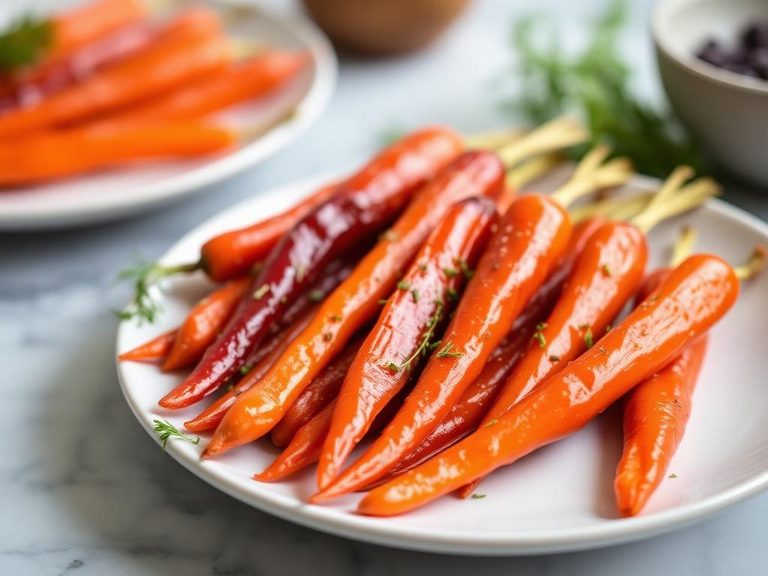
This is the humble carrot, transformed by freezing and cooking into a tender, sweet, and convenient side dish. The addition of fat gives it a richer mouthfeel and helps your body absorb its star nutrient, beta-carotene. It offers a comforting, familiar sweetness with a soft, yielding texture that’s a staple in home kitchens.
Calorie split: 5% protein · 50% carbs · 44% fat
↓ Full nutrition💚 Why it's loved
People love its natural, caramelized sweetness that intensifies with cooking, making it a kid-friendly favorite and a versatile ingredient. It’s a comforting, no-fuss vegetable that fits seamlessly into countless meals, from holiday roasts to weeknight stews.
⚠️ Watch-outs & how to enjoy it better
The added fat increases calorie density, which is a consideration for strict calorie control. Its natural sugars can cause a quicker blood sugar rise compared to non-starchy vegetables. To counteract this, pair it with a protein source (like chicken or lentils) or a healthy fat (like nuts or olive oil) to slow digestion and stabilize energy levels.
Key benefits
- Excellent source of beta-carotene, which the body converts to vitamin A for vision and immune health.
- The added fat significantly boosts the absorption of fat-soluble vitamins like A and K.
- Provides a good amount of dietary fiber for digestive health and satiety.
- A convenient, year-round source of antioxidants and nutrients.
🍽️ Popular dishes


🌍 Where it's eaten
💡 Did you know?
The beta-carotene that gives carrots their orange color is so potent that eating a large amount over time can temporarily give your skin a yellowish-orange tint, a harmless condition called carotenemia.
Full nutrition (USDA data · scales with serving)
| Water | 87.5 g |
| Energy | 61.0 kcal |
| Protein | 0.79 g |
| Total lipid (fat) | 3.0 g |
| Carbohydrate, by difference | 7.7 g |
| Fiber, total dietary | 3.1 g |
| Total Sugars | 4.1 g |
| Calcium, Ca | 32.0 mg |
| Iron, Fe | 0.42 mg |
| Magnesium, Mg | 11.0 mg |
| Phosphorus, P | 30.0 mg |
| Potassium, K | 204 mg |
| Sodium, Na | 185 mg |
| Zinc, Zn | 0.27 mg |
| Copper, Cu | 0.08 mg |
| Selenium, Se | 0.60 ug |
| Vitamin C, total ascorbic acid | 2.1 mg |
| Thiamin | 0.04 mg |
| Riboflavin | 0.05 mg |
| Niacin | 0.45 mg |
| Vitamin B-6 | 0.10 mg |
| Folate, total | 7.0 ug |
| Folic acid | 0.00 ug |
| Folate, food | 7.0 ug |
| Folate, DFE | 7.0 ug |
| Choline, total | 8.6 mg |
| Vitamin B-12 | 0.00 ug |
| Vitamin B-12, added | 0.00 ug |
| Vitamin A, RAE | 830 ug |
| Retinol | 11.0 ug |
| Carotene, beta | 7942 ug |
| Carotene, alpha | 3597 ug |
| Cryptoxanthin, beta | 0.00 ug |
| Lycopene | 0.00 ug |
| Lutein + zeaxanthin | 654 ug |
| Vitamin E (alpha-tocopherol) | 1.1 mg |
| Vitamin E, added | 0.00 mg |
| Vitamin D (D2 + D3) | 0.00 ug |
| Vitamin K (phylloquinone) | 16.6 ug |
| Alcohol, ethyl | 0.00 g |
| Caffeine | 0.00 mg |
| Theobromine | 0.00 mg |
Fat & fatty acid profile (per 100g)
| Fatty acids, total saturated | 0.67 g |
| SFA 4:0 | 0.02 g |
| SFA 6:0 | 0.01 g |
| SFA 8:0 | 0.01 g |
| SFA 10:0 | 0.02 g |
| SFA 12:0 | 0.02 g |
| SFA 14:0 | 0.06 g |
| SFA 16:0 | 0.36 g |
| SFA 18:0 | 0.14 g |
| Fatty acids, total monounsaturated | 0.90 g |
| MUFA 16:1 | 0.01 g |
| MUFA 18:1 | 0.87 g |
| MUFA 20:1 | 0.01 g |
| MUFA 22:1 | 0.00 g |
| Fatty acids, total polyunsaturated | 0.89 g |
| PUFA 18:2 | 0.81 g |
| PUFA 18:3 | 0.08 g |
| PUFA 18:4 | 0.00 g |
| PUFA 20:4 | 0.00 g |
| PUFA 20:5 n-3 (EPA) | 0.00 g |
| PUFA 22:5 n-3 (DPA) | 0.00 g |
| PUFA 22:6 n-3 (DHA) | 0.00 g |
| Cholesterol | 2.0 mg |
Amino acid profile (per 100g)
Estimated from Carrots, canned, no salt added, drained solids — USDA does not publish this profile for Carrots.
| Tryptophan | 0.01 g |
| Threonine | 0.02 g |
| Isoleucine | 0.03 g |
| Leucine | 0.03 g |
| Lysine | 0.03 g |
| Methionine | 0.00 g |
| Cystine | 0.01 g |
| Phenylalanine | 0.02 g |
| Tyrosine | 0.01 g |
| Valine | 0.03 g |
| Arginine | 0.03 g |
| Histidine | 0.01 g |
| Alanine | 0.04 g |
| Aspartic acid | 0.08 g |
| Glutamic acid | 0.12 g |
| Glycine | 0.02 g |
| Proline | 0.02 g |
| Serine | 0.02 g |
FAQ
Why are these carrots cooked with fat?
Beta-carotene (vitamin A) is fat-soluble, meaning it needs dietary fat to be properly absorbed by your body. Cooking carrots with a little oil or butter makes their nutrients more bioavailable.
Is this healthier than raw carrots?
Both are healthy. Cooking breaks down cell walls, making some nutrients like beta-carotene more accessible, but can reduce heat-sensitive vitamins like vitamin C. The added fat increases calories but aids nutrient absorption.
Why are they frozen?
Carrots are typically flash-frozen shortly after harvest, which locks in nutrients and texture effectively. It's a convenient, affordable, and consistent option for out-of-season cooking.
Nutrient density (calculated · NRF9.3)
Nutrient Rich Foods index: beneficial nutrients (protein, fiber, vitamins, minerals) minus saturated fat, added sugar & sodium, per 100 kcal.
NRF9.3 index — Fulgoni, Keast & Drewnowski, 2009. Computed from USDA nutrients.
Weight-loss friendliness (composite index)
Energy density 0.61 kcal/g · 5% calories from protein · 3.1 g fiber · 4.1 g sugar per 100 g.
Composite of energy density (Rolls et al., 1999), protein & fiber satiety, minus sugar. A calculated heuristic — ranks satiety-per-calorie, not a clinical measure.
Dietary load (calculated from USDA values)
Potential renal acid load. Positive = acid-forming, negative = alkaline-forming.
Sodium-to-potassium ratio: 0.91 (lower is better — aim for ≤ 1)
Sodium:potassium per WHO potassium guidance. Computed from USDA nutrients.