

BURGER KING, french toast sticks
Whole food · Fast Foods

Photo: Wikipedia
Burger King's French Toast Sticks are golden, rectangular pieces of sweet bread, deep-fried to a crisp exterior while remaining soft and pillowy inside. They deliver a classic sweet, eggy flavor with a satisfying crunch, making them a beloved breakfast staple. Nutritionally, they are a high-carb, moderate-fat item, providing quick energy but limited protein.
Calorie split: 7% protein · 47% carbs · 46% fat
↓ Full nutrition💚 Why it's loved
People love them for their addictive combination of a crispy, cinnamon-sugar-dusted shell and a soft, bread-like interior. They are a nostalgic comfort food, often enjoyed as a fun, shareable breakfast or snack, especially when dipped in maple syrup.
⚠️ Watch-outs & how to enjoy it better
Due to their high carbohydrate and sugar content, they can cause rapid blood-sugar spikes, making them a poor choice for individuals managing diabetes or seeking sustained energy. They are also high in sodium and contain common allergens like wheat, eggs, and milk. To counteract, pair them with a protein source like eggs or Greek yogurt, or opt for a smaller portion alongside a savory item.
Key benefits
- Convenient, portable breakfast option
- Good source of quick energy from carbohydrates
- Satisfies sweet cravings effectively
- Consistent taste and texture across locations
- Often served with dipping syrups for added flavor
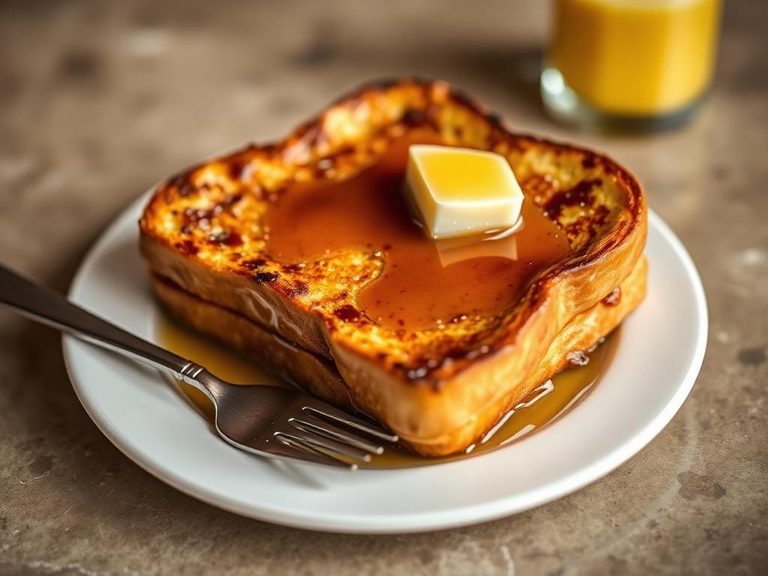
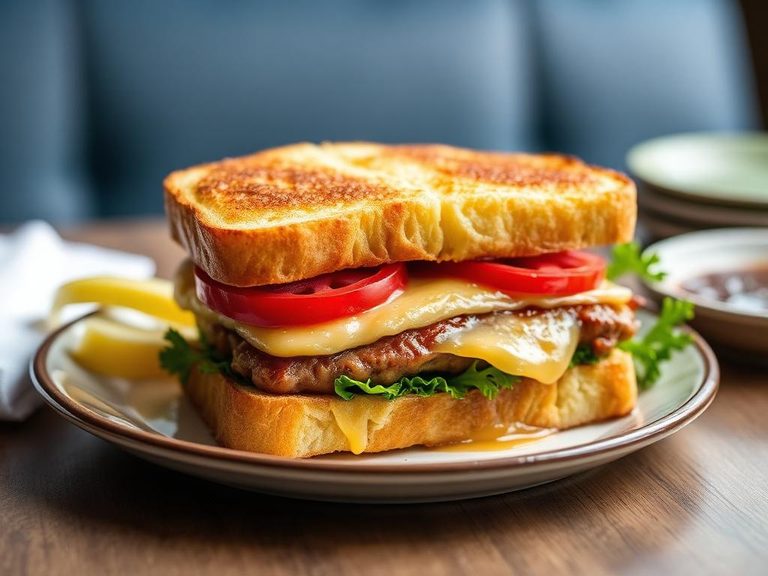
🍽️ Popular dishes



🌍 Where it's eaten
💡 Did you know?
The concept of dipping bread in an egg mixture and frying it dates back to at least the 14th century in Europe, where it was known as 'pain perdu' or 'lost bread' because it was a way to use up stale loaves.
Full nutrition (USDA data · scales with serving)
| Water | 33.6 g |
| Energy | 349 kcal |
| Energy | 1458 kj |
| Protein | 6.0 g |
| Total lipid (fat) | 17.7 g |
| Ash | 1.5 g |
| Carbohydrate, by difference | 41.2 g |
| Fiber, total dietary | 1.4 g |
| Total Sugars | 9.9 g |
| Sucrose | 7.1 g |
| Glucose | 1.0 g |
| Fructose | 0.75 g |
| Lactose | 0.15 g |
| Maltose | 0.82 g |
| Galactose | 0.00 g |
| Starch | 26.6 g |
| Calcium, Ca | 53.0 mg |
| Iron, Fe | 1.9 mg |
| Magnesium, Mg | 19.0 mg |
| Phosphorus, P | 87.0 mg |
| Potassium, K | 111 mg |
| Sodium, Na | 428 mg |
| Zinc, Zn | 0.51 mg |
| Copper, Cu | 0.09 mg |
| Manganese, Mn | 0.39 mg |
| Selenium, Se | 12.2 ug |
| Vitamin C, total ascorbic acid | 0.00 mg |
| Thiamin | 0.28 mg |
| Riboflavin | 0.17 mg |
| Niacin | 2.6 mg |
| Pantothenic acid | 0.34 mg |
| Vitamin B-6 | 0.05 mg |
| Vitamin B-12 | 0.00 ug |
| Vitamin E (alpha-tocopherol) | 0.88 mg |
| Tocopherol, beta | 0.07 mg |
| Tocopherol, gamma | 5.3 mg |
| Tocopherol, delta | 3.5 mg |
| Tocotrienol, alpha | 0.03 mg |
| Tocotrienol, beta | 0.00 mg |
| Tocotrienol, gamma | 0.00 mg |
| Tocotrienol, delta | 0.00 mg |
| Vitamin K (phylloquinone) | 14.5 ug |
| Vitamin K (Dihydrophylloquinone) | 27.7 ug |
Fat & fatty acid profile (per 100g)
| Fatty acids, total saturated | 4.0 g |
| SFA 8:0 | 0.00 g |
| SFA 10:0 | 0.00 g |
| SFA 12:0 | 0.00 g |
| SFA 14:0 | 0.01 g |
| SFA 15:0 | 0.00 g |
| SFA 16:0 | 2.0 g |
| SFA 17:0 | 0.01 g |
| SFA 18:0 | 1.9 g |
| SFA 20:0 | 0.06 g |
| SFA 22:0 | 0.06 g |
| Fatty acids, total monounsaturated | 9.5 g |
| MUFA 14:1 | 0.00 g |
| MUFA 15:1 | 0.00 g |
| MUFA 16:1 | 0.03 g |
| MUFA 17:1 | 0.00 g |
| MUFA 18:1 | 9.4 g |
| MUFA 20:1 | 0.07 g |
| Fatty acids, total polyunsaturated | 2.6 g |
| PUFA 18:2 | 2.4 g |
| PUFA 18:3 | 0.14 g |
| PUFA 18:3 n-3 c,c,c (ALA) | 0.14 g |
| PUFA 18:3 n-6 c,c,c | 0.00 g |
| PUFA 20:2 n-6 c,c | 0.00 g |
| PUFA 20:3 | 0.00 g |
| PUFA 20:4 | 0.00 g |
| Cholesterol | 0.00 mg |
Amino acid profile (per 100g)
| Tryptophan | 0.05 g |
| Threonine | 0.18 g |
| Isoleucine | 0.23 g |
| Leucine | 0.44 g |
| Lysine | 0.15 g |
| Methionine | 0.09 g |
| Cystine | 0.14 g |
| Phenylalanine | 0.30 g |
| Tyrosine | 0.18 g |
| Valine | 0.28 g |
| Arginine | 0.26 g |
| Histidine | 0.15 g |
| Alanine | 0.23 g |
| Aspartic acid | 0.32 g |
| Glutamic acid | 2.0 g |
| Glycine | 0.24 g |
| Proline | 0.62 g |
| Serine | 0.30 g |
FAQ
Are French Toast Sticks healthier than regular French Toast?
Not necessarily. While portion-controlled, they are often deep-fried, which can increase fat content compared to pan-fried French Toast. The nutritional profile is similar, but preparation method matters.
Can I make a version at home?
Yes. Use thick-cut bread (like brioche or challah), dip in a mixture of eggs, milk, cinnamon, and vanilla, then bake or pan-fry. Baking reduces added fat compared to deep-frying.
Why are they so high in sodium?
Sodium is added for flavor enhancement and as a preservative in the pre-made batter and dough. It's common in many processed, fried foods to balance sweetness and extend shelf life.
Nutrient density (calculated · NRF9.3)
Nutrient Rich Foods index: beneficial nutrients (protein, fiber, vitamins, minerals) minus saturated fat, added sugar & sodium, per 100 kcal.
NRF9.3 index — Fulgoni, Keast & Drewnowski, 2009. Computed from USDA nutrients.
Weight-loss friendliness (composite index)
Energy density 3.49 kcal/g · 7% calories from protein · 1.4 g fiber · 9.9 g sugar per 100 g.
Composite of energy density (Rolls et al., 1999), protein & fiber satiety, minus sugar. A calculated heuristic — ranks satiety-per-calorie, not a clinical measure.
Dietary load (calculated from USDA values)
Potential renal acid load. Positive = acid-forming, negative = alkaline-forming.
Sodium-to-potassium ratio: 3.86 (lower is better — aim for ≤ 1)
Sodium:potassium per WHO potassium guidance. Computed from USDA nutrients.