

Broccoli, frozen, cooked, fat added, NS as to fat type
Common food

Photo: Wikipedia
This is broccoli that has been blanched and frozen at peak freshness, then cooked (often steamed or microwaved) with a small amount of added fat for richness. It offers a tender-crisp texture and a mildly sweet, earthy flavor that's less bitter than its fresh counterpart. Nutritionally, it's a low-calorie powerhouse, delivering a solid dose of protein and fiber for its weight.
Calorie split: 21% protein · 37% carbs · 42% fat
↓ Full nutrition💚 Why it's loved
People love it for its reliability and convenience—it's a quick, nutritious side dish that pairs well with almost any protein. Its mild flavor and consistent texture make it a staple for busy weeknight meals and a kid-friendly vegetable option.
⚠️ Watch-outs & how to enjoy it better
Some may find the texture slightly softer or mushier than fresh broccoli if overcooked. Those monitoring vitamin K intake (e.g., on blood thinners) should be mindful of consistent portions. To counteract, avoid overcooking by steaming until just tender-crisp, and pair with a healthy fat (like olive oil or nuts) to enhance nutrient absorption.
Key benefits
- Excellent source of vitamin C and vitamin K
- High in dietary fiber for digestive health
- Provides plant-based protein for muscle maintenance
- Contains sulforaphane, a compound studied for its antioxidant properties
- Convenient year-round vegetable with minimal preparation
🍽️ Popular dishes
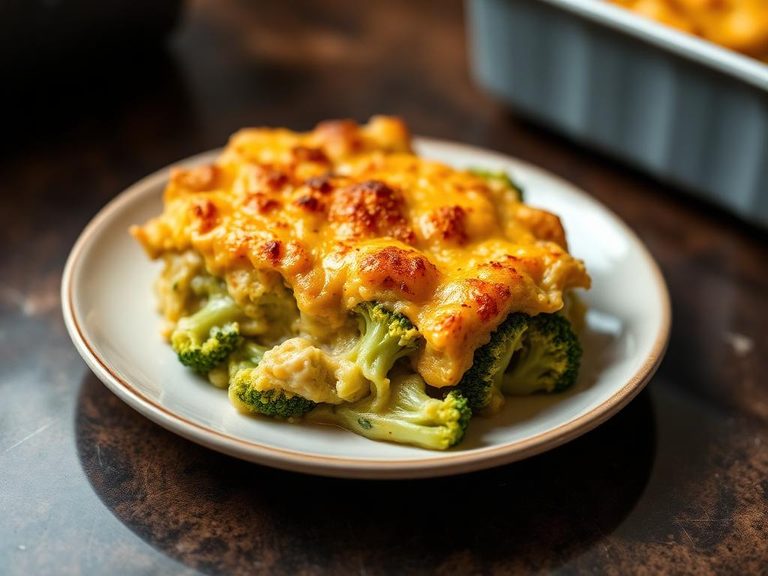
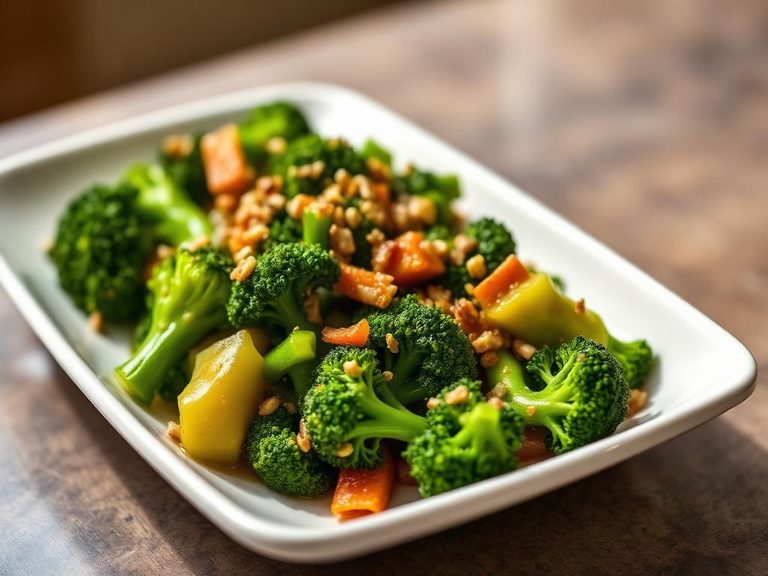
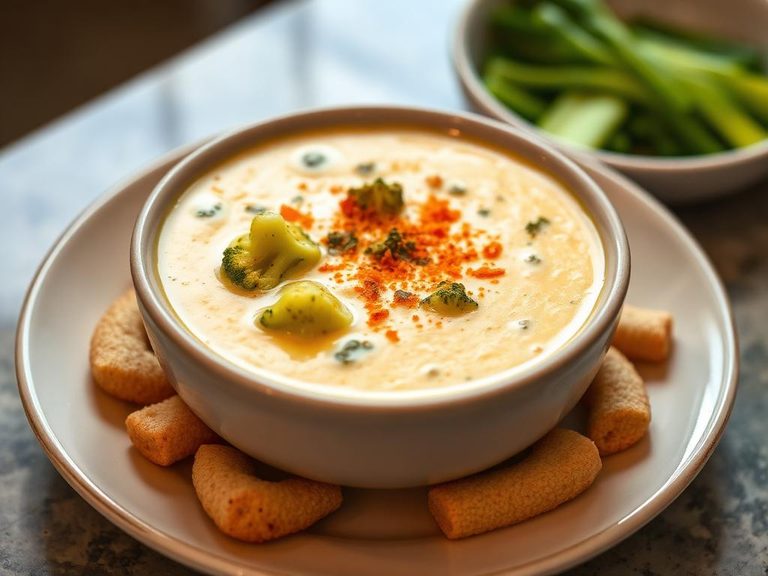
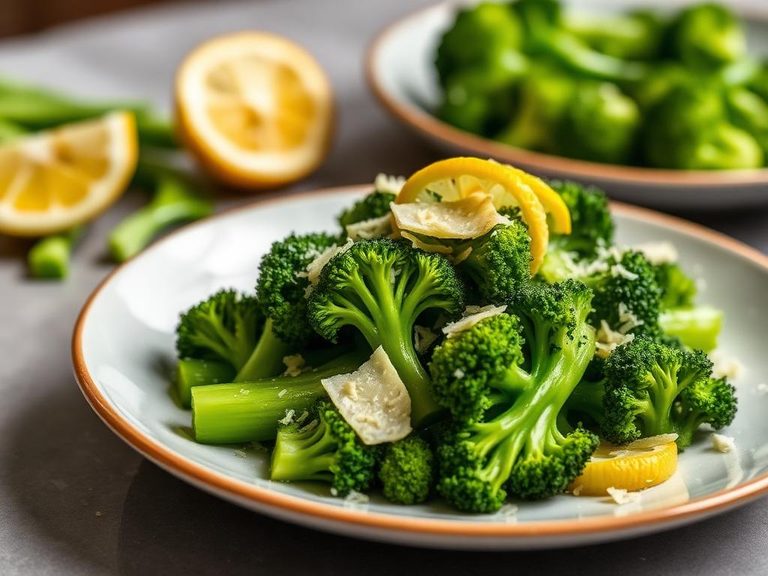
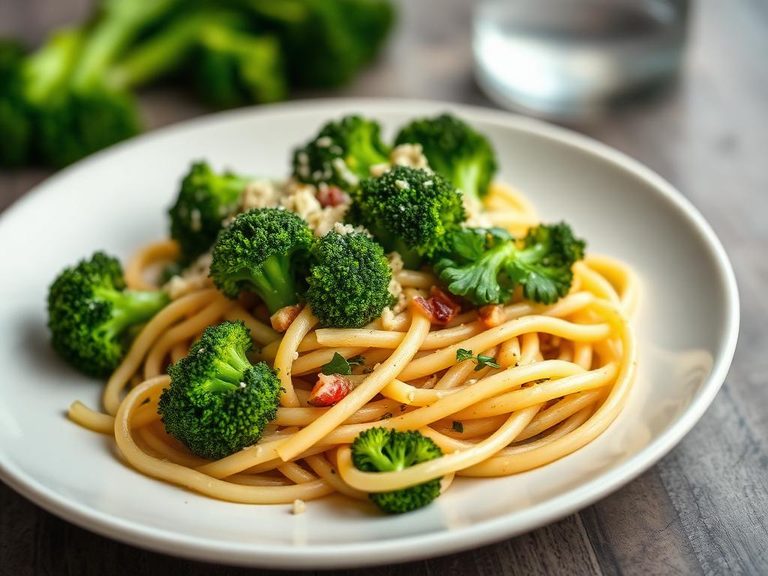
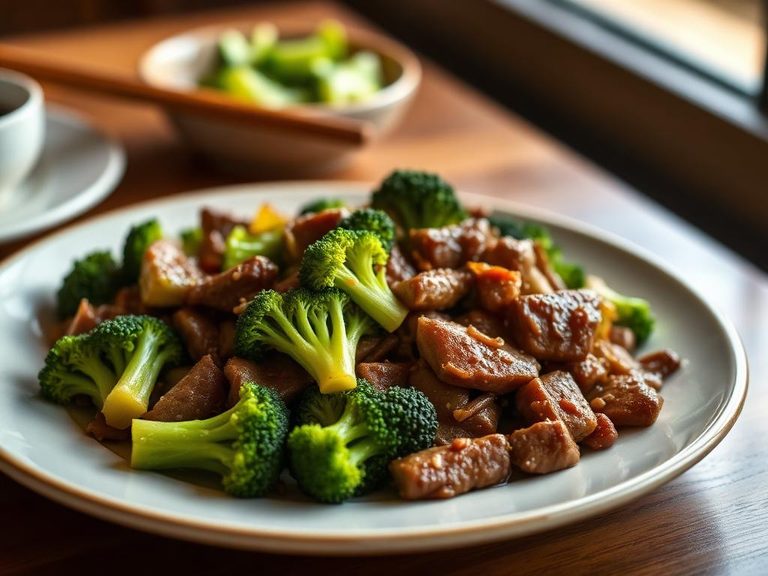
🌍 Where it's eaten
💡 Did you know?
Freezing broccoli shortly after harvest can actually preserve its vitamin C content better than 'fresh' broccoli that has traveled long distances to the supermarket.
Full nutrition (USDA data · scales with serving)
| Water | 88.2 g |
| Energy | 50.0 kcal |
| Protein | 3.0 g |
| Total lipid (fat) | 2.7 g |
| Carbohydrate, by difference | 5.2 g |
| Fiber, total dietary | 2.9 g |
| Total Sugars | 1.4 g |
| Calcium, Ca | 32.0 mg |
| Iron, Fe | 0.59 mg |
| Magnesium, Mg | 13.0 mg |
| Phosphorus, P | 48.0 mg |
| Potassium, K | 138 mg |
| Sodium, Na | 132 mg |
| Zinc, Zn | 0.27 mg |
| Copper, Cu | 0.03 mg |
| Selenium, Se | 0.70 ug |
| Vitamin C, total ascorbic acid | 38.8 mg |
| Thiamin | 0.05 mg |
| Riboflavin | 0.08 mg |
| Niacin | 0.44 mg |
| Vitamin B-6 | 0.14 mg |
| Folate, total | 54.0 ug |
| Folic acid | 0.00 ug |
| Folate, food | 54.0 ug |
| Folate, DFE | 54.0 ug |
| Choline, total | 15.9 mg |
| Vitamin B-12 | 0.00 ug |
| Vitamin B-12, added | 0.00 ug |
| Vitamin A, RAE | 61.0 ug |
| Retinol | 11.0 ug |
| Carotene, beta | 583 ug |
| Carotene, alpha | 18.0 ug |
| Cryptoxanthin, beta | 1.0 ug |
| Lycopene | 0.00 ug |
| Lutein + zeaxanthin | 1060 ug |
| Vitamin E (alpha-tocopherol) | 1.7 mg |
| Vitamin E, added | 0.00 mg |
| Vitamin D (D2 + D3) | 0.00 ug |
| Vitamin K (phylloquinone) | 87.4 ug |
| Alcohol, ethyl | 0.00 g |
| Caffeine | 0.00 mg |
| Theobromine | 0.00 mg |
Fat & fatty acid profile (per 100g)
| Fatty acids, total saturated | 0.68 g |
| SFA 4:0 | 0.02 g |
| SFA 6:0 | 0.01 g |
| SFA 8:0 | 0.01 g |
| SFA 10:0 | 0.02 g |
| SFA 12:0 | 0.02 g |
| SFA 14:0 | 0.06 g |
| SFA 16:0 | 0.38 g |
| SFA 18:0 | 0.14 g |
| Fatty acids, total monounsaturated | 0.91 g |
| MUFA 16:1 | 0.01 g |
| MUFA 18:1 | 0.88 g |
| MUFA 20:1 | 0.01 g |
| MUFA 22:1 | 0.00 g |
| Fatty acids, total polyunsaturated | 0.78 g |
| PUFA 18:2 | 0.66 g |
| PUFA 18:3 | 0.12 g |
| PUFA 18:4 | 0.00 g |
| PUFA 20:4 | 0.00 g |
| PUFA 20:5 n-3 (EPA) | 0.00 g |
| PUFA 22:5 n-3 (DPA) | 0.00 g |
| PUFA 22:6 n-3 (DHA) | 0.00 g |
| Cholesterol | 2.0 mg |
Amino acid profile (per 100g)
Estimated from Broccoli, cooked, boiled, drained, with salt — USDA does not publish this profile for Broccoli.
| Tryptophan | 0.03 g |
| Threonine | 0.10 g |
| Isoleucine | 0.09 g |
| Leucine | 0.15 g |
| Lysine | 0.15 g |
| Methionine | 0.04 g |
| Cystine | 0.03 g |
| Phenylalanine | 0.12 g |
| Tyrosine | 0.06 g |
| Valine | 0.14 g |
| Arginine | 0.20 g |
| Histidine | 0.06 g |
| Alanine | 0.11 g |
| Aspartic acid | 0.33 g |
| Glutamic acid | 0.55 g |
| Glycine | 0.10 g |
| Proline | 0.11 g |
| Serine | 0.13 g |
FAQ
Is frozen broccoli as nutritious as fresh?
Yes, often more so. Frozen broccoli is typically flash-frozen shortly after harvest, which locks in nutrients. Fresh broccoli can lose vitamins (especially C and B) during transport and storage.
Why is 'fat added' listed in the description?
It means a small amount of fat (like oil or butter) was added during processing or preparation, likely to improve texture, flavor, or prevent clumping. This contributes to the slightly higher fat content.
How do I prevent frozen broccoli from getting watery?
Cook it from frozen without thawing first. Use methods like steaming, microwaving with a little water, or sautéing in a hot pan. Avoid boiling, which can make it soggy and leach out nutrients.
Nutrient density (calculated · NRF9.3)
Nutrient Rich Foods index: beneficial nutrients (protein, fiber, vitamins, minerals) minus saturated fat, added sugar & sodium, per 100 kcal.
NRF9.3 index — Fulgoni, Keast & Drewnowski, 2009. Computed from USDA nutrients.
Weight-loss friendliness (composite index)
Energy density 0.50 kcal/g · 24% calories from protein · 2.9 g fiber · 1.4 g sugar per 100 g.
Composite of energy density (Rolls et al., 1999), protein & fiber satiety, minus sugar. A calculated heuristic — ranks satiety-per-calorie, not a clinical measure.
Dietary load (calculated from USDA values)
Potential renal acid load. Positive = acid-forming, negative = alkaline-forming.
Sodium-to-potassium ratio: 0.96 (lower is better — aim for ≤ 1)
Sodium:potassium per WHO potassium guidance. Computed from USDA nutrients.