

Broccoli, fresh, cooked, fat added, NS as to fat type
Common food

Photo: Wikipedia
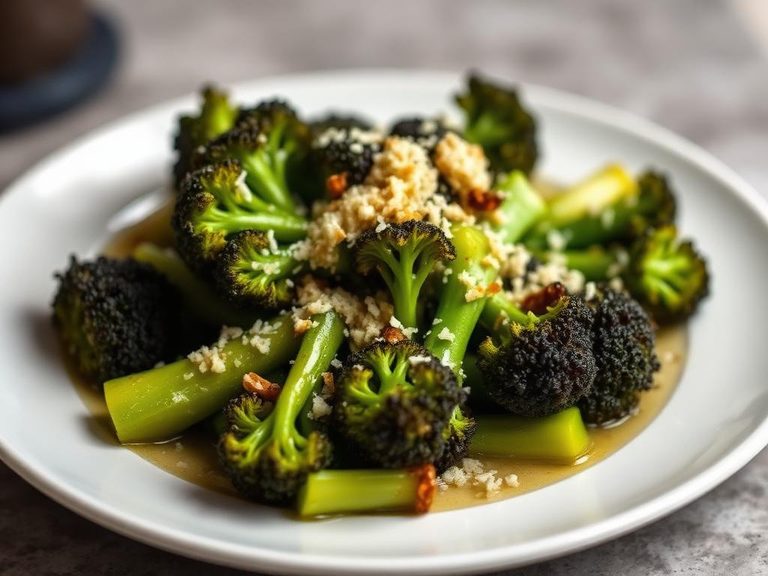
This is fresh broccoli that has been cooked—typically steamed, boiled, or sautéed—with a small amount of added fat. The florets turn a vibrant, deep green and offer a tender-crisp texture with a mild, earthy, slightly sweet flavor. Nutritionally, it's a standout source of vitamin C and vitamin K, with a good dose of fiber and plant-based protein for a vegetable.
Calorie split: 17% protein · 40% carbs · 43% fat
↓ Full nutrition💚 Why it's loved
People love it for its satisfying, hearty texture and its incredible versatility—it absorbs flavors from garlic, lemon, cheese, or Asian sauces beautifully. It's a staple in home cooking and restaurants alike, bridging healthy eating with genuine culinary appeal.
⚠️ Watch-outs & how to enjoy it better
Some find it has a slightly bitter or sulfurous taste, especially when overcooked, and its cruciferous nature can cause digestive discomfort for some. To counteract bitterness, cook until just tender-crisp and pair with a acidic element like lemon juice or a fat like olive oil or cheese to round out the flavor.
Key benefits
- Excellent source of vitamin C and vitamin K
- Provides plant-based protein and dietary fiber
- Contains sulforaphane, a compound studied for health benefits
- Low in calories while being nutrient-dense
🍽️ Popular dishes
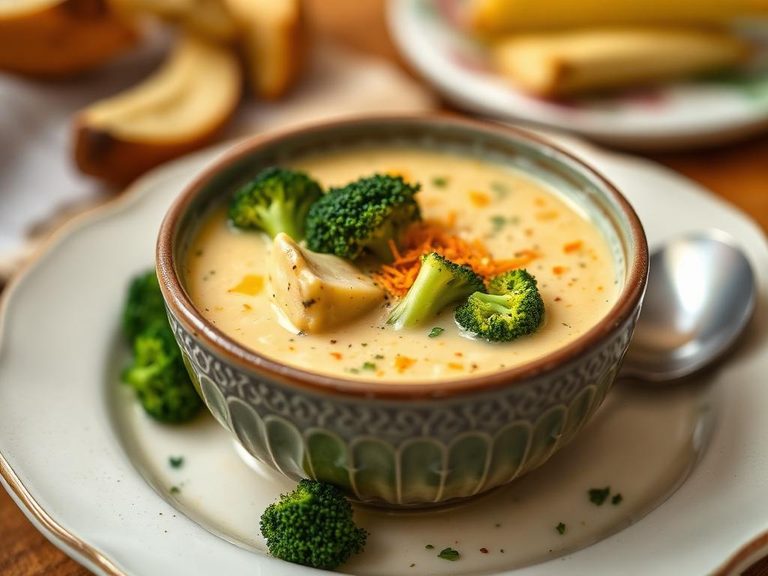
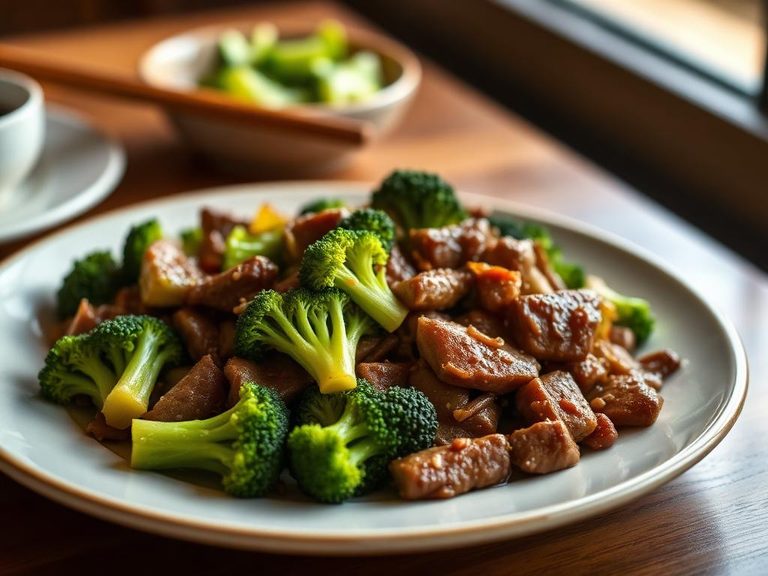
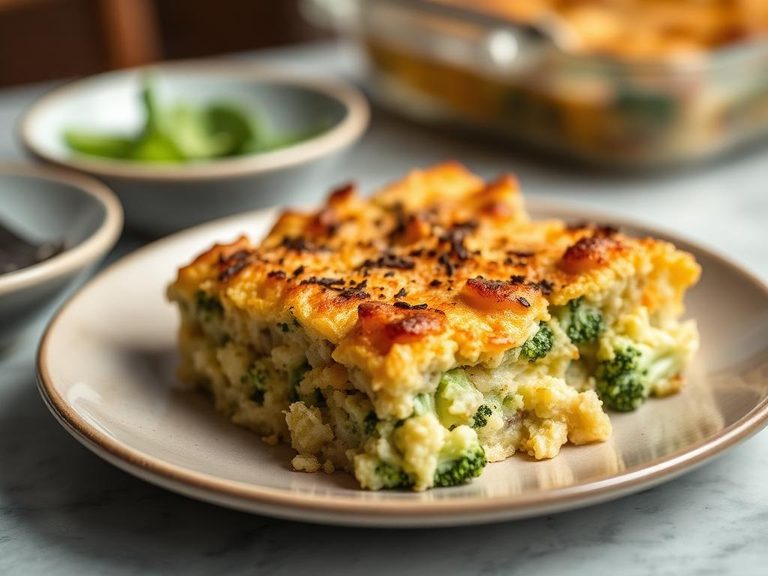
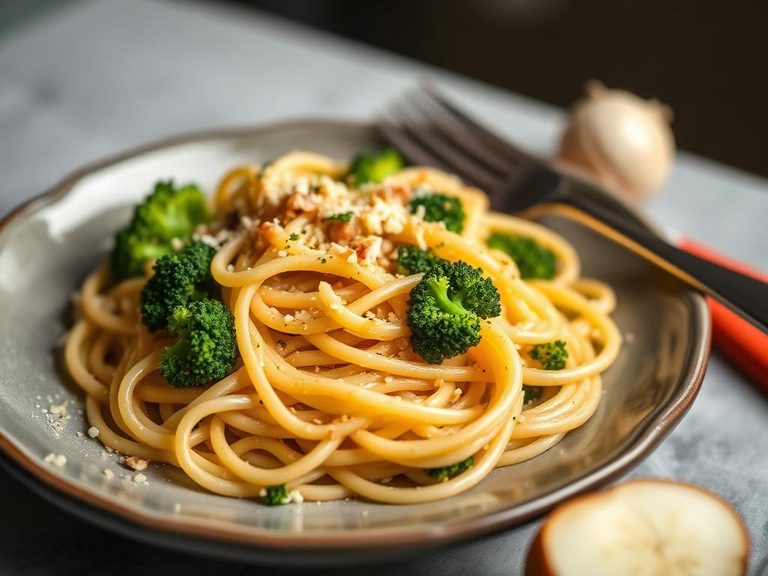
🌍 Where it's eaten
💡 Did you know?
The part of the broccoli we eat is actually a cluster of unopened flower buds, and if left to grow, they would bloom into small yellow flowers.
Full nutrition (USDA data · scales with serving)
| Water | 86.9 g |
| Energy | 63.0 kcal |
| Protein | 2.6 g |
| Total lipid (fat) | 3.0 g |
| Carbohydrate, by difference | 6.3 g |
| Fiber, total dietary | 2.4 g |
| Total Sugars | 1.4 g |
| Calcium, Ca | 47.0 mg |
| Iron, Fe | 0.70 mg |
| Magnesium, Mg | 21.0 mg |
| Phosphorus, P | 68.0 mg |
| Potassium, K | 306 mg |
| Sodium, Na | 162 mg |
| Zinc, Zn | 0.42 mg |
| Copper, Cu | 0.06 mg |
| Selenium, Se | 1.6 ug |
| Vitamin C, total ascorbic acid | 78.3 mg |
| Thiamin | 0.07 mg |
| Riboflavin | 0.11 mg |
| Niacin | 0.61 mg |
| Vitamin B-6 | 0.19 mg |
| Folate, total | 56.0 ug |
| Folic acid | 0.00 ug |
| Folate, food | 56.0 ug |
| Folate, DFE | 56.0 ug |
| Choline, total | 19.1 mg |
| Vitamin B-12 | 0.00 ug |
| Vitamin B-12, added | 0.00 ug |
| Vitamin A, RAE | 19.0 ug |
| Retinol | 11.0 ug |
| Carotene, beta | 94.0 ug |
| Carotene, alpha | 0.00 ug |
| Cryptoxanthin, beta | 0.00 ug |
| Lycopene | 0.00 ug |
| Lutein + zeaxanthin | 714 ug |
| Vitamin E (alpha-tocopherol) | 0.55 mg |
| Vitamin E, added | 0.00 mg |
| Vitamin D (D2 + D3) | 0.00 ug |
| Vitamin K (phylloquinone) | 105 ug |
| Alcohol, ethyl | 0.00 g |
| Caffeine | 0.00 mg |
| Theobromine | 0.00 mg |
Fat & fatty acid profile (per 100g)
| Fatty acids, total saturated | 0.73 g |
| SFA 4:0 | 0.02 g |
| SFA 6:0 | 0.01 g |
| SFA 8:0 | 0.01 g |
| SFA 10:0 | 0.02 g |
| SFA 12:0 | 0.02 g |
| SFA 14:0 | 0.07 g |
| SFA 16:0 | 0.41 g |
| SFA 18:0 | 0.15 g |
| Fatty acids, total monounsaturated | 0.95 g |
| MUFA 16:1 | 0.01 g |
| MUFA 18:1 | 0.92 g |
| MUFA 20:1 | 0.01 g |
| MUFA 22:1 | 0.00 g |
| Fatty acids, total polyunsaturated | 0.78 g |
| PUFA 18:2 | 0.69 g |
| PUFA 18:3 | 0.11 g |
| PUFA 18:4 | 0.00 g |
| PUFA 20:4 | 0.00 g |
| PUFA 20:5 n-3 (EPA) | 0.00 g |
| PUFA 22:5 n-3 (DPA) | 0.00 g |
| PUFA 22:6 n-3 (DHA) | 0.00 g |
| Cholesterol | 2.0 mg |
Amino acid profile (per 100g)
Estimated from Broccoli, cooked, boiled, drained, with salt — USDA does not publish this profile for Broccoli.
| Tryptophan | 0.03 g |
| Threonine | 0.10 g |
| Isoleucine | 0.09 g |
| Leucine | 0.15 g |
| Lysine | 0.15 g |
| Methionine | 0.04 g |
| Cystine | 0.03 g |
| Phenylalanine | 0.12 g |
| Tyrosine | 0.06 g |
| Valine | 0.14 g |
| Arginine | 0.20 g |
| Histidine | 0.06 g |
| Alanine | 0.11 g |
| Aspartic acid | 0.33 g |
| Glutamic acid | 0.55 g |
| Glycine | 0.10 g |
| Proline | 0.11 g |
| Serine | 0.13 g |
FAQ
Is cooked broccoli healthier than raw?
Cooking broccoli can make some nutrients, like beta-carotene, more available to your body, but it can reduce heat-sensitive vitamin C. Steaming is often recommended as it preserves the most nutrients while making it easier to digest.
Why does my cooked broccoli turn yellow?
The green color comes from chlorophyll. Prolonged cooking or exposure to acids (like vinegar) breaks down chlorophyll, revealing yellow pigments. To keep it green, cook quickly and avoid adding acidic ingredients until the end.
Can I eat the broccoli stem?
Absolutely! The stem is edible and nutritious. Peel off the tough outer layer with a knife or vegetable peeler, then slice or chop the tender inner part. It has a sweeter, milder flavor than the florets.
Nutrient density (calculated · NRF9.3)
Nutrient Rich Foods index: beneficial nutrients (protein, fiber, vitamins, minerals) minus saturated fat, added sugar & sodium, per 100 kcal.
NRF9.3 index — Fulgoni, Keast & Drewnowski, 2009. Computed from USDA nutrients.
Weight-loss friendliness (composite index)
Energy density 0.63 kcal/g · 17% calories from protein · 2.4 g fiber · 1.4 g sugar per 100 g.
Composite of energy density (Rolls et al., 1999), protein & fiber satiety, minus sugar. A calculated heuristic — ranks satiety-per-calorie, not a clinical measure.
Dietary load (calculated from USDA values)
Potential renal acid load. Positive = acid-forming, negative = alkaline-forming.
Sodium-to-potassium ratio: 0.53 (lower is better — aim for ≤ 1)
Sodium:potassium per WHO potassium guidance. Computed from USDA nutrients.