

Bread, white
Common food
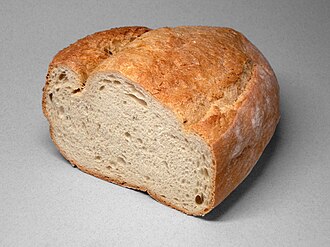
Photo: Wikipedia
White bread is a soft, airy loaf made from refined wheat flour, offering a mild, slightly sweet flavor and a tender, pillowy texture. Nutritionally, it's a quick energy source, providing about 267 calories and 49 grams of carbohydrates per 100g, with minimal fiber and a modest amount of protein.
Calorie split: 14% protein · 74% carbs · 12% fat
↓ Full nutrition💚 Why it's loved
People love its comforting, neutral taste and soft texture, which make it a perfect canvas for both sweet and savory toppings. Its cultural ubiquity—from the classic sandwich to simple buttered toast—makes it a nostalgic and convenient staple in kitchens worldwide.
⚠️ Watch-outs & how to enjoy it better
Its high glycemic index can cause rapid blood-sugar spikes, which is a concern for diabetics or those managing insulin resistance. It is also a common source of gluten and may contain added sodium. To counteract this, pair it with protein (like eggs or nut butter) or healthy fats (like avocado) to slow digestion, choose whole-grain versions when possible, and practice portion control.
Key benefits
- Provides quick, easily digestible energy
- Often fortified with B vitamins and iron
- Low in fat and cholesterol
- Versatile base for sandwiches and toast
- Long shelf life when properly stored
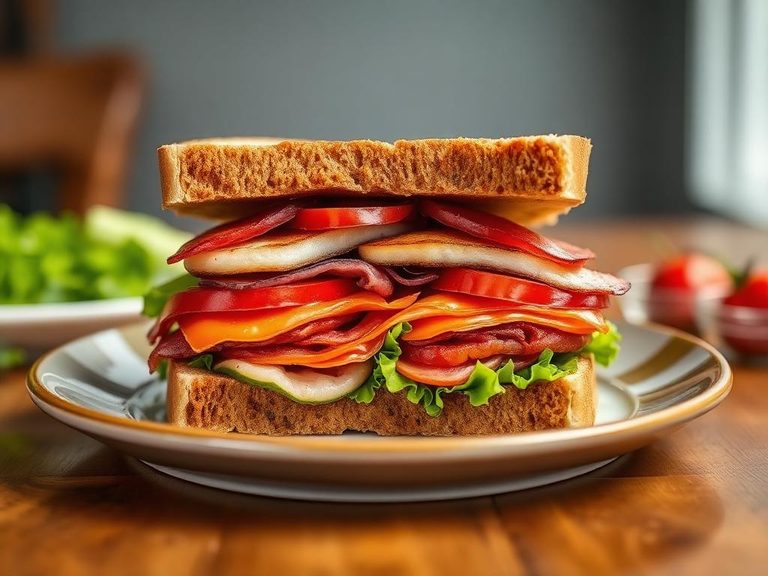
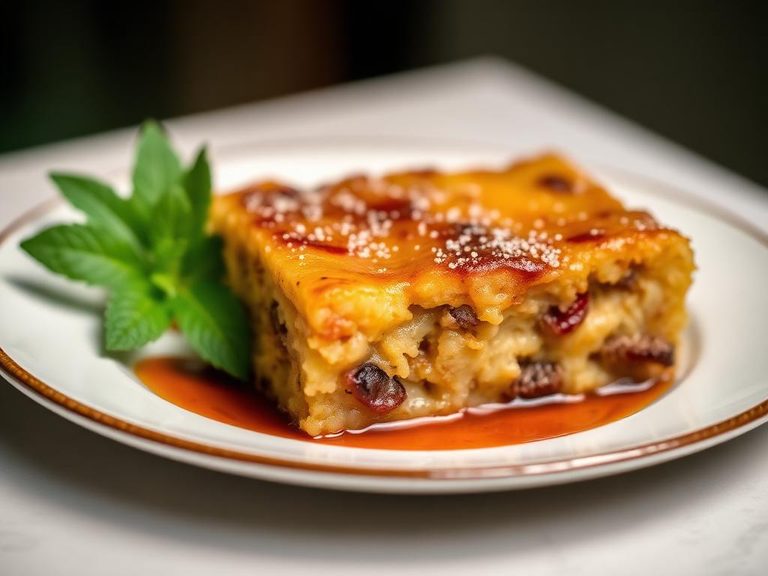
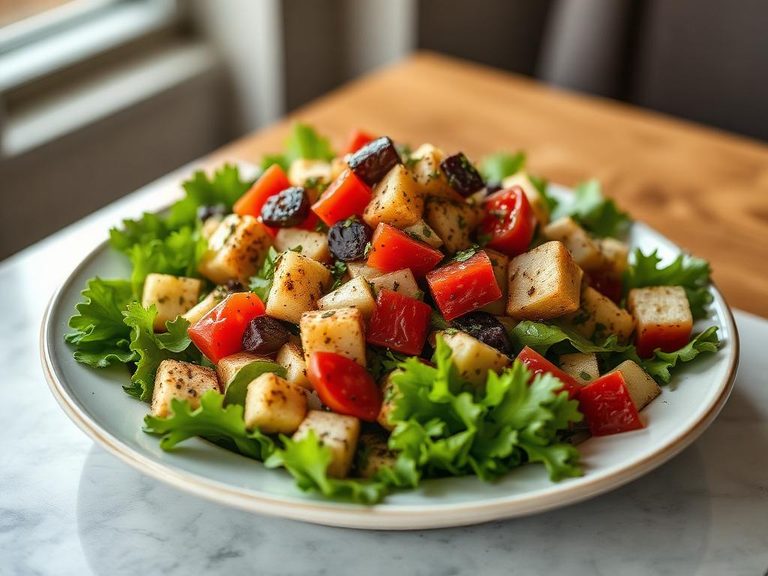
🍽️ Popular dishes



🌍 Where it's eaten
💡 Did you know?
The soft, uniform texture of modern white bread is achieved by using only the endosperm of the wheat kernel, stripping away the bran and germ—a process perfected in the 19th century with the invention of the steel roller mill.
Full nutrition (USDA data · scales with serving)
| Water | 35.7 g |
| Energy | 267 kcal |
| Protein | 9.4 g |
| Total lipid (fat) | 3.6 g |
| Carbohydrate, by difference | 49.2 g |
| Fiber, total dietary | 2.3 g |
| Total Sugars | 5.3 g |
| Calcium, Ca | 211 mg |
| Iron, Fe | 3.4 mg |
| Magnesium, Mg | 27.0 mg |
| Phosphorus, P | 113 mg |
| Potassium, K | 117 mg |
| Sodium, Na | 450 mg |
| Zinc, Zn | 0.88 mg |
| Copper, Cu | 0.12 mg |
| Selenium, Se | 23.2 ug |
| Vitamin C, total ascorbic acid | 0.00 mg |
| Thiamin | 0.51 mg |
| Riboflavin | 0.24 mg |
| Niacin | 4.8 mg |
| Vitamin B-6 | 0.09 mg |
| Folate, total | 111 ug |
| Folic acid | 86.0 ug |
| Folate, food | 25.0 ug |
| Folate, DFE | 171 ug |
| Choline, total | 14.6 mg |
| Vitamin B-12 | 0.00 ug |
| Vitamin B-12, added | 0.00 ug |
| Vitamin A, RAE | 0.00 ug |
| Retinol | 0.00 ug |
| Carotene, beta | 0.00 ug |
| Carotene, alpha | 0.00 ug |
| Cryptoxanthin, beta | 0.00 ug |
| Lycopene | 0.00 ug |
| Lutein + zeaxanthin | 44.0 ug |
| Vitamin E (alpha-tocopherol) | 0.22 mg |
| Vitamin E, added | 0.00 mg |
| Vitamin D (D2 + D3) | 0.00 ug |
| Vitamin K (phylloquinone) | 0.20 ug |
| Alcohol, ethyl | 0.00 g |
| Caffeine | 0.00 mg |
| Theobromine | 0.00 mg |
Fat & fatty acid profile (per 100g)
| Fatty acids, total saturated | 0.82 g |
| SFA 4:0 | 0.00 g |
| SFA 6:0 | 0.00 g |
| SFA 8:0 | 0.01 g |
| SFA 10:0 | 0.01 g |
| SFA 12:0 | 0.01 g |
| SFA 14:0 | 0.01 g |
| SFA 16:0 | 0.49 g |
| SFA 18:0 | 0.25 g |
| Fatty acids, total monounsaturated | 0.72 g |
| MUFA 16:1 | 0.02 g |
| MUFA 18:1 | 0.71 g |
| MUFA 20:1 | 0.01 g |
| MUFA 22:1 | 0.00 g |
| Fatty acids, total polyunsaturated | 1.9 g |
| PUFA 18:2 | 1.7 g |
| PUFA 18:3 | 0.20 g |
| PUFA 18:4 | 0.00 g |
| PUFA 20:4 | 0.00 g |
| PUFA 20:5 n-3 (EPA) | 0.00 g |
| PUFA 22:5 n-3 (DPA) | 0.00 g |
| PUFA 22:6 n-3 (DHA) | 0.00 g |
| Cholesterol | 0.00 mg |
Amino acid profile (per 100g)
Estimated from Bread, salvadoran sweet cheese (quesadilla salvadorena) — USDA does not publish this profile for Bread.
| Tryptophan | 0.07 g |
| Threonine | 0.21 g |
| Isoleucine | 0.30 g |
| Leucine | 0.65 g |
| Lysine | 0.50 g |
| Methionine | 0.28 g |
| Cystine | 0.06 g |
| Phenylalanine | 0.37 g |
| Tyrosine | 0.23 g |
| Valine | 0.43 g |
| Arginine | 0.25 g |
| Histidine | 0.15 g |
| Alanine | 0.36 g |
| Aspartic acid | 0.59 g |
| Glutamic acid | 1.3 g |
| Glycine | 0.20 g |
| Proline | 0.83 g |
| Serine | 0.45 g |
| Hydroxyproline | 0.00 g |
FAQ
Is white bread unhealthy?
It's not inherently 'unhealthy' but is nutritionally less dense than whole-grain bread. It provides energy but can spike blood sugar. Enjoying it in moderation, especially when paired with protein or fiber, is key for a balanced diet.
Why does white bread have a long shelf life?
The removal of the bran and germ (which contain oils) reduces the risk of spoilage. Additionally, commercial white bread often contains preservatives like calcium propionate to inhibit mold growth.
Can I make white bread at home without a bread machine?
Absolutely. A basic white bread dough requires flour, water, yeast, salt, and a little sugar and fat. It can be kneaded by hand, left to rise, shaped into a loaf, and baked in a standard oven.
Nutrient density (calculated · NRF9.3)
Nutrient Rich Foods index: beneficial nutrients (protein, fiber, vitamins, minerals) minus saturated fat, added sugar & sodium, per 100 kcal.
NRF9.3 index — Fulgoni, Keast & Drewnowski, 2009. Computed from USDA nutrients.
Weight-loss friendliness (composite index)
Energy density 2.67 kcal/g · 14% calories from protein · 2.3 g fiber · 5.3 g sugar per 100 g.
Composite of energy density (Rolls et al., 1999), protein & fiber satiety, minus sugar. A calculated heuristic — ranks satiety-per-calorie, not a clinical measure.
Dietary load (calculated from USDA values)
Potential renal acid load. Positive = acid-forming, negative = alkaline-forming.
Sodium-to-potassium ratio: 3.85 (lower is better — aim for ≤ 1)
Sodium:potassium per WHO potassium guidance. Computed from USDA nutrients.