

Bread, multigrain, reduced calorie and/or high fiber
Common food

Photo: Wikipedia
This is a dense, hearty bread packed with a medley of whole grains, offering a satisfying chew and a nutty, earthy flavor profile. It's a nutritional powerhouse, delivering a remarkable 10.7g of fiber per 100g while keeping calories and fat remarkably low. Think of it as the robust, textured foundation for a truly substantial sandwich or toast.
Calorie split: 15% protein · 75% carbs · 10% fat
↓ Full nutrition💚 Why it's loved
People love it for its complex, satisfying texture and deep, nutty flavor that elevates simple meals. Its versatility makes it perfect for everything from hearty avocado toast to a robust base for a club sandwich.
⚠️ Watch-outs & how to enjoy it better
The dense texture can be dry or overly chewy for some palates, and the high fiber content may cause digestive discomfort if not accustomed to it. To counteract dryness, pair with moist toppings like hummus, mashed avocado, or a flavorful spread; for digestive ease, increase water intake and introduce it gradually into your diet.
Key benefits
- High in dietary fiber, promoting digestive health and satiety.
- Low in fat, making it a lean choice for calorie-conscious diets.
- Provides a good source of plant-based protein (8.91g per 100g).
- Complex carbohydrates from multiple grains offer sustained energy release.
- Low in sugar, with only 4.63g per 100g.
🍽️ Popular dishes
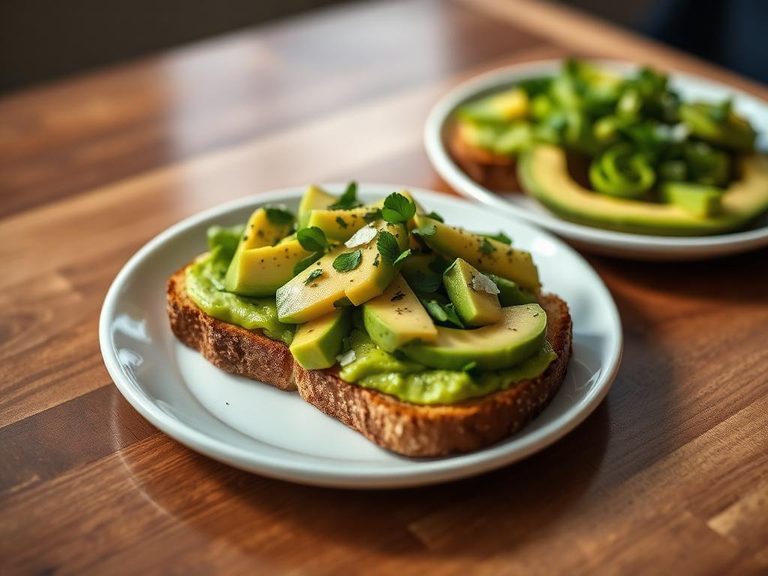
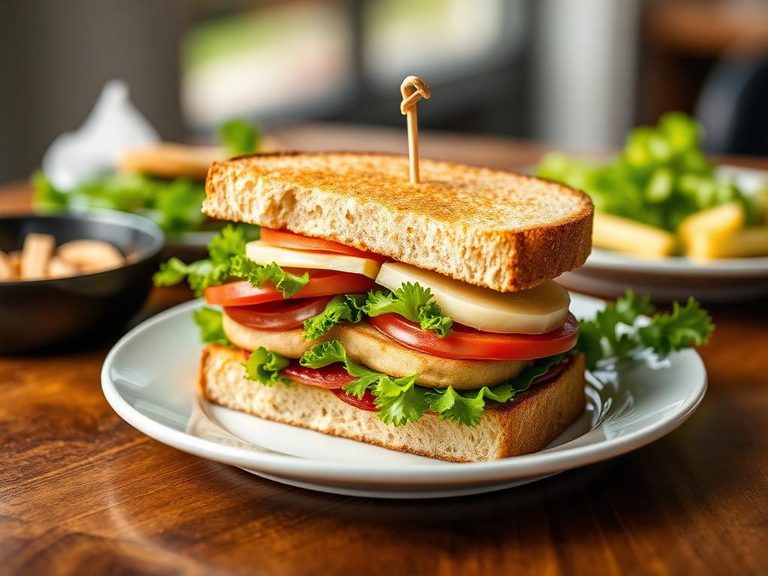
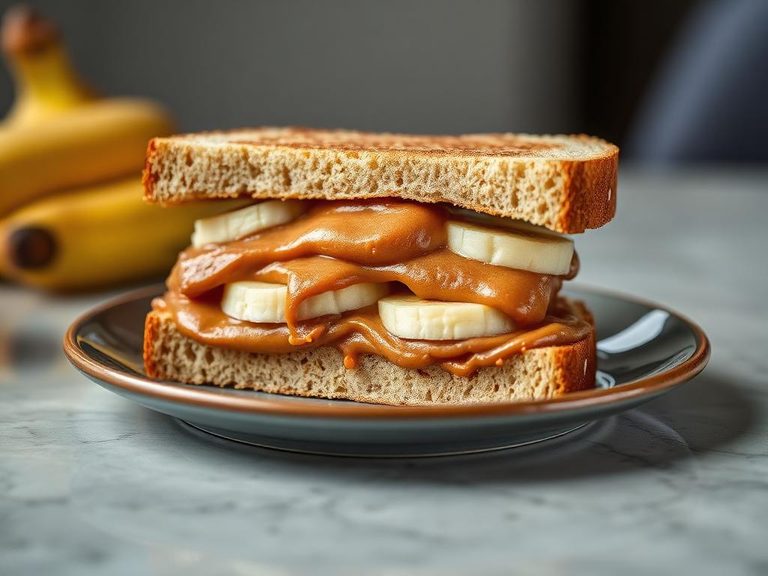
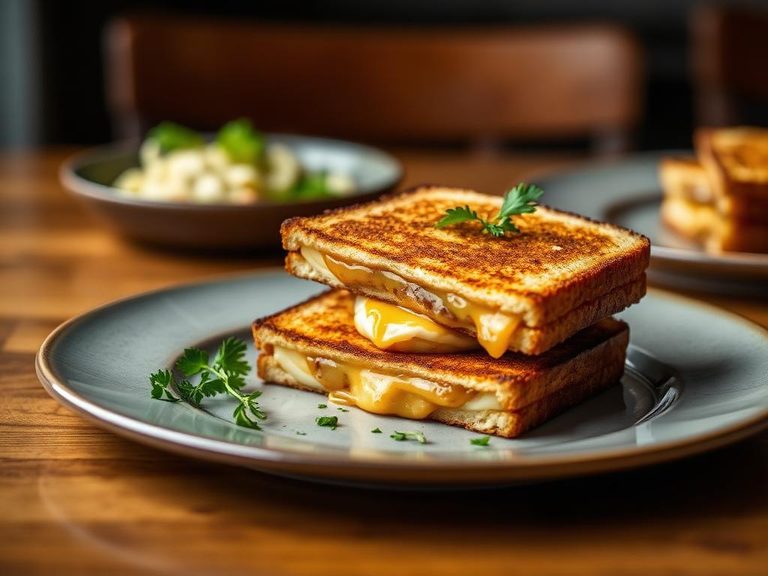


🌍 Where it's eaten
💡 Did you know?
The term 'multigrain' simply means the bread contains more than one type of grain, but it doesn't guarantee the grains are whole; this reduced-calorie version is specifically engineered to maximize fiber and minimize energy density, often using ingredients like oat bran and flaxseed.
Full nutrition (USDA data · scales with serving)
| Water | 41.9 g |
| Energy | 207 kcal |
| Protein | 8.9 g |
| Total lipid (fat) | 2.5 g |
| Carbohydrate, by difference | 44.9 g |
| Fiber, total dietary | 10.7 g |
| Total Sugars | 4.6 g |
| Calcium, Ca | 93.0 mg |
| Iron, Fe | 3.4 mg |
| Magnesium, Mg | 41.0 mg |
| Phosphorus, P | 148 mg |
| Potassium, K | 109 mg |
| Sodium, Na | 465 mg |
| Zinc, Zn | 1.5 mg |
| Copper, Cu | 0.35 mg |
| Selenium, Se | 23.4 ug |
| Vitamin C, total ascorbic acid | 0.50 mg |
| Thiamin | 0.41 mg |
| Riboflavin | 0.30 mg |
| Niacin | 3.9 mg |
| Vitamin B-6 | 0.08 mg |
| Folate, total | 95.0 ug |
| Folic acid | 59.0 ug |
| Folate, food | 35.0 ug |
| Folate, DFE | 136 ug |
| Choline, total | 16.4 mg |
| Vitamin B-12 | 0.27 ug |
| Vitamin B-12, added | 0.00 ug |
| Vitamin A, RAE | 0.00 ug |
| Retinol | 0.00 ug |
| Carotene, beta | 1.0 ug |
| Carotene, alpha | 0.00 ug |
| Cryptoxanthin, beta | 0.00 ug |
| Lycopene | 0.00 ug |
| Lutein + zeaxanthin | 38.0 ug |
| Vitamin E (alpha-tocopherol) | 0.23 mg |
| Vitamin E, added | 0.00 mg |
| Vitamin D (D2 + D3) | 0.00 ug |
| Vitamin K (phylloquinone) | 0.60 ug |
| Alcohol, ethyl | 0.00 g |
| Caffeine | 0.00 mg |
| Theobromine | 0.00 mg |
Fat & fatty acid profile (per 100g)
| Fatty acids, total saturated | 0.55 g |
| SFA 4:0 | 0.00 g |
| SFA 6:0 | 0.00 g |
| SFA 8:0 | 0.00 g |
| SFA 10:0 | 0.00 g |
| SFA 12:0 | 0.00 g |
| SFA 14:0 | 0.01 g |
| SFA 16:0 | 0.33 g |
| SFA 18:0 | 0.21 g |
| Fatty acids, total monounsaturated | 1.1 g |
| MUFA 16:1 | 0.02 g |
| MUFA 18:1 | 1.0 g |
| MUFA 20:1 | 0.00 g |
| MUFA 22:1 | 0.00 g |
| Fatty acids, total polyunsaturated | 0.61 g |
| PUFA 18:2 | 0.58 g |
| PUFA 18:3 | 0.03 g |
| PUFA 18:4 | 0.00 g |
| PUFA 20:4 | 0.00 g |
| PUFA 20:5 n-3 (EPA) | 0.00 g |
| PUFA 22:5 n-3 (DPA) | 0.00 g |
| PUFA 22:6 n-3 (DHA) | 0.00 g |
| Cholesterol | 0.00 mg |
Amino acid profile (per 100g)
Estimated from Bread, salvadoran sweet cheese (quesadilla salvadorena) — USDA does not publish this profile for Bread.
| Tryptophan | 0.07 g |
| Threonine | 0.21 g |
| Isoleucine | 0.30 g |
| Leucine | 0.65 g |
| Lysine | 0.50 g |
| Methionine | 0.28 g |
| Cystine | 0.06 g |
| Phenylalanine | 0.37 g |
| Tyrosine | 0.23 g |
| Valine | 0.43 g |
| Arginine | 0.25 g |
| Histidine | 0.15 g |
| Alanine | 0.36 g |
| Aspartic acid | 0.59 g |
| Glutamic acid | 1.3 g |
| Glycine | 0.20 g |
| Proline | 0.83 g |
| Serine | 0.45 g |
| Hydroxyproline | 0.00 g |
FAQ
Is this bread good for weight loss?
Yes, its high fiber and protein content can promote fullness and help control appetite, making it a supportive choice within a calorie-controlled diet.
How does it differ from regular whole wheat bread?
Multigrain bread incorporates a variety of grains (like oats, barley, rye, and seeds) for a more complex nutrient profile and texture, whereas whole wheat bread uses only wheat. This specific version is also formulated to be lower in calories and higher in fiber.
Can people with gluten intolerance eat this?
Most multigrain breads contain gluten from wheat, rye, or barley. Unless explicitly labeled 'gluten-free,' it is not safe for individuals with celiac disease or gluten sensitivity.
Nutrient density (calculated · NRF9.3)
Nutrient Rich Foods index: beneficial nutrients (protein, fiber, vitamins, minerals) minus saturated fat, added sugar & sodium, per 100 kcal.
NRF9.3 index — Fulgoni, Keast & Drewnowski, 2009. Computed from USDA nutrients.
Weight-loss friendliness (composite index)
Energy density 2.07 kcal/g · 17% calories from protein · 10.7 g fiber · 4.6 g sugar per 100 g.
Composite of energy density (Rolls et al., 1999), protein & fiber satiety, minus sugar. A calculated heuristic — ranks satiety-per-calorie, not a clinical measure.
Dietary load (calculated from USDA values)
Potential renal acid load. Positive = acid-forming, negative = alkaline-forming.
Sodium-to-potassium ratio: 4.27 (lower is better — aim for ≤ 1)
Sodium:potassium per WHO potassium guidance. Computed from USDA nutrients.