

Beverages, chocolate-flavor beverage mix for milk, powder, with added nutrients, prepared with whole milk
Whole food · Beverages

Photo: Wikipedia
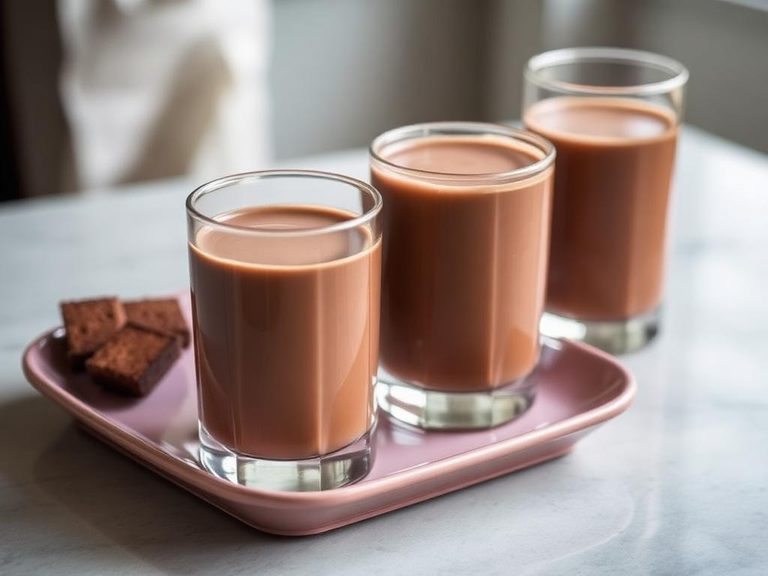
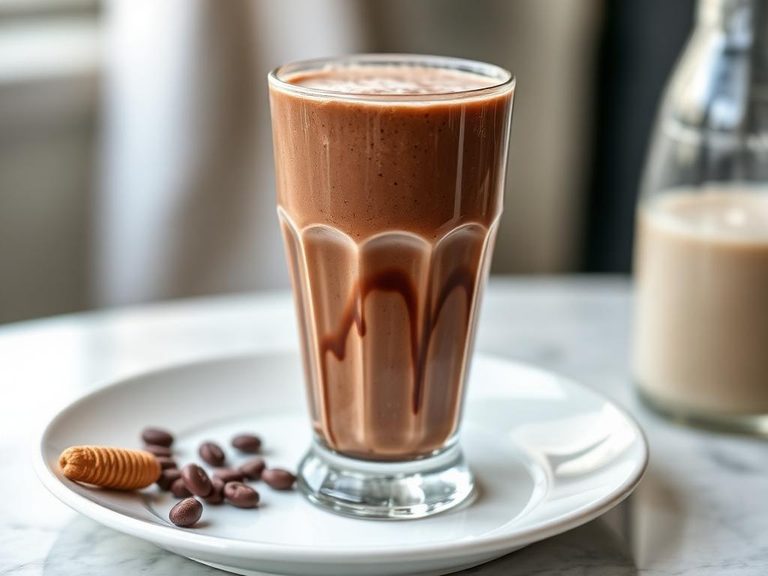
This is a powdered chocolate-flavor beverage mix designed to be blended with whole milk, creating a rich, creamy, and sweet drink. The final prepared beverage has a smooth, comforting texture with a classic chocolate milk taste. Nutritionally, it provides a moderate calorie boost with a balance of protein, carbohydrates, and fat from the milk base.
Calorie split: 15% protein · 53% carbs · 32% fat
↓ Full nutrition💚 Why it's loved
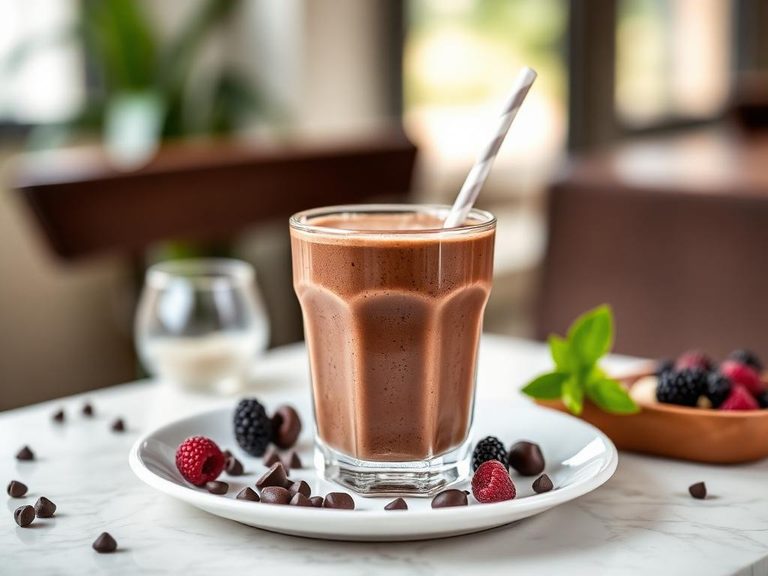
People love it for its nostalgic, comforting chocolate milk flavor and the simple pleasure of a warm or cold treat. It's a versatile base for smoothies, shakes, or even a flavor boost in coffee.
⚠️ Watch-outs & how to enjoy it better
The high sugar content (over 11g per 100g of prepared drink) can lead to blood-sugar spikes, and the mix may contain common allergens like soy lecithin. To counteract sugar spikes, pair it with a source of fiber or protein (like a handful of nuts), and practice portion control by enjoying it as an occasional treat rather than a daily staple.
Key benefits
- Provides calcium and vitamin D from the whole milk base
- Offers a quick source of energy from carbohydrates
- Contains protein for muscle maintenance
- Convenient and consistent chocolate flavor
- Often fortified with additional vitamins and minerals
🍽️ Popular dishes


🌍 Where it's eaten
💡 Did you know?
The first known chocolate drink was created by the ancient Mesoamericans, but the modern powdered mix for chocolate milk was popularized in the early 20th century as a convenient way to make the treat at home.
Full nutrition (USDA data · scales with serving)
| Water | 80.9 g |
| Energy | 89.0 kcal |
| Energy | 373 kj |
| Protein | 3.3 g |
| Total lipid (fat) | 3.2 g |
| Ash | 0.77 g |
| Carbohydrate, by difference | 11.9 g |
| Fiber, total dietary | 0.40 g |
| Total Sugars | 11.6 g |
| Calcium, Ca | 141 mg |
| Iron, Fe | 0.03 mg |
| Magnesium, Mg | 14.0 mg |
| Phosphorus, P | 84.0 mg |
| Potassium, K | 144 mg |
| Sodium, Na | 50.0 mg |
| Zinc, Zn | 0.91 mg |
| Copper, Cu | 0.10 mg |
| Manganese, Mn | 0.06 mg |
| Selenium, Se | 3.5 ug |
| Vitamin C, total ascorbic acid | 2.3 mg |
| Thiamin | 0.04 mg |
| Riboflavin | 0.16 mg |
| Niacin | 0.10 mg |
| Pantothenic acid | 0.34 mg |
| Vitamin B-6 | 0.11 mg |
| Folate, total | 5.0 ug |
| Folic acid | 0.00 ug |
| Folate, food | 5.0 ug |
| Folate, DFE | 5.0 ug |
| Choline, total | 13.4 mg |
| Vitamin B-12 | 0.41 ug |
| Vitamin B-12, added | 0.00 ug |
| Vitamin A, RAE | 42.0 ug |
| Retinol | 41.0 ug |
| Carotene, beta | 6.0 ug |
| Carotene, alpha | 0.00 ug |
| Cryptoxanthin, beta | 0.00 ug |
| Vitamin A, IU | 148 iu |
| Lycopene | 0.00 ug |
| Lutein + zeaxanthin | 0.00 ug |
| Vitamin E (alpha-tocopherol) | 0.07 mg |
| Vitamin E, added | 0.00 mg |
| Vitamin D (D2 + D3), International Units | 47.0 iu |
| Vitamin D (D2 + D3) | 1.2 ug |
| Vitamin K (phylloquinone) | 0.30 ug |
| Alcohol, ethyl | 0.00 g |
| Caffeine | 1.0 mg |
| Theobromine | 23.0 mg |
Fat & fatty acid profile (per 100g)
| Fatty acids, total saturated | 1.9 g |
| SFA 4:0 | 0.07 g |
| SFA 6:0 | 0.07 g |
| SFA 8:0 | 0.07 g |
| SFA 10:0 | 0.07 g |
| SFA 12:0 | 0.07 g |
| SFA 14:0 | 0.27 g |
| SFA 16:0 | 0.85 g |
| SFA 18:0 | 0.43 g |
| Fatty acids, total monounsaturated | 0.74 g |
| MUFA 16:1 | 0.00 g |
| MUFA 18:1 | 0.74 g |
| MUFA 20:1 | 0.00 g |
| MUFA 22:1 | 0.00 g |
| Fatty acids, total polyunsaturated | 0.18 g |
| PUFA 18:2 | 0.11 g |
| PUFA 18:3 | 0.07 g |
| PUFA 18:4 | 0.00 g |
| PUFA 20:4 | 0.00 g |
| PUFA 20:5 n-3 (EPA) | 0.00 g |
| PUFA 22:5 n-3 (DPA) | 0.00 g |
| PUFA 22:6 n-3 (DHA) | 0.00 g |
| Cholesterol | 10.0 mg |
Amino acid profile (per 100g)
Estimated from Beverages, carbonated, tonic water — USDA does not publish this profile for Beverages.
| Tryptophan | 0.00 g |
| Threonine | 0.00 g |
| Isoleucine | 0.00 g |
| Leucine | 0.00 g |
| Lysine | 0.00 g |
| Methionine | 0.00 g |
| Cystine | 0.00 g |
| Phenylalanine | 0.00 g |
| Tyrosine | 0.00 g |
| Valine | 0.00 g |
| Arginine | 0.00 g |
| Histidine | 0.00 g |
| Alanine | 0.00 g |
| Aspartic acid | 0.00 g |
| Glutamic acid | 0.00 g |
| Glycine | 0.00 g |
| Proline | 0.00 g |
| Serine | 0.00 g |
FAQ
Is this the same as hot cocoa mix?
Not exactly. This mix is specifically formulated to be prepared with milk for a chocolate milk beverage, while hot cocoa mixes are often designed for hot water and may have a different sugar and fat content.
Can I use this mix with plant-based milk?
Yes, you can. The nutritional profile will change based on the milk alternative you choose, but the flavor will still be chocolatey.
Why does it have added nutrients?
Manufacturers often add vitamins and minerals like calcium, vitamin D, and iron to fortify the product, making it a more nutritionally complete beverage option.
Nutrient density (calculated · NRF9.3)
Nutrient Rich Foods index: beneficial nutrients (protein, fiber, vitamins, minerals) minus saturated fat, added sugar & sodium, per 100 kcal.
NRF9.3 index — Fulgoni, Keast & Drewnowski, 2009. Computed from USDA nutrients.
Weight-loss friendliness (composite index)
Energy density 0.89 kcal/g · 15% calories from protein · 0.4 g fiber · 11.6 g sugar per 100 g.
Composite of energy density (Rolls et al., 1999), protein & fiber satiety, minus sugar. A calculated heuristic — ranks satiety-per-calorie, not a clinical measure.
Dietary load (calculated from USDA values)
Potential renal acid load. Positive = acid-forming, negative = alkaline-forming.
Sodium-to-potassium ratio: 0.35 (lower is better — aim for ≤ 1)
Sodium:potassium per WHO potassium guidance. Computed from USDA nutrients.