

Beverages, chocolate-flavor beverage mix for milk, powder, with added nutrients
Whole food · Beverages

Photo: Wikipedia
This is a powdered mix designed to be stirred into milk, creating a rich, sweet chocolate-flavored beverage. It typically has a fine, granular texture that dissolves easily, leaving a smooth, creamy drink with a classic cocoa taste. Nutritionally, it's a high-carbohydrate, high-sugar product, providing a quick source of energy at around 400 calories per 100g.
Calorie split: 5% protein · 90% carbs · 5% fat
↓ Full nutrition💚 Why it's loved
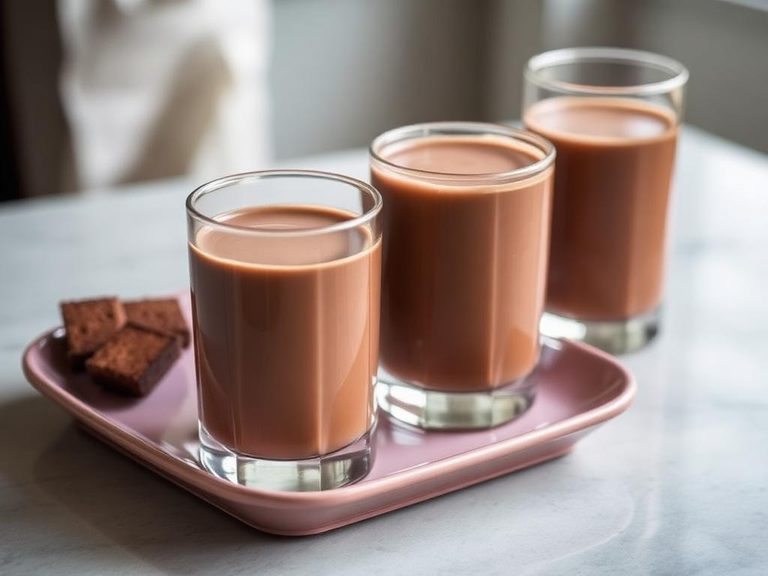
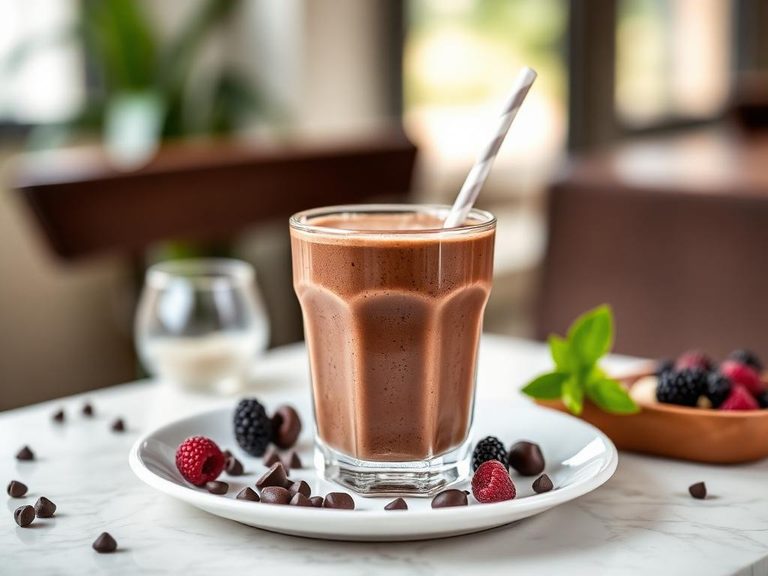
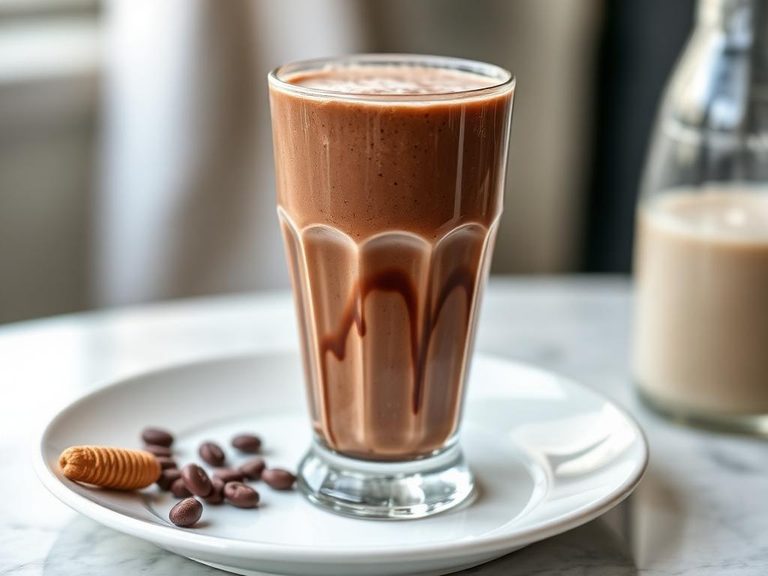
People love it for its comforting, nostalgic taste that evokes childhood and simple pleasures. Its versatility is a huge draw—it can be mixed into milk for a drink, blended into smoothies, or even used as a dry ingredient in baking for a chocolate boost.
⚠️ Watch-outs & how to enjoy it better
The primary downside is its very high sugar content, which can lead to rapid blood-sugar spikes and crashes. It is also low in protein and healthy fats, making it an unbalanced snack on its own. To counteract this, always pair it with a source of protein (like Greek yogurt or nuts) or healthy fat (like a handful of almonds) to slow sugar absorption and increase satiety. Practicing strict portion control (e.g., using one level scoop instead of two) is also key.
Key benefits
- Provides a quick, convenient source of energy.
- Fortified with vitamins and minerals for added nutritional value.
- Offers a consistent and familiar chocolate flavor.
- Simple to prepare with just milk and stirring.
- Can be a palatable way to increase calorie intake.
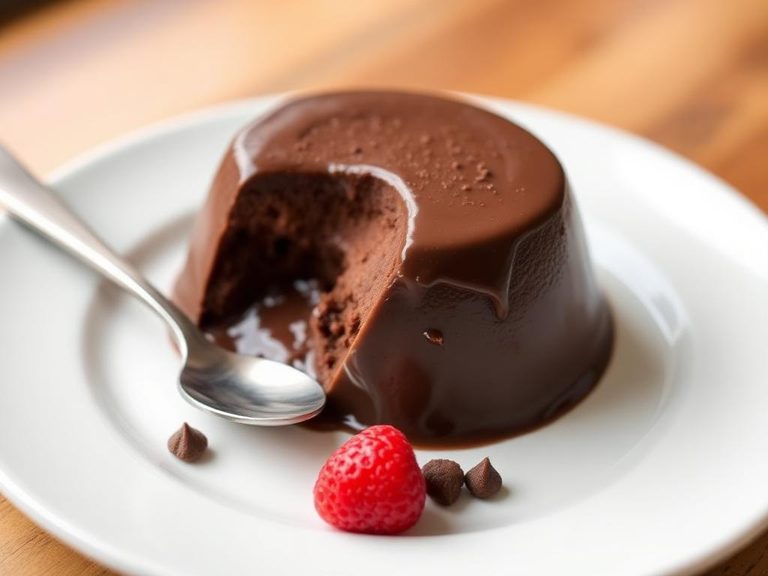
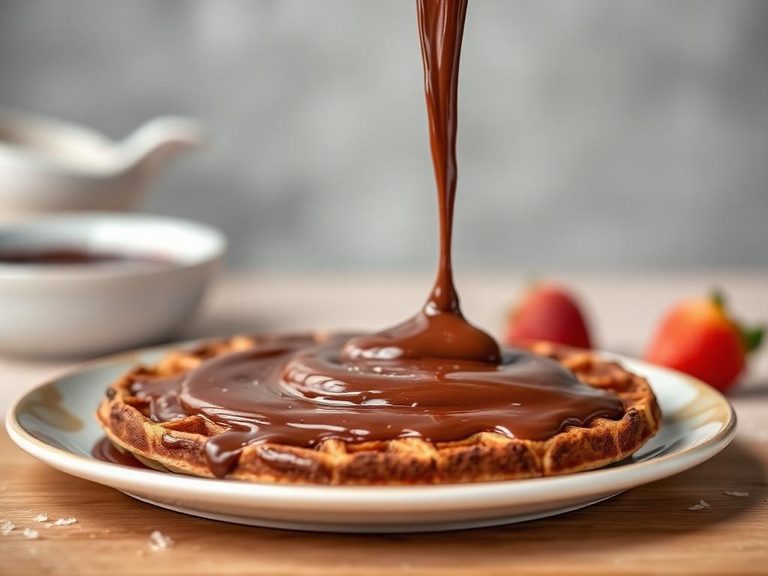
🍽️ Popular dishes
🌍 Where it's eaten
💡 Did you know?
Many popular chocolate beverage mixes were originally marketed in the early 20th century as health tonics or medicinal foods, emphasizing their added nutrients like iron and calcium.
Full nutrition (USDA data · scales with serving)
| Water | 1.1 g |
| Energy | 400 kcal |
| Energy | 1673 kj |
| Protein | 4.5 g |
| Total lipid (fat) | 2.3 g |
| Ash | 1.8 g |
| Carbohydrate, by difference | 90.3 g |
| Fiber, total dietary | 4.5 g |
| Total Sugars | 81.8 g |
| Calcium, Ca | 455 mg |
| Iron, Fe | 0.00 mg |
| Magnesium, Mg | 53.0 mg |
| Phosphorus, P | 86.0 mg |
| Potassium, K | 280 mg |
| Sodium, Na | 136 mg |
| Zinc, Zn | 6.8 mg |
| Copper, Cu | 0.91 mg |
| Manganese, Mn | 0.71 mg |
| Selenium, Se | 1.9 ug |
| Vitamin C, total ascorbic acid | 27.3 mg |
| Thiamin | 0.01 mg |
| Riboflavin | 0.06 mg |
| Niacin | 0.20 mg |
| Pantothenic acid | 0.00 mg |
| Vitamin B-6 | 0.91 mg |
| Folate, total | 4.0 ug |
| Folic acid | 0.00 ug |
| Folate, food | 4.0 ug |
| Folate, DFE | 4.0 ug |
| Choline, total | 3.3 mg |
| Vitamin B-12 | 0.00 ug |
| Vitamin B-12, added | 0.00 ug |
| Vitamin A, RAE | 0.00 ug |
| Retinol | 0.00 ug |
| Carotene, beta | 0.00 ug |
| Carotene, alpha | 0.00 ug |
| Cryptoxanthin, beta | 0.00 ug |
| Vitamin A, IU | 2.0 iu |
| Lycopene | 0.00 ug |
| Lutein + zeaxanthin | 0.00 ug |
| Vitamin E (alpha-tocopherol) | 0.04 mg |
| Vitamin E, added | 0.00 mg |
| Vitamin D (D2 + D3), International Units | 0.00 iu |
| Vitamin D (D2 + D3) | 0.00 ug |
| Vitamin K (phylloquinone) | 0.90 ug |
| Alcohol, ethyl | 0.00 g |
| Caffeine | 8.0 mg |
| Theobromine | 277 mg |
Fat & fatty acid profile (per 100g)
| Fatty acids, total saturated | 2.3 g |
| SFA 4:0 | 0.00 g |
| SFA 6:0 | 0.00 g |
| SFA 8:0 | 0.00 g |
| SFA 10:0 | 0.00 g |
| SFA 12:0 | 0.00 g |
| SFA 14:0 | 0.01 g |
| SFA 16:0 | 1.1 g |
| SFA 18:0 | 1.2 g |
| Fatty acids, total monounsaturated | 0.00 g |
| MUFA 16:1 | 0.00 g |
| MUFA 18:1 | 0.00 g |
| MUFA 20:1 | 0.00 g |
| MUFA 22:1 | 0.00 g |
| Fatty acids, total polyunsaturated | 0.00 g |
| PUFA 18:2 | 0.00 g |
| PUFA 18:3 | 0.00 g |
| PUFA 18:4 | 0.00 g |
| PUFA 20:4 | 0.00 g |
| PUFA 20:5 n-3 (EPA) | 0.00 g |
| PUFA 22:5 n-3 (DPA) | 0.00 g |
| PUFA 22:6 n-3 (DHA) | 0.00 g |
| Cholesterol | 0.00 mg |
Amino acid profile (per 100g)
Estimated from Beverages, carbonated, tonic water — USDA does not publish this profile for Beverages.
| Tryptophan | 0.00 g |
| Threonine | 0.00 g |
| Isoleucine | 0.00 g |
| Leucine | 0.00 g |
| Lysine | 0.00 g |
| Methionine | 0.00 g |
| Cystine | 0.00 g |
| Phenylalanine | 0.00 g |
| Tyrosine | 0.00 g |
| Valine | 0.00 g |
| Arginine | 0.00 g |
| Histidine | 0.00 g |
| Alanine | 0.00 g |
| Aspartic acid | 0.00 g |
| Glutamic acid | 0.00 g |
| Glycine | 0.00 g |
| Proline | 0.00 g |
| Serine | 0.00 g |
FAQ
Can I mix this with water instead of milk?
Yes, you can mix it with water, but the drink will be significantly thinner, less creamy, and lower in protein and calcium. The flavor will also be less rich.
Is this suitable for people with diabetes?
Due to its very high sugar content (over 80g per 100g), it is generally not recommended for individuals managing diabetes without strict portion control and medical advice, as it can cause rapid increases in blood glucose levels.
How does the nutrition change when mixed with milk?
Mixing with milk adds significant protein, calcium, and fat, making the overall drink more balanced and satiating. The total calories, carbs, and sugar will also increase based on the type and amount of milk used.
Nutrient density (calculated · NRF9.3)
Nutrient Rich Foods index: beneficial nutrients (protein, fiber, vitamins, minerals) minus saturated fat, added sugar & sodium, per 100 kcal.
NRF9.3 index — Fulgoni, Keast & Drewnowski, 2009. Computed from USDA nutrients.
Weight-loss friendliness (composite index)
Energy density 4.00 kcal/g · 5% calories from protein · 4.5 g fiber · 81.8 g sugar per 100 g.
Composite of energy density (Rolls et al., 1999), protein & fiber satiety, minus sugar. A calculated heuristic — ranks satiety-per-calorie, not a clinical measure.
Dietary load (calculated from USDA values)
Potential renal acid load. Positive = acid-forming, negative = alkaline-forming.
Sodium-to-potassium ratio: 0.49 (lower is better — aim for ≤ 1)
Sodium:potassium per WHO potassium guidance. Computed from USDA nutrients.