

Beef, neck bones
Common food
Beef neck bones are bony, meaty cuts from the cervical vertebrae, prized for their rich, beefy flavor and a texture that transforms from tough to succulent and gelatinous after slow cooking. They are a nutritional powerhouse, delivering a hefty 25.9g of protein per 100g with zero carbohydrates, making them a staple for high-protein, low-carb diets. The high fat content (16.46g) is largely rendered during cooking, contributing to a deeply savory, umami-rich broth.
Calorie split: 41% protein · 0% carbs · 59% fat
↓ Full nutrition💚 Why it's loved
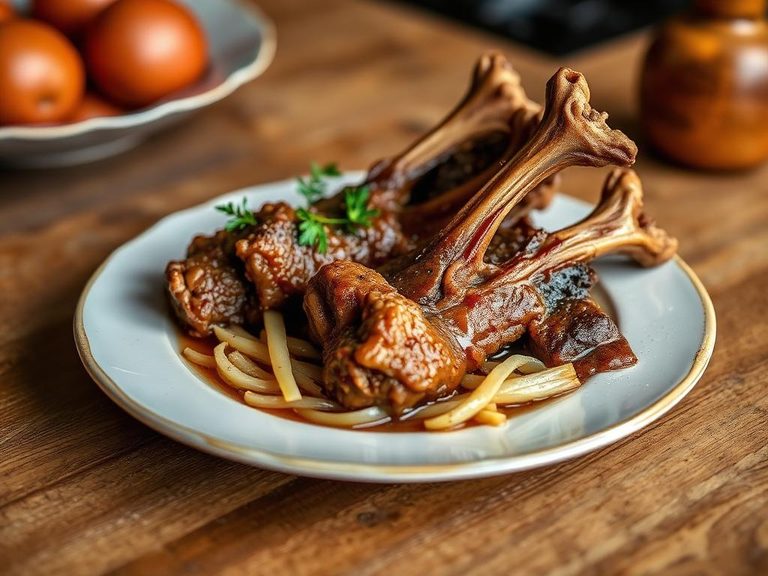
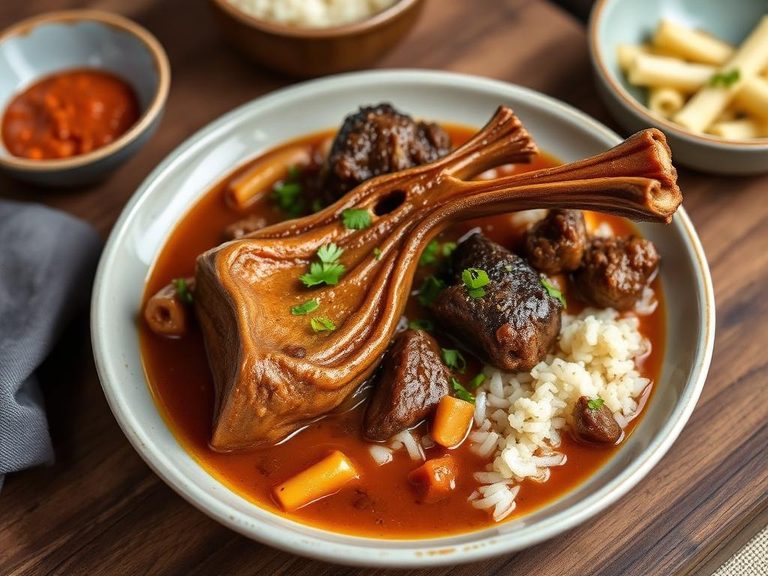
People love beef neck bones for their unparalleled ability to create deep, savory, and gelatinous broths and stews that form the soul of comfort food across many cultures. Their high meat-to-bone ratio and connective tissue make them ideal for slow-cooking, resulting in tender, fall-off-the-bone meat that infuses dishes with rich flavor.
⚠️ Watch-outs & how to enjoy it better
The high fat and calorie density may be a concern for those monitoring saturated fat intake, and the bones can be messy to eat, requiring careful handling. To counteract the richness, pair the meat with high-fiber vegetables like collard greens or cabbage, and use a spoon to skim excess fat from the surface of broths and stews before serving.
Key benefits
- Excellent source of complete protein for muscle maintenance
- Rich in collagen and gelatin, which support joint and gut health
- Provides essential minerals like iron, zinc, and phosphorus
- Naturally carbohydrate-free, suitable for ketogenic and carnivore diets
- Yields a nutrient-dense, flavorful bone broth when simmered
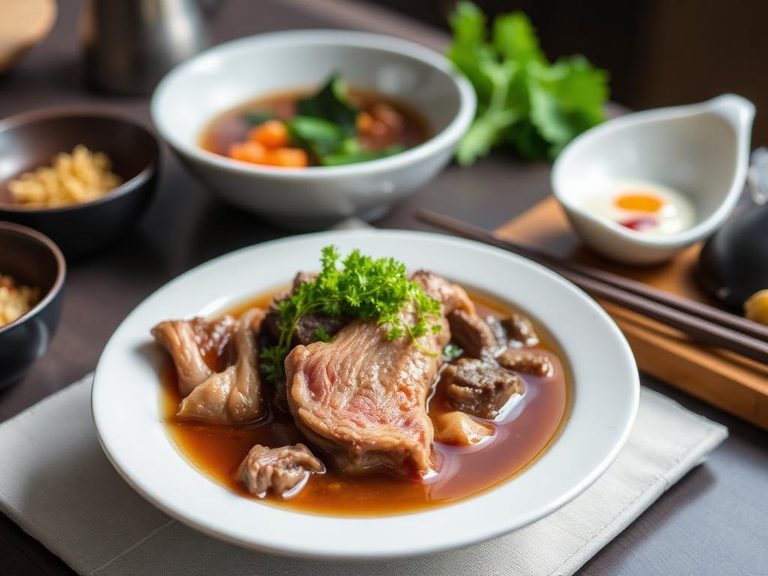
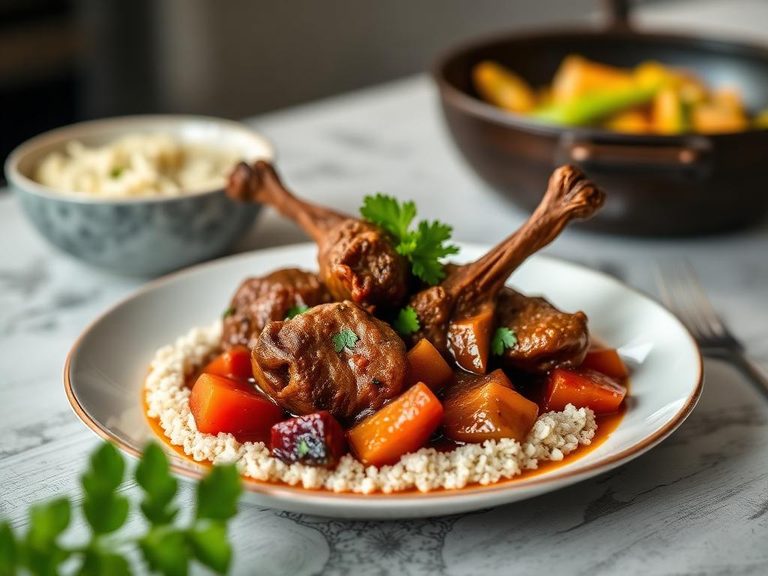
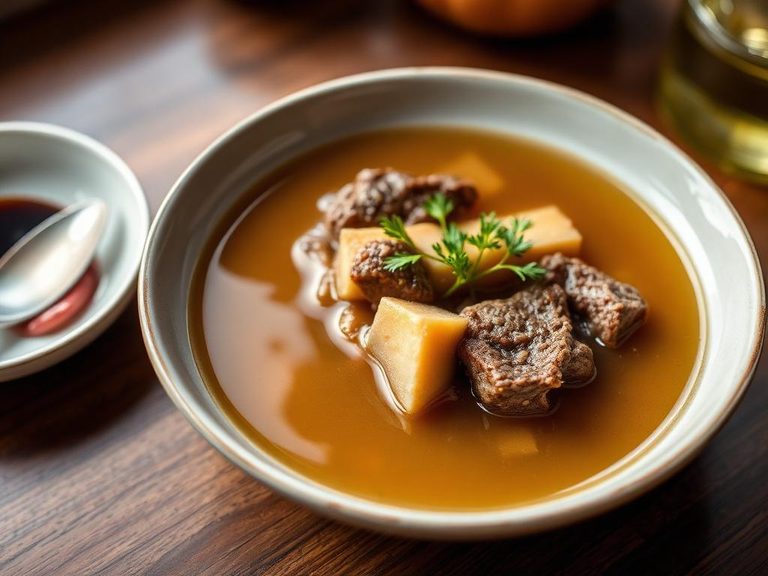
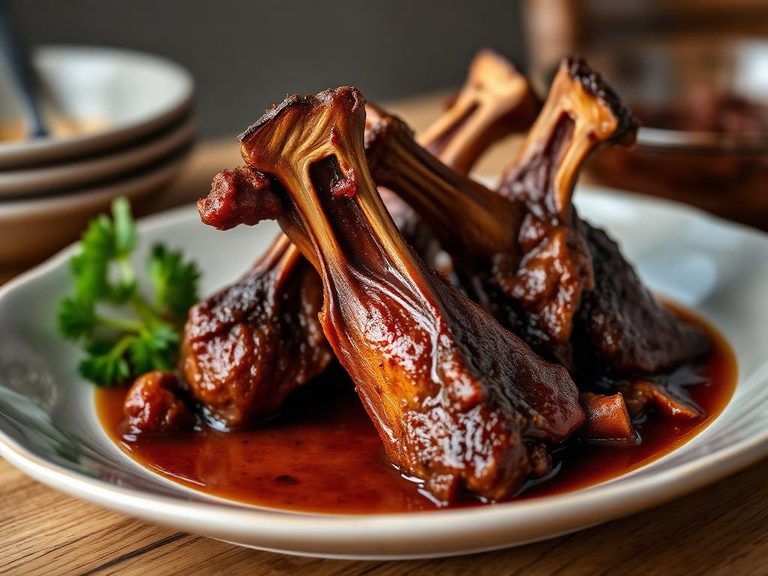
🍽️ Popular dishes
🌍 Where it's eaten
💡 Did you know?
The 'neck' in beef neck bones refers to the animal's cervical vertebrae; a single neck bone is anatomically complex, featuring multiple processes that create pockets perfect for trapping flavorful braising liquids and rendered fat.
Full nutrition (USDA data · scales with serving)
| Water | 56.5 g |
| Energy | 257 kcal |
| Protein | 25.9 g |
| Total lipid (fat) | 16.5 g |
| Carbohydrate, by difference | 0.00 g |
| Fiber, total dietary | 0.00 g |
| Total Sugars | 0.00 g |
| Calcium, Ca | 13.0 mg |
| Iron, Fe | 2.2 mg |
| Magnesium, Mg | 20.0 mg |
| Phosphorus, P | 179 mg |
| Potassium, K | 269 mg |
| Sodium, Na | 357 mg |
| Zinc, Zn | 5.1 mg |
| Copper, Cu | 0.07 mg |
| Selenium, Se | 28.1 ug |
| Vitamin C, total ascorbic acid | 0.00 mg |
| Thiamin | 0.07 mg |
| Riboflavin | 0.19 mg |
| Niacin | 5.4 mg |
| Vitamin B-6 | 0.47 mg |
| Folate, total | 7.0 ug |
| Folic acid | 0.00 ug |
| Folate, food | 7.0 ug |
| Folate, DFE | 7.0 ug |
| Choline, total | 82.6 mg |
| Vitamin B-12 | 1.8 ug |
| Vitamin B-12, added | 0.00 ug |
| Vitamin A, RAE | 3.0 ug |
| Retinol | 3.0 ug |
| Carotene, beta | 0.00 ug |
| Carotene, alpha | 0.00 ug |
| Cryptoxanthin, beta | 0.00 ug |
| Lycopene | 0.00 ug |
| Lutein + zeaxanthin | 0.00 ug |
| Vitamin E (alpha-tocopherol) | 0.31 mg |
| Vitamin E, added | 0.00 mg |
| Vitamin D (D2 + D3) | 0.20 ug |
| Vitamin K (phylloquinone) | 1.4 ug |
| Alcohol, ethyl | 0.00 g |
| Caffeine | 0.00 mg |
| Theobromine | 0.00 mg |
Fat & fatty acid profile (per 100g)
| Fatty acids, total saturated | 6.7 g |
| SFA 4:0 | 0.00 g |
| SFA 6:0 | 0.00 g |
| SFA 8:0 | 0.00 g |
| SFA 10:0 | 0.02 g |
| SFA 12:0 | 0.02 g |
| SFA 14:0 | 0.48 g |
| SFA 16:0 | 3.8 g |
| SFA 18:0 | 2.2 g |
| Fatty acids, total monounsaturated | 7.3 g |
| MUFA 16:1 | 0.59 g |
| MUFA 18:1 | 6.6 g |
| MUFA 20:1 | 0.03 g |
| MUFA 22:1 | 0.00 g |
| Fatty acids, total polyunsaturated | 0.73 g |
| PUFA 18:2 | 0.57 g |
| PUFA 18:3 | 0.09 g |
| PUFA 18:4 | 0.00 g |
| PUFA 20:4 | 0.04 g |
| PUFA 20:5 n-3 (EPA) | 0.00 g |
| PUFA 22:5 n-3 (DPA) | 0.01 g |
| PUFA 22:6 n-3 (DHA) | 0.00 g |
| Cholesterol | 86.0 mg |
Amino acid profile (per 100g)
Estimated from Beef, variety meats and by-products, mechanically separated beef, raw — USDA does not publish this profile for Beef.
| Tryptophan | 0.17 g |
| Threonine | 0.47 g |
| Isoleucine | 0.58 g |
| Leucine | 1.2 g |
| Lysine | 1.2 g |
| Methionine | 0.43 g |
| Cystine | 0.23 g |
| Phenylalanine | 0.64 g |
| Tyrosine | 0.38 g |
| Valine | 0.92 g |
| Arginine | 1.2 g |
| Histidine | 0.44 g |
| Alanine | 1.0 g |
| Aspartic acid | 1.3 g |
| Glutamic acid | 2.1 g |
| Glycine | 1.2 g |
| Proline | 0.92 g |
| Serine | 0.57 g |
FAQ
Are beef neck bones the same as oxtail?
No. Oxtail comes from the tail of the cow and has a central bone with a ring of meat. Neck bones are from the cervical vertebrae and have a more irregular, bony structure with meat attached in various places.
How do I get the most meat off the bone?
Slow cooking is key. Braise, stew, or pressure cook the neck bones for 2-3 hours (or 45-60 minutes in a pressure cooker) until the connective tissue breaks down and the meat becomes tender enough to pull away easily with a fork.
Is the broth from neck bones nutritious?
Yes, the broth is rich in minerals like calcium, magnesium, and phosphorus extracted from the bones, as well as collagen and gelatin from the connective tissues, making it a nutrient-dense base for soups and sauces.
Nutrient density (calculated · NRF9.3)
Nutrient Rich Foods index: beneficial nutrients (protein, fiber, vitamins, minerals) minus saturated fat, added sugar & sodium, per 100 kcal.
NRF9.3 index — Fulgoni, Keast & Drewnowski, 2009. Computed from USDA nutrients.
Weight-loss friendliness (composite index)
Energy density 2.57 kcal/g · 40% calories from protein · 0.0 g fiber · 0.0 g sugar per 100 g.
Composite of energy density (Rolls et al., 1999), protein & fiber satiety, minus sugar. A calculated heuristic — ranks satiety-per-calorie, not a clinical measure.
Dietary load (calculated from USDA values)
Potential renal acid load. Positive = acid-forming, negative = alkaline-forming.
Sodium-to-potassium ratio: 1.33 (lower is better — aim for ≤ 1)
Sodium:potassium per WHO potassium guidance. Computed from USDA nutrients.