

Beef, dried, chipped, cooked in fat
Common food

Photo: Wikipedia
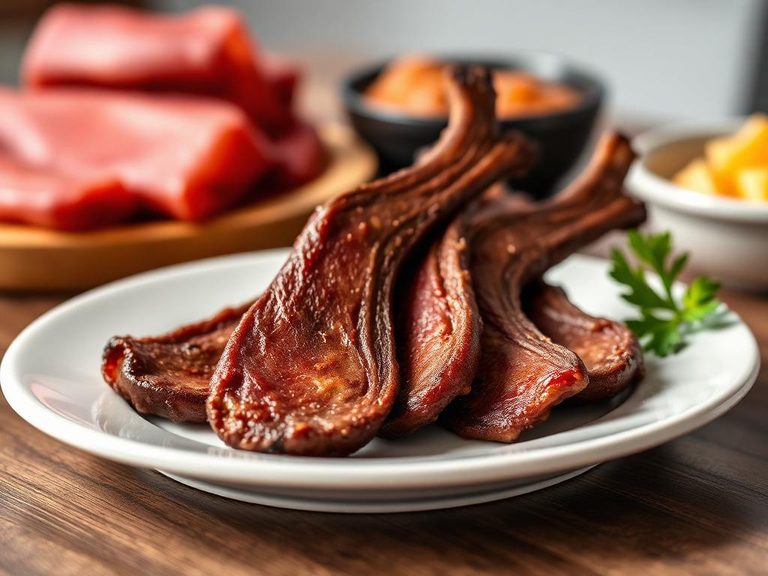
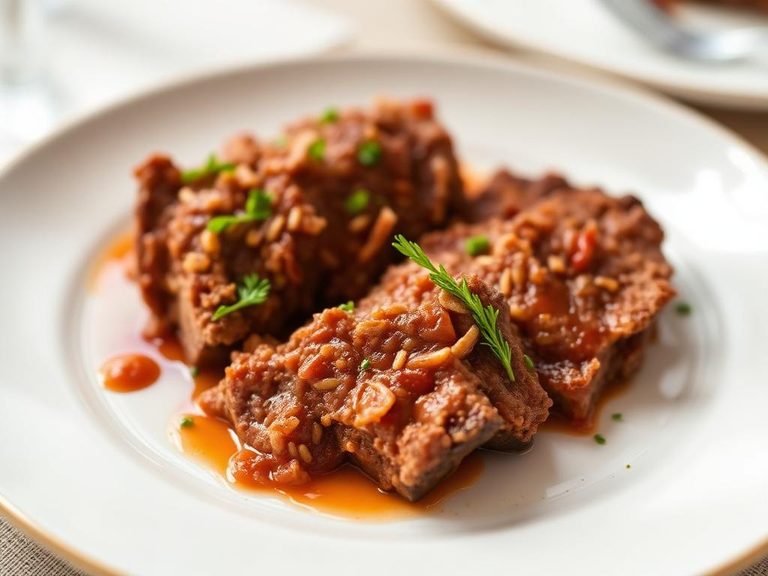
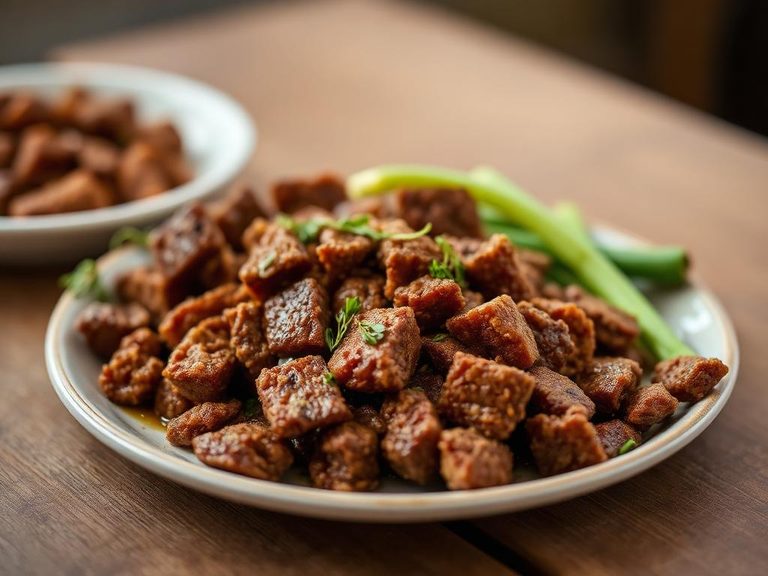
Beef, dried, chipped, cooked in fat is a shelf-stable, intensely savory ingredient made by dehydrating thin slices of beef and then frying them in their own rendered fat. The result is a crispy, chewy, and deeply umami-rich product with a concentrated beef flavor. Nutritionally, it is a powerhouse of protein with a moderate calorie count from the added fat.
Calorie split: 50% protein · 4% carbs · 45% fat
↓ Full nutrition💚 Why it's loved
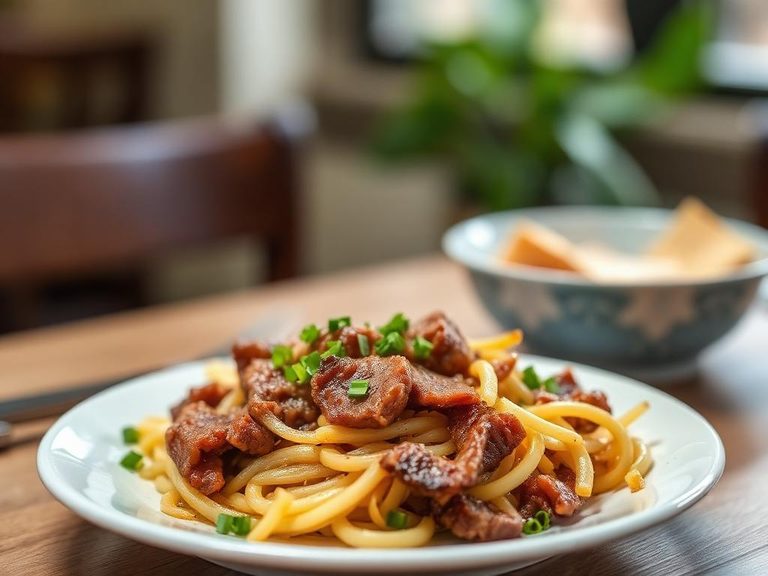
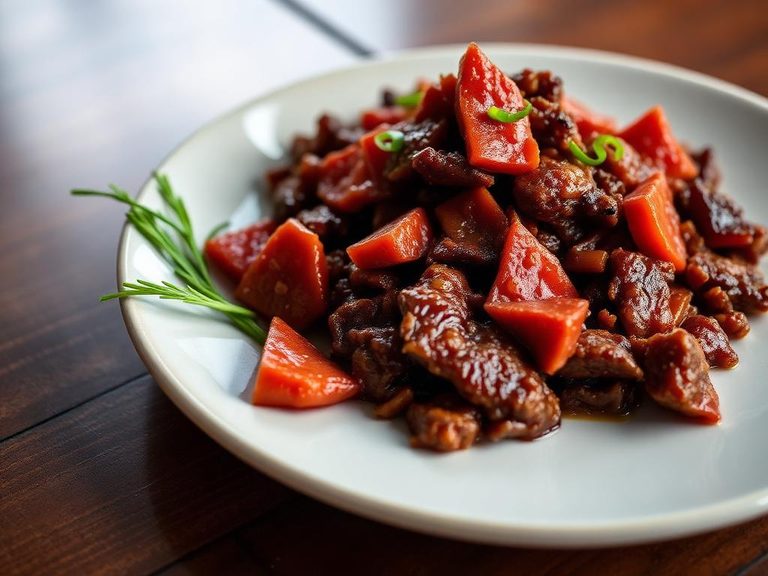
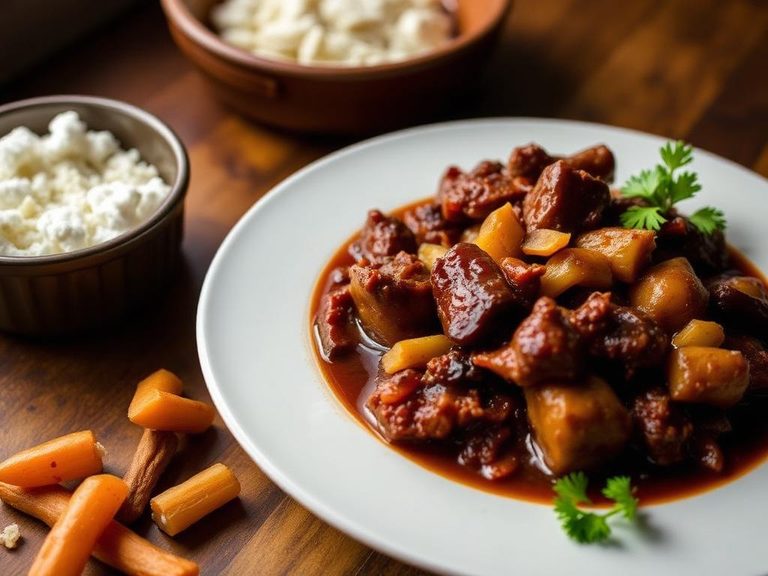
People love it for its incredible umami depth and satisfying, crispy-chewy texture that elevates soups, stews, and rice dishes. It's a beloved pantry staple in many cultures for its convenience and ability to add a profound meaty flavor without hours of cooking.
⚠️ Watch-outs & how to enjoy it better
The high sodium content from the curing and drying process can be a concern for those monitoring salt intake, and the added fat increases the calorie density. To counteract this, use it as a flavoring agent rather than the main protein, rinse briefly before use if possible, and pair it with plenty of fresh vegetables and unsalted broth.
Key benefits
- Excellent source of complete protein for muscle maintenance
- Highly shelf-stable and requires no refrigeration
- Provides a quick, energy-dense calorie source
- Rich in iron and B vitamins from the beef
🍽️ Popular dishes
🌍 Where it's eaten
💡 Did you know?
The process of cooking the dried chips in fat was a traditional preservation method that created a product similar to modern confit, where the fat sealed out air and moisture, allowing the meat to last for months without spoiling.
Full nutrition (USDA data · scales with serving)
| Water | 48.6 g |
| Energy | 225 kcal |
| Protein | 28.1 g |
| Total lipid (fat) | 11.3 g |
| Carbohydrate, by difference | 2.5 g |
| Fiber, total dietary | 0.00 g |
| Total Sugars | 2.4 g |
| Calcium, Ca | 7.0 mg |
| Iron, Fe | 2.2 mg |
| Magnesium, Mg | 17.0 mg |
| Phosphorus, P | 164 mg |
| Potassium, K | 213 mg |
| Sodium, Na | 2523 mg |
| Zinc, Zn | 4.5 mg |
| Copper, Cu | 0.07 mg |
| Selenium, Se | 29.3 ug |
| Vitamin C, total ascorbic acid | 0.00 mg |
| Thiamin | 0.06 mg |
| Riboflavin | 0.15 mg |
| Niacin | 4.7 mg |
| Vitamin B-6 | 0.35 mg |
| Folate, total | 9.0 ug |
| Folic acid | 0.00 ug |
| Folate, food | 9.0 ug |
| Folate, DFE | 9.0 ug |
| Choline, total | 4.8 mg |
| Vitamin B-12 | 1.4 ug |
| Vitamin B-12, added | 0.00 ug |
| Vitamin A, RAE | 0.00 ug |
| Retinol | 0.00 ug |
| Carotene, beta | 0.00 ug |
| Carotene, alpha | 0.00 ug |
| Cryptoxanthin, beta | 0.00 ug |
| Lycopene | 0.00 ug |
| Lutein + zeaxanthin | 0.00 ug |
| Vitamin E (alpha-tocopherol) | 0.40 mg |
| Vitamin E, added | 0.00 mg |
| Vitamin D (D2 + D3) | 0.20 ug |
| Vitamin K (phylloquinone) | 1.2 ug |
| Alcohol, ethyl | 0.00 g |
| Caffeine | 0.00 mg |
| Theobromine | 0.00 mg |
Fat & fatty acid profile (per 100g)
| Fatty acids, total saturated | 4.6 g |
| SFA 4:0 | 0.00 g |
| SFA 6:0 | 0.00 g |
| SFA 8:0 | 0.00 g |
| SFA 10:0 | 0.01 g |
| SFA 12:0 | 0.02 g |
| SFA 14:0 | 0.19 g |
| SFA 16:0 | 2.8 g |
| SFA 18:0 | 1.6 g |
| Fatty acids, total monounsaturated | 5.1 g |
| MUFA 16:1 | 0.33 g |
| MUFA 18:1 | 4.6 g |
| MUFA 20:1 | 0.10 g |
| MUFA 22:1 | 0.00 g |
| Fatty acids, total polyunsaturated | 1.1 g |
| PUFA 18:2 | 1.0 g |
| PUFA 18:3 | 0.10 g |
| PUFA 18:4 | 0.00 g |
| PUFA 20:4 | 0.01 g |
| PUFA 20:5 n-3 (EPA) | 0.00 g |
| PUFA 22:5 n-3 (DPA) | 0.00 g |
| PUFA 22:6 n-3 (DHA) | 0.00 g |
| Cholesterol | 81.0 mg |
Amino acid profile (per 100g)
Estimated from Beef, variety meats and by-products, mechanically separated beef, raw — USDA does not publish this profile for Beef.
| Tryptophan | 0.17 g |
| Threonine | 0.47 g |
| Isoleucine | 0.58 g |
| Leucine | 1.2 g |
| Lysine | 1.2 g |
| Methionine | 0.43 g |
| Cystine | 0.23 g |
| Phenylalanine | 0.64 g |
| Tyrosine | 0.38 g |
| Valine | 0.92 g |
| Arginine | 1.2 g |
| Histidine | 0.44 g |
| Alanine | 1.0 g |
| Aspartic acid | 1.3 g |
| Glutamic acid | 2.1 g |
| Glycine | 1.2 g |
| Proline | 0.92 g |
| Serine | 0.57 g |
FAQ
How is this different from regular beef jerky?
Traditional jerky is typically just dried, while this product is specifically 'chipped' (thinly sliced) and then 'cooked in fat,' which adds calories, changes the texture to be more crispy or chewy, and enhances the savory flavor.
Is it safe to eat straight from the package?
Yes, it is fully cooked and preserved, making it safe to eat as a snack. However, its primary use is as a flavoring ingredient in cooked dishes.
How should I store it?
Store it in a cool, dry, and dark place in an airtight container. Due to the fat content, it can become rancid over time, so using it within a few months is ideal.
Nutrient density (calculated · NRF9.3)
Nutrient Rich Foods index: beneficial nutrients (protein, fiber, vitamins, minerals) minus saturated fat, added sugar & sodium, per 100 kcal.
NRF9.3 index — Fulgoni, Keast & Drewnowski, 2009. Computed from USDA nutrients.
Weight-loss friendliness (composite index)
Energy density 2.25 kcal/g · 50% calories from protein · 0.0 g fiber · 2.4 g sugar per 100 g.
Composite of energy density (Rolls et al., 1999), protein & fiber satiety, minus sugar. A calculated heuristic — ranks satiety-per-calorie, not a clinical measure.
Dietary load (calculated from USDA values)
Potential renal acid load. Positive = acid-forming, negative = alkaline-forming.
Sodium-to-potassium ratio: 11.85 (lower is better — aim for ≤ 1)
Sodium:potassium per WHO potassium guidance. Computed from USDA nutrients.