

Beef, dried, chipped, uncooked
Common food
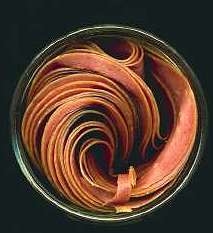
Photo: Wikipedia
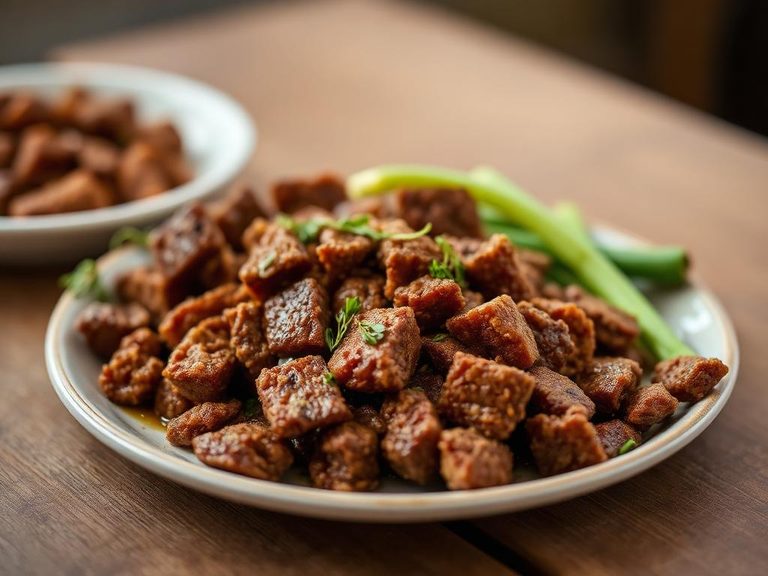
Beef, dried, chipped, uncooked is a shelf-stable, lean protein source made by slicing beef into thin strips and dehydrating it. It has a tough, chewy texture and a concentrated, savory, umami-rich beef flavor. Nutritionally, it's exceptionally high in protein (31.1g per 100g) with minimal fat and carbohydrates.
Calorie split: 81% protein · 7% carbs · 11% fat
↓ Full nutrition💚 Why it's loved
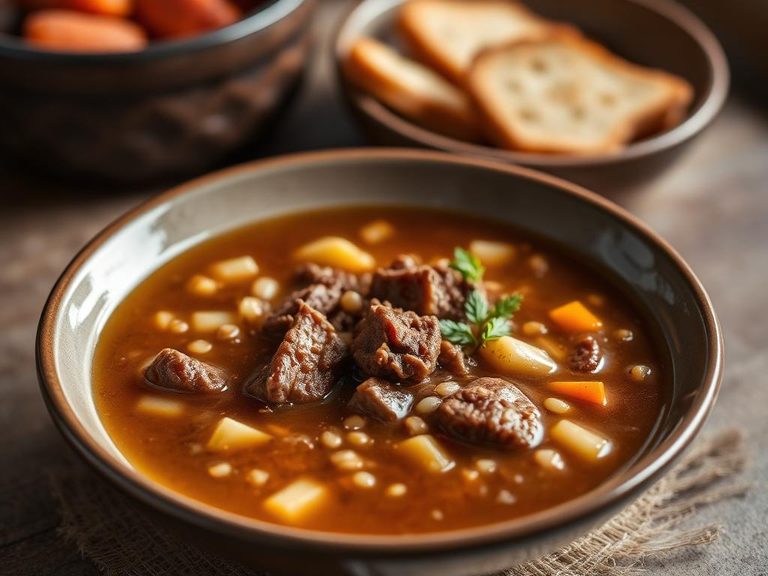
People love it for its intense, savory beef flavor and satisfying chew, making it a beloved trail snack and pantry staple. Its versatility allows it to be rehydrated into stews or eaten dry as a protein-packed, no-cook food.
⚠️ Watch-outs & how to enjoy it better
The primary downside is its very tough, jerky-like texture which can be hard on the jaw if not rehydrated. It is also often high in sodium from the curing process, which can be a concern for those monitoring salt intake. To counteract toughness, rehydrate it in broth or water before cooking. To manage sodium, look for low-sodium versions or rinse it briefly before use.
Key benefits
- Excellent source of high-quality, complete protein for muscle maintenance.
- Extremely lightweight and portable, ideal for camping or emergency kits.
- Very low in fat and carbohydrates, making it suitable for low-carb diets.
- Shelf-stable for months without refrigeration when stored properly.
- Concentrated flavor acts as a potent seasoning or snack.
🍽️ Popular dishes
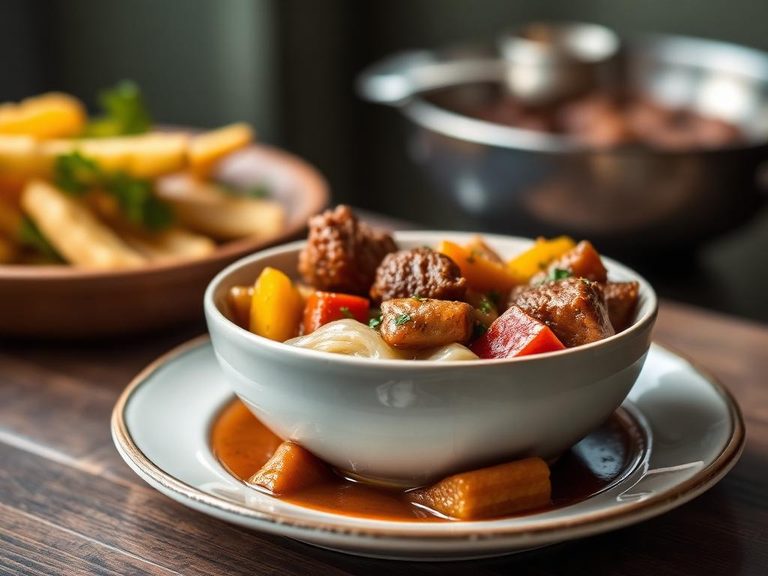
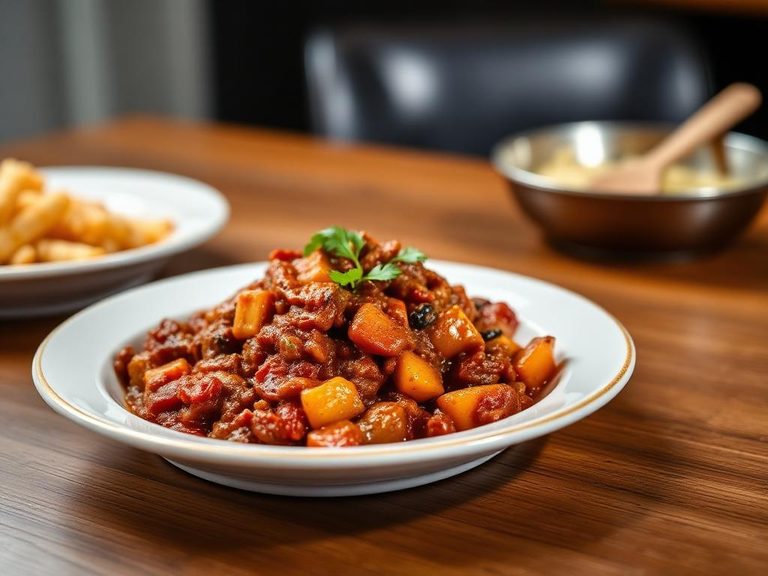
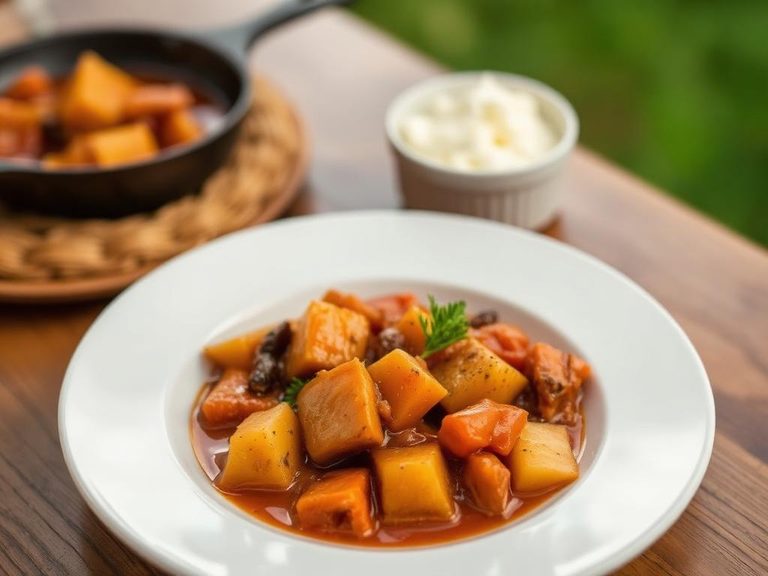
🌍 Where it's eaten
💡 Did you know?
This food is the direct ancestor of modern beef jerky and was a critical survival ration for explorers, pioneers, and soldiers for centuries due to its incredible weight-to-nutrition ratio.
Full nutrition (USDA data · scales with serving)
| Water | 53.8 g |
| Energy | 153 kcal |
| Protein | 31.1 g |
| Total lipid (fat) | 1.9 g |
| Carbohydrate, by difference | 2.8 g |
| Fiber, total dietary | 0.00 g |
| Total Sugars | 2.7 g |
| Calcium, Ca | 8.0 mg |
| Iron, Fe | 2.4 mg |
| Magnesium, Mg | 19.0 mg |
| Phosphorus, P | 181 mg |
| Potassium, K | 235 mg |
| Sodium, Na | 2790 mg |
| Zinc, Zn | 4.9 mg |
| Copper, Cu | 0.07 mg |
| Selenium, Se | 32.4 ug |
| Vitamin C, total ascorbic acid | 0.00 mg |
| Thiamin | 0.07 mg |
| Riboflavin | 0.16 mg |
| Niacin | 5.2 mg |
| Vitamin B-6 | 0.39 mg |
| Folate, total | 10.0 ug |
| Folic acid | 0.00 ug |
| Folate, food | 10.0 ug |
| Folate, DFE | 10.0 ug |
| Choline, total | 0.00 mg |
| Vitamin B-12 | 1.6 ug |
| Vitamin B-12, added | 0.00 ug |
| Vitamin A, RAE | 0.00 ug |
| Retinol | 0.00 ug |
| Carotene, beta | 0.00 ug |
| Carotene, alpha | 0.00 ug |
| Cryptoxanthin, beta | 0.00 ug |
| Lycopene | 0.00 ug |
| Lutein + zeaxanthin | 0.00 ug |
| Vitamin E (alpha-tocopherol) | 0.38 mg |
| Vitamin E, added | 0.00 mg |
| Vitamin D (D2 + D3) | 0.00 ug |
| Vitamin K (phylloquinone) | 1.3 ug |
| Alcohol, ethyl | 0.00 g |
| Caffeine | 0.00 mg |
| Theobromine | 0.00 mg |
Fat & fatty acid profile (per 100g)
| Fatty acids, total saturated | 0.95 g |
| SFA 4:0 | 0.00 g |
| SFA 6:0 | 0.00 g |
| SFA 8:0 | 0.00 g |
| SFA 10:0 | 0.00 g |
| SFA 12:0 | 0.00 g |
| SFA 14:0 | 0.07 g |
| SFA 16:0 | 0.59 g |
| SFA 18:0 | 0.29 g |
| Fatty acids, total monounsaturated | 0.84 g |
| MUFA 16:1 | 0.08 g |
| MUFA 18:1 | 0.76 g |
| MUFA 20:1 | 0.00 g |
| MUFA 22:1 | 0.00 g |
| Fatty acids, total polyunsaturated | 0.07 g |
| PUFA 18:2 | 0.06 g |
| PUFA 18:3 | 0.01 g |
| PUFA 18:4 | 0.00 g |
| PUFA 20:4 | 0.01 g |
| PUFA 20:5 n-3 (EPA) | 0.00 g |
| PUFA 22:5 n-3 (DPA) | 0.00 g |
| PUFA 22:6 n-3 (DHA) | 0.00 g |
| Cholesterol | 79.0 mg |
Amino acid profile (per 100g)
Estimated from Beef, variety meats and by-products, mechanically separated beef, raw — USDA does not publish this profile for Beef.
| Tryptophan | 0.17 g |
| Threonine | 0.47 g |
| Isoleucine | 0.58 g |
| Leucine | 1.2 g |
| Lysine | 1.2 g |
| Methionine | 0.43 g |
| Cystine | 0.23 g |
| Phenylalanine | 0.64 g |
| Tyrosine | 0.38 g |
| Valine | 0.92 g |
| Arginine | 1.2 g |
| Histidine | 0.44 g |
| Alanine | 1.0 g |
| Aspartic acid | 1.3 g |
| Glutamic acid | 2.1 g |
| Glycine | 1.2 g |
| Proline | 0.92 g |
| Serine | 0.57 g |
FAQ
How is this different from beef jerky?
Beef jerky is typically marinated in a seasoned solution (often with sugar) before drying, resulting in a more tender, flavored snack. Dried, chipped beef is usually just salted or cured and sliced thinner, intended more as an ingredient for cooking than a ready-to-eat snack.
How do I rehydrate it for cooking?
Soak the dried chips in warm water, broth, or other liquid for 30-60 minutes until pliable. The soaking liquid will become a flavorful stock you can use in the recipe. For stews, you can also add it directly to the pot and let it simmer for an extended period.
Is it safe to eat right out of the bag?
Yes, it is fully cooked and safe to eat uncooked, but its extremely tough and chewy texture makes it more enjoyable when rehydrated or added to a dish.
What's the best way to store it?
Keep it in a cool, dark, and dry place in an airtight container or sealed bag. For long-term storage (over a year), consider vacuum sealing and freezing it.
Nutrient density (calculated · NRF9.3)
Nutrient Rich Foods index: beneficial nutrients (protein, fiber, vitamins, minerals) minus saturated fat, added sugar & sodium, per 100 kcal.
NRF9.3 index — Fulgoni, Keast & Drewnowski, 2009. Computed from USDA nutrients.
Weight-loss friendliness (composite index)
Energy density 1.53 kcal/g · 81% calories from protein · 0.0 g fiber · 2.7 g sugar per 100 g.
Composite of energy density (Rolls et al., 1999), protein & fiber satiety, minus sugar. A calculated heuristic — ranks satiety-per-calorie, not a clinical measure.
Dietary load (calculated from USDA values)
Potential renal acid load. Positive = acid-forming, negative = alkaline-forming.
Sodium-to-potassium ratio: 11.87 (lower is better — aim for ≤ 1)
Sodium:potassium per WHO potassium guidance. Computed from USDA nutrients.