

Barley, hulled
Whole food · Cereal Grains and Pasta

Photo: Wikipedia
Hulled barley is a chewy, nutty whole grain with a satisfying, hearty texture that holds up beautifully in soups and stews. It boasts an impressive 17.3 grams of fiber per 100 grams, making it a standout for digestive health and sustained energy.
Calorie split: 14% protein · 81% carbs · 6% fat
↓ Full nutrition💚 Why it's loved
People love its robust, earthy flavor and pleasantly chewy bite, which adds wonderful texture to meals. Its incredible versatility allows it to shine in everything from hearty winter soups to refreshing grain salads.
⚠️ Watch-outs & how to enjoy it better
Its high fiber content can cause digestive discomfort like bloating for some, especially if not accustomed to it. To counteract this, start with small portions, increase intake gradually, and ensure you drink plenty of water. It also requires a longer cooking time than refined grains.
Key benefits
- Excellent source of dietary fiber for gut health.
- Provides plant-based protein and essential minerals.
- Low in fat and contains no added sugar.
- Helps promote a feeling of fullness and satiety.
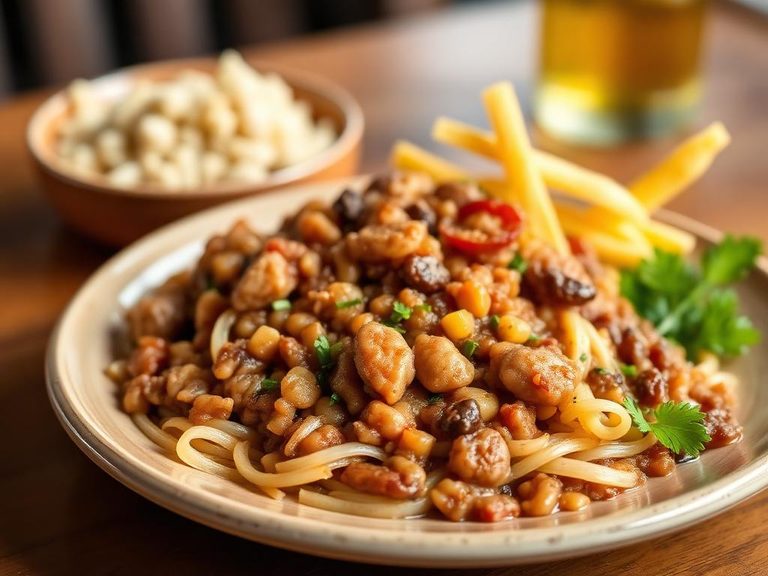
🍽️ Popular dishes
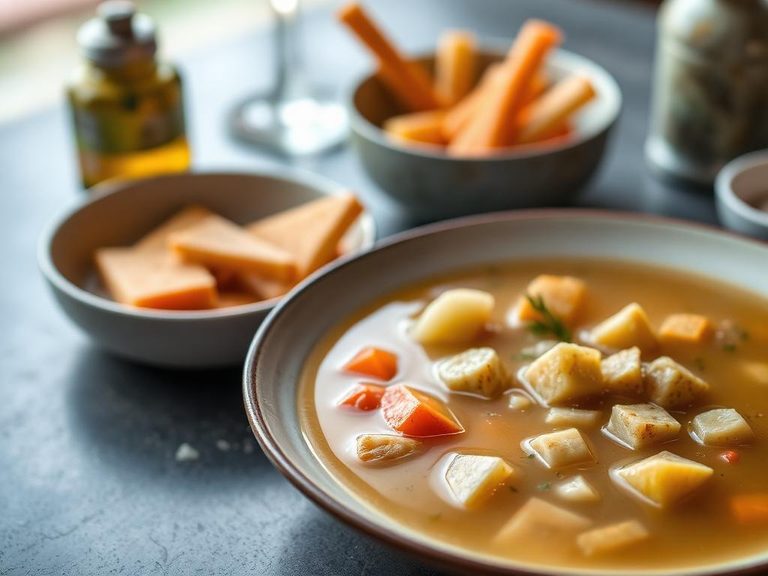
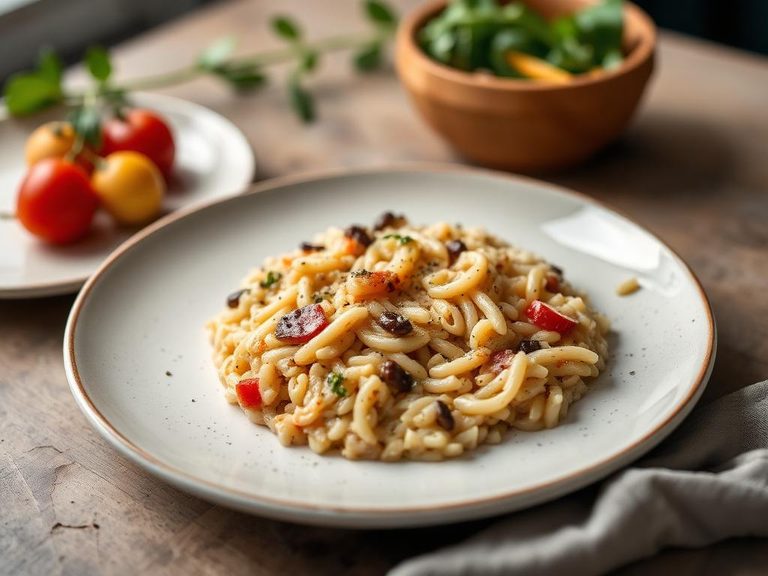
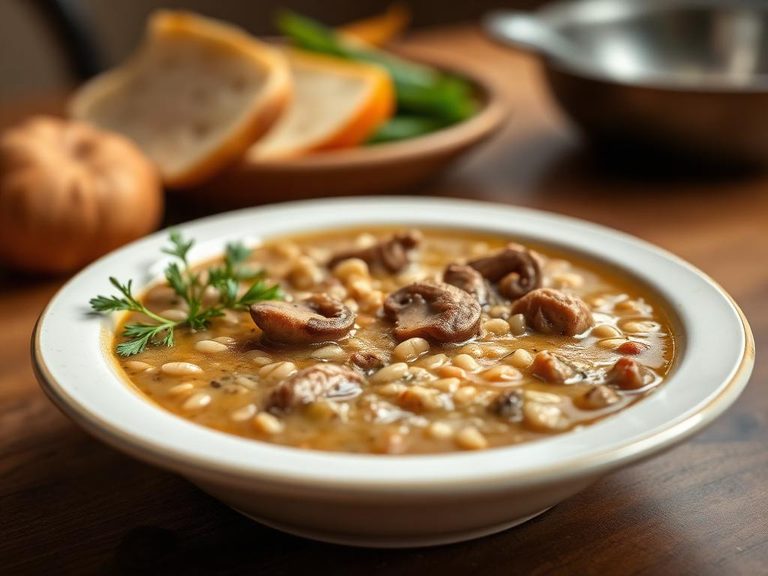
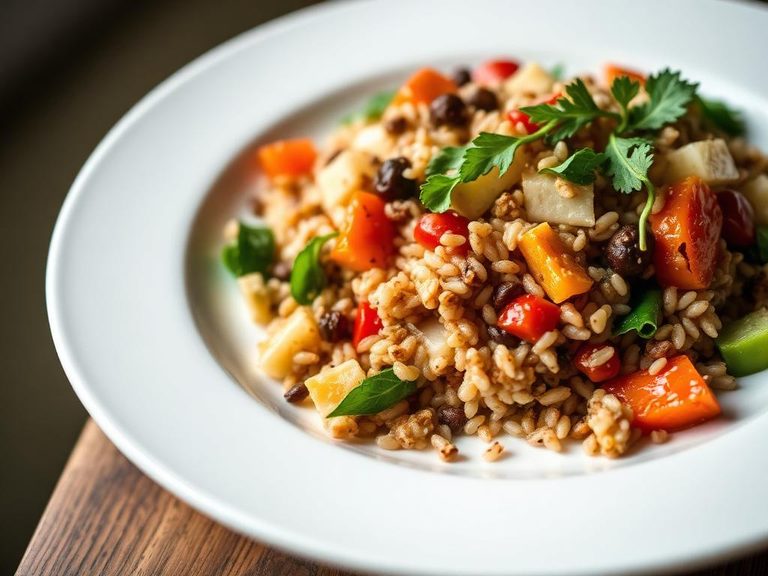

🌍 Where it's eaten
💡 Did you know?
Archaeological evidence suggests barley was one of the first grains cultivated by humans, with finds dating back over 10,000 years in the Fertile Crescent.
Full nutrition (USDA data · scales with serving)
| Water | 9.4 g |
| Energy | 354 kcal |
| Energy | 1481 kj |
| Protein | 12.5 g |
| Total lipid (fat) | 2.3 g |
| Ash | 2.3 g |
| Carbohydrate, by difference | 73.5 g |
| Fiber, total dietary | 17.3 g |
| Total Sugars | 0.80 g |
| Calcium, Ca | 33.0 mg |
| Iron, Fe | 3.6 mg |
| Magnesium, Mg | 133 mg |
| Phosphorus, P | 264 mg |
| Potassium, K | 452 mg |
| Sodium, Na | 12.0 mg |
| Zinc, Zn | 2.8 mg |
| Copper, Cu | 0.50 mg |
| Manganese, Mn | 1.9 mg |
| Selenium, Se | 37.7 ug |
| Vitamin C, total ascorbic acid | 0.00 mg |
| Thiamin | 0.65 mg |
| Riboflavin | 0.28 mg |
| Niacin | 4.6 mg |
| Pantothenic acid | 0.28 mg |
| Vitamin B-6 | 0.32 mg |
| Folate, total | 19.0 ug |
| Folic acid | 0.00 ug |
| Folate, food | 19.0 ug |
| Folate, DFE | 19.0 ug |
| Vitamin B-12 | 0.00 ug |
| Vitamin B-12, added | 0.00 ug |
| Vitamin A, RAE | 1.0 ug |
| Retinol | 0.00 ug |
| Carotene, beta | 13.0 ug |
| Carotene, alpha | 0.00 ug |
| Cryptoxanthin, beta | 0.00 ug |
| Vitamin A, IU | 22.0 iu |
| Lycopene | 0.00 ug |
| Lutein + zeaxanthin | 160 ug |
| Vitamin E (alpha-tocopherol) | 0.57 mg |
| Vitamin E, added | 0.00 mg |
| Vitamin D (D2 + D3), International Units | 0.00 iu |
| Vitamin D (D2 + D3) | 0.00 ug |
| Vitamin K (phylloquinone) | 2.2 ug |
| Alcohol, ethyl | 0.00 g |
| Caffeine | 0.00 mg |
| Theobromine | 0.00 mg |
Fat & fatty acid profile (per 100g)
| Fatty acids, total saturated | 0.48 g |
| SFA 4:0 | 0.00 g |
| SFA 6:0 | 0.00 g |
| SFA 8:0 | 0.00 g |
| SFA 10:0 | 0.00 g |
| SFA 12:0 | 0.01 g |
| SFA 14:0 | 0.01 g |
| SFA 16:0 | 0.41 g |
| SFA 18:0 | 0.02 g |
| Fatty acids, total monounsaturated | 0.29 g |
| MUFA 16:1 | 0.01 g |
| MUFA 18:1 | 0.24 g |
| MUFA 20:1 | 0.00 g |
| MUFA 22:1 | 0.00 g |
| Fatty acids, total polyunsaturated | 1.1 g |
| PUFA 18:2 | 1.00 g |
| PUFA 18:3 | 0.11 g |
| PUFA 18:4 | 0.00 g |
| PUFA 20:4 | 0.00 g |
| PUFA 20:5 n-3 (EPA) | 0.00 g |
| PUFA 22:5 n-3 (DPA) | 0.00 g |
| PUFA 22:6 n-3 (DHA) | 0.00 g |
| Cholesterol | 0.00 mg |
Amino acid profile (per 100g)
| Tryptophan | 0.21 g |
| Threonine | 0.42 g |
| Isoleucine | 0.46 g |
| Leucine | 0.85 g |
| Lysine | 0.47 g |
| Methionine | 0.24 g |
| Cystine | 0.28 g |
| Phenylalanine | 0.70 g |
| Tyrosine | 0.36 g |
| Valine | 0.61 g |
| Arginine | 0.63 g |
| Histidine | 0.28 g |
| Alanine | 0.49 g |
| Aspartic acid | 0.78 g |
| Glutamic acid | 3.3 g |
| Glycine | 0.45 g |
| Proline | 1.5 g |
| Serine | 0.53 g |
FAQ
What's the difference between hulled and pearl barley?
Hulled barley is minimally processed, with only the inedible outer husk removed, making it a whole grain. Pearl barley has been further polished to remove the bran layer, resulting in a quicker cook time but less fiber and nutrients.
How do I cook hulled barley?
Rinse the barley. For every 1 cup of barley, use about 3-4 cups of water or broth. Bring to a boil, then simmer, covered, for 40-50 minutes until tender and chewy. Drain any excess liquid.
Is barley gluten-free?
No. Barley contains gluten and is not suitable for individuals with celiac disease or gluten sensitivity.
Nutrient density (calculated · NRF9.3)
Nutrient Rich Foods index: beneficial nutrients (protein, fiber, vitamins, minerals) minus saturated fat, added sugar & sodium, per 100 kcal.
NRF9.3 index — Fulgoni, Keast & Drewnowski, 2009. Computed from USDA nutrients.
Weight-loss friendliness (composite index)
Energy density 3.54 kcal/g · 14% calories from protein · 17.3 g fiber · 0.8 g sugar per 100 g.
Composite of energy density (Rolls et al., 1999), protein & fiber satiety, minus sugar. A calculated heuristic — ranks satiety-per-calorie, not a clinical measure.
Dietary load (calculated from USDA values)
Potential renal acid load. Positive = acid-forming, negative = alkaline-forming.
Sodium-to-potassium ratio: 0.03 (lower is better — aim for ≤ 1)
Sodium:potassium per WHO potassium guidance. Computed from USDA nutrients.