

Barley flour or meal
Whole food · Cereal Grains and Pasta

Photo: Wikipedia
Barley flour is a nutty, slightly sweet flour ground from hulled or pearled barley, offering a dense, chewy texture in baked goods. It is a nutritional powerhouse, particularly noted for its high fiber content and substantial protein. Its earthy flavor profile makes it a robust base for breads, porridges, and savory dishes.
Calorie split: 12% protein · 84% carbs · 4% fat
↓ Full nutrition💚 Why it's loved
People love barley flour for its rich, earthy flavor and the satisfying, chewy texture it brings to breads and pancakes. Its versatility allows it to be used in everything from hearty loaves to delicate pastries, often blending well with other flours.
⚠️ Watch-outs & how to enjoy it better
It can be dense and may not rise as well as wheat flour, which can be a downside for those seeking light, fluffy baked goods. As a gluten-containing grain, it must be avoided by individuals with celiac disease or gluten sensitivity. To counteract density, it's often blended with other flours and leavening agents, and for gluten issues, certified gluten-free alternatives like sorghum flour can be used.
Key benefits
- Rich in dietary fiber, especially beta-glucan, which supports heart health.
- Provides a substantial amount of plant-based protein.
- Contains essential minerals like selenium, manganese, and phosphorus.
- Has a lower glycemic index than many wheat flours.
- Adds a satisfying, chewy texture and nutty flavor to recipes.
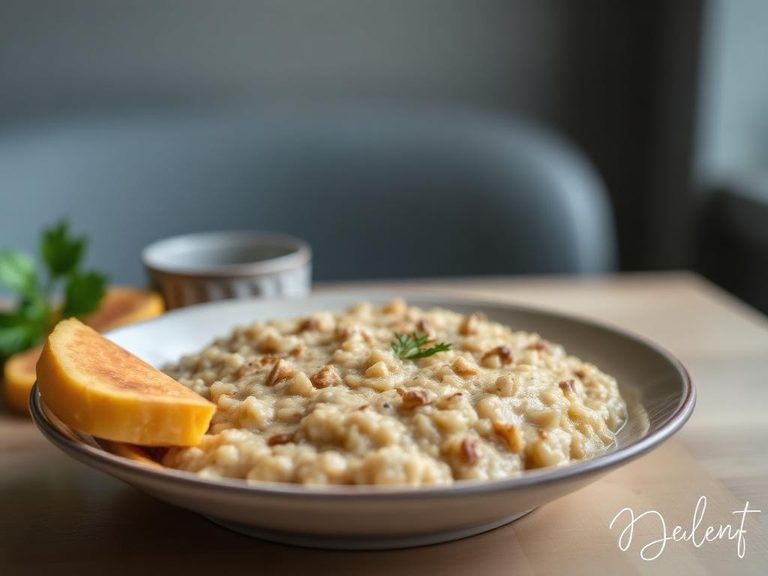
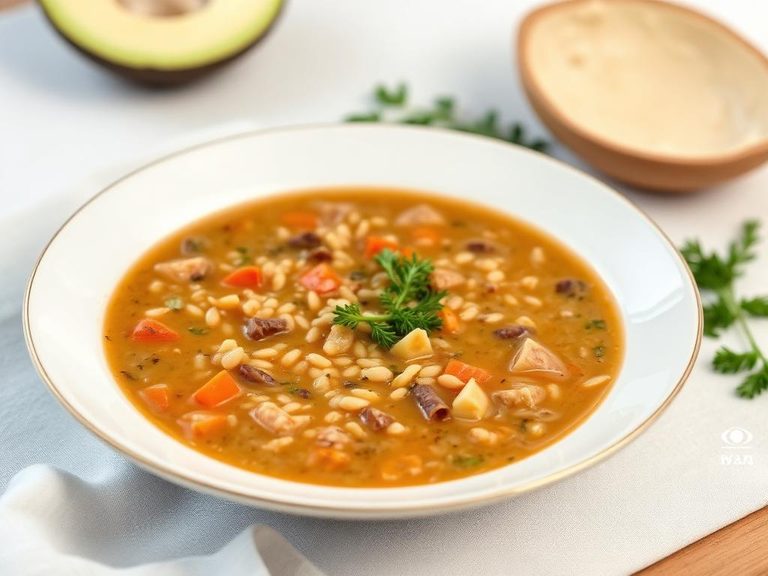
🍽️ Popular dishes



🌍 Where it's eaten
💡 Did you know?
Barley is one of the first cultivated grains, with evidence of its use dating back to 8000 BC in the Fertile Crescent.
Full nutrition (USDA data · scales with serving)
| Water | 12.1 g |
| Energy | 345 kcal |
| Energy | 1443 kj |
| Protein | 10.5 g |
| Total lipid (fat) | 1.6 g |
| Ash | 1.3 g |
| Carbohydrate, by difference | 74.5 g |
| Fiber, total dietary | 10.1 g |
| Total Sugars | 0.80 g |
| Calcium, Ca | 32.0 mg |
| Iron, Fe | 2.7 mg |
| Magnesium, Mg | 96.0 mg |
| Phosphorus, P | 296 mg |
| Potassium, K | 309 mg |
| Sodium, Na | 4.0 mg |
| Zinc, Zn | 2.0 mg |
| Copper, Cu | 0.34 mg |
| Manganese, Mn | 1.0 mg |
| Selenium, Se | 37.7 ug |
| Vitamin C, total ascorbic acid | 0.00 mg |
| Thiamin | 0.37 mg |
| Riboflavin | 0.11 mg |
| Niacin | 6.3 mg |
| Pantothenic acid | 0.14 mg |
| Vitamin B-6 | 0.40 mg |
| Folate, total | 8.0 ug |
| Folic acid | 0.00 ug |
| Folate, food | 8.0 ug |
| Folate, DFE | 8.0 ug |
| Choline, total | 37.8 mg |
| Betaine | 65.5 mg |
| Vitamin B-12 | 0.00 ug |
| Vitamin B-12, added | 0.00 ug |
| Vitamin A, RAE | 0.00 ug |
| Retinol | 0.00 ug |
| Carotene, beta | 0.00 ug |
| Carotene, alpha | 0.00 ug |
| Cryptoxanthin, beta | 0.00 ug |
| Vitamin A, IU | 0.00 iu |
| Lycopene | 0.00 ug |
| Lutein + zeaxanthin | 160 ug |
| Vitamin E (alpha-tocopherol) | 0.57 mg |
| Vitamin E, added | 0.00 mg |
| Vitamin D (D2 + D3), International Units | 0.00 iu |
| Vitamin D (D2 + D3) | 0.00 ug |
| Vitamin K (phylloquinone) | 2.2 ug |
| Alcohol, ethyl | 0.00 g |
| Caffeine | 0.00 mg |
| Theobromine | 0.00 mg |
Fat & fatty acid profile (per 100g)
| Fatty acids, total saturated | 0.34 g |
| SFA 4:0 | 0.00 g |
| SFA 6:0 | 0.00 g |
| SFA 8:0 | 0.00 g |
| SFA 10:0 | 0.00 g |
| SFA 12:0 | 0.00 g |
| SFA 14:0 | 0.01 g |
| SFA 16:0 | 0.29 g |
| SFA 18:0 | 0.01 g |
| Fatty acids, total monounsaturated | 0.20 g |
| MUFA 16:1 | 0.00 g |
| MUFA 18:1 | 0.17 g |
| MUFA 20:1 | 0.00 g |
| MUFA 22:1 | 0.00 g |
| Fatty acids, total polyunsaturated | 0.77 g |
| PUFA 18:2 | 0.69 g |
| PUFA 18:3 | 0.08 g |
| PUFA 18:4 | 0.00 g |
| PUFA 20:4 | 0.00 g |
| PUFA 20:5 n-3 (EPA) | 0.00 g |
| PUFA 22:5 n-3 (DPA) | 0.00 g |
| PUFA 22:6 n-3 (DHA) | 0.00 g |
| Cholesterol | 0.00 mg |
Amino acid profile (per 100g)
| Tryptophan | 0.17 g |
| Threonine | 0.36 g |
| Isoleucine | 0.38 g |
| Leucine | 0.71 g |
| Lysine | 0.39 g |
| Methionine | 0.20 g |
| Cystine | 0.23 g |
| Phenylalanine | 0.59 g |
| Tyrosine | 0.30 g |
| Valine | 0.52 g |
| Arginine | 0.53 g |
| Histidine | 0.24 g |
| Alanine | 0.41 g |
| Aspartic acid | 0.66 g |
| Glutamic acid | 2.7 g |
| Glycine | 0.38 g |
| Proline | 1.2 g |
| Serine | 0.44 g |
FAQ
Is barley flour gluten-free?
No, barley flour contains gluten and is not suitable for individuals with celiac disease or gluten sensitivity.
How does barley flour affect the texture of baked goods?
Barley flour adds a dense, chewy texture and a nutty flavor, often requiring blending with other flours for lighter results.
Can barley flour be used in place of wheat flour?
It can be used as a partial substitute, but due to its density and gluten content, it's often blended with other flours for optimal texture.
Nutrient density (calculated · NRF9.3)
Nutrient Rich Foods index: beneficial nutrients (protein, fiber, vitamins, minerals) minus saturated fat, added sugar & sodium, per 100 kcal.
NRF9.3 index — Fulgoni, Keast & Drewnowski, 2009. Computed from USDA nutrients.
Weight-loss friendliness (composite index)
Energy density 3.45 kcal/g · 12% calories from protein · 10.1 g fiber · 0.8 g sugar per 100 g.
Composite of energy density (Rolls et al., 1999), protein & fiber satiety, minus sugar. A calculated heuristic — ranks satiety-per-calorie, not a clinical measure.
Dietary load (calculated from USDA values)
Potential renal acid load. Positive = acid-forming, negative = alkaline-forming.
Sodium-to-potassium ratio: 0.01 (lower is better — aim for ≤ 1)
Sodium:potassium per WHO potassium guidance. Computed from USDA nutrients.