

Babyfood, vegetables, carrots, junior
Whole food · Baby Foods

Photo: Wikipedia
This is a smooth, vibrant orange purée made specifically for infants transitioning to solid foods, featuring the natural sweetness of carrots. The texture is finely mashed but slightly thicker than a stage-one purée, offering a gentle introduction to more complex mouthfeels. Nutritionally, it's a powerhouse of beta-carotene (which the body converts to vitamin A) and provides a good source of dietary fiber for developing digestive systems.
Calorie split: 9% protein · 85% carbs · 5% fat
↓ Full nutrition💚 Why it's loved
Parents love it for its naturally sweet, mild flavor that babies often accept readily, making it a reliable first vegetable. Its smooth, spoonable texture is perfectly calibrated for infants learning to eat from a spoon.
⚠️ Watch-outs & how to enjoy it better
The natural sugars (over 3g per 100g) can be a consideration for babies with sensitive digestion or those monitoring sugar intake. To counteract any potential for rapid sugar absorption, it's best served as part of a mixed meal alongside a source of protein (like puréed chicken or lentils) or healthy fat (like a swirl of avocado purée).
Key benefits
- Excellent source of beta-carotene, essential for vision and immune health.
- High in dietary fiber to support healthy digestion.
- Naturally low in fat and contains no added sodium.
- Provides a gentle, sweet flavor to introduce vegetables.
- Convenient, shelf-stable introduction to solids.
🍽️ Popular dishes
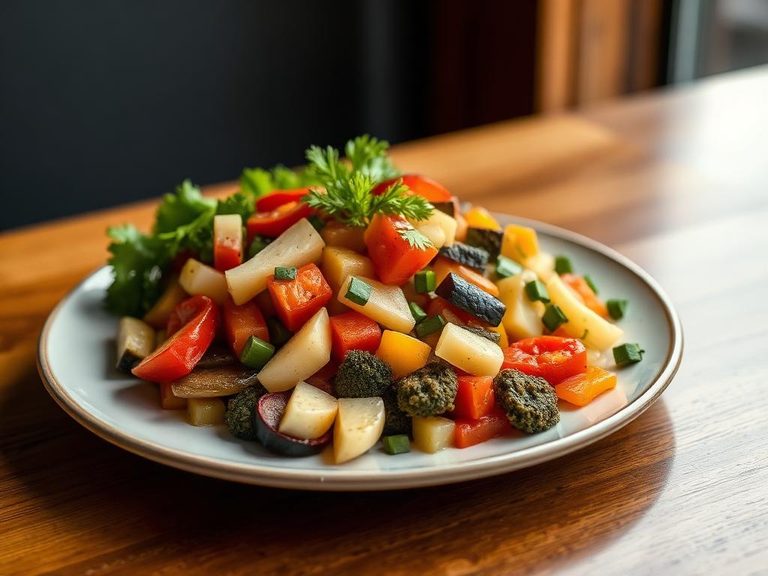
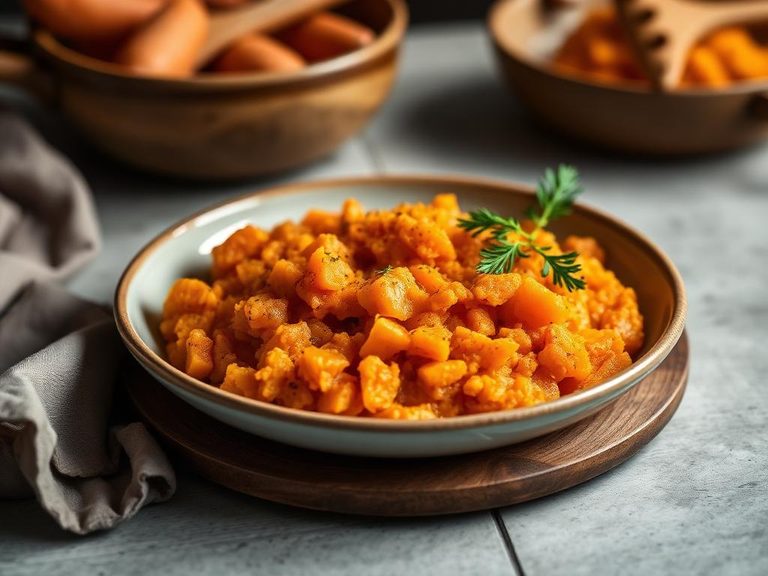
🌍 Where it's eaten
💡 Did you know?
The beta-carotene in carrots is fat-soluble, meaning a tiny amount of healthy fat (like from breast milk, formula, or avocado) mixed into the purée dramatically increases the baby's absorption of this key nutrient.
Full nutrition (USDA data · scales with serving)
| Water | 91.0 g |
| Energy | 32.0 kcal |
| Energy | 134 kj |
| Protein | 0.80 g |
| Total lipid (fat) | 0.20 g |
| Ash | 0.70 g |
| Carbohydrate, by difference | 7.2 g |
| Fiber, total dietary | 1.7 g |
| Total Sugars | 3.2 g |
| Calcium, Ca | 23.0 mg |
| Iron, Fe | 0.39 mg |
| Magnesium, Mg | 11.0 mg |
| Phosphorus, P | 20.0 mg |
| Potassium, K | 202 mg |
| Sodium, Na | 49.0 mg |
| Zinc, Zn | 0.18 mg |
| Copper, Cu | 0.05 mg |
| Selenium, Se | 0.20 ug |
| Fluoride, F | 12.0 ug |
| Vitamin C, total ascorbic acid | 5.5 mg |
| Thiamin | 0.02 mg |
| Riboflavin | 0.04 mg |
| Niacin | 0.50 mg |
| Pantothenic acid | 0.28 mg |
| Vitamin B-6 | 0.08 mg |
| Folate, total | 17.0 ug |
| Folic acid | 0.00 ug |
| Folate, food | 17.0 ug |
| Folate, DFE | 17.0 ug |
| Choline, total | 8.0 mg |
| Vitamin B-12 | 0.00 ug |
| Vitamin B-12, added | 0.00 ug |
| Vitamin A, RAE | 591 ug |
| Retinol | 0.00 ug |
| Carotene, beta | 5745 ug |
| Carotene, alpha | 2682 ug |
| Cryptoxanthin, beta | 0.00 ug |
| Vitamin A, IU | 11810 iu |
| Lycopene | 0.00 ug |
| Lutein + zeaxanthin | 230 ug |
| Vitamin E (alpha-tocopherol) | 0.52 mg |
| Vitamin E, added | 0.00 mg |
| Vitamin D (D2 + D3), International Units | 0.00 iu |
| Vitamin D (D2 + D3) | 0.00 ug |
| Vitamin K (phylloquinone) | 12.5 ug |
| Alcohol, ethyl | 0.00 g |
| Caffeine | 0.00 mg |
| Theobromine | 0.00 mg |
Fat & fatty acid profile (per 100g)
| Fatty acids, total saturated | 0.04 g |
| SFA 4:0 | 0.00 g |
| SFA 6:0 | 0.00 g |
| SFA 8:0 | 0.00 g |
| SFA 10:0 | 0.00 g |
| SFA 12:0 | 0.00 g |
| SFA 14:0 | 0.00 g |
| SFA 16:0 | 0.03 g |
| SFA 18:0 | 0.00 g |
| Fatty acids, total monounsaturated | 0.01 g |
| MUFA 16:1 | 0.00 g |
| MUFA 18:1 | 0.01 g |
| MUFA 20:1 | 0.00 g |
| MUFA 22:1 | 0.00 g |
| Fatty acids, total polyunsaturated | 0.09 g |
| PUFA 18:2 | 0.08 g |
| PUFA 18:3 | 0.01 g |
| PUFA 18:4 | 0.00 g |
| PUFA 20:4 | 0.00 g |
| PUFA 20:5 n-3 (EPA) | 0.00 g |
| PUFA 22:5 n-3 (DPA) | 0.00 g |
| PUFA 22:6 n-3 (DHA) | 0.00 g |
| Cholesterol | 0.00 mg |
Amino acid profile (per 100g)
| Tryptophan | 0.01 g |
| Threonine | 0.02 g |
| Isoleucine | 0.02 g |
| Leucine | 0.03 g |
| Lysine | 0.02 g |
| Methionine | 0.01 g |
| Cystine | 0.01 g |
| Phenylalanine | 0.03 g |
| Tyrosine | 0.02 g |
| Valine | 0.03 g |
| Arginine | 0.05 g |
| Histidine | 0.01 g |
| Alanine | 0.04 g |
| Aspartic acid | 0.13 g |
| Glutamic acid | 0.23 g |
| Glycine | 0.02 g |
| Proline | 0.02 g |
| Serine | 0.02 g |
FAQ
At what age can I introduce this carrot purée?
This 'junior' stage purée is typically introduced around 6-8 months, when a baby is sitting up with support and showing interest in food. Always consult your pediatrician first.
Is the sugar in this product added?
No. The 3.16g of sugar per 100g is naturally occurring from the carrots themselves. Reputable baby foods have no added sugars.
Why is the texture called 'junior'?
It indicates a slightly thicker, more textured purée than 'stage 1' foods, designed for babies who are ready to manage a bit more substance and are developing their chewing motions.
Nutrient density (calculated · NRF9.3)
Nutrient Rich Foods index: beneficial nutrients (protein, fiber, vitamins, minerals) minus saturated fat, added sugar & sodium, per 100 kcal.
NRF9.3 index — Fulgoni, Keast & Drewnowski, 2009. Computed from USDA nutrients.
Weight-loss friendliness (composite index)
Energy density 0.32 kcal/g · 10% calories from protein · 1.7 g fiber · 3.2 g sugar per 100 g.
Composite of energy density (Rolls et al., 1999), protein & fiber satiety, minus sugar. A calculated heuristic — ranks satiety-per-calorie, not a clinical measure.
Dietary load (calculated from USDA values)
Potential renal acid load. Positive = acid-forming, negative = alkaline-forming.
Sodium-to-potassium ratio: 0.24 (lower is better — aim for ≤ 1)
Sodium:potassium per WHO potassium guidance. Computed from USDA nutrients.