

Applesauce, canned, unsweetened, with added ascorbic acid
Whole food · Fruits and Fruit Juices

Photo: Wikipedia
A smooth, velvety puree of cooked apples, this unsweetened canned variety delivers a gentle, tart-sweet flavor with a comforting, spoonable texture. Fortified with ascorbic acid (Vitamin C) to preserve its pale golden hue and nutritional value, it offers a light, low-fat snack at just 42 calories per 100g. It's a simple, fiber-containing fruit product that captures the essence of apples in a convenient, shelf-stable form.
Calorie split: 1% protein · 97% carbs · 2% fat
↓ Full nutrition💚 Why it's loved
People adore it for its nostalgic, comforting sweetness and incredibly smooth texture, making it a beloved staple for children, the elderly, and anyone seeking a gentle, fruit-based treat. Its versatility is key—it shines as a simple side, a baking substitute for oil, or a base for sauces and desserts.
⚠️ Watch-outs & how to enjoy it better
Despite being unsweetened, its natural sugar content (9.39g/100g) can cause blood-sugar spikes, so individuals monitoring glucose should practice portion control and pair it with protein or fat (like a dollop of Greek yogurt or a handful of nuts) to slow absorption. It's also a processed product, so some may prefer fresh apples for their higher fiber and crunch.
Key benefits
- Low in fat and calories (42 kcal/100g)
- Source of dietary fiber (1.1g/100g)
- Fortified with Vitamin C (ascorbic acid)
- No added sugars, naturally sweet from fruit
- Gentle on digestion, easy to consume
🍽️ Popular dishes
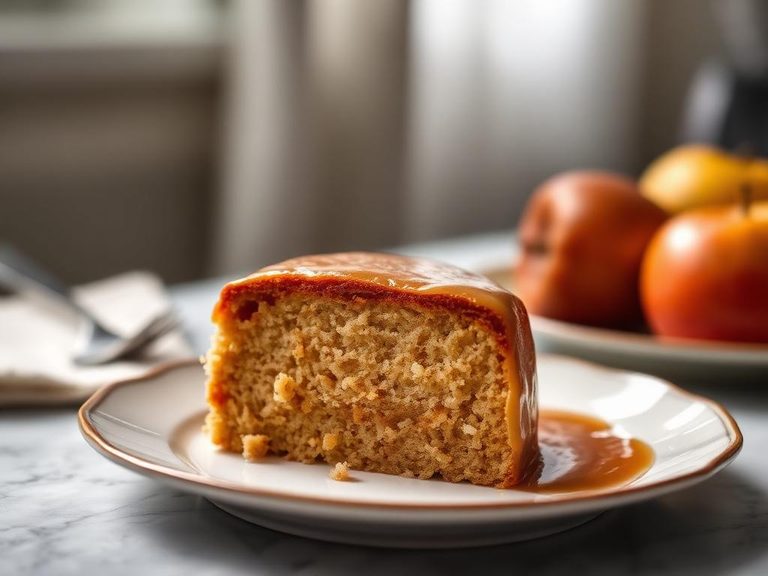
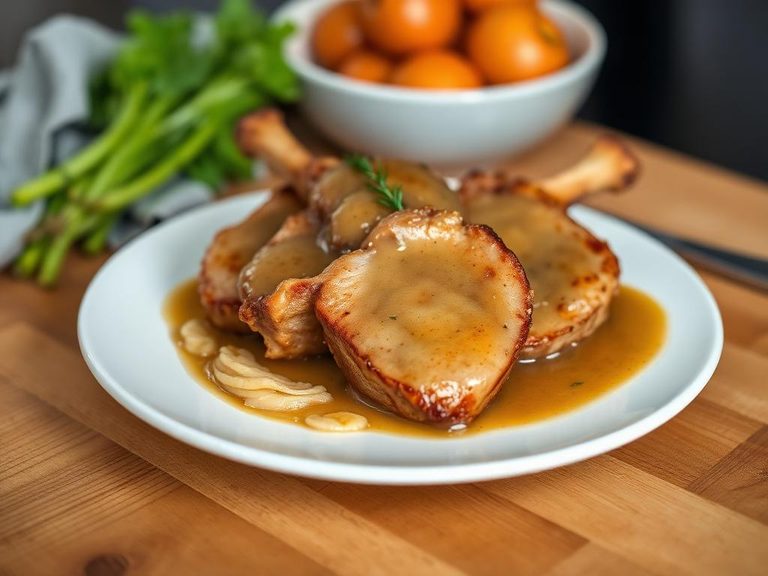
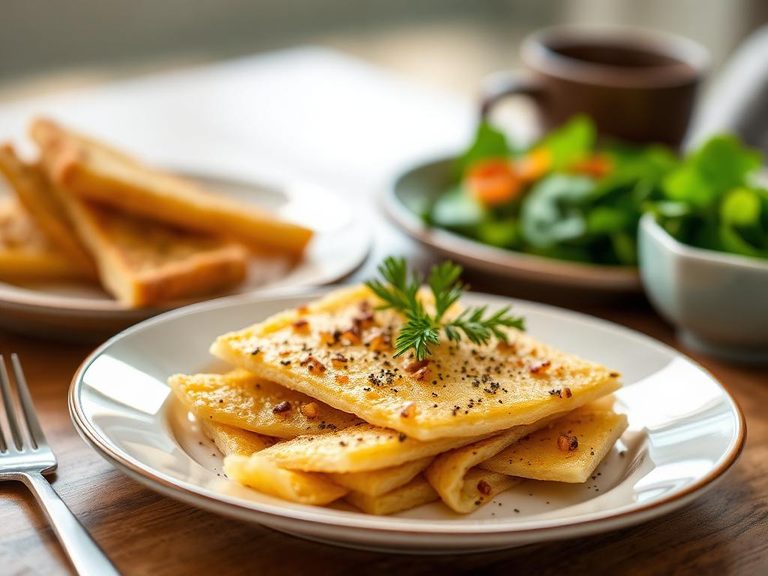
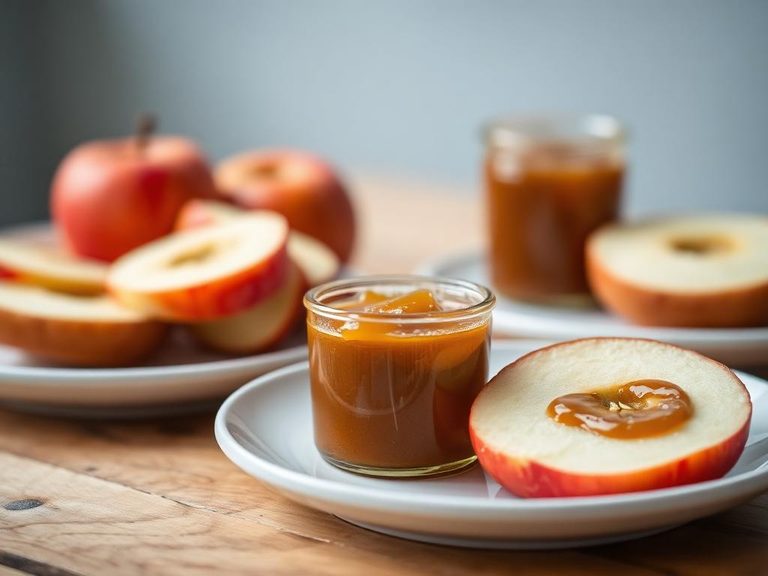
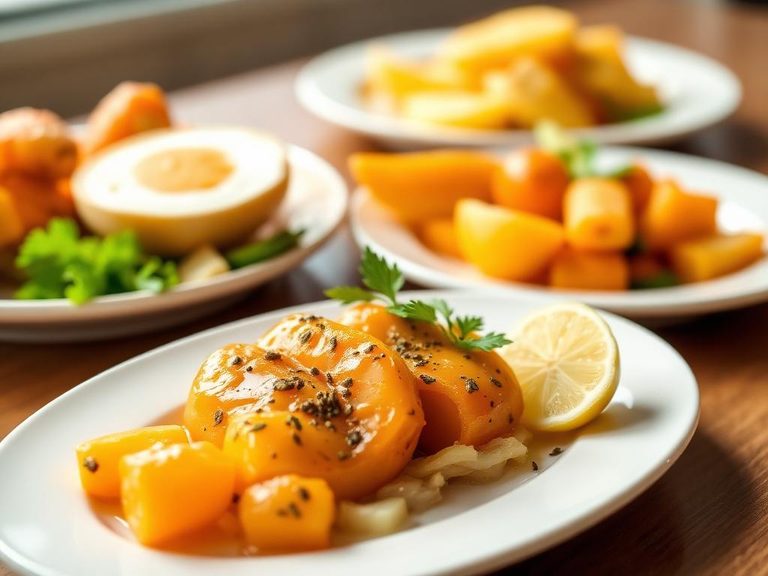
🌍 Where it's eaten
💡 Did you know?
During World War II, applesauce was a common dessert in U.S. military mess halls because it was easy to ship, store, and served as a morale-boosting comfort food.
Full nutrition (USDA data · scales with serving)
| Water | 88.2 g |
| Energy | 42.0 kcal |
| Energy | 176 kj |
| Protein | 0.17 g |
| Total lipid (fat) | 0.10 g |
| Ash | 0.24 g |
| Carbohydrate, by difference | 11.3 g |
| Fiber, total dietary | 1.1 g |
| Total Sugars | 9.4 g |
| Sucrose | 1.1 g |
| Glucose | 2.3 g |
| Fructose | 5.9 g |
| Lactose | 0.00 g |
| Maltose | 0.07 g |
| Galactose | 0.00 g |
| Starch | 0.00 g |
| Calcium, Ca | 4.0 mg |
| Iron, Fe | 0.23 mg |
| Magnesium, Mg | 3.0 mg |
| Phosphorus, P | 5.0 mg |
| Potassium, K | 74.0 mg |
| Sodium, Na | 2.0 mg |
| Zinc, Zn | 0.03 mg |
| Copper, Cu | 0.03 mg |
| Manganese, Mn | 0.03 mg |
| Selenium, Se | 0.30 ug |
| Vitamin C, total ascorbic acid | 21.2 mg |
| Thiamin | 0.03 mg |
| Riboflavin | 0.03 mg |
| Niacin | 0.08 mg |
| Pantothenic acid | 0.04 mg |
| Vitamin B-6 | 0.03 mg |
| Folate, total | 3.0 ug |
| Folic acid | 0.00 ug |
| Folate, food | 3.0 ug |
| Folate, DFE | 3.0 ug |
| Choline, total | 2.2 mg |
| Betaine | 0.40 mg |
| Vitamin B-12 | 0.00 ug |
| Vitamin A, RAE | 1.0 ug |
| Retinol | 0.00 ug |
| Vitamin A, IU | 29.0 iu |
| Vitamin E (alpha-tocopherol) | 0.16 mg |
| Tocopherol, beta | 0.00 mg |
| Tocopherol, gamma | 0.00 mg |
| Tocopherol, delta | 0.00 mg |
| Tocotrienol, alpha | 0.02 mg |
| Tocotrienol, beta | 0.00 mg |
| Tocotrienol, gamma | 0.00 mg |
| Tocotrienol, delta | 0.00 mg |
| Vitamin D (D2 + D3), International Units | 0.00 iu |
| Vitamin D (D2 + D3) | 0.00 ug |
| Vitamin K (phylloquinone) | 0.50 ug |
| Vitamin K (Dihydrophylloquinone) | 0.00 ug |
| Vitamin K (Menaquinone-4) | 0.00 ug |
Fat & fatty acid profile (per 100g)
| Fatty acids, total saturated | 0.01 g |
| SFA 16:0 | 0.01 g |
| SFA 18:0 | 0.00 g |
| Fatty acids, total monounsaturated | 0.00 g |
| MUFA 18:1 | 0.00 g |
| Fatty acids, total polyunsaturated | 0.01 g |
| PUFA 18:2 | 0.01 g |
| PUFA 18:3 | 0.00 g |
| Fatty acids, total trans | 0.00 g |
| Cholesterol | 0.00 mg |
Amino acid profile (per 100g)
| Tryptophan | 0.00 g |
| Threonine | 0.01 g |
| Isoleucine | 0.01 g |
| Leucine | 0.01 g |
| Lysine | 0.01 g |
| Methionine | 0.00 g |
| Cystine | 0.00 g |
| Phenylalanine | 0.01 g |
| Tyrosine | 0.00 g |
| Valine | 0.01 g |
| Arginine | 0.01 g |
| Histidine | 0.00 g |
| Alanine | 0.01 g |
| Aspartic acid | 0.03 g |
| Glutamic acid | 0.02 g |
| Glycine | 0.01 g |
| Proline | 0.01 g |
| Serine | 0.01 g |
FAQ
Is unsweetened applesauce healthy?
Yes, it's a low-fat, low-calorie fruit option with some fiber and Vitamin C. However, it still contains natural sugars, so moderation is key, especially for those managing blood sugar.
Can I use applesauce as a baking substitute?
Absolutely! Unsweetened applesauce can replace oil or butter in many recipes (typically 1:1 ratio for oil), adding moisture and a subtle apple flavor while reducing fat content.
How does canned applesauce differ from homemade?
Canned applesauce is often smoother and may have a slightly cooked flavor, while homemade can be chunkier and fresher-tasting. Both can be unsweetened, but canned versions are fortified with ascorbic acid for preservation.
Nutrient density (calculated · NRF9.3)
Nutrient Rich Foods index: beneficial nutrients (protein, fiber, vitamins, minerals) minus saturated fat, added sugar & sodium, per 100 kcal.
NRF9.3 index — Fulgoni, Keast & Drewnowski, 2009. Computed from USDA nutrients.
Weight-loss friendliness (composite index)
Energy density 0.42 kcal/g · 2% calories from protein · 1.1 g fiber · 9.4 g sugar per 100 g.
Composite of energy density (Rolls et al., 1999), protein & fiber satiety, minus sugar. A calculated heuristic — ranks satiety-per-calorie, not a clinical measure.
Dietary load (calculated from USDA values)
Potential renal acid load. Positive = acid-forming, negative = alkaline-forming.
Sodium-to-potassium ratio: 0.03 (lower is better — aim for ≤ 1)
Sodium:potassium per WHO potassium guidance. Computed from USDA nutrients.