

Almond milk, unsweetened
Common food

Photo: Wikipedia
Unsweetened almond milk is a light, creamy, plant-based beverage made from finely ground almonds and water. It has a subtle, nutty flavor with a smooth, slightly thin texture compared to dairy milk. Nutritionally, it is extremely low in calories and contains a small amount of healthy fats.
Calorie split: 15% protein · 9% carbs · 76% fat
↓ Full nutrition💚 Why it's loved
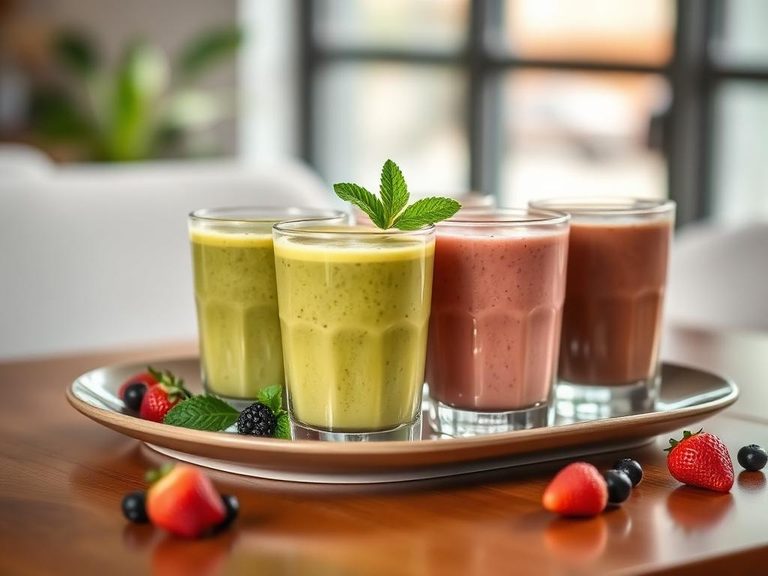
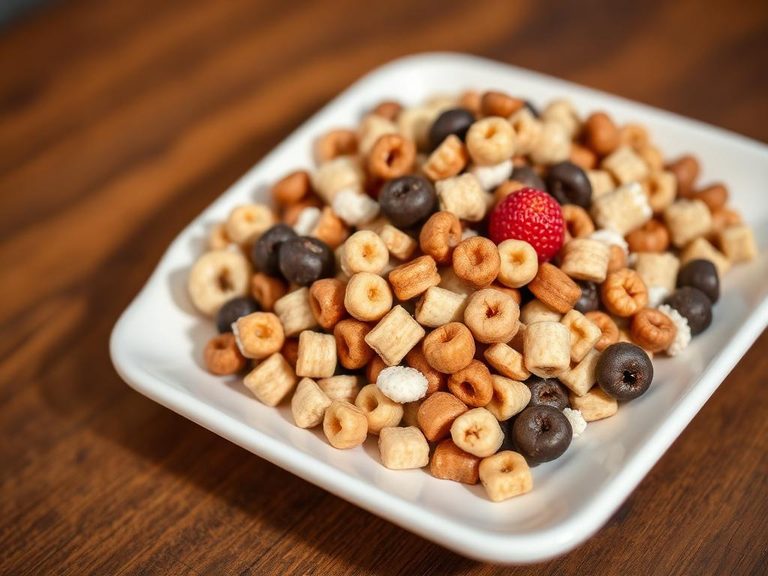
People love it for its mild, versatile flavor that complements coffee, cereal, and smoothies without overpowering them. It's a popular dairy-free staple in modern health-conscious and plant-based diets.
⚠️ Watch-outs & how to enjoy it better
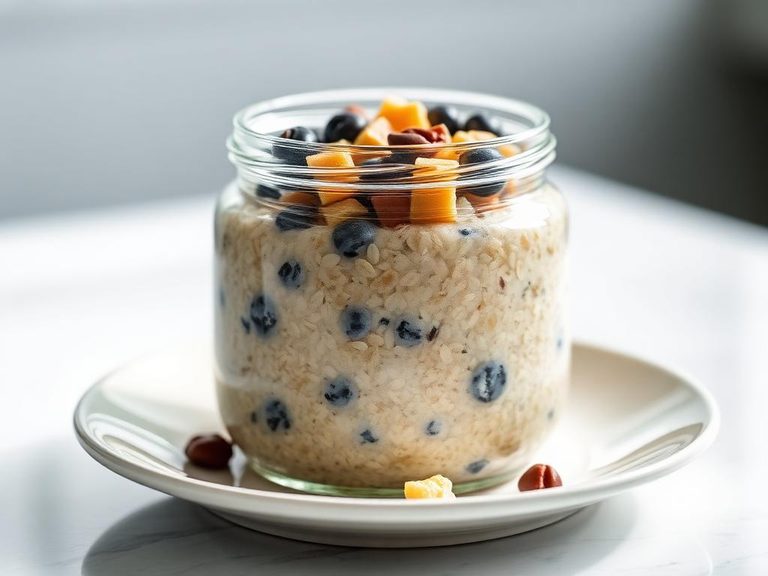
As a nut product, it's a common allergen for those with tree nut sensitivities. It is also very low in protein (0.55g/100g) compared to dairy or soy milk, so it's not a significant protein source. Tip: Pair it with protein-rich foods like oats, chia seeds, or protein powder to create a more balanced meal.
Key benefits
- Very low calorie density (15 kcal/100g)
- Naturally lactose-free and vegan
- Source of monounsaturated fats
- Often fortified with calcium and vitamin D
- Low in carbohydrates and sugar
🍽️ Popular dishes



🌍 Where it's eaten
💡 Did you know?
The global commercial almond milk market exploded in the 21st century, but the practice of making nut milks dates back to the Middle Ages in Europe, where they were a common Lenten substitute for dairy.
Full nutrition (USDA data · scales with serving)
| Water | 97.4 g |
| Energy | 15.0 kcal |
| Protein | 0.55 g |
| Total lipid (fat) | 1.2 g |
| Carbohydrate, by difference | 0.34 g |
| Fiber, total dietary | 0.00 g |
| Total Sugars | 0.00 g |
| Calcium, Ca | 173 mg |
| Iron, Fe | 0.29 mg |
| Magnesium, Mg | 7.0 mg |
| Phosphorus, P | 30.0 mg |
| Potassium, K | 31.0 mg |
| Sodium, Na | 60.0 mg |
| Zinc, Zn | 0.17 mg |
| Copper, Cu | 0.02 mg |
| Selenium, Se | 0.00 ug |
| Vitamin C, total ascorbic acid | 0.00 mg |
| Thiamin | 0.00 mg |
| Riboflavin | 0.03 mg |
| Niacin | 0.07 mg |
| Vitamin B-6 | 0.00 mg |
| Folate, total | 0.00 ug |
| Folic acid | 0.00 ug |
| Folate, food | 0.00 ug |
| Folate, DFE | 0.00 ug |
| Choline, total | 3.1 mg |
| Vitamin B-12 | 0.34 ug |
| Vitamin B-12, added | 0.34 ug |
| Vitamin A, RAE | 41.0 ug |
| Retinol | 41.0 ug |
| Carotene, beta | 0.00 ug |
| Carotene, alpha | 0.00 ug |
| Cryptoxanthin, beta | 0.00 ug |
| Lycopene | 0.00 ug |
| Lutein + zeaxanthin | 0.00 ug |
| Vitamin E (alpha-tocopherol) | 3.3 mg |
| Vitamin E, added | 3.3 mg |
| Vitamin D (D2 + D3) | 0.90 ug |
| Vitamin K (phylloquinone) | 0.00 ug |
| Alcohol, ethyl | 0.00 g |
| Caffeine | 0.00 mg |
| Theobromine | 0.00 mg |
Fat & fatty acid profile (per 100g)
| Fatty acids, total saturated | 0.10 g |
| SFA 4:0 | 0.00 g |
| SFA 6:0 | 0.00 g |
| SFA 8:0 | 0.00 g |
| SFA 10:0 | 0.00 g |
| SFA 12:0 | 0.00 g |
| SFA 14:0 | 0.00 g |
| SFA 16:0 | 0.08 g |
| SFA 18:0 | 0.02 g |
| Fatty acids, total monounsaturated | 0.73 g |
| MUFA 16:1 | 0.01 g |
| MUFA 18:1 | 0.72 g |
| MUFA 20:1 | 0.00 g |
| MUFA 22:1 | 0.00 g |
| Fatty acids, total polyunsaturated | 0.28 g |
| PUFA 18:2 | 0.28 g |
| PUFA 18:3 | 0.00 g |
| PUFA 18:4 | 0.00 g |
| PUFA 20:4 | 0.00 g |
| PUFA 20:5 n-3 (EPA) | 0.00 g |
| PUFA 22:5 n-3 (DPA) | 0.00 g |
| PUFA 22:6 n-3 (DHA) | 0.00 g |
| Cholesterol | 0.00 mg |
Amino acid profile (per 100g)
Estimated from Beverages, almond milk, chocolate, ready-to-drink — USDA does not publish this profile for Almond milk.
| Tryptophan | 0.01 g |
| Threonine | 0.01 g |
| Isoleucine | 0.02 g |
| Leucine | 0.04 g |
| Lysine | 0.01 g |
| Methionine | 0.00 g |
| Cystine | 0.01 g |
| Phenylalanine | 0.03 g |
| Tyrosine | 0.01 g |
| Valine | 0.02 g |
| Arginine | 0.06 g |
| Histidine | 0.01 g |
| Alanine | 0.03 g |
| Aspartic acid | 0.07 g |
| Glutamic acid | 0.17 g |
| Glycine | 0.04 g |
| Proline | 0.03 g |
| Serine | 0.02 g |
FAQ
Is unsweetened almond milk a good source of protein?
No, it is very low in protein (about 0.55g per 100g or ~1.3g per cup). For a protein-rich plant milk, soy or pea protein milk are better choices.
Can I use it for baking?
Yes, it works well as a 1:1 substitute for dairy milk in most baking recipes, though its lower protein and fat content may slightly alter the texture of items like pancakes or muffins.
Why does it sometimes separate in coffee?
The acidity in coffee can cause the proteins in almond milk to curdle. Using barista-style blends or adding the milk slowly while stirring can help prevent this.
Nutrient density (calculated · NRF9.3)
Nutrient Rich Foods index: beneficial nutrients (protein, fiber, vitamins, minerals) minus saturated fat, added sugar & sodium, per 100 kcal.
NRF9.3 index — Fulgoni, Keast & Drewnowski, 2009. Computed from USDA nutrients.
Weight-loss friendliness (composite index)
Energy density 0.15 kcal/g · 15% calories from protein · 0.0 g fiber · 0.0 g sugar per 100 g.
Composite of energy density (Rolls et al., 1999), protein & fiber satiety, minus sugar. A calculated heuristic — ranks satiety-per-calorie, not a clinical measure.
Dietary load (calculated from USDA values)
Potential renal acid load. Positive = acid-forming, negative = alkaline-forming.
Sodium-to-potassium ratio: 1.94 (lower is better — aim for ≤ 1)
Sodium:potassium per WHO potassium guidance. Computed from USDA nutrients.