Salami, cooked, beef
Whole food · Sausages and Luncheon Meats

Photo: Wikipedia
Cooked beef salami is a dense, finely ground cured sausage with a rich, savory, and slightly smoky flavor profile, often seasoned with garlic and black pepper. Its texture is firm yet yielding, with small pockets of fat that melt on the palate, delivering a concentrated meaty taste. Nutritionally, it is a high-fat, high-protein food, providing over 22 grams of fat and 12.6 grams of protein per 100 grams, with minimal carbohydrates.
💚 Why it's loved
People love cooked beef salami for its intense, umami-rich flavor and satisfying chew, which makes it a standout ingredient in sandwiches and charcuterie boards. Its versatility allows it to be eaten cold, fried, or baked, and it carries a deep cultural heritage in European and American deli traditions.
⚠️ Watch-outs & how to enjoy it better
The high fat and sodium content can be a concern for those monitoring heart health or blood pressure, and it is not suitable for vegetarian or vegan diets. To mitigate this, pair it with fiber-rich vegetables or whole-grain bread to balance the meal, and practice portion control by limiting servings to 2-3 slices at a time.
Key benefits
- High-quality protein source for muscle maintenance
- Rich in B vitamins, particularly B12, for energy metabolism
- Provides essential minerals like iron and zinc
- Low in carbohydrates, suitable for low-carb diets
- Long shelf life due to curing process
🍽️ Popular dishes

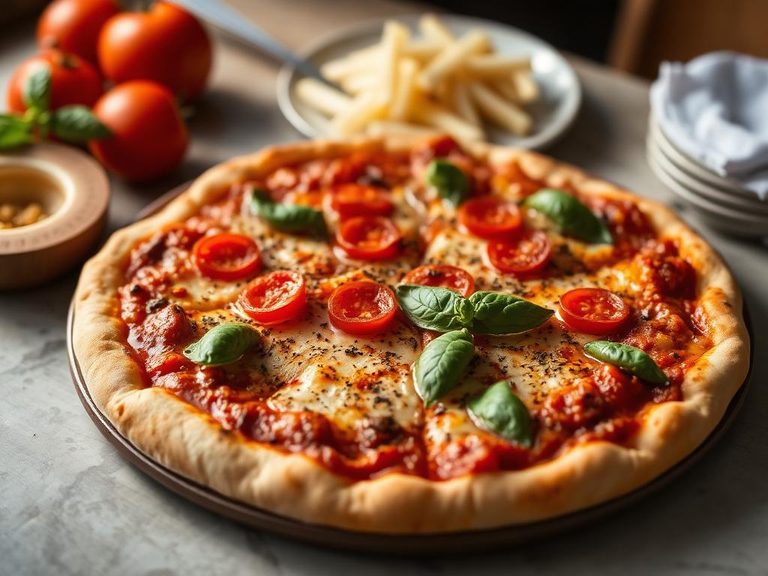

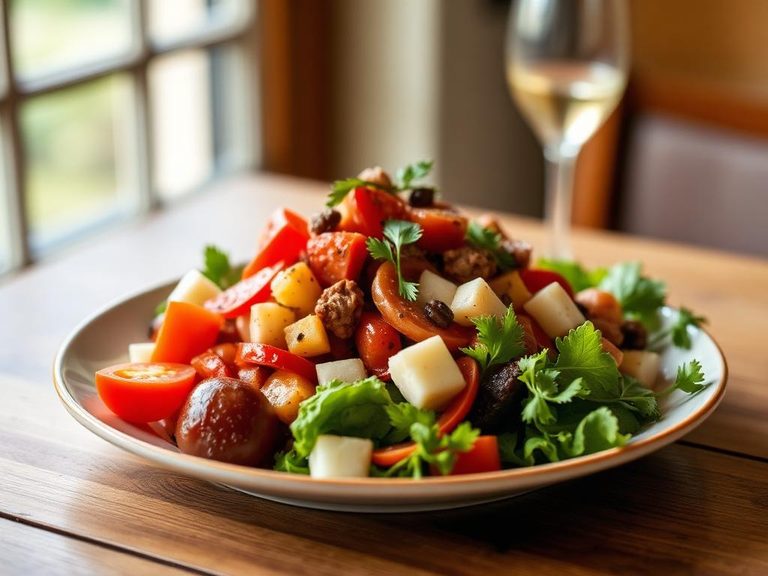
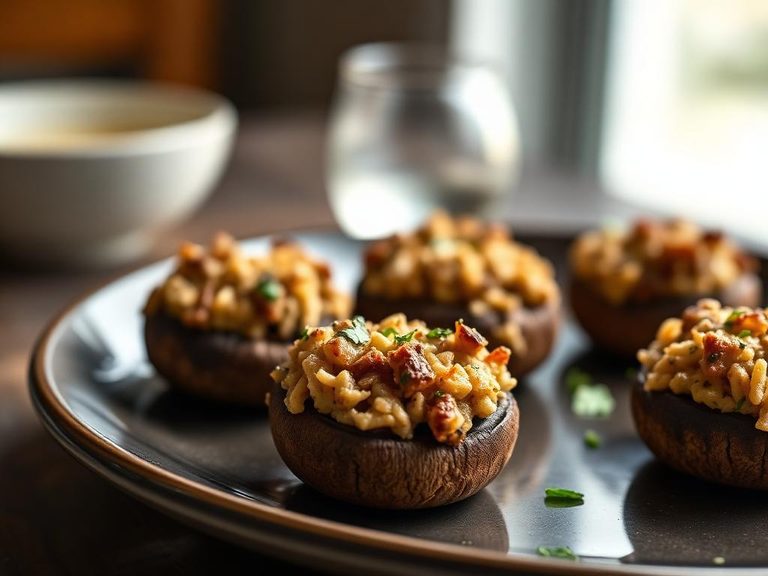
🌍 Where it's eaten
💡 Did you know?
The name 'salami' comes from the Latin word 'salamen,' meaning 'salted meat,' and traditional salami was historically cured with salt and air-dried to preserve it for long journeys.
Full nutrition (scales with serving)
| Water | 60.0 g |
| Energy | 261 kcal |
| Energy | 1092 kj |
| Protein | 12.6 g |
| Total lipid (fat) | 22.2 g |
| Ash | 3.3 g |
| Carbohydrate, by difference | 1.9 g |
| Fiber, total dietary | 0.00 g |
| Total Sugars | 1.5 g |
| Calcium, Ca | 6.0 mg |
| Iron, Fe | 2.2 mg |
| Magnesium, Mg | 13.0 mg |
| Phosphorus, P | 205 mg |
| Potassium, K | 188 mg |
| Sodium, Na | 1140 mg |
| Zinc, Zn | 1.8 mg |
| Copper, Cu | 0.19 mg |
| Manganese, Mn | 0.05 mg |
| Selenium, Se | 14.6 ug |
| Fluoride, F | 41.2 ug |
| Vitamin C, total ascorbic acid | 0.00 mg |
| Thiamin | 0.10 mg |
| Riboflavin | 0.19 mg |
| Niacin | 3.2 mg |
| Pantothenic acid | 0.95 mg |
| Vitamin B-6 | 0.18 mg |
| Folate, total | 2.0 ug |
| Folic acid | 0.00 ug |
| Folate, food | 2.0 ug |
| Folate, DFE | 2.0 ug |
| Choline, total | 57.5 mg |
| Betaine | 2.6 mg |
| Vitamin B-12 | 3.1 ug |
| Vitamin B-12, added | 0.00 ug |
| Vitamin A, RAE | 0.00 ug |
| Retinol | 0.00 ug |
| Carotene, beta | 0.00 ug |
| Carotene, alpha | 0.00 ug |
| Cryptoxanthin, beta | 0.00 ug |
| Vitamin A, IU | 0.00 iu |
| Lycopene | 0.00 ug |
| Lutein + zeaxanthin | 0.00 ug |
| Vitamin E (alpha-tocopherol) | 0.19 mg |
| Vitamin E, added | 0.00 mg |
| Vitamin D (D2 + D3), International Units | 48.0 iu |
| Vitamin D (D2 + D3) | 1.2 ug |
| Vitamin K (phylloquinone) | 1.3 ug |
| Alcohol, ethyl | 0.00 g |
| Caffeine | 0.00 mg |
| Theobromine | 0.00 mg |
Fat & fatty acid profile (per 100g)
| Fatty acids, total saturated | 9.9 g |
| SFA 4:0 | 0.00 g |
| SFA 6:0 | 0.00 g |
| SFA 8:0 | 0.00 g |
| SFA 10:0 | 0.07 g |
| SFA 12:0 | 0.00 g |
| SFA 14:0 | 0.56 g |
| SFA 16:0 | 5.4 g |
| SFA 18:0 | 3.9 g |
| Fatty acids, total monounsaturated | 10.6 g |
| MUFA 16:1 | 1.0 g |
| MUFA 18:1 | 9.6 g |
| MUFA 20:1 | 0.00 g |
| MUFA 22:1 | 0.00 g |
| Fatty acids, total polyunsaturated | 1.0 g |
| PUFA 18:2 | 0.66 g |
| PUFA 18:3 | 0.38 g |
| PUFA 18:4 | 0.00 g |
| PUFA 20:4 | 0.00 g |
| PUFA 20:5 n-3 (EPA) | 0.00 g |
| PUFA 22:5 n-3 (DPA) | 0.00 g |
| PUFA 22:6 n-3 (DHA) | 0.00 g |
| Cholesterol | 71.0 mg |
| Phytosterols | 0.00 mg |
Amino acid profile (per 100g)
| Tryptophan | 0.14 g |
| Threonine | 0.57 g |
| Isoleucine | 0.65 g |
| Leucine | 1.1 g |
| Lysine | 1.2 g |
| Methionine | 0.35 g |
| Cystine | 0.19 g |
| Phenylalanine | 0.54 g |
| Tyrosine | 0.49 g |
| Valine | 0.66 g |
| Arginine | 0.93 g |
| Histidine | 0.48 g |
| Alanine | 1.1 g |
| Aspartic acid | 1.5 g |
| Glutamic acid | 2.4 g |
| Glycine | 1.3 g |
| Proline | 1.1 g |
| Serine | 0.61 g |
FAQ
Is cooked beef salami healthier than raw salami?
Cooked beef salami is generally considered safer due to the cooking process, which reduces the risk of harmful bacteria, but it may have similar fat and sodium content to raw varieties.
Can I freeze cooked beef salami?
Yes, you can freeze it for up to 2-3 months; wrap it tightly in plastic wrap or foil to prevent freezer burn, and thaw in the refrigerator before use.
What is the best way to store cooked beef salami?
Store it in the refrigerator in a sealed container or wrapped in plastic wrap, and consume within 1-2 weeks after opening for optimal freshness.