Cheese, pasteurized process, swiss
Whole food · Dairy and Egg Products
Pasteurized process Swiss cheese is a smooth, meltable cheese with a mild, nutty flavor and a creamy, slightly elastic texture. Its signature feature is the 'eyes' (holes) formed by gas during fermentation, though process versions often have fewer. Nutritionally, it's a protein powerhouse with 24.73g per 100g, making it excellent for muscle support.
💚 Why it's loved
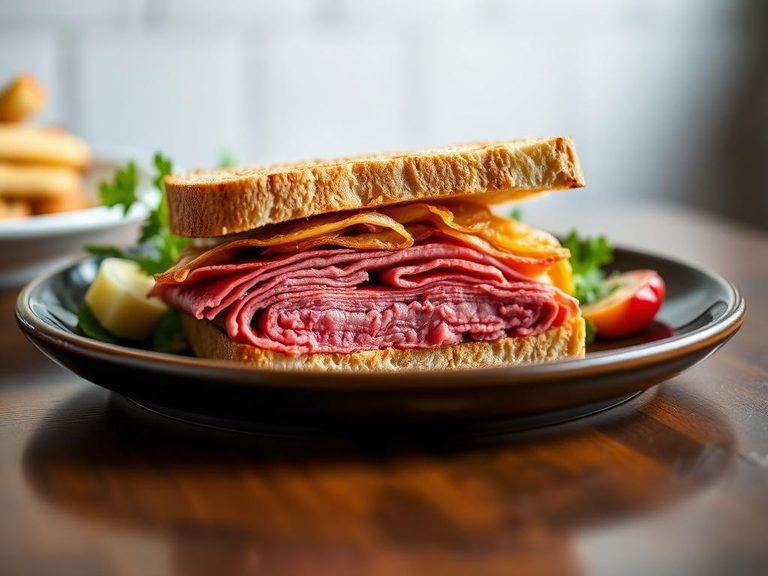
People love it for its exceptional melting quality, which creates a smooth, gooey texture perfect for grilled sandwiches and sauces. Its mild, nutty taste is versatile, complementing everything from burgers to fondue without overpowering other ingredients.
⚠️ Watch-outs & how to enjoy it better
Processed cheese can be high in sodium, which may concern those monitoring blood pressure. It is also a dairy product, making it unsuitable for those with lactose intolerance or milk allergies. To counteract sodium, pair with potassium-rich foods like tomatoes or spinach, and use portion control (e.g., one slice per sandwich).
Key benefits
- High-quality complete protein source
- Rich in calcium for bone health
- Provides vitamin B12 for nerve function
- Low in carbohydrates (2.1g per 100g)
- Contains conjugated linoleic acid (CLA), a beneficial fatty acid
🍽️ Popular dishes
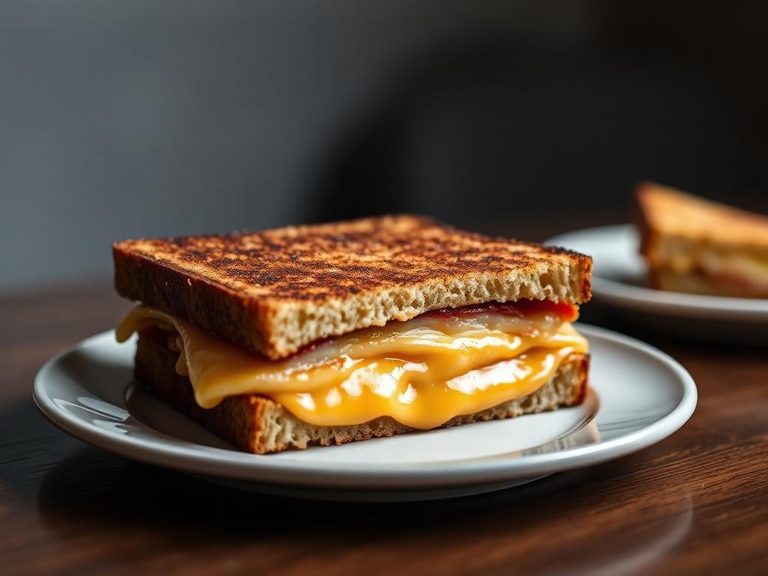
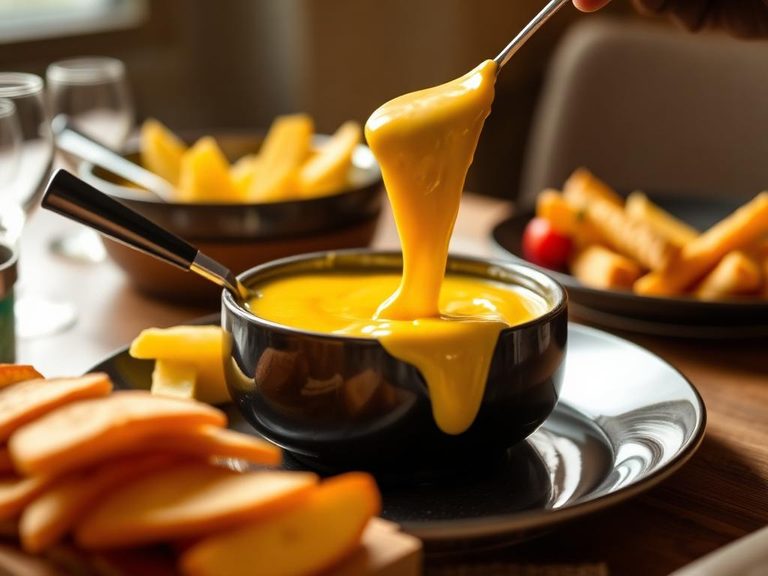
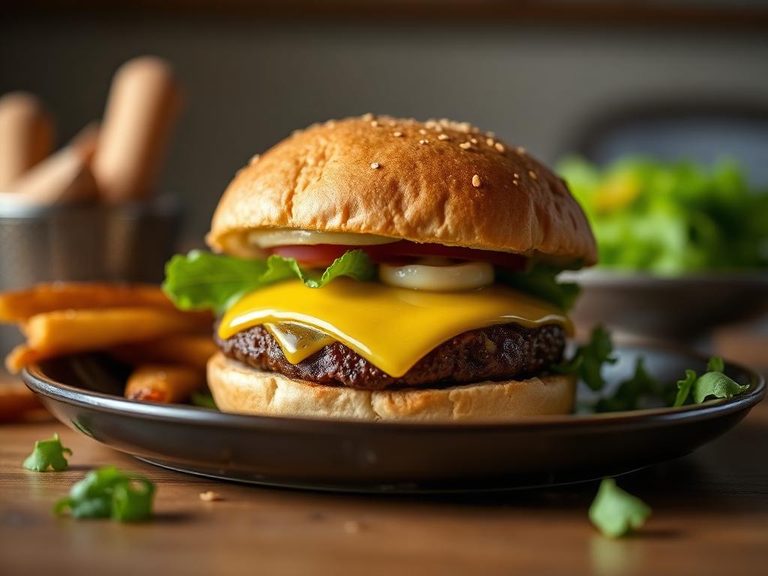
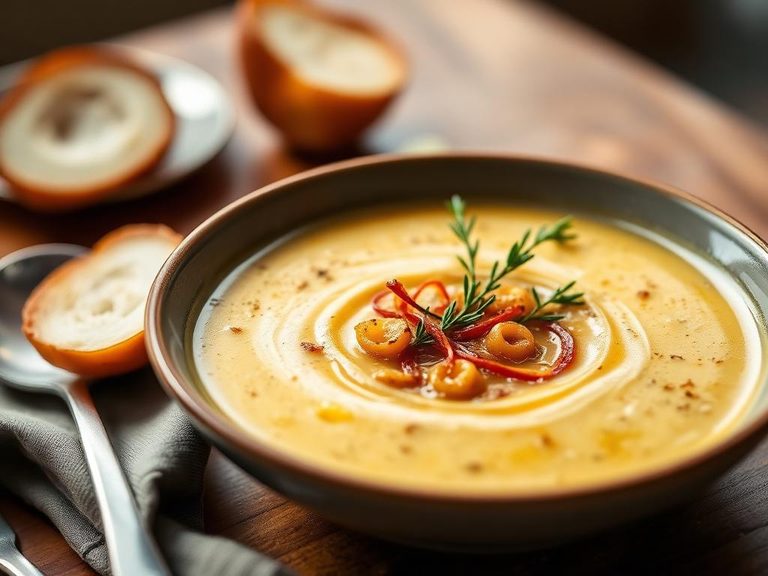
🌍 Where it's eaten
💡 Did you know?
The holes in Swiss cheese are caused by the bacterium *Propionibacterium freudenreichii*, which consumes lactic acid and releases carbon dioxide gas that forms bubbles in the cheese during aging.
Full nutrition (scales with serving)
| Water | 42.3 g |
| Energy | 334 kcal |
| Energy | 1396 kj |
| Protein | 24.7 g |
| Total lipid (fat) | 25.0 g |
| Ash | 5.8 g |
| Carbohydrate, by difference | 2.1 g |
| Fiber, total dietary | 0.00 g |
| Total Sugars | 1.2 g |
| Calcium, Ca | 772 mg |
| Iron, Fe | 0.61 mg |
| Magnesium, Mg | 29.0 mg |
| Phosphorus, P | 762 mg |
| Potassium, K | 216 mg |
| Sodium, Na | 1370 mg |
| Zinc, Zn | 3.6 mg |
| Copper, Cu | 0.03 mg |
| Manganese, Mn | 0.01 mg |
| Selenium, Se | 15.9 ug |
| Vitamin C, total ascorbic acid | 0.00 mg |
| Thiamin | 0.01 mg |
| Riboflavin | 0.28 mg |
| Niacin | 0.04 mg |
| Pantothenic acid | 0.26 mg |
| Vitamin B-6 | 0.04 mg |
| Folate, total | 6.0 ug |
| Folic acid | 0.00 ug |
| Folate, food | 6.0 ug |
| Folate, DFE | 6.0 ug |
| Choline, total | 36.2 mg |
| Vitamin B-12 | 1.2 ug |
| Vitamin B-12, added | 0.00 ug |
| Vitamin A, RAE | 198 ug |
| Retinol | 192 ug |
| Carotene, beta | 63.0 ug |
| Carotene, alpha | 0.00 ug |
| Cryptoxanthin, beta | 0.00 ug |
| Vitamin A, IU | 746 iu |
| Lycopene | 0.00 ug |
| Lutein + zeaxanthin | 0.00 ug |
| Vitamin E (alpha-tocopherol) | 0.34 mg |
| Vitamin E, added | 0.00 mg |
| Vitamin D (D2 + D3), International Units | 18.0 iu |
| Vitamin D (D2 + D3) | 0.50 ug |
| Vitamin D3 (cholecalciferol) | 0.50 ug |
| Vitamin K (phylloquinone) | 2.2 ug |
| Alcohol, ethyl | 0.00 g |
| Caffeine | 0.00 mg |
| Theobromine | 0.00 mg |
Fat & fatty acid profile (per 100g)
| Fatty acids, total saturated | 16.0 g |
| SFA 4:0 | 0.81 g |
| SFA 6:0 | 0.49 g |
| SFA 8:0 | 0.28 g |
| SFA 10:0 | 0.57 g |
| SFA 12:0 | 0.57 g |
| SFA 14:0 | 2.8 g |
| SFA 16:0 | 7.2 g |
| SFA 18:0 | 2.6 g |
| Fatty acids, total monounsaturated | 7.0 g |
| MUFA 16:1 | 0.68 g |
| MUFA 18:1 | 5.9 g |
| MUFA 20:1 | 0.00 g |
| MUFA 22:1 | 0.00 g |
| Fatty acids, total polyunsaturated | 0.62 g |
| PUFA 18:2 | 0.34 g |
| PUFA 18:3 | 0.28 g |
| PUFA 18:4 | 0.00 g |
| PUFA 20:4 | 0.00 g |
| PUFA 20:5 n-3 (EPA) | 0.00 g |
| PUFA 22:5 n-3 (DPA) | 0.00 g |
| PUFA 22:6 n-3 (DHA) | 0.00 g |
| Cholesterol | 85.0 mg |
Amino acid profile (per 100g)
| Tryptophan | 0.36 g |
| Threonine | 0.80 g |
| Isoleucine | 1.1 g |
| Leucine | 2.2 g |
| Lysine | 2.5 g |
| Methionine | 0.64 g |
| Cystine | 0.16 g |
| Phenylalanine | 1.3 g |
| Tyrosine | 1.4 g |
| Valine | 1.5 g |
| Arginine | 1.0 g |
| Histidine | 1.0 g |
| Alanine | 0.62 g |
| Aspartic acid | 1.5 g |
| Glutamic acid | 5.1 g |
| Glycine | 0.41 g |
| Proline | 2.5 g |
| Serine | 1.2 g |
FAQ
What is the difference between process Swiss and natural Swiss cheese?
Process Swiss is made by melting and emulsifying natural Swiss cheese with other ingredients like milk, emulsifiers, and sometimes additional fats, resulting in a smoother, more consistent melt and a milder flavor. Natural Swiss has a more complex, nutty taste and a firmer texture with more pronounced holes.
Is pasteurized process Swiss cheese lactose-free?
No, it is not lactose-free. While the pasteurization process kills harmful bacteria, it does not remove lactose. However, the fermentation process in cheese-making reduces lactose content, so some people with mild lactose intolerance may tolerate it in small portions.
Can I use process Swiss cheese for fondue?
Yes, it's actually ideal for fondue because its emulsifiers prevent it from separating or becoming grainy when melted, creating a perfectly smooth, creamy dip.