

Zwieback
Whole food · Baby Foods

Photo: Wikipedia
Zwieback is a twice-baked, crisp rusk made from white bread dough, offering a satisfying, dry crunch and a subtly sweet, toasted flavor. Its low moisture content gives it a long shelf life, making it a pantry staple. Nutritionally, it's a dense source of carbohydrates, providing quick energy at 426 kcal per 100g.
Calorie split: 10% protein · 70% carbs · 21% fat
↓ Full nutrition💚 Why it's loved
People love zwieback for its comforting, mild sweetness and satisfying crunch, which softens perfectly in milk or tea. It's a versatile, nostalgic snack that bridges cultures, from a teething biscuit for babies to a simple breakfast or travel food.
⚠️ Watch-outs & how to enjoy it better
Its high carbohydrate and sugar content (12.5g per 100g) can cause rapid blood sugar spikes, making it less ideal for diabetics without careful pairing. To counteract this, enjoy it with a source of protein or fat like cheese, nut butter, or yogurt to slow glucose absorption, and practice portion control.
Key benefits
- Excellent source of quick-release energy from carbohydrates
- Very low moisture content ensures a long shelf life
- Provides a gentle, easy-to-digest texture when softened
- Source of small amounts of protein and dietary fiber
🍽️ Popular dishes
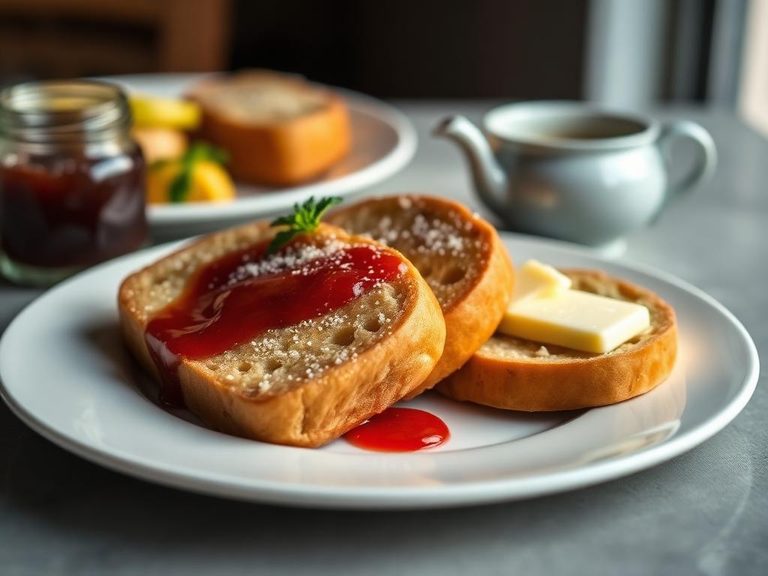
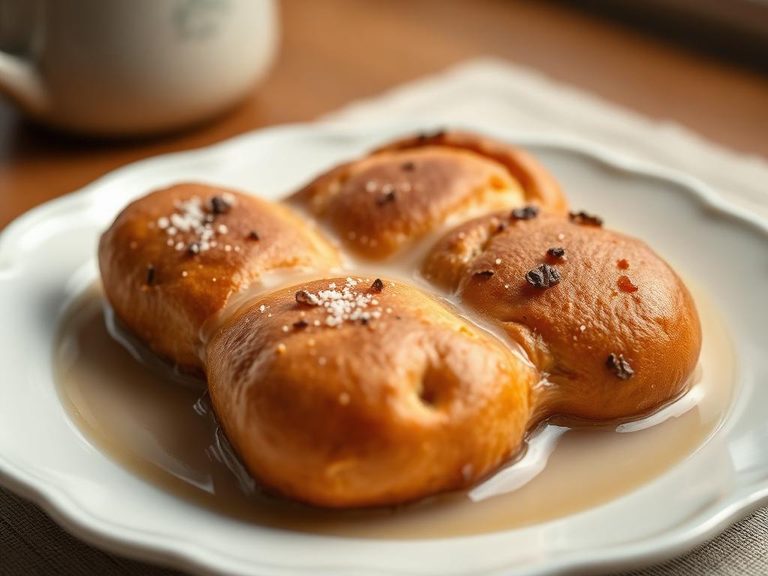
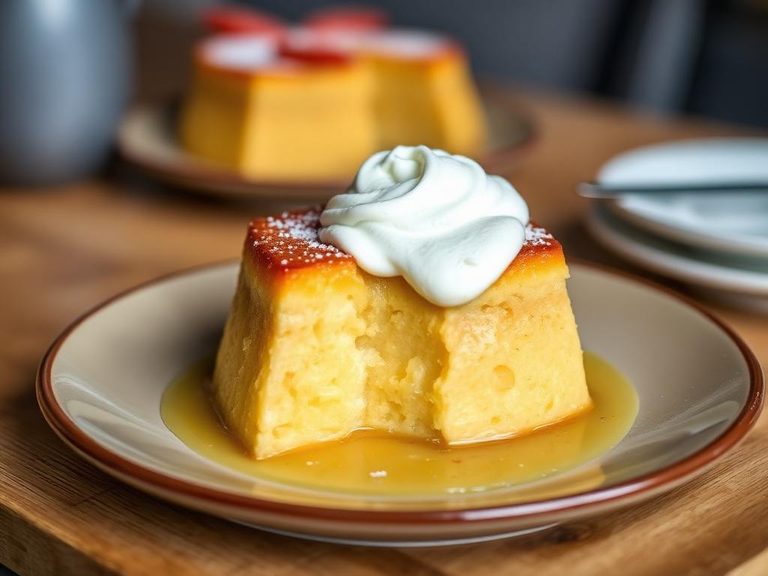
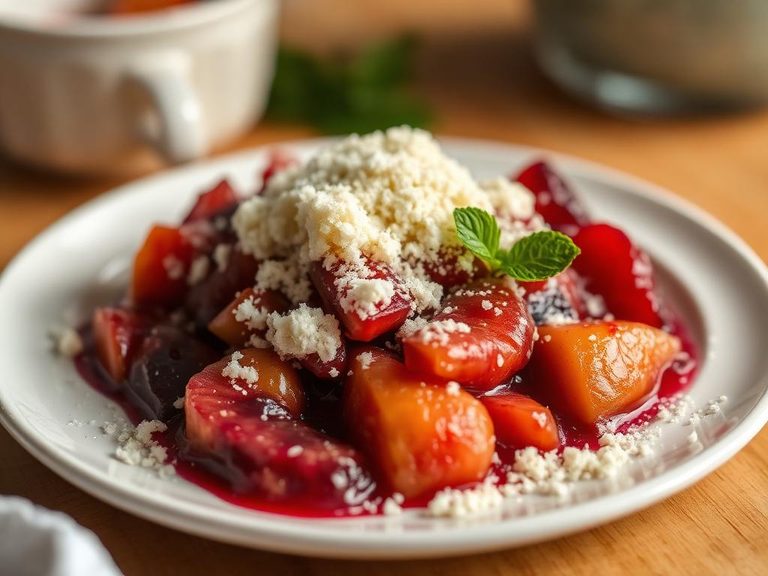
🌍 Where it's eaten
💡 Did you know?
The name 'Zwieback' literally means 'twice-baked' in German, referring to the process where bread is baked, sliced, and then baked again until completely dry and crisp.
Full nutrition (USDA data · scales with serving)
| Water | 4.5 g |
| Energy | 426 kcal |
| Energy | 1783 kj |
| Protein | 10.1 g |
| Total lipid (fat) | 9.7 g |
| Ash | 1.5 g |
| Carbohydrate, by difference | 74.2 g |
| Fiber, total dietary | 2.5 g |
| Total Sugars | 12.5 g |
| Calcium, Ca | 20.0 mg |
| Iron, Fe | 0.60 mg |
| Magnesium, Mg | 14.0 mg |
| Phosphorus, P | 55.0 mg |
| Potassium, K | 305 mg |
| Sodium, Na | 227 mg |
| Zinc, Zn | 0.54 mg |
| Copper, Cu | 0.14 mg |
| Selenium, Se | 28.7 ug |
| Fluoride, F | 0.10 ug |
| Vitamin C, total ascorbic acid | 5.3 mg |
| Thiamin | 0.21 mg |
| Riboflavin | 0.24 mg |
| Niacin | 1.3 mg |
| Pantothenic acid | 0.54 mg |
| Vitamin B-6 | 0.08 mg |
| Folate, total | 87.0 ug |
| Folic acid | 67.0 ug |
| Folate, food | 20.0 ug |
| Folate, DFE | 134 ug |
| Choline, total | 10.7 mg |
| Vitamin B-12 | 0.00 ug |
| Vitamin B-12, added | 0.00 ug |
| Vitamin A, RAE | 16.0 ug |
| Retinol | 15.0 ug |
| Carotene, beta | 4.0 ug |
| Carotene, alpha | 0.00 ug |
| Cryptoxanthin, beta | 1.0 ug |
| Vitamin A, IU | 58.0 iu |
| Lycopene | 0.00 ug |
| Lutein + zeaxanthin | 16.0 ug |
| Vitamin E (alpha-tocopherol) | 2.4 mg |
| Vitamin E, added | 2.3 mg |
| Tocopherol, beta | 0.05 mg |
| Tocopherol, gamma | 0.31 mg |
| Tocopherol, delta | 0.01 mg |
| Tocotrienol, alpha | 0.02 mg |
| Tocotrienol, beta | 0.07 mg |
| Tocotrienol, gamma | 0.00 mg |
| Tocotrienol, delta | 0.01 mg |
| Vitamin D (D2 + D3), International Units | 0.00 iu |
| Vitamin D (D2 + D3) | 0.00 ug |
| Vitamin K (phylloquinone) | 0.90 ug |
| Alcohol, ethyl | 0.00 g |
| Caffeine | 0.00 mg |
| Theobromine | 0.00 mg |
Fat & fatty acid profile (per 100g)
| Fatty acids, total saturated | 2.5 g |
| SFA 4:0 | 0.10 g |
| SFA 6:0 | 0.06 g |
| SFA 8:0 | 0.04 g |
| SFA 10:0 | 0.08 g |
| SFA 12:0 | 0.09 g |
| SFA 13:0 | 0.00 g |
| SFA 14:0 | 0.31 g |
| SFA 15:0 | 0.00 g |
| SFA 16:0 | 1.2 g |
| SFA 17:0 | 0.01 g |
| SFA 18:0 | 0.59 g |
| SFA 20:0 | 0.02 g |
| SFA 22:0 | 0.05 g |
| SFA 24:0 | 0.00 g |
| Fatty acids, total monounsaturated | 4.2 g |
| MUFA 14:1 | 0.00 g |
| MUFA 15:1 | 0.00 g |
| MUFA 16:1 | 0.13 g |
| MUFA 17:1 | 0.00 g |
| MUFA 18:1 | 4.1 g |
| MUFA 20:1 | 0.01 g |
| MUFA 22:1 | 0.00 g |
| MUFA 24:1 c | 0.00 g |
| Fatty acids, total polyunsaturated | 2.1 g |
| PUFA 18:2 | 2.0 g |
| PUFA 18:3 | 0.07 g |
| PUFA 18:4 | 0.00 g |
| PUFA 20:2 n-6 c,c | 0.00 g |
| PUFA 20:3 | 0.00 g |
| PUFA 20:4 | 0.00 g |
| PUFA 20:5 n-3 (EPA) | 0.00 g |
| PUFA 22:5 n-3 (DPA) | 0.00 g |
| PUFA 22:6 n-3 (DHA) | 0.00 g |
| Fatty acids, total trans | 0.01 g |
| Cholesterol | 8.0 mg |
FAQ
Is zwieback the same as toast or rusks?
Not exactly. While similar, zwieback is specifically a twice-baked bread made from a enriched dough (often with eggs and butter), resulting in a sweeter, more delicate crumb than standard savory rusks or plain toast.
How should I store zwieback?
Store it in an airtight container at room temperature, away from moisture. Its low water content makes it very shelf-stable, often lasting for months without spoiling.
Can I make zwieback at home?
Yes. You can make a simple version by slicing a loaf of white or challah bread, brushing slices with butter, and baking them at a low temperature until completely dry and golden.
Nutrient density (calculated · NRF9.3)
Nutrient Rich Foods index: beneficial nutrients (protein, fiber, vitamins, minerals) minus saturated fat, added sugar & sodium, per 100 kcal.
NRF9.3 index — Fulgoni, Keast & Drewnowski, 2009. Computed from USDA nutrients.
Weight-loss friendliness (composite index)
Energy density 4.26 kcal/g · 9% calories from protein · 2.5 g fiber · 12.5 g sugar per 100 g.
Composite of energy density (Rolls et al., 1999), protein & fiber satiety, minus sugar. A calculated heuristic — ranks satiety-per-calorie, not a clinical measure.
Dietary load (calculated from USDA values)
Potential renal acid load. Positive = acid-forming, negative = alkaline-forming.
Sodium-to-potassium ratio: 0.74 (lower is better — aim for ≤ 1)
Sodium:potassium per WHO potassium guidance. Computed from USDA nutrients.