

Yogurt, chocolate, nonfat milk
Whole food · Dairy and Egg Products
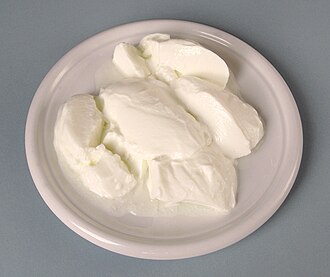
Photo: Wikipedia
A smooth, creamy nonfat yogurt infused with rich cocoa flavor, delivering a sweet, dessert-like experience without the fat. Its nutrition profile is lean, offering a modest protein boost (3.53g) and a notable 23.53g of carbohydrates, primarily from 14.97g of added sugar. This makes it a light, indulgent snack that satisfies chocolate cravings with a tangy yogurt base.
Calorie split: 13% protein · 87% carbs · 0% fat
↓ Full nutrition💚 Why it's loved
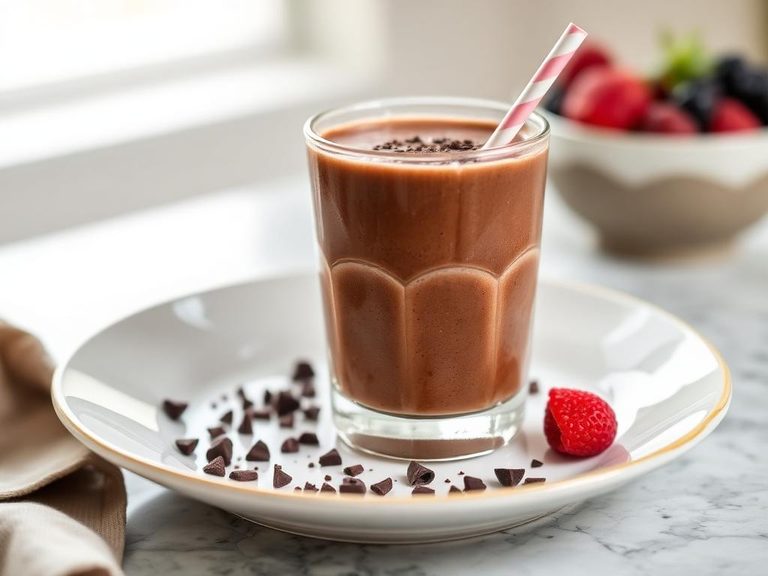
People love it for the nostalgic, comforting combination of tangy yogurt and sweet chocolate, reminiscent of a pudding or mousse. Its versatility allows it to be enjoyed straight from the container, as a smoothie base, or as a topping for fruit and granola.
⚠️ Watch-outs & how to enjoy it better
The high sugar content (nearly 15g per 100g) can cause blood-sugar spikes, especially for those with insulin sensitivity or diabetes. To counteract this, pair it with a source of healthy fat or protein (like nuts or seeds) and practice portion control. It is also a dairy product, a common allergen for lactose-intolerant individuals.
Key benefits
- Provides a quick energy source from carbohydrates
- Contains protein for muscle maintenance and satiety
- Fat-free, making it a lighter dessert option
- Offers a small amount of dietary fiber
- Good source of calcium for bone health
🍽️ Popular dishes


🌍 Where it's eaten
💡 Did you know?
Nonfat chocolate yogurt is often used as a high-protein, low-fat substitute for chocolate pudding in healthy dessert recipes, a trend that gained significant popularity in the 1990s fitness culture.
Full nutrition (USDA data · scales with serving)
| Water | 71.6 g |
| Energy | 112 kcal |
| Energy | 469 kj |
| Protein | 3.5 g |
| Total lipid (fat) | 0.00 g |
| Ash | 1.4 g |
| Carbohydrate, by difference | 23.5 g |
| Fiber, total dietary | 1.2 g |
| Total Sugars | 15.0 g |
| Calcium, Ca | 88.0 mg |
| Iron, Fe | 0.42 mg |
| Magnesium, Mg | 40.0 mg |
| Phosphorus, P | 166 mg |
| Potassium, K | 339 mg |
| Sodium, Na | 135 mg |
| Zinc, Zn | 1.1 mg |
| Copper, Cu | 0.21 mg |
| Selenium, Se | 7.0 ug |
| Fluoride, F | 12.0 ug |
| Vitamin C, total ascorbic acid | 0.00 mg |
| Thiamin | 0.05 mg |
| Riboflavin | 0.21 mg |
| Niacin | 0.22 mg |
| Vitamin B-6 | 0.05 mg |
| Folate, total | 12.0 ug |
| Folic acid | 0.00 ug |
| Folate, food | 12.0 ug |
| Folate, DFE | 12.0 ug |
| Choline, total | 15.2 mg |
| Vitamin B-12 | 0.50 ug |
| Vitamin B-12, added | 0.00 ug |
| Vitamin A, RAE | 0.00 ug |
| Retinol | 0.00 ug |
| Carotene, beta | 0.00 ug |
| Carotene, alpha | 0.00 ug |
| Cryptoxanthin, beta | 0.00 ug |
| Vitamin A, IU | 0.00 iu |
| Lycopene | 0.00 ug |
| Lutein + zeaxanthin | 0.00 ug |
| Vitamin E (alpha-tocopherol) | 0.00 mg |
| Vitamin E, added | 0.00 mg |
| Vitamin D (D2 + D3), International Units | 0.00 iu |
| Vitamin D (D2 + D3) | 0.00 ug |
| Vitamin K (phylloquinone) | 0.00 ug |
| Alcohol, ethyl | 0.00 g |
| Caffeine | 2.0 mg |
| Theobromine | 23.0 mg |
Fat & fatty acid profile (per 100g)
| Fatty acids, total saturated | 0.00 g |
| SFA 4:0 | 0.00 g |
| SFA 6:0 | 0.00 g |
| SFA 8:0 | 0.00 g |
| SFA 10:0 | 0.00 g |
| SFA 12:0 | 0.00 g |
| SFA 14:0 | 0.00 g |
| SFA 16:0 | 0.00 g |
| SFA 18:0 | 0.00 g |
| Fatty acids, total monounsaturated | 0.00 g |
| MUFA 16:1 | 0.00 g |
| MUFA 18:1 | 0.00 g |
| MUFA 20:1 | 0.00 g |
| MUFA 22:1 | 0.00 g |
| Fatty acids, total polyunsaturated | 0.00 g |
| PUFA 18:2 | 0.00 g |
| PUFA 18:3 | 0.00 g |
| PUFA 18:4 | 0.00 g |
| PUFA 20:4 | 0.00 g |
| PUFA 20:5 n-3 (EPA) | 0.00 g |
| PUFA 22:5 n-3 (DPA) | 0.00 g |
| PUFA 22:6 n-3 (DHA) | 0.00 g |
| Cholesterol | 1.0 mg |
Amino acid profile (per 100g)
Estimated from Yogurt, fruit variety, nonfat — USDA does not publish this profile for Yogurt.
| Tryptophan | 0.03 g |
| Threonine | 0.20 g |
| Isoleucine | 0.27 g |
| Leucine | 0.50 g |
| Lysine | 0.44 g |
| Methionine | 0.14 g |
| Cystine | 0.04 g |
| Phenylalanine | 0.27 g |
| Tyrosine | 0.25 g |
| Valine | 0.41 g |
| Arginine | 0.15 g |
| Histidine | 0.12 g |
| Alanine | 0.21 g |
| Aspartic acid | 0.39 g |
| Glutamic acid | 0.97 g |
| Glycine | 0.12 g |
| Proline | 0.58 g |
| Serine | 0.30 g |
FAQ
Is nonfat chocolate yogurt healthy?
It can be a part of a healthy diet, offering protein and calcium without fat. However, it's important to be mindful of its high sugar content (about 15g per 100g), which can contribute to added sugars in your diet.
How does nonfat chocolate yogurt compare to regular chocolate yogurt?
Nonfat chocolate yogurt has significantly less fat and fewer calories (112 kcal per 100g vs. typically 150-200 kcal). However, it may have a slightly thinner texture and often contains more added sugar to compensate for the lack of fat.
Can I use nonfat chocolate yogurt in cooking?
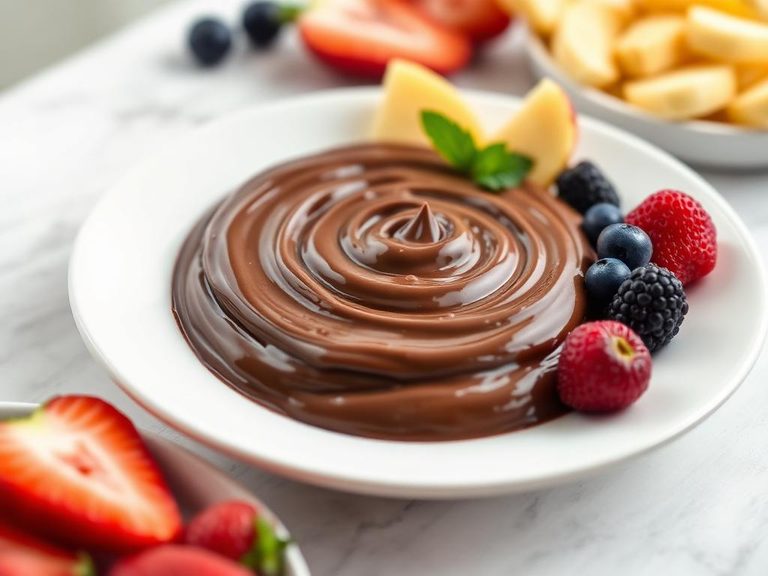
Yes, it's a versatile ingredient. It can be used in smoothies, as a base for dips, in baked goods for moisture and tang, or as a healthier topping for desserts and breakfast bowls.
Nutrient density (calculated · NRF9.3)
Nutrient Rich Foods index: beneficial nutrients (protein, fiber, vitamins, minerals) minus saturated fat, added sugar & sodium, per 100 kcal.
NRF9.3 index — Fulgoni, Keast & Drewnowski, 2009. Computed from USDA nutrients.
Weight-loss friendliness (composite index)
Energy density 1.12 kcal/g · 13% calories from protein · 1.2 g fiber · 15.0 g sugar per 100 g.
Composite of energy density (Rolls et al., 1999), protein & fiber satiety, minus sugar. A calculated heuristic — ranks satiety-per-calorie, not a clinical measure.
Dietary load (calculated from USDA values)
Potential renal acid load. Positive = acid-forming, negative = alkaline-forming.
Sodium-to-potassium ratio: 0.40 (lower is better — aim for ≤ 1)
Sodium:potassium per WHO potassium guidance. Computed from USDA nutrients.