

Wheat, hard red winter
Whole food · Cereal Grains and Pasta

Photo: Wikipedia
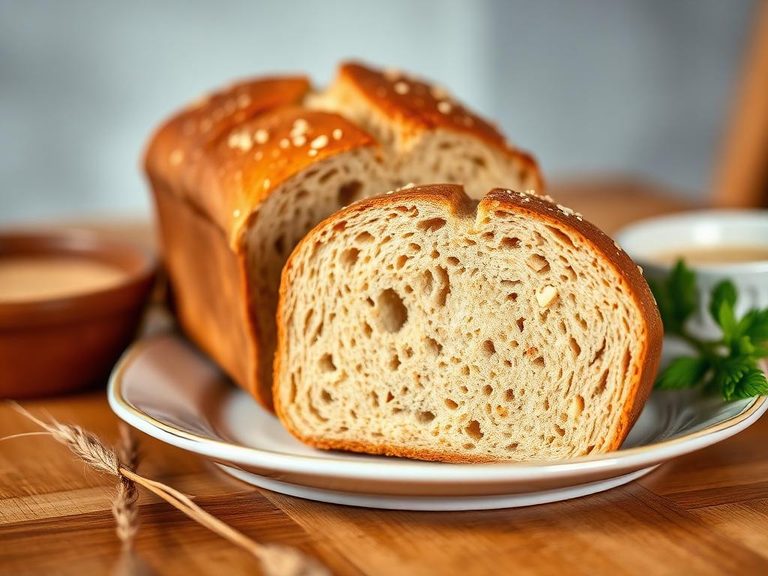
Hard red winter wheat is a robust, high-protein grain with a deep, nutty flavor and a chewy texture when cooked whole. Its high gluten content makes it the premier choice for hearty, rustic breads that require a strong rise and a satisfying crumb. Nutritionally, it's a powerhouse, offering a significant dose of protein and exceptional fiber per serving.
Calorie split: 14% protein · 82% carbs · 4% fat
↓ Full nutrition💚 Why it's loved
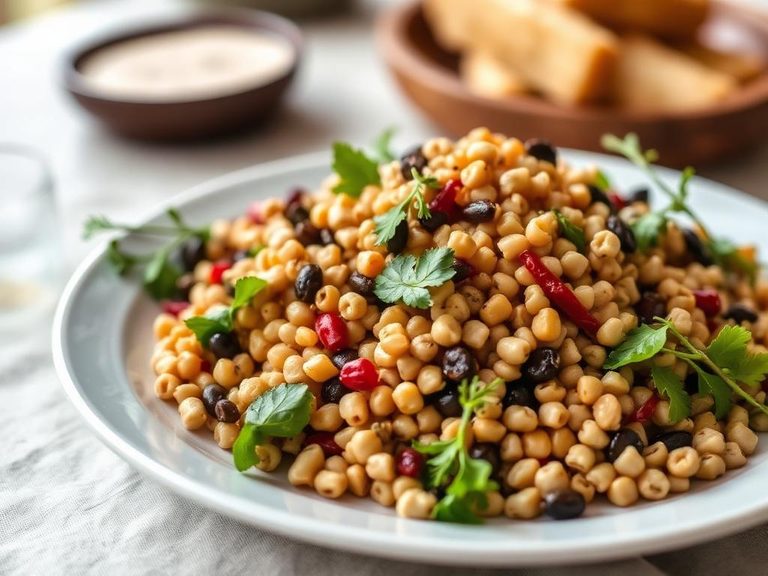
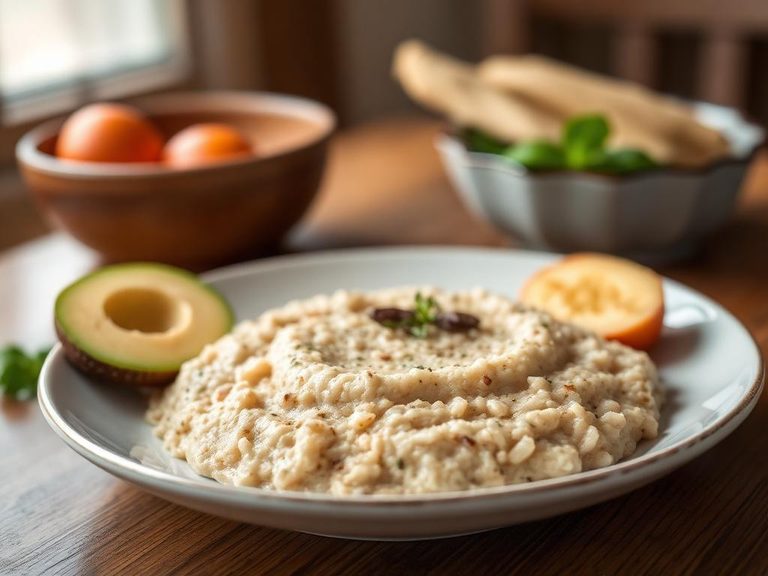
People cherish it for the deep, complex flavor and chewy texture it imparts to artisan breads, whole-grain pastas, and hearty cereals. It's the backbone of traditional whole-wheat baking, valued for its ability to create loaves with excellent structure and a satisfying, nutty taste.
⚠️ Watch-outs & how to enjoy it better
Its high gluten content makes it unsuitable for those with celiac disease or gluten sensitivity. The dense, chewy texture can be less appealing in baked goods where a light, fluffy crumb is desired. To counteract its density in baking, it's often blended with a portion of all-purpose flour or high-protein bread flour. Soaking whole berries before cooking can also improve digestibility and reduce cooking time.
Key benefits
- Excellent source of dietary fiber for digestive health.
- High in plant-based protein for muscle maintenance.
- Rich in minerals like magnesium, phosphorus, and selenium.
- Contains antioxidants like ferulic acid in the bran.
- Provides complex carbohydrates for sustained energy.
🍽️ Popular dishes
🌍 Where it's eaten
💡 Did you know?
Hard red winter wheat is planted in the fall, goes dormant under winter snow, and is harvested in early summer—a cycle that gives it a longer growing season and higher protein content than spring-planted wheats.
Full nutrition (USDA data · scales with serving)
| Water | 13.1 g |
| Energy | 327 kcal |
| Energy | 1368 kj |
| Protein | 12.6 g |
| Total lipid (fat) | 1.5 g |
| Ash | 1.6 g |
| Carbohydrate, by difference | 71.2 g |
| Fiber, total dietary | 12.2 g |
| Total Sugars | 0.41 g |
| Calcium, Ca | 29.0 mg |
| Iron, Fe | 3.2 mg |
| Magnesium, Mg | 126 mg |
| Phosphorus, P | 288 mg |
| Potassium, K | 363 mg |
| Sodium, Na | 2.0 mg |
| Zinc, Zn | 2.6 mg |
| Copper, Cu | 0.43 mg |
| Manganese, Mn | 4.0 mg |
| Selenium, Se | 70.7 ug |
| Vitamin C, total ascorbic acid | 0.00 mg |
| Thiamin | 0.38 mg |
| Riboflavin | 0.12 mg |
| Niacin | 5.5 mg |
| Pantothenic acid | 0.95 mg |
| Vitamin B-6 | 0.30 mg |
| Folate, total | 38.0 ug |
| Folic acid | 0.00 ug |
| Folate, food | 38.0 ug |
| Folate, DFE | 38.0 ug |
| Choline, total | 31.2 mg |
| Vitamin B-12 | 0.00 ug |
| Vitamin B-12, added | 0.00 ug |
| Vitamin A, RAE | 0.00 ug |
| Retinol | 0.00 ug |
| Carotene, beta | 5.0 ug |
| Carotene, alpha | 0.00 ug |
| Cryptoxanthin, beta | 0.00 ug |
| Vitamin A, IU | 9.0 iu |
| Lycopene | 0.00 ug |
| Lutein + zeaxanthin | 220 ug |
| Vitamin E (alpha-tocopherol) | 1.0 mg |
| Vitamin E, added | 0.00 mg |
| Vitamin D (D2 + D3), International Units | 0.00 iu |
| Vitamin D (D2 + D3) | 0.00 ug |
| Vitamin K (phylloquinone) | 1.9 ug |
| Alcohol, ethyl | 0.00 g |
| Caffeine | 0.00 mg |
| Theobromine | 0.00 mg |
Fat & fatty acid profile (per 100g)
| Fatty acids, total saturated | 0.27 g |
| SFA 4:0 | 0.00 g |
| SFA 6:0 | 0.00 g |
| SFA 8:0 | 0.01 g |
| SFA 10:0 | 0.00 g |
| SFA 12:0 | 0.00 g |
| SFA 14:0 | 0.00 g |
| SFA 16:0 | 0.23 g |
| SFA 18:0 | 0.01 g |
| Fatty acids, total monounsaturated | 0.20 g |
| MUFA 16:1 | 0.01 g |
| MUFA 18:1 | 0.19 g |
| MUFA 20:1 | 0.00 g |
| MUFA 22:1 | 0.00 g |
| Fatty acids, total polyunsaturated | 0.63 g |
| PUFA 18:2 | 0.60 g |
| PUFA 18:3 | 0.03 g |
| PUFA 18:4 | 0.00 g |
| PUFA 20:4 | 0.00 g |
| PUFA 20:5 n-3 (EPA) | 0.00 g |
| PUFA 22:5 n-3 (DPA) | 0.00 g |
| PUFA 22:6 n-3 (DHA) | 0.00 g |
| Cholesterol | 0.00 mg |
Amino acid profile (per 100g)
| Tryptophan | 0.16 g |
| Threonine | 0.36 g |
| Isoleucine | 0.46 g |
| Leucine | 0.85 g |
| Lysine | 0.34 g |
| Methionine | 0.20 g |
| Cystine | 0.32 g |
| Phenylalanine | 0.59 g |
| Tyrosine | 0.39 g |
| Valine | 0.56 g |
| Arginine | 0.59 g |
| Histidine | 0.28 g |
| Alanine | 0.45 g |
| Aspartic acid | 0.64 g |
| Glutamic acid | 4.0 g |
| Glycine | 0.53 g |
| Proline | 1.3 g |
| Serine | 0.59 g |
FAQ
What's the difference between hard red winter and hard red spring wheat?
Winter wheat is planted in fall and harvested in summer, resulting in a slightly lower protein content (10-12%) ideal for whole-grain breads. Spring wheat is planted in spring and harvested in late summer, with higher protein (12-15%) preferred for all-purpose and bread flours.
Can I use it for all-purpose flour in recipes?
It's not a direct substitute. Its high gluten and bran content will make cakes and pastries dense and chewy. It's best for breads, muffins, and pancakes where a hearty texture is desired, or blended with all-purpose flour.
How do I store wheat berries to keep them fresh?
Store whole wheat berries in an airtight container in a cool, dark place like a pantry for up to a year, or in the freezer for even longer shelf life to prevent the natural oils in the germ from going rancid.
Nutrient density (calculated · NRF9.3)
Nutrient Rich Foods index: beneficial nutrients (protein, fiber, vitamins, minerals) minus saturated fat, added sugar & sodium, per 100 kcal.
NRF9.3 index — Fulgoni, Keast & Drewnowski, 2009. Computed from USDA nutrients.
Weight-loss friendliness (composite index)
Energy density 3.27 kcal/g · 15% calories from protein · 12.2 g fiber · 0.4 g sugar per 100 g.
Composite of energy density (Rolls et al., 1999), protein & fiber satiety, minus sugar. A calculated heuristic — ranks satiety-per-calorie, not a clinical measure.
Dietary load (calculated from USDA values)
Potential renal acid load. Positive = acid-forming, negative = alkaline-forming.
Sodium-to-potassium ratio: 0.01 (lower is better — aim for ≤ 1)
Sodium:potassium per WHO potassium guidance. Computed from USDA nutrients.