

Vegetables, stew type, cooked, no added fat
Common food
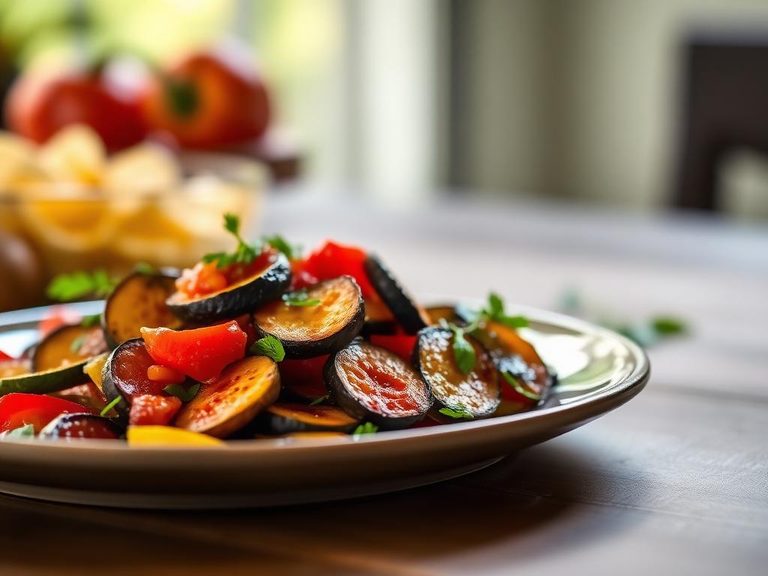
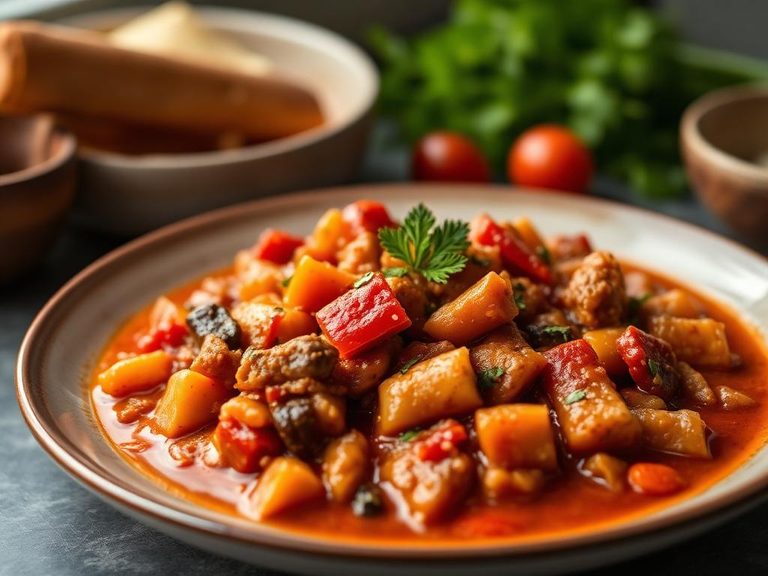
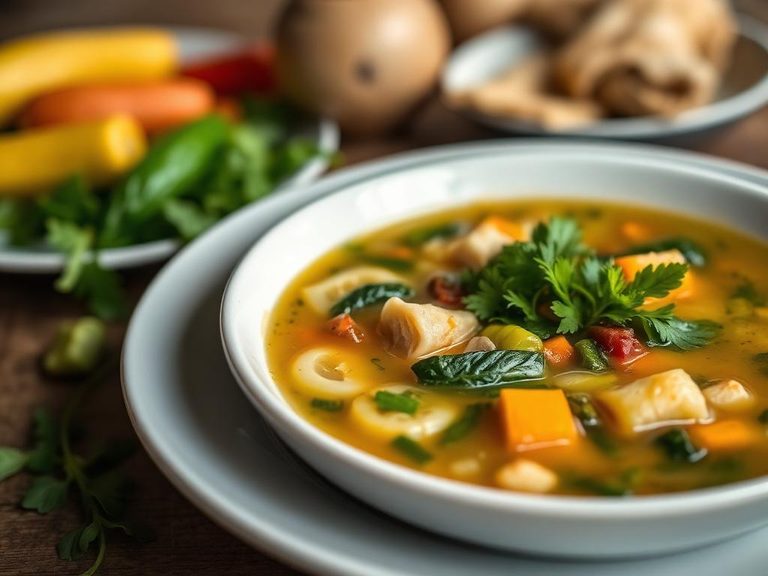
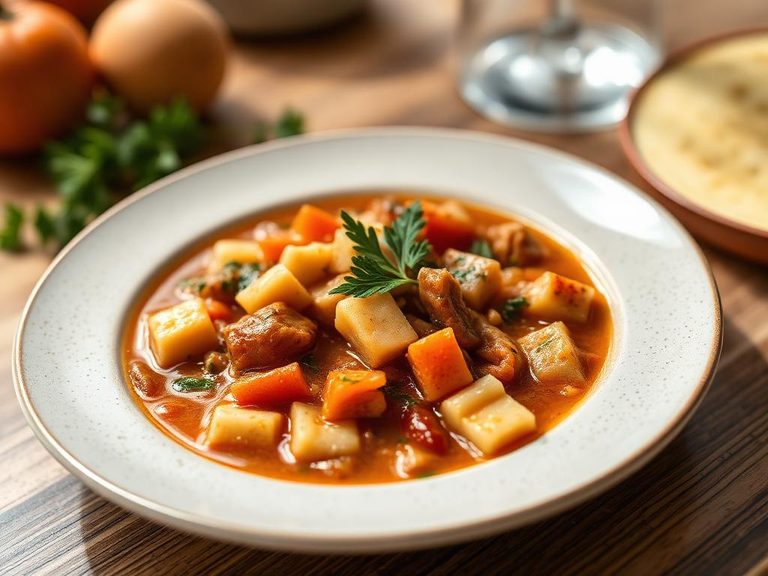
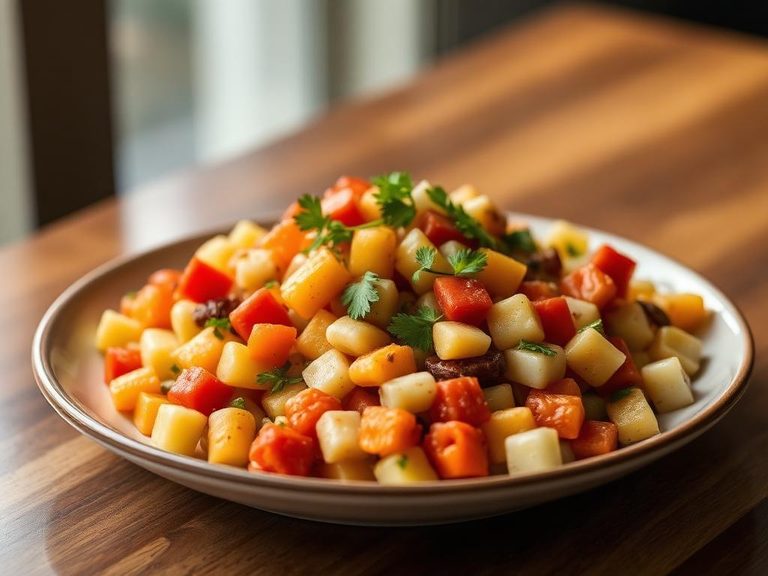
This is a hearty, comforting medley of vegetables simmered until tender in a savory broth, resulting in a soft, melt-in-your-mouth texture. The flavor is deeply savory and slightly sweet, with each vegetable contributing its own character to the collective taste. Nutritionally, it's a low-calorie, high-fiber powerhouse that delivers a significant amount of complex carbohydrates for sustained energy.
Calorie split: 8% protein · 89% carbs · 2% fat
↓ Full nutrition💚 Why it's loved
People cherish stewed vegetables for their profound comfort-food appeal and the way slow cooking melds flavors into a harmonious, savory whole. It's a versatile dish that can be tailored to any seasonal harvest or cultural palate, making it a universal symbol of home cooking.
⚠️ Watch-outs & how to enjoy it better
The soft texture can be unappealing to those who prefer crisp vegetables, and the cooking process can leach some water-soluble vitamins. For individuals monitoring blood sugar, the high carbohydrate content from starchy vegetables like potatoes or carrots can cause spikes; pairing the stew with a lean protein or a dollop of Greek yogurt can help moderate this response.
Key benefits
- Excellent source of dietary fiber for digestive health
- Very low in fat and calories, supporting weight management
- Rich in complex carbohydrates for steady energy release
- Provides a diverse array of vitamins and minerals from mixed vegetables
- High water content aids in hydration
🍽️ Popular dishes
🌍 Where it's eaten
💡 Did you know?
The term 'stew' likely derives from the Old French word 'estuve,' referring to a bathhouse, as the slow-cooking method was originally done in a steam-filled chamber.
Full nutrition (USDA data · scales with serving)
| Water | 81.4 g |
| Energy | 69.0 kcal |
| Protein | 1.5 g |
| Total lipid (fat) | 0.18 g |
| Carbohydrate, by difference | 15.7 g |
| Fiber, total dietary | 2.1 g |
| Total Sugars | 3.1 g |
| Calcium, Ca | 18.0 mg |
| Iron, Fe | 0.26 mg |
| Magnesium, Mg | 18.0 mg |
| Phosphorus, P | 44.0 mg |
| Potassium, K | 321 mg |
| Sodium, Na | 169 mg |
| Zinc, Zn | 0.25 mg |
| Copper, Cu | 0.13 mg |
| Selenium, Se | 0.20 ug |
| Vitamin C, total ascorbic acid | 9.2 mg |
| Thiamin | 0.08 mg |
| Riboflavin | 0.05 mg |
| Niacin | 1.1 mg |
| Vitamin B-6 | 0.21 mg |
| Folate, total | 19.0 ug |
| Folic acid | 0.00 ug |
| Folate, food | 19.0 ug |
| Folate, DFE | 19.0 ug |
| Choline, total | 11.3 mg |
| Vitamin B-12 | 0.00 ug |
| Vitamin B-12, added | 0.00 ug |
| Vitamin A, RAE | 248 ug |
| Retinol | 0.00 ug |
| Carotene, beta | 2466 ug |
| Carotene, alpha | 1029 ug |
| Cryptoxanthin, beta | 0.00 ug |
| Lycopene | 0.00 ug |
| Lutein + zeaxanthin | 91.0 ug |
| Vitamin E (alpha-tocopherol) | 0.24 mg |
| Vitamin E, added | 0.00 mg |
| Vitamin D (D2 + D3) | 0.00 ug |
| Vitamin K (phylloquinone) | 5.8 ug |
| Alcohol, ethyl | 0.00 g |
| Caffeine | 0.00 mg |
| Theobromine | 0.00 mg |
Fat & fatty acid profile (per 100g)
| Fatty acids, total saturated | 0.03 g |
| SFA 4:0 | 0.00 g |
| SFA 6:0 | 0.00 g |
| SFA 8:0 | 0.00 g |
| SFA 10:0 | 0.00 g |
| SFA 12:0 | 0.00 g |
| SFA 14:0 | 0.00 g |
| SFA 16:0 | 0.03 g |
| SFA 18:0 | 0.00 g |
| Fatty acids, total monounsaturated | 0.01 g |
| MUFA 16:1 | 0.00 g |
| MUFA 18:1 | 0.01 g |
| MUFA 20:1 | 0.00 g |
| MUFA 22:1 | 0.00 g |
| Fatty acids, total polyunsaturated | 0.06 g |
| PUFA 18:2 | 0.05 g |
| PUFA 18:3 | 0.01 g |
| PUFA 18:4 | 0.00 g |
| PUFA 20:4 | 0.00 g |
| PUFA 20:5 n-3 (EPA) | 0.00 g |
| PUFA 22:5 n-3 (DPA) | 0.00 g |
| PUFA 22:6 n-3 (DHA) | 0.00 g |
| Cholesterol | 0.00 mg |
Amino acid profile (per 100g)
Estimated from Babyfood, vegetables, mix vegetables junior — USDA does not publish this profile for Vegetables.
| Tryptophan | 0.01 g |
| Threonine | 0.04 g |
| Isoleucine | 0.06 g |
| Leucine | 0.09 g |
| Lysine | 0.05 g |
| Methionine | 0.02 g |
| Cystine | 0.03 g |
| Phenylalanine | 0.06 g |
| Tyrosine | 0.05 g |
| Valine | 0.07 g |
| Arginine | 0.09 g |
| Histidine | 0.03 g |
| Alanine | 0.06 g |
| Aspartic acid | 0.17 g |
| Glutamic acid | 0.37 g |
| Glycine | 0.05 g |
| Proline | 0.11 g |
| Serine | 0.05 g |
FAQ
Does stewing vegetables destroy their nutrients?
While some heat-sensitive vitamins (like Vitamin C and B vitamins) can degrade with cooking, stewing actually makes certain nutrients, like lycopene in tomatoes and beta-carotene in carrots, more bioavailable. The key is to avoid overcooking and to consume the nutrient-rich broth.
Can I make this vegan or gluten-free?
Absolutely. This dish is naturally vegan and gluten-free when prepared with vegetable broth and without any added thickeners like flour. It's a very adaptable base recipe.
Why are my stewed vegetables mushy?
Mushiness is a common result of overcooking. To maintain some texture, add denser vegetables (like carrots, potatoes) to the pot first, and add softer ones (like zucchini, tomatoes) later in the cooking process.
Nutrient density (calculated · NRF9.3)
Nutrient Rich Foods index: beneficial nutrients (protein, fiber, vitamins, minerals) minus saturated fat, added sugar & sodium, per 100 kcal.
NRF9.3 index — Fulgoni, Keast & Drewnowski, 2009. Computed from USDA nutrients.
Weight-loss friendliness (composite index)
Energy density 0.69 kcal/g · 9% calories from protein · 2.1 g fiber · 3.1 g sugar per 100 g.
Composite of energy density (Rolls et al., 1999), protein & fiber satiety, minus sugar. A calculated heuristic — ranks satiety-per-calorie, not a clinical measure.
Dietary load (calculated from USDA values)
Potential renal acid load. Positive = acid-forming, negative = alkaline-forming.
Sodium-to-potassium ratio: 0.53 (lower is better — aim for ≤ 1)
Sodium:potassium per WHO potassium guidance. Computed from USDA nutrients.