

Vegetables, stew type, cooked, fat added
Common food

Photo: Wikipedia
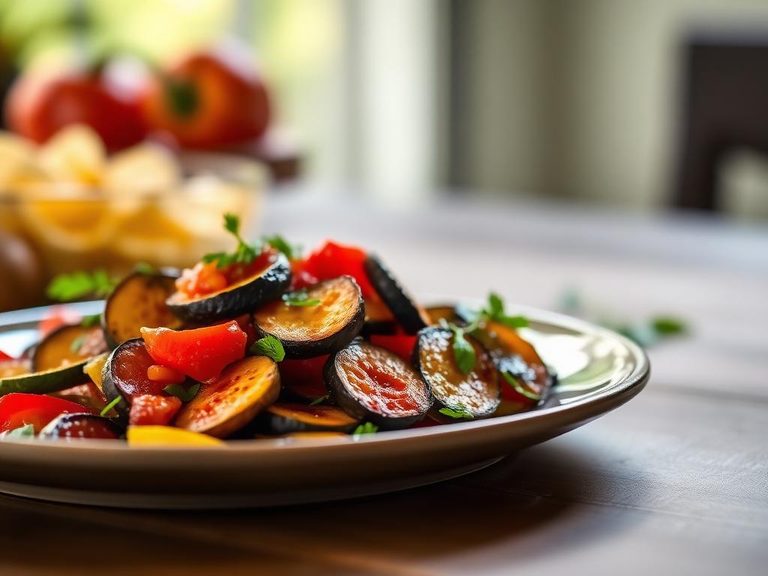
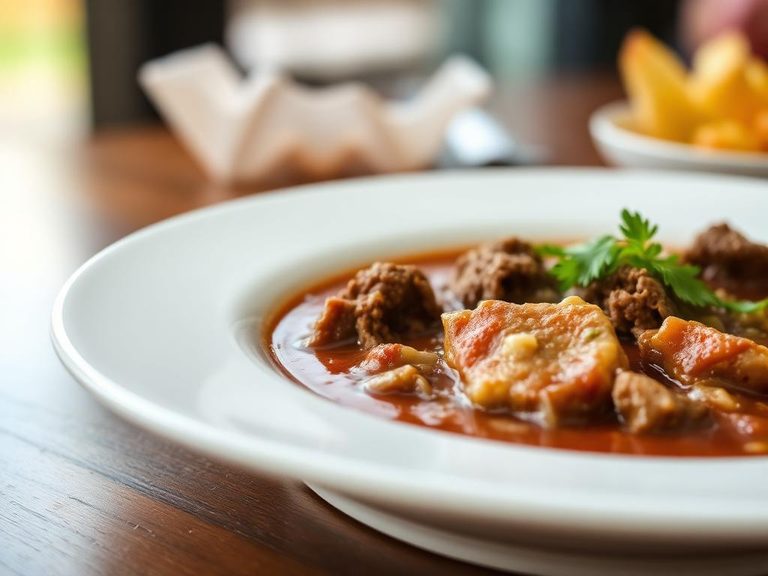
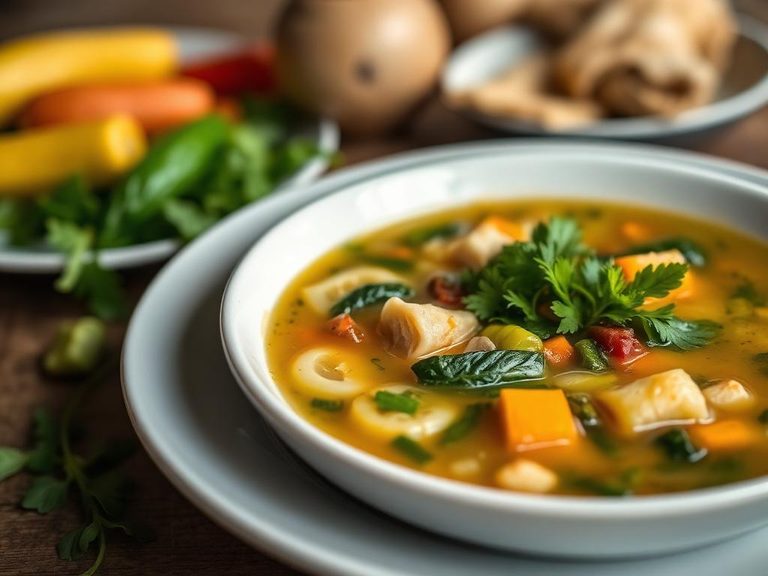
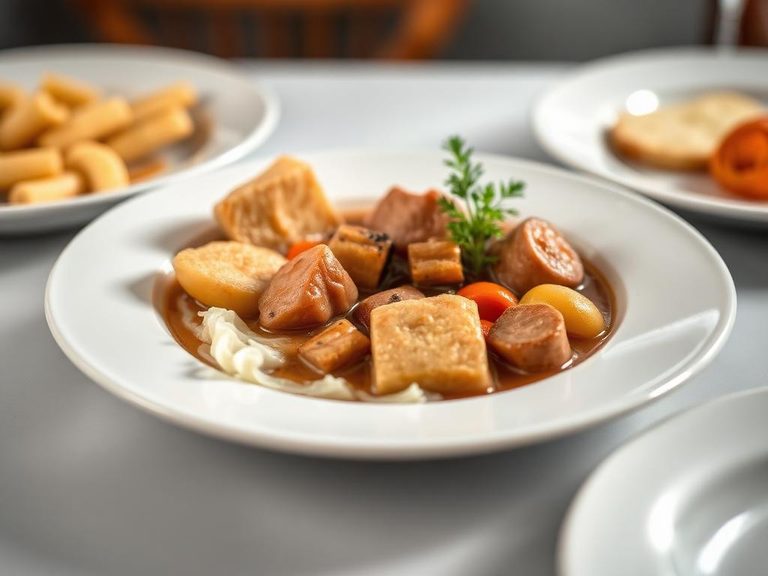
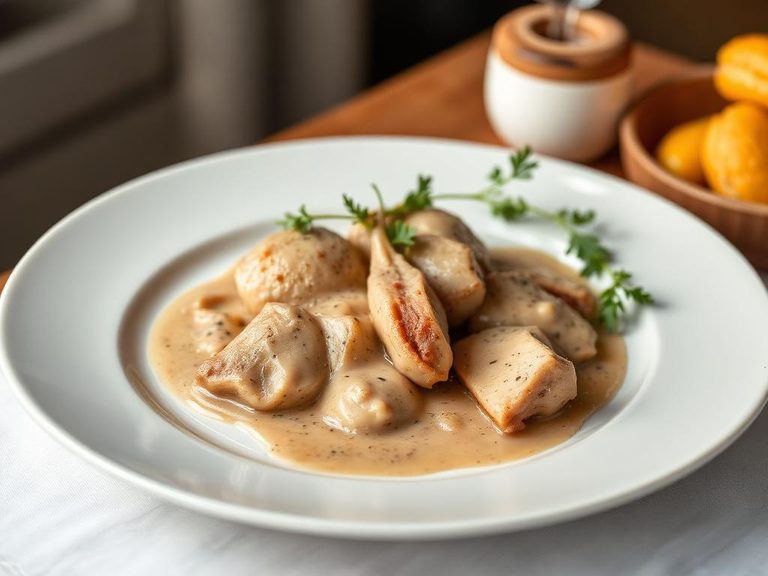
This is a hearty, savory medley of vegetables slow-cooked in a flavorful broth or sauce, often with added fat for richness. The texture is tender and yielding, with flavors that meld into a comforting, savory depth. Nutritionally, it's a low-calorie, high-fiber dish that provides a good source of complex carbohydrates.
Calorie split: 6% protein · 61% carbs · 33% fat
↓ Full nutrition💚 Why it's loved
People love it for its deep, comforting flavors where the vegetables become tender and absorb the savory broth. It's incredibly versatile, serving as a standalone meal, a side dish, or a base for grains and proteins.
⚠️ Watch-outs & how to enjoy it better
The added fat can increase calorie density, and some recipes may be high in sodium. For those monitoring blood sugar, the carbohydrate content should be considered. To counteract, pair with a lean protein source, control portion size, and choose low-sodium broths or season with herbs and spices.
Key benefits
- Low calorie density supports weight management
- High fiber content aids digestion and promotes satiety
- Provides complex carbohydrates for sustained energy
- Cooking method can increase bioavailability of certain nutrients like lycopene
🍽️ Popular dishes

🌍 Where it's eaten
💡 Did you know?
The process of stewing vegetables can actually break down their cell walls, making some nutrients, like the antioxidant lycopene in tomatoes, more easily absorbed by the body compared to when they are raw.
Full nutrition (USDA data · scales with serving)
| Water | 78.7 g |
| Energy | 97.0 kcal |
| Protein | 1.4 g |
| Total lipid (fat) | 3.6 g |
| Carbohydrate, by difference | 15.1 g |
| Fiber, total dietary | 2.0 g |
| Total Sugars | 3.0 g |
| Calcium, Ca | 18.0 mg |
| Iron, Fe | 0.25 mg |
| Magnesium, Mg | 18.0 mg |
| Phosphorus, P | 42.0 mg |
| Potassium, K | 309 mg |
| Sodium, Na | 181 mg |
| Zinc, Zn | 0.24 mg |
| Copper, Cu | 0.13 mg |
| Selenium, Se | 0.20 ug |
| Vitamin C, total ascorbic acid | 8.8 mg |
| Thiamin | 0.08 mg |
| Riboflavin | 0.04 mg |
| Niacin | 1.1 mg |
| Vitamin B-6 | 0.23 mg |
| Folate, total | 18.0 ug |
| Folic acid | 0.00 ug |
| Folate, food | 18.0 ug |
| Folate, DFE | 18.0 ug |
| Choline, total | 11.2 mg |
| Vitamin B-12 | 0.00 ug |
| Vitamin B-12, added | 0.00 ug |
| Vitamin A, RAE | 257 ug |
| Retinol | 15.0 ug |
| Carotene, beta | 2401 ug |
| Carotene, alpha | 999 ug |
| Cryptoxanthin, beta | 0.00 ug |
| Lycopene | 0.00 ug |
| Lutein + zeaxanthin | 88.0 ug |
| Vitamin E (alpha-tocopherol) | 0.75 mg |
| Vitamin E, added | 0.00 mg |
| Vitamin D (D2 + D3) | 0.00 ug |
| Vitamin K (phylloquinone) | 8.6 ug |
| Alcohol, ethyl | 0.00 g |
| Caffeine | 0.00 mg |
| Theobromine | 0.00 mg |
Fat & fatty acid profile (per 100g)
| Fatty acids, total saturated | 0.94 g |
| SFA 4:0 | 0.02 g |
| SFA 6:0 | 0.02 g |
| SFA 8:0 | 0.01 g |
| SFA 10:0 | 0.02 g |
| SFA 12:0 | 0.03 g |
| SFA 14:0 | 0.09 g |
| SFA 16:0 | 0.52 g |
| SFA 18:0 | 0.19 g |
| Fatty acids, total monounsaturated | 1.2 g |
| MUFA 16:1 | 0.02 g |
| MUFA 18:1 | 1.2 g |
| MUFA 20:1 | 0.02 g |
| MUFA 22:1 | 0.00 g |
| Fatty acids, total polyunsaturated | 1.1 g |
| PUFA 18:2 | 0.93 g |
| PUFA 18:3 | 0.12 g |
| PUFA 18:4 | 0.00 g |
| PUFA 20:4 | 0.00 g |
| PUFA 20:5 n-3 (EPA) | 0.00 g |
| PUFA 22:5 n-3 (DPA) | 0.00 g |
| PUFA 22:6 n-3 (DHA) | 0.00 g |
| Cholesterol | 3.0 mg |
Amino acid profile (per 100g)
Estimated from Babyfood, vegetables, mix vegetables junior — USDA does not publish this profile for Vegetables.
| Tryptophan | 0.01 g |
| Threonine | 0.04 g |
| Isoleucine | 0.06 g |
| Leucine | 0.09 g |
| Lysine | 0.05 g |
| Methionine | 0.02 g |
| Cystine | 0.03 g |
| Phenylalanine | 0.06 g |
| Tyrosine | 0.05 g |
| Valine | 0.07 g |
| Arginine | 0.09 g |
| Histidine | 0.03 g |
| Alanine | 0.06 g |
| Aspartic acid | 0.17 g |
| Glutamic acid | 0.37 g |
| Glycine | 0.05 g |
| Proline | 0.11 g |
| Serine | 0.05 g |
FAQ
Is stewed vegetable a good meal for weight loss?
Yes, it can be. It's typically low in calories but high in volume and fiber, which helps you feel full. The key is to be mindful of the amount of added fat and to pair it with a lean protein source for a balanced, satisfying meal.
How does the nutrition change if I don't add fat?
Omitting the added fat significantly reduces the calorie and fat content, making it an even lighter dish. However, some fat-soluble vitamins (like A, D, E, K) are better absorbed with a little fat present, and the mouthfeel and flavor richness will be reduced.
Can I make this ahead of time?
Absolutely. Stews are excellent for meal prep as the flavors often deepen and improve when refrigerated overnight. Store in airtight containers for up to 4 days.
Nutrient density (calculated · NRF9.3)
Nutrient Rich Foods index: beneficial nutrients (protein, fiber, vitamins, minerals) minus saturated fat, added sugar & sodium, per 100 kcal.
NRF9.3 index — Fulgoni, Keast & Drewnowski, 2009. Computed from USDA nutrients.
Weight-loss friendliness (composite index)
Energy density 0.97 kcal/g · 6% calories from protein · 2.0 g fiber · 3.0 g sugar per 100 g.
Composite of energy density (Rolls et al., 1999), protein & fiber satiety, minus sugar. A calculated heuristic — ranks satiety-per-calorie, not a clinical measure.
Dietary load (calculated from USDA values)
Potential renal acid load. Positive = acid-forming, negative = alkaline-forming.
Sodium-to-potassium ratio: 0.59 (lower is better — aim for ≤ 1)
Sodium:potassium per WHO potassium guidance. Computed from USDA nutrients.