

Tomatoes, NS as to form, cooked
Common food
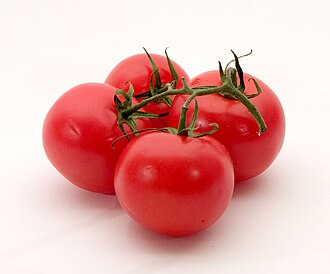
Photo: Wikipedia
Cooked tomatoes are a rich, savory ingredient with a soft, melt-in-your-mouth texture and a deep, concentrated umami flavor. The cooking process breaks down their cell walls, making their vibrant lycopene and other nutrients more bioavailable. This preparation often includes a small amount of added fat, which is key for absorbing fat-soluble vitamins and antioxidants.
Calorie split: 8% protein · 35% carbs · 57% fat
↓ Full nutrition💚 Why it's loved
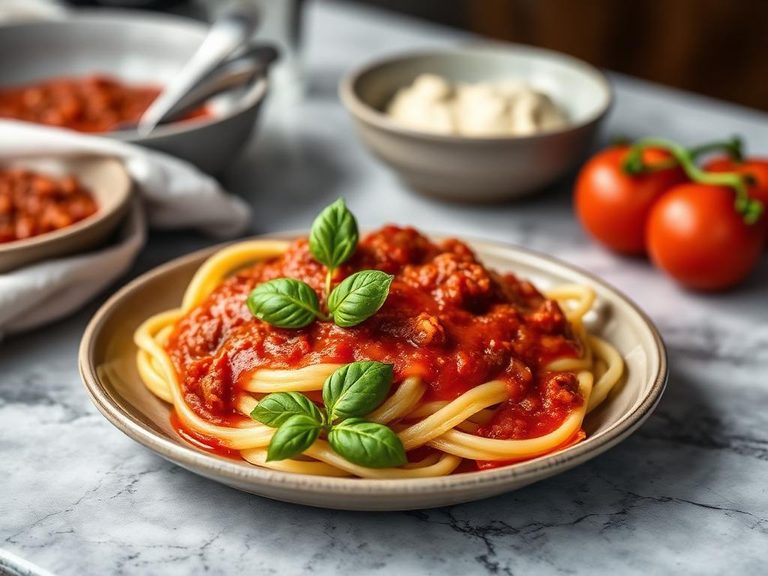
People love cooked tomatoes for their profound ability to form the flavor backbone of countless global cuisines, from rich pasta sauces to hearty stews. Their natural sweetness and acidity intensify with heat, creating a complex, savory base that is both comforting and versatile.
⚠️ Watch-outs & how to enjoy it better
The natural acidity of tomatoes can aggravate heartburn or acid reflux in sensitive individuals. To mitigate this, pair with alkaline foods like dairy (e.g., in a cream sauce) or non-acidic vegetables, and avoid consuming large portions on an empty stomach. The oxalate content may also be a concern for those prone to certain kidney stones.
Key benefits
- Excellent source of the antioxidant lycopene
- Cooking increases lycopene bioavailability
- Provides vitamin C and potassium
- Contains fiber for digestive health
- Low in calories, nutrient-dense
🍽️ Popular dishes


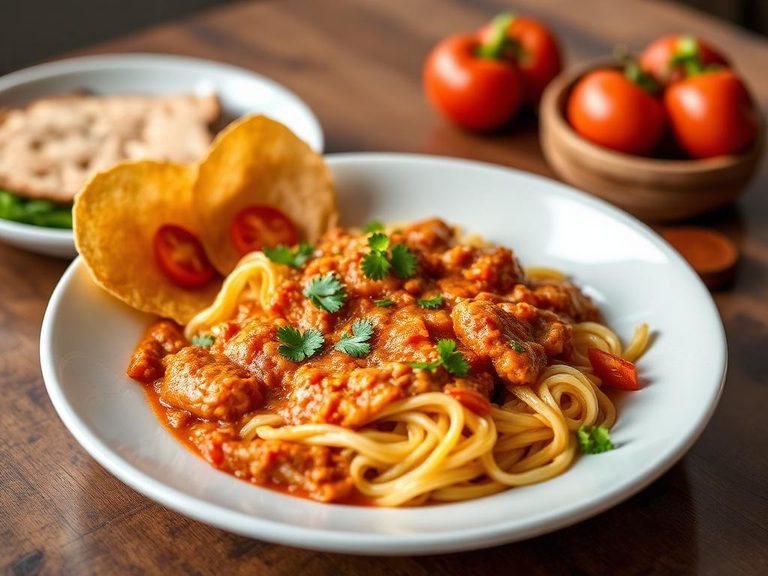
🌍 Where it's eaten
💡 Did you know?
The lycopene in tomatoes is a carotenoid pigment, and its concentration can actually increase during certain cooking processes, making canned or stewed tomatoes sometimes more potent sources than fresh ones.
Full nutrition (USDA data · scales with serving)
| Water | 89.8 g |
| Energy | 50.0 kcal |
| Protein | 1.1 g |
| Total lipid (fat) | 3.4 g |
| Carbohydrate, by difference | 4.7 g |
| Fiber, total dietary | 1.5 g |
| Total Sugars | 3.2 g |
| Calcium, Ca | 13.0 mg |
| Iron, Fe | 0.33 mg |
| Magnesium, Mg | 13.0 mg |
| Phosphorus, P | 29.0 mg |
| Potassium, K | 287 mg |
| Sodium, Na | 157 mg |
| Zinc, Zn | 0.21 mg |
| Copper, Cu | 0.07 mg |
| Selenium, Se | 0.00 ug |
| Vitamin C, total ascorbic acid | 15.8 mg |
| Thiamin | 0.04 mg |
| Riboflavin | 0.02 mg |
| Niacin | 0.68 mg |
| Vitamin B-6 | 0.11 mg |
| Folate, total | 13.0 ug |
| Folic acid | 0.00 ug |
| Folate, food | 13.0 ug |
| Folate, DFE | 13.0 ug |
| Choline, total | 7.6 mg |
| Vitamin B-12 | 0.00 ug |
| Vitamin B-12, added | 0.00 ug |
| Vitamin A, RAE | 62.0 ug |
| Retinol | 14.0 ug |
| Carotene, beta | 522 ug |
| Carotene, alpha | 116 ug |
| Cryptoxanthin, beta | 0.00 ug |
| Lycopene | 2958 ug |
| Lutein + zeaxanthin | 141 ug |
| Vitamin E (alpha-tocopherol) | 1.1 mg |
| Vitamin E, added | 0.00 mg |
| Vitamin D (D2 + D3) | 0.00 ug |
| Vitamin K (phylloquinone) | 12.2 ug |
| Alcohol, ethyl | 0.00 g |
| Caffeine | 0.00 mg |
| Theobromine | 0.00 mg |
Fat & fatty acid profile (per 100g)
| Fatty acids, total saturated | 0.87 g |
| SFA 4:0 | 0.02 g |
| SFA 6:0 | 0.02 g |
| SFA 8:0 | 0.01 g |
| SFA 10:0 | 0.02 g |
| SFA 12:0 | 0.03 g |
| SFA 14:0 | 0.08 g |
| SFA 16:0 | 0.48 g |
| SFA 18:0 | 0.18 g |
| Fatty acids, total monounsaturated | 1.2 g |
| MUFA 16:1 | 0.02 g |
| MUFA 18:1 | 1.1 g |
| MUFA 20:1 | 0.01 g |
| MUFA 22:1 | 0.00 g |
| Fatty acids, total polyunsaturated | 1.0 g |
| PUFA 18:2 | 0.91 g |
| PUFA 18:3 | 0.10 g |
| PUFA 18:4 | 0.00 g |
| PUFA 20:4 | 0.00 g |
| PUFA 20:5 n-3 (EPA) | 0.00 g |
| PUFA 22:5 n-3 (DPA) | 0.00 g |
| PUFA 22:6 n-3 (DHA) | 0.00 g |
| Cholesterol | 3.0 mg |
Amino acid profile (per 100g)
Estimated from Tomatoes, sun-dried, packed in oil, drained — USDA does not publish this profile for Tomatoes.
| Tryptophan | 0.04 g |
| Threonine | 0.13 g |
| Isoleucine | 0.12 g |
| Leucine | 0.18 g |
| Lysine | 0.19 g |
| Methionine | 0.04 g |
| Cystine | 0.07 g |
| Phenylalanine | 0.13 g |
| Tyrosine | 0.09 g |
| Valine | 0.13 g |
| Arginine | 0.12 g |
| Histidine | 0.08 g |
| Alanine | 0.14 g |
| Aspartic acid | 0.70 g |
| Glutamic acid | 1.9 g |
| Glycine | 0.13 g |
| Proline | 0.10 g |
| Serine | 0.13 g |
FAQ
Are cooked tomatoes healthier than raw?
Cooking tomatoes significantly increases the bioavailability of the antioxidant lycopene, making it easier for your body to absorb. However, raw tomatoes retain more of their heat-sensitive vitamin C. Both forms offer distinct nutritional benefits.
Why is fat often added when cooking tomatoes?
Lycopene and vitamin K in tomatoes are fat-soluble nutrients. Adding a small amount of healthy fat, like olive oil, during cooking helps your body absorb these beneficial compounds more effectively.
What does 'NS as to form' mean on a nutrition label?
It stands for 'Not Specified as to form.' This is a general category indicating the tomatoes were cooked, but the specific preparation (e.g., diced, crushed, whole peeled) isn't detailed for the nutritional analysis.
Nutrient density (calculated · NRF9.3)
Nutrient Rich Foods index: beneficial nutrients (protein, fiber, vitamins, minerals) minus saturated fat, added sugar & sodium, per 100 kcal.
NRF9.3 index — Fulgoni, Keast & Drewnowski, 2009. Computed from USDA nutrients.
Weight-loss friendliness (composite index)
Energy density 0.50 kcal/g · 9% calories from protein · 1.5 g fiber · 3.2 g sugar per 100 g.
Composite of energy density (Rolls et al., 1999), protein & fiber satiety, minus sugar. A calculated heuristic — ranks satiety-per-calorie, not a clinical measure.
Dietary load (calculated from USDA values)
Potential renal acid load. Positive = acid-forming, negative = alkaline-forming.
Sodium-to-potassium ratio: 0.55 (lower is better — aim for ≤ 1)
Sodium:potassium per WHO potassium guidance. Computed from USDA nutrients.