

Tea, iced, instant, black, decaffeinated, unsweetened
Common food

Photo: Wikipedia
This is a virtually calorie-free beverage made from brewed black tea leaves that have been decaffeinated and then freeze-dried or spray-dried into a soluble powder for instant preparation. Its taste is a clean, brisk, and slightly tannic black tea flavor without the bitterness of caffeine, and the texture is a clear, smooth liquid when dissolved in water. Nutritionally, it is essentially a zero-calorie, zero-fat, and zero-sugar drink, providing only trace amounts of protein and carbohydrates.
Calorie split: 26% protein · 74% carbs · 0% fat
↓ Full nutrition💚 Why it's loved
People love it for its instant convenience and the comforting, familiar taste of black tea without the jitters of caffeine. It's incredibly versatile, serving as a base for iced tea, a warm drink, or a mixer for cocktails and mocktails.
⚠️ Watch-outs & how to enjoy it better
Some may find the flavor less complex or nuanced than freshly brewed tea, and the instant powder can sometimes leave a slightly gritty residue if not fully dissolved. For those sensitive to tannins, it can cause a dry mouth or stomach irritation; pairing it with a small amount of milk or a snack can help mitigate this.
Key benefits
- Extremely low in calories (1 kcal per 100g), making it ideal for calorie-conscious diets.
- Caffeine-free, so it can be consumed at any time of day without disrupting sleep.
- Contains antioxidants like theaflavins and thearubigins from black tea, which may support heart health.
- Hydrating and sugar-free, serving as a healthy alternative to sodas and sweetened beverages.
- Convenient and shelf-stable, requiring no brewing time or equipment.
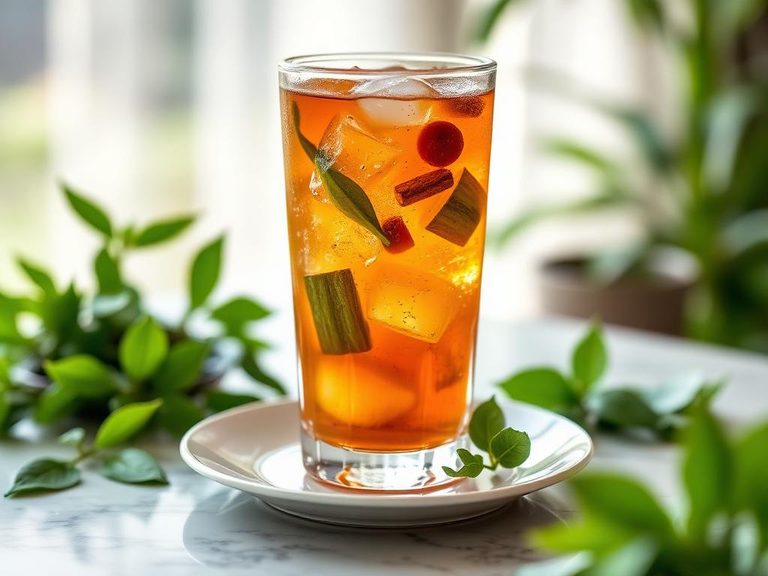
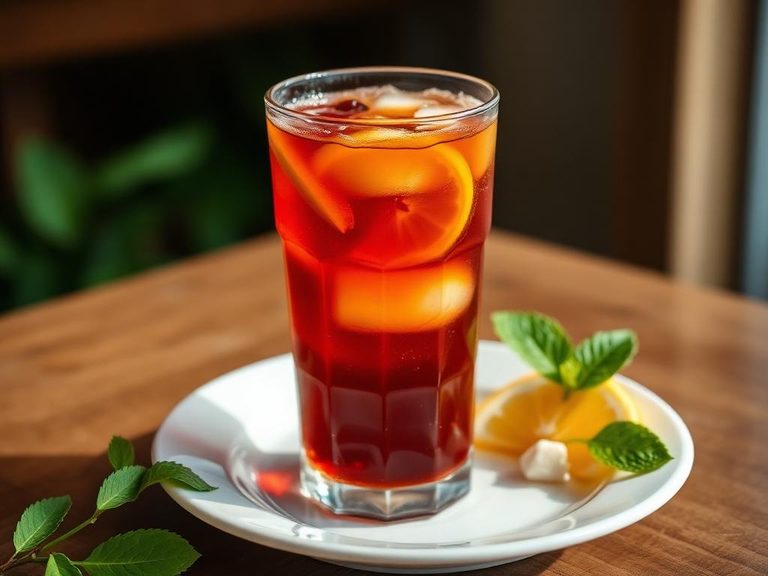
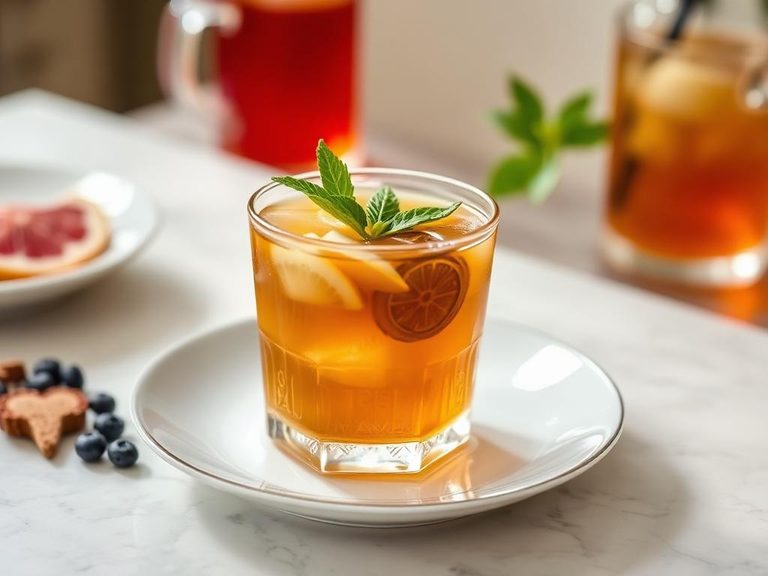
🍽️ Popular dishes

🌍 Where it's eaten
💡 Did you know?
The decaffeination process for black tea often uses ethyl acetate or carbon dioxide to remove caffeine, but the tea leaves still retain about 2-5 mg of caffeine per cup, which is significantly less than the 40-70 mg in a regular cup of black tea.
Full nutrition (USDA data · scales with serving)
| Water | 99.6 g |
| Energy | 1.0 kcal |
| Protein | 0.06 g |
| Total lipid (fat) | 0.00 g |
| Carbohydrate, by difference | 0.17 g |
| Fiber, total dietary | 0.00 g |
| Total Sugars | 0.02 g |
| Calcium, Ca | 3.0 mg |
| Iron, Fe | 0.01 mg |
| Magnesium, Mg | 2.0 mg |
| Phosphorus, P | 1.0 mg |
| Potassium, K | 18.0 mg |
| Sodium, Na | 4.0 mg |
| Zinc, Zn | 0.02 mg |
| Copper, Cu | 0.01 mg |
| Selenium, Se | 0.00 ug |
| Vitamin C, total ascorbic acid | 0.00 mg |
| Thiamin | 0.00 mg |
| Riboflavin | 0.00 mg |
| Niacin | 0.03 mg |
| Vitamin B-6 | 0.00 mg |
| Folate, total | 0.00 ug |
| Folic acid | 0.00 ug |
| Folate, food | 0.00 ug |
| Folate, DFE | 0.00 ug |
| Choline, total | 0.30 mg |
| Vitamin B-12 | 0.00 ug |
| Vitamin B-12, added | 0.00 ug |
| Vitamin A, RAE | 0.00 ug |
| Retinol | 0.00 ug |
| Carotene, beta | 0.00 ug |
| Carotene, alpha | 0.00 ug |
| Cryptoxanthin, beta | 0.00 ug |
| Lycopene | 0.00 ug |
| Lutein + zeaxanthin | 0.00 ug |
| Vitamin E (alpha-tocopherol) | 0.00 mg |
| Vitamin E, added | 0.00 mg |
| Vitamin D (D2 + D3) | 0.00 ug |
| Vitamin K (phylloquinone) | 0.00 ug |
| Alcohol, ethyl | 0.00 g |
| Caffeine | 0.00 mg |
| Theobromine | 0.00 mg |
Fat & fatty acid profile (per 100g)
| Fatty acids, total saturated | 0.00 g |
| SFA 4:0 | 0.00 g |
| SFA 6:0 | 0.00 g |
| SFA 8:0 | 0.00 g |
| SFA 10:0 | 0.00 g |
| SFA 12:0 | 0.00 g |
| SFA 14:0 | 0.00 g |
| SFA 16:0 | 0.00 g |
| SFA 18:0 | 0.00 g |
| Fatty acids, total monounsaturated | 0.00 g |
| MUFA 16:1 | 0.00 g |
| MUFA 18:1 | 0.00 g |
| MUFA 20:1 | 0.00 g |
| MUFA 22:1 | 0.00 g |
| Fatty acids, total polyunsaturated | 0.00 g |
| PUFA 18:2 | 0.00 g |
| PUFA 18:3 | 0.00 g |
| PUFA 18:4 | 0.00 g |
| PUFA 20:4 | 0.00 g |
| PUFA 20:5 n-3 (EPA) | 0.00 g |
| PUFA 22:5 n-3 (DPA) | 0.00 g |
| PUFA 22:6 n-3 (DHA) | 0.00 g |
| Cholesterol | 0.00 mg |
Amino acid profile (per 100g)
Estimated from Cookies, animal crackers (includes arrowroot, tea biscuits) — USDA does not publish this profile for Tea.
| Tryptophan | 0.10 g |
| Threonine | 0.19 g |
| Isoleucine | 0.26 g |
| Leucine | 0.47 g |
| Lysine | 0.24 g |
| Methionine | 0.12 g |
| Cystine | 0.15 g |
| Phenylalanine | 0.32 g |
| Tyrosine | 0.20 g |
| Valine | 0.30 g |
| Arginine | 0.26 g |
| Histidine | 0.14 g |
| Alanine | 0.21 g |
| Aspartic acid | 0.29 g |
| Glutamic acid | 2.3 g |
| Glycine | 0.23 g |
| Proline | 0.76 g |
| Serine | 0.36 g |
FAQ
Is instant decaf black tea as healthy as brewed tea?
Yes, it retains many of the same antioxidants and health benefits, though the exact levels can vary slightly based on the processing method.
Can I use this to make iced tea?
Absolutely! It's perfect for iced tea. Simply dissolve the powder in a small amount of hot water, then add cold water and ice.
Does it contain any sugar or sweeteners?
No, unsweetened instant decaf black tea contains zero sugar and no added sweeteners, making it a pure, zero-calorie beverage.
How much caffeine is in it?
While labeled decaffeinated, it typically contains a very small amount of caffeine, usually 2-5 mg per cup, which is much less than regular black tea.
Nutrient density (calculated · NRF9.3)
Nutrient Rich Foods index: beneficial nutrients (protein, fiber, vitamins, minerals) minus saturated fat, added sugar & sodium, per 100 kcal.
NRF9.3 index — Fulgoni, Keast & Drewnowski, 2009. Computed from USDA nutrients.
Weight-loss friendliness (composite index)
Energy density 0.01 kcal/g · 24% calories from protein · 0.0 g fiber · 0.0 g sugar per 100 g.
Composite of energy density (Rolls et al., 1999), protein & fiber satiety, minus sugar. A calculated heuristic — ranks satiety-per-calorie, not a clinical measure.
Dietary load (calculated from USDA values)
Potential renal acid load. Positive = acid-forming, negative = alkaline-forming.
Sodium-to-potassium ratio: 0.22 (lower is better — aim for ≤ 1)
Sodium:potassium per WHO potassium guidance. Computed from USDA nutrients.