

Tea, iced, brewed, green, decaffeinated, pre-sweetened with low calorie sweetener
Common food

Photo: Wikipedia
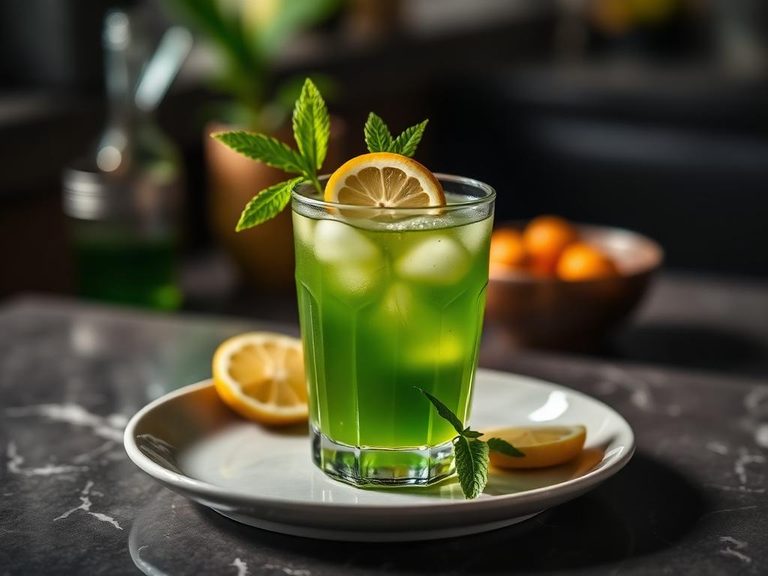
This is a crisp, refreshing, pre-brewed green tea that's been decaffeinated and lightly sweetened for a guilt-free sip. It delivers a clean, subtly grassy flavor with a hint of sweetness and a smooth, non-astringent finish. Nutritionally, it's a near-zero calorie beverage, providing just a trace of carbohydrates from the low-calorie sweetener.
Calorie split: 0% protein · 100% carbs · 0% fat
↓ Full nutrition💚 Why it's loved
People love it for its effortless balance of refreshing tea flavor and light sweetness, making it an easy, enjoyable way to stay hydrated. It's a versatile pick-me-up that fits seamlessly into a busy day, offering a taste of green tea without any bitterness.
⚠️ Watch-outs & how to enjoy it better
Some may find the low-calorie sweetener leaves a slight aftertaste, and the decaffeination process can strip away some of the tea's nuanced aromatics. For those sensitive to sweeteners, it's wise to check the specific ingredient used (like aspartame or sucralose) and consume in moderation.
Key benefits
- Extremely low-calorie hydration option
- Provides a gentle, sweet flavor without sugar
- Contains catechins from green tea, like EGCG
- Offers a caffeine-free alternative for evening consumption
- Convenient, ready-to-drink format
🍽️ Popular dishes
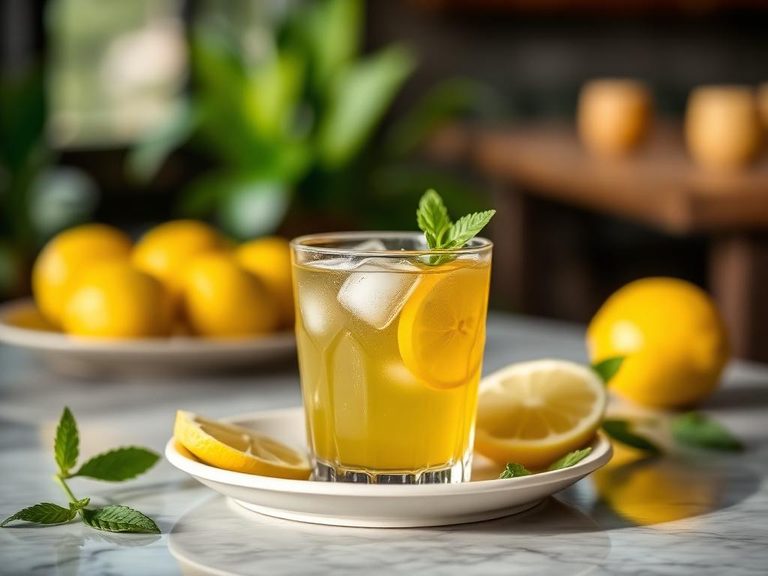
🌍 Where it's eaten
💡 Did you know?
The decaffeination process typically removes 97% or more of the caffeine, but it also strips away some of the L-theanine, an amino acid responsible for green tea's calming, focused effect.
Full nutrition (USDA data · scales with serving)
| Water | 99.5 g |
| Energy | 1.0 kcal |
| Protein | 0.00 g |
| Total lipid (fat) | 0.00 g |
| Carbohydrate, by difference | 0.38 g |
| Fiber, total dietary | 0.00 g |
| Total Sugars | 0.33 g |
| Calcium, Ca | 0.00 mg |
| Iron, Fe | 0.00 mg |
| Magnesium, Mg | 1.0 mg |
| Phosphorus, P | 0.00 mg |
| Potassium, K | 15.0 mg |
| Sodium, Na | 0.00 mg |
| Zinc, Zn | 0.01 mg |
| Copper, Cu | 0.01 mg |
| Selenium, Se | 0.00 ug |
| Vitamin C, total ascorbic acid | 0.00 mg |
| Thiamin | 0.01 mg |
| Riboflavin | 0.06 mg |
| Niacin | 0.03 mg |
| Vitamin B-6 | 0.01 mg |
| Folate, total | 0.00 ug |
| Folic acid | 0.00 ug |
| Folate, food | 0.00 ug |
| Folate, DFE | 0.00 ug |
| Choline, total | 0.00 mg |
| Vitamin B-12 | 0.00 ug |
| Vitamin B-12, added | 0.00 ug |
| Vitamin A, RAE | 0.00 ug |
| Retinol | 0.00 ug |
| Carotene, beta | 0.00 ug |
| Carotene, alpha | 0.00 ug |
| Cryptoxanthin, beta | 0.00 ug |
| Lycopene | 0.00 ug |
| Lutein + zeaxanthin | 0.00 ug |
| Vitamin E (alpha-tocopherol) | 0.00 mg |
| Vitamin E, added | 0.00 mg |
| Vitamin D (D2 + D3) | 0.00 ug |
| Vitamin K (phylloquinone) | 0.00 ug |
| Alcohol, ethyl | 0.00 g |
| Caffeine | 0.00 mg |
| Theobromine | 0.00 mg |
Fat & fatty acid profile (per 100g)
| Fatty acids, total saturated | 0.00 g |
| SFA 4:0 | 0.00 g |
| SFA 6:0 | 0.00 g |
| SFA 8:0 | 0.00 g |
| SFA 10:0 | 0.00 g |
| SFA 12:0 | 0.00 g |
| SFA 14:0 | 0.00 g |
| SFA 16:0 | 0.00 g |
| SFA 18:0 | 0.00 g |
| Fatty acids, total monounsaturated | 0.00 g |
| MUFA 16:1 | 0.00 g |
| MUFA 18:1 | 0.00 g |
| MUFA 20:1 | 0.00 g |
| MUFA 22:1 | 0.00 g |
| Fatty acids, total polyunsaturated | 0.00 g |
| PUFA 18:2 | 0.00 g |
| PUFA 18:3 | 0.00 g |
| PUFA 18:4 | 0.00 g |
| PUFA 20:4 | 0.00 g |
| PUFA 20:5 n-3 (EPA) | 0.00 g |
| PUFA 22:5 n-3 (DPA) | 0.00 g |
| PUFA 22:6 n-3 (DHA) | 0.00 g |
| Cholesterol | 0.00 mg |
Amino acid profile (per 100g)
Estimated from Cookies, animal crackers (includes arrowroot, tea biscuits) — USDA does not publish this profile for Tea.
| Tryptophan | 0.10 g |
| Threonine | 0.19 g |
| Isoleucine | 0.26 g |
| Leucine | 0.47 g |
| Lysine | 0.24 g |
| Methionine | 0.12 g |
| Cystine | 0.15 g |
| Phenylalanine | 0.32 g |
| Tyrosine | 0.20 g |
| Valine | 0.30 g |
| Arginine | 0.26 g |
| Histidine | 0.14 g |
| Alanine | 0.21 g |
| Aspartic acid | 0.29 g |
| Glutamic acid | 2.3 g |
| Glycine | 0.23 g |
| Proline | 0.76 g |
| Serine | 0.36 g |
FAQ
How does the taste differ from regular sweetened green tea?
It will have a cleaner, less sugary taste profile. The sweetness is more subtle and lacks the 'mouthfeel' of sugar, often with a quicker, sharper finish from the low-calorie sweetener.
Is it truly calorie-free?
At 1 kcal per 100g, it is considered a 'negligible calorie' beverage. The tiny amount comes from the low-calorie sweetener and residual compounds in the tea, but it won't impact your daily intake meaningfully.
Can I use this as a base for cooking?
Absolutely. Its mild flavor makes it a great liquid for cooking rice, poaching fruit, or creating light broths and dressings where you want a hint of green tea without adding sugar or caffeine.
Nutrient density (calculated · NRF9.3)
Nutrient Rich Foods index: beneficial nutrients (protein, fiber, vitamins, minerals) minus saturated fat, added sugar & sodium, per 100 kcal.
NRF9.3 index — Fulgoni, Keast & Drewnowski, 2009. Computed from USDA nutrients.
Weight-loss friendliness (composite index)
Energy density 0.01 kcal/g · 0% calories from protein · 0.0 g fiber · 0.3 g sugar per 100 g.
Composite of energy density (Rolls et al., 1999), protein & fiber satiety, minus sugar. A calculated heuristic — ranks satiety-per-calorie, not a clinical measure.
Dietary load (calculated from USDA values)
Potential renal acid load. Positive = acid-forming, negative = alkaline-forming.
Sodium-to-potassium ratio: 0.00 (lower is better — aim for ≤ 1)
Sodium:potassium per WHO potassium guidance. Computed from USDA nutrients.