

Tea, iced, bottled, green
Common food

Photo: Wikipedia
A chilled, ready-to-drink infusion of green tea leaves, offering a crisp, subtly grassy flavor with a refreshing, clean finish. Its light body and mild astringency make it a popular thirst-quencher. Nutritionally, it's a very low-calorie beverage, with its small carbohydrate content coming almost entirely from added sugar.
Calorie split: 0% protein · 93% carbs · 7% fat
↓ Full nutrition💚 Why it's loved
People love it for its ability to deliver the authentic, slightly bitter taste of green tea in a cold, convenient format, perfect for on-the-go hydration. It's a staple in convenience stores and vending machines across many cultures, especially in East Asia, where it's a go-to daily beverage.
⚠️ Watch-outs & how to enjoy it better
The primary downside is the added sugar (over 5g per 100g), which can contribute to blood sugar spikes and empty calories if consumed in large quantities. For those monitoring sugar intake, choosing an unsweetened variety is advisable. If the tea is high in oxalates, individuals prone to kidney stones might consider moderation and ensuring adequate water intake.
Key benefits
- Hydrating with zero fat and protein
- Provides a moderate caffeine boost from tea leaves
- Contains natural antioxidants from green tea
- Very low in calories per serving
- Convenient, portable refreshment
🍽️ Popular dishes
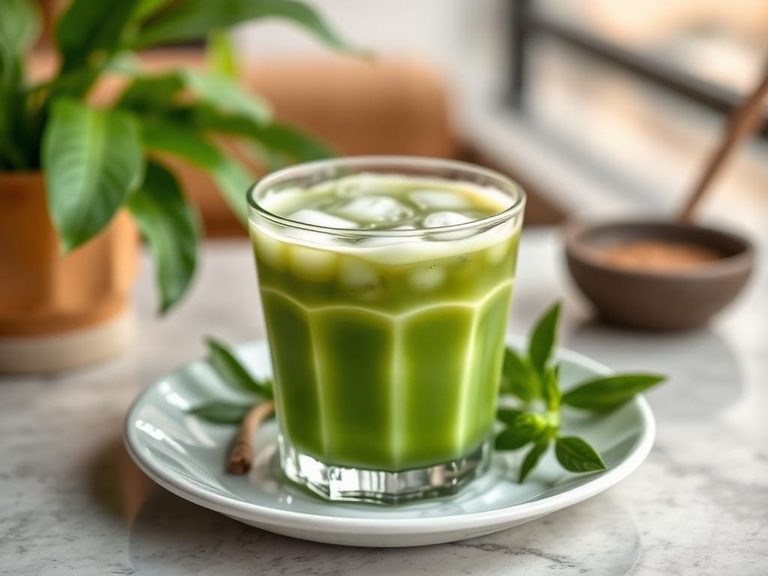
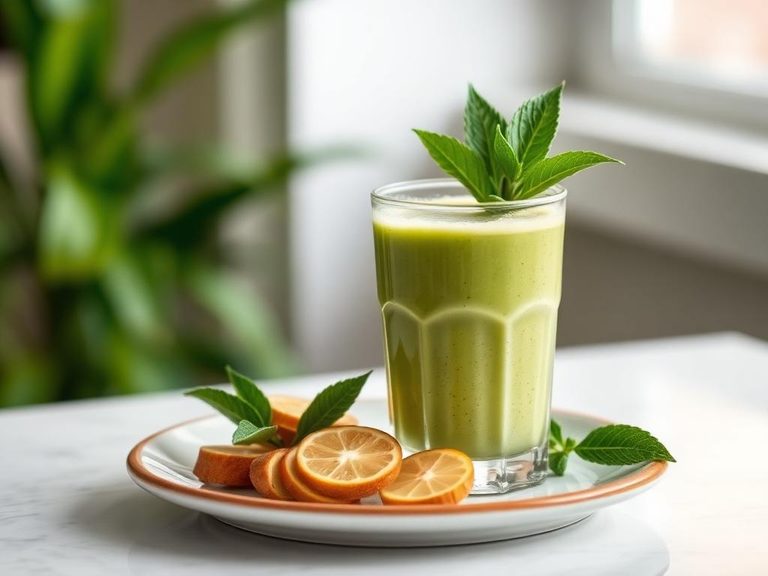
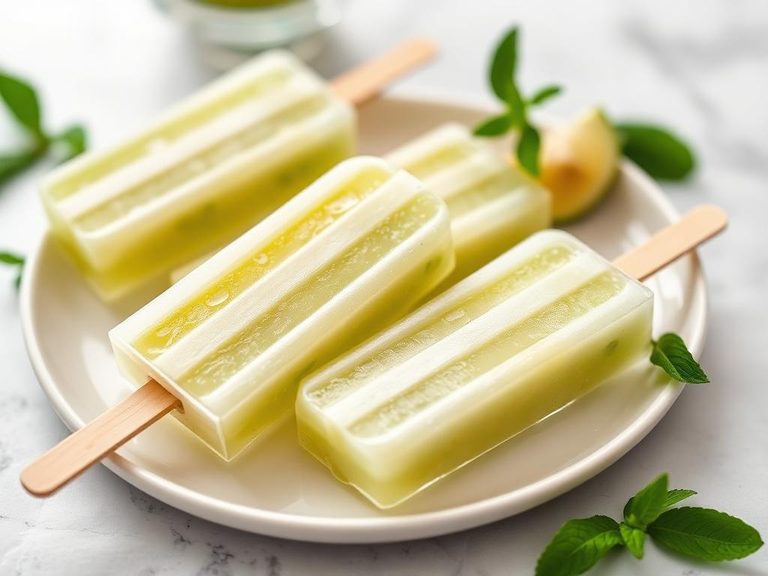
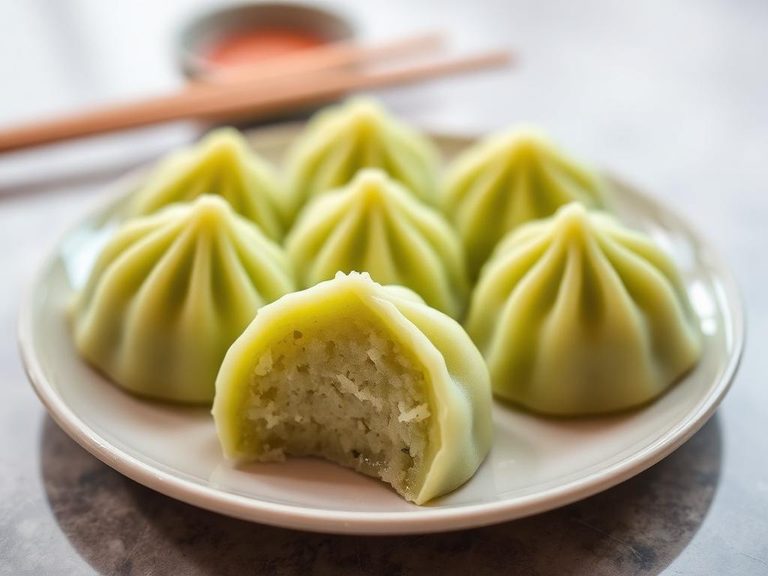
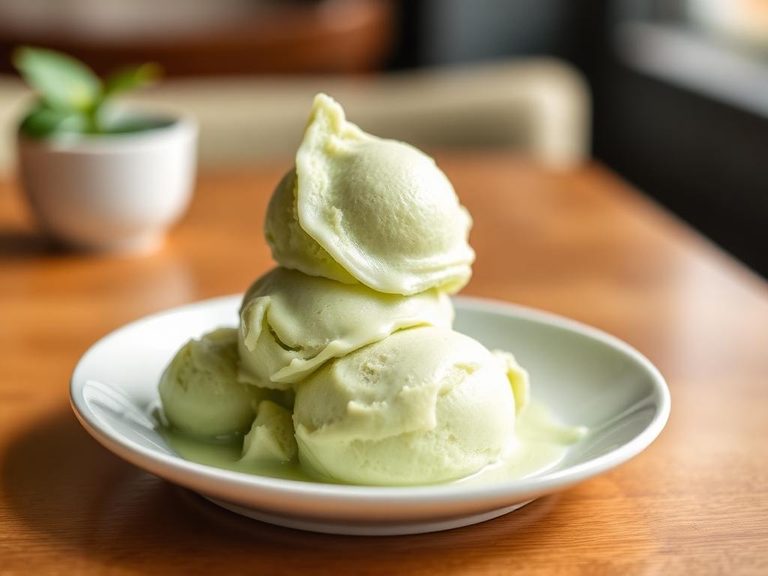
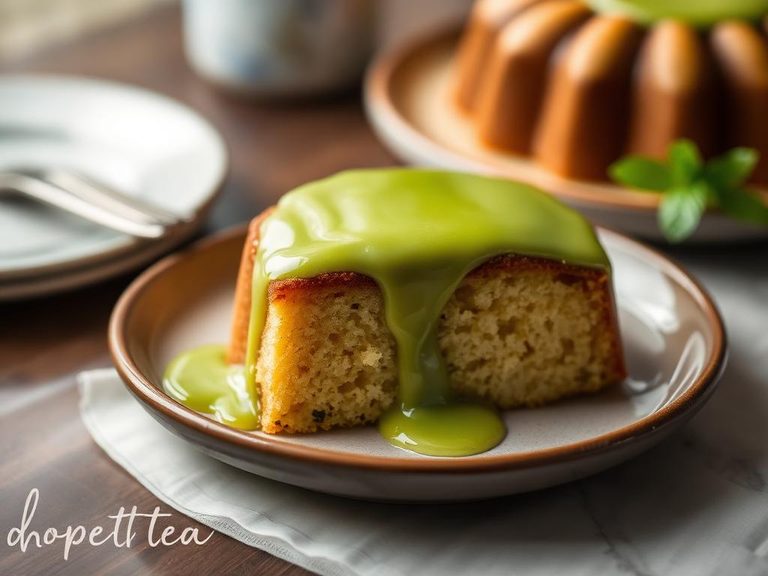
🌍 Where it's eaten
💡 Did you know?
The practice of bottling ready-to-drink iced green tea was pioneered in Japan in the 1980s, with brands like Oi Ocha creating a massive, enduring market for the product.
Full nutrition (USDA data · scales with serving)
| Water | 93.5 g |
| Energy | 27.0 kcal |
| Protein | 0.00 g |
| Total lipid (fat) | 0.22 g |
| Carbohydrate, by difference | 6.2 g |
| Fiber, total dietary | 0.00 g |
| Total Sugars | 5.3 g |
| Calcium, Ca | 1.0 mg |
| Iron, Fe | 0.00 mg |
| Magnesium, Mg | 0.00 mg |
| Phosphorus, P | 31.0 mg |
| Potassium, K | 12.0 mg |
| Sodium, Na | 21.0 mg |
| Zinc, Zn | 0.01 mg |
| Copper, Cu | 0.01 mg |
| Selenium, Se | 0.00 ug |
| Vitamin C, total ascorbic acid | 0.00 mg |
| Thiamin | 0.00 mg |
| Riboflavin | 0.00 mg |
| Niacin | 0.00 mg |
| Vitamin B-6 | 0.00 mg |
| Folate, total | 0.00 ug |
| Folic acid | 0.00 ug |
| Folate, food | 0.00 ug |
| Folate, DFE | 0.00 ug |
| Choline, total | 0.00 mg |
| Vitamin B-12 | 0.00 ug |
| Vitamin B-12, added | 0.00 ug |
| Vitamin A, RAE | 0.00 ug |
| Retinol | 0.00 ug |
| Carotene, beta | 0.00 ug |
| Carotene, alpha | 0.00 ug |
| Cryptoxanthin, beta | 0.00 ug |
| Lycopene | 0.00 ug |
| Lutein + zeaxanthin | 0.00 ug |
| Vitamin E (alpha-tocopherol) | 0.00 mg |
| Vitamin E, added | 0.00 mg |
| Vitamin D (D2 + D3) | 0.00 ug |
| Vitamin K (phylloquinone) | 0.00 ug |
| Alcohol, ethyl | 0.00 g |
| Caffeine | 5.0 mg |
| Theobromine | 1.0 mg |
Fat & fatty acid profile (per 100g)
| Fatty acids, total saturated | 0.00 g |
| SFA 4:0 | 0.00 g |
| SFA 6:0 | 0.00 g |
| SFA 8:0 | 0.00 g |
| SFA 10:0 | 0.00 g |
| SFA 12:0 | 0.00 g |
| SFA 14:0 | 0.00 g |
| SFA 16:0 | 0.00 g |
| SFA 18:0 | 0.00 g |
| Fatty acids, total monounsaturated | 0.00 g |
| MUFA 16:1 | 0.00 g |
| MUFA 18:1 | 0.00 g |
| MUFA 20:1 | 0.00 g |
| MUFA 22:1 | 0.00 g |
| Fatty acids, total polyunsaturated | 0.00 g |
| PUFA 18:2 | 0.00 g |
| PUFA 18:3 | 0.00 g |
| PUFA 18:4 | 0.00 g |
| PUFA 20:4 | 0.00 g |
| PUFA 20:5 n-3 (EPA) | 0.00 g |
| PUFA 22:5 n-3 (DPA) | 0.00 g |
| PUFA 22:6 n-3 (DHA) | 0.00 g |
| Cholesterol | 0.00 mg |
Amino acid profile (per 100g)
Estimated from Cookies, animal crackers (includes arrowroot, tea biscuits) — USDA does not publish this profile for Tea.
| Tryptophan | 0.10 g |
| Threonine | 0.19 g |
| Isoleucine | 0.26 g |
| Leucine | 0.47 g |
| Lysine | 0.24 g |
| Methionine | 0.12 g |
| Cystine | 0.15 g |
| Phenylalanine | 0.32 g |
| Tyrosine | 0.20 g |
| Valine | 0.30 g |
| Arginine | 0.26 g |
| Histidine | 0.14 g |
| Alanine | 0.21 g |
| Aspartic acid | 0.29 g |
| Glutamic acid | 2.3 g |
| Glycine | 0.23 g |
| Proline | 0.76 g |
| Serine | 0.36 g |
FAQ
Is bottled green tea as healthy as freshly brewed?
Not exactly. Bottled versions often contain added sugar and preservatives, and the heat during processing can degrade some of the delicate antioxidants found in freshly brewed tea. Unsweetened bottled varieties are the closest alternative.
How much caffeine is in a typical bottle?
It varies by brand and tea concentration, but a 500ml bottle generally contains between 20-50mg of caffeine, which is less than a cup of coffee but enough for a mild lift.
Can I use bottled green tea for cooking?
Yes, it can be used in recipes like poaching liquids, gelatin desserts, or as a base for smoothies. Be mindful that its added sugar and specific flavor profile will affect the final dish.
Nutrient density (calculated · NRF9.3)
Nutrient Rich Foods index: beneficial nutrients (protein, fiber, vitamins, minerals) minus saturated fat, added sugar & sodium, per 100 kcal.
NRF9.3 index — Fulgoni, Keast & Drewnowski, 2009. Computed from USDA nutrients.
Weight-loss friendliness (composite index)
Energy density 0.27 kcal/g · 0% calories from protein · 0.0 g fiber · 5.3 g sugar per 100 g.
Composite of energy density (Rolls et al., 1999), protein & fiber satiety, minus sugar. A calculated heuristic — ranks satiety-per-calorie, not a clinical measure.
Dietary load (calculated from USDA values)
Potential renal acid load. Positive = acid-forming, negative = alkaline-forming.
Sodium-to-potassium ratio: 1.75 (lower is better — aim for ≤ 1)
Sodium:potassium per WHO potassium guidance. Computed from USDA nutrients.