

Tea, iced, bottled, black, diet
Common food
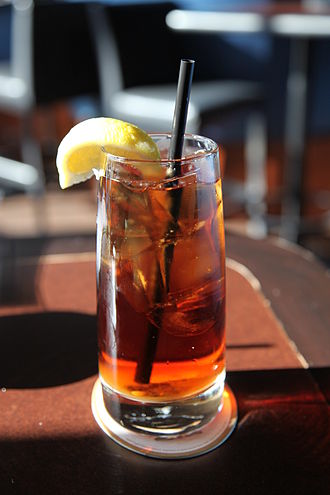
Photo: Wikipedia
This is a crisp, refreshing, zero-calorie beverage made from brewed black tea, chilled, and bottled with artificial or natural zero-calorie sweeteners. It has a clean, slightly tannic tea flavor with a watery texture, lacking the body or sugar of traditional sweet tea. Its nutritional profile is virtually empty, offering hydration with negligible calories, carbs, or fat.
Calorie split: 0% protein · 100% carbs · 0% fat
↓ Full nutrition💚 Why it's loved
People love it for its crisp, thirst-quenching convenience and the ability to enjoy a flavorful, caffeinated drink without sugar or calories. It's a staple for on-the-go hydration, especially in warm climates or as a low-calorie alternative to sweetened beverages.
⚠️ Watch-outs & how to enjoy it better
Some may find the artificial sweeteners leave a lingering aftertaste or cause digestive discomfort. Those sensitive to caffeine should be cautious, as it can disrupt sleep or increase anxiety; opting for decaffeinated versions or limiting intake to daytime can help. Additionally, the tannins in black tea can inhibit iron absorption, so pairing it with iron-rich foods or waiting an hour after meals is advisable.
Key benefits
- Provides hydration with negligible calories
- Contains antioxidants from black tea (theaflavins)
- Offers a convenient, portable caffeine source
- Can be a low-calorie alternative to sugary sodas
- May support alertness due to caffeine content
🍽️ Popular dishes



🌍 Where it's eaten
💡 Did you know?
The world's largest producer of black tea is China, but the United States is one of the largest consumers of iced tea, with over 80% of tea consumed in the U.S. being iced.
Full nutrition (USDA data · scales with serving)
| Water | 99.7 g |
| Energy | 1.0 kcal |
| Protein | 0.00 g |
| Total lipid (fat) | 0.00 g |
| Carbohydrate, by difference | 0.22 g |
| Fiber, total dietary | 0.00 g |
| Total Sugars | 0.00 g |
| Calcium, Ca | 0.00 mg |
| Iron, Fe | 0.00 mg |
| Magnesium, Mg | 0.00 mg |
| Phosphorus, P | 33.0 mg |
| Potassium, K | 14.0 mg |
| Sodium, Na | 17.0 mg |
| Zinc, Zn | 0.00 mg |
| Copper, Cu | 0.01 mg |
| Selenium, Se | 0.00 ug |
| Vitamin C, total ascorbic acid | 0.00 mg |
| Thiamin | 0.00 mg |
| Riboflavin | 0.00 mg |
| Niacin | 0.00 mg |
| Vitamin B-6 | 0.00 mg |
| Folate, total | 0.00 ug |
| Folic acid | 0.00 ug |
| Folate, food | 0.00 ug |
| Folate, DFE | 0.00 ug |
| Choline, total | 0.00 mg |
| Vitamin B-12 | 0.00 ug |
| Vitamin B-12, added | 0.00 ug |
| Vitamin A, RAE | 0.00 ug |
| Retinol | 0.00 ug |
| Carotene, beta | 0.00 ug |
| Carotene, alpha | 0.00 ug |
| Cryptoxanthin, beta | 0.00 ug |
| Lycopene | 0.00 ug |
| Lutein + zeaxanthin | 0.00 ug |
| Vitamin E (alpha-tocopherol) | 0.00 mg |
| Vitamin E, added | 0.00 mg |
| Vitamin D (D2 + D3) | 0.00 ug |
| Vitamin K (phylloquinone) | 0.00 ug |
| Alcohol, ethyl | 0.00 g |
| Caffeine | 2.0 mg |
| Theobromine | 0.00 mg |
Fat & fatty acid profile (per 100g)
| Fatty acids, total saturated | 0.00 g |
| SFA 4:0 | 0.00 g |
| SFA 6:0 | 0.00 g |
| SFA 8:0 | 0.00 g |
| SFA 10:0 | 0.00 g |
| SFA 12:0 | 0.00 g |
| SFA 14:0 | 0.00 g |
| SFA 16:0 | 0.00 g |
| SFA 18:0 | 0.00 g |
| Fatty acids, total monounsaturated | 0.00 g |
| MUFA 16:1 | 0.00 g |
| MUFA 18:1 | 0.00 g |
| MUFA 20:1 | 0.00 g |
| MUFA 22:1 | 0.00 g |
| Fatty acids, total polyunsaturated | 0.00 g |
| PUFA 18:2 | 0.00 g |
| PUFA 18:3 | 0.00 g |
| PUFA 18:4 | 0.00 g |
| PUFA 20:4 | 0.00 g |
| PUFA 20:5 n-3 (EPA) | 0.00 g |
| PUFA 22:5 n-3 (DPA) | 0.00 g |
| PUFA 22:6 n-3 (DHA) | 0.00 g |
| Cholesterol | 0.00 mg |
Amino acid profile (per 100g)
Estimated from Cookies, animal crackers (includes arrowroot, tea biscuits) — USDA does not publish this profile for Tea.
| Tryptophan | 0.10 g |
| Threonine | 0.19 g |
| Isoleucine | 0.26 g |
| Leucine | 0.47 g |
| Lysine | 0.24 g |
| Methionine | 0.12 g |
| Cystine | 0.15 g |
| Phenylalanine | 0.32 g |
| Tyrosine | 0.20 g |
| Valine | 0.30 g |
| Arginine | 0.26 g |
| Histidine | 0.14 g |
| Alanine | 0.21 g |
| Aspartic acid | 0.29 g |
| Glutamic acid | 2.3 g |
| Glycine | 0.23 g |
| Proline | 0.76 g |
| Serine | 0.36 g |
FAQ
Does diet iced tea have any calories?
No, diet iced tea typically contains 0-1 calories per serving, as it uses non-nutritive sweeteners like aspartame or sucralose instead of sugar.
Is diet iced tea safe for people with diabetes?
Generally yes, as it contains no sugar and has minimal impact on blood glucose levels, but individuals should monitor their response to artificial sweeteners and consult their healthcare provider.
How much caffeine is in diet iced tea?
The caffeine content varies by brand and brewing method, but a typical 8-ounce serving contains about 20-50 mg of caffeine, similar to a cup of black tea.
Nutrient density (calculated · NRF9.3)
Nutrient Rich Foods index: beneficial nutrients (protein, fiber, vitamins, minerals) minus saturated fat, added sugar & sodium, per 100 kcal.
NRF9.3 index — Fulgoni, Keast & Drewnowski, 2009. Computed from USDA nutrients.
Weight-loss friendliness (composite index)
Energy density 0.01 kcal/g · 0% calories from protein · 0.0 g fiber · 0.0 g sugar per 100 g.
Composite of energy density (Rolls et al., 1999), protein & fiber satiety, minus sugar. A calculated heuristic — ranks satiety-per-calorie, not a clinical measure.
Dietary load (calculated from USDA values)
Potential renal acid load. Positive = acid-forming, negative = alkaline-forming.
Sodium-to-potassium ratio: 1.21 (lower is better — aim for ≤ 1)
Sodium:potassium per WHO potassium guidance. Computed from USDA nutrients.