

Tea, iced, bottled, green, diet
Common food

Photo: Wikipedia
Diet green iced tea is a crisp, zero-calorie beverage brewed from green tea leaves and sweetened with non-nutritive sweeteners like aspartame or sucralose. It delivers a light, grassy flavor with a refreshing, watery texture, often enhanced with subtle citrus or fruit notes. With only 4 kcal per 100g and zero fat or protein, it's a virtually calorie-free way to enjoy the taste of green tea.
Calorie split: 0% protein · 100% carbs · 0% fat
↓ Full nutrition💚 Why it's loved
People love it for its clean, refreshing taste that satisfies a craving for something flavorful without the sugar crash. It's a go-to for on-the-go hydration, fitting seamlessly into busy lifestyles and pairing well with meals from sushi to sandwiches.
⚠️ Watch-outs & how to enjoy it better
Some individuals may experience digestive discomfort or headaches from artificial sweeteners like aspartame, especially in large quantities. Those sensitive to caffeine should limit intake, and the oxalates in green tea can be a concern for people prone to kidney stones—opt for moderate portions and stay well-hydrated to mitigate risks.
Key benefits
- Provides catechins and polyphenols from green tea
- Zero calories and sugar-free, aiding weight management
- Contains caffeine for mild alertness without heavy calories
- Hydrating alternative to sugary sodas and juices
- May support metabolic health through green tea compounds
🍽️ Popular dishes

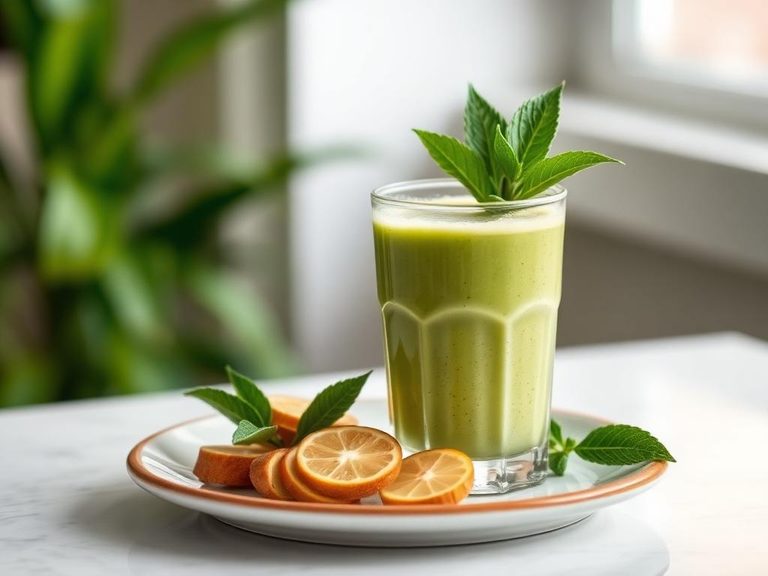

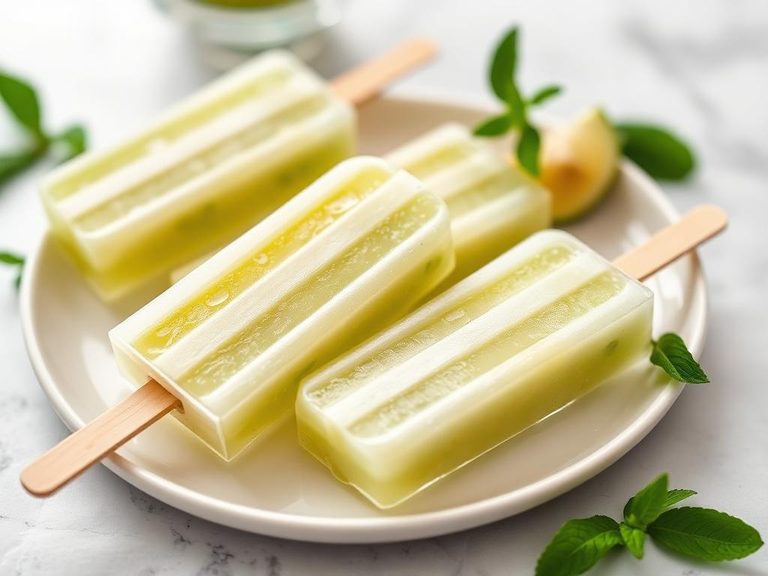
🌍 Where it's eaten
💡 Did you know?
Bottled diet green tea often contains added vitamin C (ascorbic acid) as a preservative, which can also enhance the absorption of green tea's catechins in your body.
Full nutrition (USDA data · scales with serving)
| Water | 98.7 g |
| Energy | 4.0 kcal |
| Protein | 0.00 g |
| Total lipid (fat) | 0.00 g |
| Carbohydrate, by difference | 0.93 g |
| Fiber, total dietary | 0.00 g |
| Total Sugars | 0.93 g |
| Calcium, Ca | 1.0 mg |
| Iron, Fe | 0.00 mg |
| Magnesium, Mg | 1.0 mg |
| Phosphorus, P | 0.00 mg |
| Potassium, K | 5.0 mg |
| Sodium, Na | 6.0 mg |
| Zinc, Zn | 0.01 mg |
| Copper, Cu | 0.01 mg |
| Selenium, Se | 0.00 ug |
| Vitamin C, total ascorbic acid | 9.5 mg |
| Thiamin | 0.00 mg |
| Riboflavin | 0.00 mg |
| Niacin | 0.00 mg |
| Vitamin B-6 | 0.00 mg |
| Folate, total | 0.00 ug |
| Folic acid | 0.00 ug |
| Folate, food | 0.00 ug |
| Folate, DFE | 0.00 ug |
| Choline, total | 0.00 mg |
| Vitamin B-12 | 0.00 ug |
| Vitamin B-12, added | 0.00 ug |
| Vitamin A, RAE | 0.00 ug |
| Retinol | 0.00 ug |
| Carotene, beta | 0.00 ug |
| Carotene, alpha | 0.00 ug |
| Cryptoxanthin, beta | 0.00 ug |
| Lycopene | 0.00 ug |
| Lutein + zeaxanthin | 0.00 ug |
| Vitamin E (alpha-tocopherol) | 0.00 mg |
| Vitamin E, added | 0.00 mg |
| Vitamin D (D2 + D3) | 0.00 ug |
| Vitamin K (phylloquinone) | 0.00 ug |
| Alcohol, ethyl | 0.00 g |
| Caffeine | 4.0 mg |
| Theobromine | 0.00 mg |
Fat & fatty acid profile (per 100g)
| Fatty acids, total saturated | 0.00 g |
| SFA 4:0 | 0.00 g |
| SFA 6:0 | 0.00 g |
| SFA 8:0 | 0.00 g |
| SFA 10:0 | 0.00 g |
| SFA 12:0 | 0.00 g |
| SFA 14:0 | 0.00 g |
| SFA 16:0 | 0.00 g |
| SFA 18:0 | 0.00 g |
| Fatty acids, total monounsaturated | 0.00 g |
| MUFA 16:1 | 0.00 g |
| MUFA 18:1 | 0.00 g |
| MUFA 20:1 | 0.00 g |
| MUFA 22:1 | 0.00 g |
| Fatty acids, total polyunsaturated | 0.00 g |
| PUFA 18:2 | 0.00 g |
| PUFA 18:3 | 0.00 g |
| PUFA 18:4 | 0.00 g |
| PUFA 20:4 | 0.00 g |
| PUFA 20:5 n-3 (EPA) | 0.00 g |
| PUFA 22:5 n-3 (DPA) | 0.00 g |
| PUFA 22:6 n-3 (DHA) | 0.00 g |
| Cholesterol | 0.00 mg |
Amino acid profile (per 100g)
Estimated from Cookies, animal crackers (includes arrowroot, tea biscuits) — USDA does not publish this profile for Tea.
| Tryptophan | 0.10 g |
| Threonine | 0.19 g |
| Isoleucine | 0.26 g |
| Leucine | 0.47 g |
| Lysine | 0.24 g |
| Methionine | 0.12 g |
| Cystine | 0.15 g |
| Phenylalanine | 0.32 g |
| Tyrosine | 0.20 g |
| Valine | 0.30 g |
| Arginine | 0.26 g |
| Histidine | 0.14 g |
| Alanine | 0.21 g |
| Aspartic acid | 0.29 g |
| Glutamic acid | 2.3 g |
| Glycine | 0.23 g |
| Proline | 0.76 g |
| Serine | 0.36 g |
FAQ
Is diet green tea actually healthy?
It provides antioxidants from green tea without sugar or calories, but benefits depend on the brand—some add minimal tea extract. It's a better choice than sugary drinks but shouldn't replace whole foods or water.
Can I drink it every day?
Yes, in moderation (1-2 servings daily). Excessive intake may lead to caffeine sensitivity or digestive issues from sweeteners. Balance with plain water and monitor your body's response.
Does it have any sugar?
No, diet green tea is sugar-free, using artificial or natural zero-calorie sweeteners. Always check labels, as some brands may have trace amounts or added flavors with minimal carbs.
Nutrient density (calculated · NRF9.3)
Nutrient Rich Foods index: beneficial nutrients (protein, fiber, vitamins, minerals) minus saturated fat, added sugar & sodium, per 100 kcal.
NRF9.3 index — Fulgoni, Keast & Drewnowski, 2009. Computed from USDA nutrients.
Weight-loss friendliness (composite index)
Energy density 0.04 kcal/g · 0% calories from protein · 0.0 g fiber · 0.9 g sugar per 100 g.
Composite of energy density (Rolls et al., 1999), protein & fiber satiety, minus sugar. A calculated heuristic — ranks satiety-per-calorie, not a clinical measure.
Dietary load (calculated from USDA values)
Potential renal acid load. Positive = acid-forming, negative = alkaline-forming.
Sodium-to-potassium ratio: 1.20 (lower is better — aim for ≤ 1)
Sodium:potassium per WHO potassium guidance. Computed from USDA nutrients.