

Tea, iced, bottled, black, decaffeinated
Common food

Photo: Wikipedia
This is a crisp, refreshing, and deeply amber-hued beverage brewed from fully oxidized black tea leaves, then chilled and bottled without caffeine. It delivers a clean, slightly tannic tea flavor with a notable sweetness from added sugar, lacking any bitterness from caffeine. Nutritionally, it's essentially a source of quick carbohydrates (sugar) with no significant protein, fat, or fiber.
Calorie split: 0% protein · 100% carbs · 0% fat
↓ Full nutrition💚 Why it's loved
People love it for its uncomplicated, thirst-quenching quality and the familiar, comforting taste of black tea without the jolt of caffeine. It's a go-to for easy hydration, a sweet treat, and a staple in lunchboxes and picnic coolers.
⚠️ Watch-outs & how to enjoy it better
The primary downside is the high added sugar content, which can contribute to blood-sugar spikes and empty calories. For those monitoring sugar intake, choosing a zero-sugar version or diluting it with plain sparkling water can significantly reduce consumption. The tannins, while mild, may also be unpalatable to some.
Key benefits
- Provides a quick, palatable source of energy from carbohydrates.
- Offers a convenient, no-prep caffeine-free hydration option.
- Contains antioxidants from black tea, though less than hot-brewed.
- Serves as a versatile base for cocktails, mocktails, and punches.
🍽️ Popular dishes


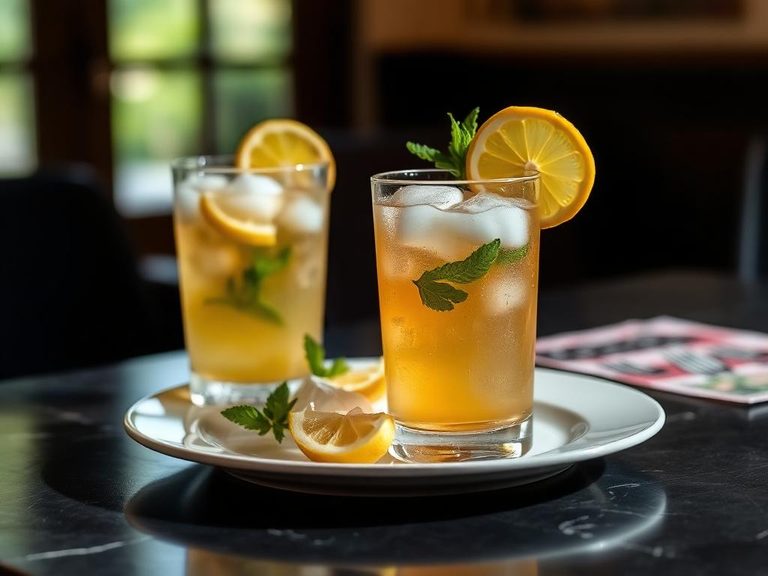
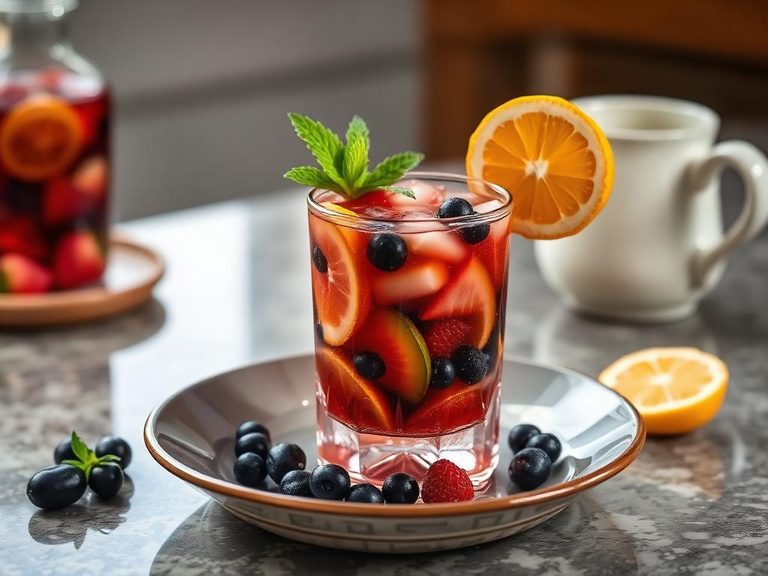
🌍 Where it's eaten
💡 Did you know?
The 'bottled' aspect is key: mass-produced iced tea often uses a 'tea concentrate' made from a high-pressure extraction process that pulls flavor compounds in minutes, not hours, fundamentally changing the chemical profile compared to traditional steeping.
Full nutrition (USDA data · scales with serving)
| Water | 91.2 g |
| Energy | 38.0 kcal |
| Protein | 0.00 g |
| Total lipid (fat) | 0.00 g |
| Carbohydrate, by difference | 8.8 g |
| Fiber, total dietary | 0.00 g |
| Total Sugars | 7.9 g |
| Calcium, Ca | 11.0 mg |
| Iron, Fe | 0.00 mg |
| Magnesium, Mg | 2.0 mg |
| Phosphorus, P | 4.0 mg |
| Potassium, K | 27.0 mg |
| Sodium, Na | 8.0 mg |
| Zinc, Zn | 0.01 mg |
| Copper, Cu | 0.01 mg |
| Selenium, Se | 0.00 ug |
| Vitamin C, total ascorbic acid | 0.00 mg |
| Thiamin | 0.00 mg |
| Riboflavin | 0.00 mg |
| Niacin | 0.00 mg |
| Vitamin B-6 | 0.00 mg |
| Folate, total | 0.00 ug |
| Folic acid | 0.00 ug |
| Folate, food | 0.00 ug |
| Folate, DFE | 0.00 ug |
| Choline, total | 0.00 mg |
| Vitamin B-12 | 0.00 ug |
| Vitamin B-12, added | 0.00 ug |
| Vitamin A, RAE | 0.00 ug |
| Retinol | 0.00 ug |
| Carotene, beta | 0.00 ug |
| Carotene, alpha | 0.00 ug |
| Cryptoxanthin, beta | 0.00 ug |
| Lycopene | 0.00 ug |
| Lutein + zeaxanthin | 0.00 ug |
| Vitamin E (alpha-tocopherol) | 0.00 mg |
| Vitamin E, added | 0.00 mg |
| Vitamin D (D2 + D3) | 0.00 ug |
| Vitamin K (phylloquinone) | 0.00 ug |
| Alcohol, ethyl | 0.00 g |
| Caffeine | 1.0 mg |
| Theobromine | 1.0 mg |
Fat & fatty acid profile (per 100g)
| Fatty acids, total saturated | 0.00 g |
| SFA 4:0 | 0.00 g |
| SFA 6:0 | 0.00 g |
| SFA 8:0 | 0.00 g |
| SFA 10:0 | 0.00 g |
| SFA 12:0 | 0.00 g |
| SFA 14:0 | 0.00 g |
| SFA 16:0 | 0.00 g |
| SFA 18:0 | 0.00 g |
| Fatty acids, total monounsaturated | 0.00 g |
| MUFA 16:1 | 0.00 g |
| MUFA 18:1 | 0.00 g |
| MUFA 20:1 | 0.00 g |
| MUFA 22:1 | 0.00 g |
| Fatty acids, total polyunsaturated | 0.00 g |
| PUFA 18:2 | 0.00 g |
| PUFA 18:3 | 0.00 g |
| PUFA 18:4 | 0.00 g |
| PUFA 20:4 | 0.00 g |
| PUFA 20:5 n-3 (EPA) | 0.00 g |
| PUFA 22:5 n-3 (DPA) | 0.00 g |
| PUFA 22:6 n-3 (DHA) | 0.00 g |
| Cholesterol | 0.00 mg |
Amino acid profile (per 100g)
Estimated from Cookies, animal crackers (includes arrowroot, tea biscuits) — USDA does not publish this profile for Tea.
| Tryptophan | 0.10 g |
| Threonine | 0.19 g |
| Isoleucine | 0.26 g |
| Leucine | 0.47 g |
| Lysine | 0.24 g |
| Methionine | 0.12 g |
| Cystine | 0.15 g |
| Phenylalanine | 0.32 g |
| Tyrosine | 0.20 g |
| Valine | 0.30 g |
| Arginine | 0.26 g |
| Histidine | 0.14 g |
| Alanine | 0.21 g |
| Aspartic acid | 0.29 g |
| Glutamic acid | 2.3 g |
| Glycine | 0.23 g |
| Proline | 0.76 g |
| Serine | 0.36 g |
FAQ
Is decaffeinated iced tea completely caffeine-free?
Not always. 'Decaffeinated' means most caffeine is removed, but trace amounts (typically 2-10mg per serving) can remain. For a true zero-caffeine option, look for labels explicitly stating 'caffeine-free.'
Why does bottled iced tea taste different from homemade?
Commercial production often uses tea concentrate, added citric acid for tartness, and precise sweetener blends for consistency. The pasteurization process for shelf stability also alters the delicate flavor compounds found in freshly brewed tea.
Does the sugar in iced tea affect hydration?
Moderate sugar concentrations (like in this product) don't impair hydration and can even aid fluid absorption. However, very high-sugar drinks can slow stomach emptying. For pure hydration, water is still the optimal choice.
Nutrient density (calculated · NRF9.3)
Nutrient Rich Foods index: beneficial nutrients (protein, fiber, vitamins, minerals) minus saturated fat, added sugar & sodium, per 100 kcal.
NRF9.3 index — Fulgoni, Keast & Drewnowski, 2009. Computed from USDA nutrients.
Weight-loss friendliness (composite index)
Energy density 0.38 kcal/g · 0% calories from protein · 0.0 g fiber · 7.9 g sugar per 100 g.
Composite of energy density (Rolls et al., 1999), protein & fiber satiety, minus sugar. A calculated heuristic — ranks satiety-per-calorie, not a clinical measure.
Dietary load (calculated from USDA values)
Potential renal acid load. Positive = acid-forming, negative = alkaline-forming.
Sodium-to-potassium ratio: 0.30 (lower is better — aim for ≤ 1)
Sodium:potassium per WHO potassium guidance. Computed from USDA nutrients.