

Tea, iced, bottled, black
Common food
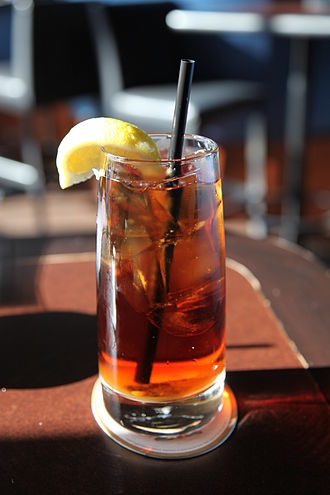
Photo: Wikipedia
This is a chilled, ready-to-drink black tea, typically brewed from Camellia sinensis leaves and often sweetened. It offers a crisp, refreshing texture with a balance of brisk tea tannins and noticeable sweetness. Nutritionally, it's a source of quick energy from its sugar content, with negligible protein, fat, or fiber.
Calorie split: 0% protein · 96% carbs · 4% fat
↓ Full nutrition💚 Why it's loved
People love it for its perfect balance of sweet and brisk, making it an ideal thirst-quencher on a hot day. Its convenience and familiar flavor have made it a cultural staple for on-the-go refreshment.
⚠️ Watch-outs & how to enjoy it better
The primary downside is the high added sugar content, which can contribute to blood sugar spikes and empty calories. To counteract this, consider it an occasional treat, pair it with a protein or fat source like nuts to slow sugar absorption, or look for unsweetened versions.
Key benefits
- Provides quick hydration
- Contains antioxidants from black tea
- Offers a convenient caffeine boost
- Serves as a refreshing low-calorie alternative to soda
🍽️ Popular dishes



🌍 Where it's eaten
💡 Did you know?
The 'iced' part of bottled iced tea is a relatively modern invention; for most of history, tea was exclusively served hot, even in warm climates.
Full nutrition (USDA data · scales with serving)
| Water | 89.0 g |
| Energy | 45.0 kcal |
| Protein | 0.00 g |
| Total lipid (fat) | 0.22 g |
| Carbohydrate, by difference | 10.8 g |
| Fiber, total dietary | 0.00 g |
| Total Sugars | 9.5 g |
| Calcium, Ca | 4.0 mg |
| Iron, Fe | 0.00 mg |
| Magnesium, Mg | 1.0 mg |
| Phosphorus, P | 1.0 mg |
| Potassium, K | 14.0 mg |
| Sodium, Na | 3.0 mg |
| Zinc, Zn | 0.01 mg |
| Copper, Cu | 0.01 mg |
| Selenium, Se | 0.00 ug |
| Vitamin C, total ascorbic acid | 0.00 mg |
| Thiamin | 0.00 mg |
| Riboflavin | 0.00 mg |
| Niacin | 0.00 mg |
| Vitamin B-6 | 0.00 mg |
| Folate, total | 0.00 ug |
| Folic acid | 0.00 ug |
| Folate, food | 0.00 ug |
| Folate, DFE | 0.00 ug |
| Choline, total | 0.00 mg |
| Vitamin B-12 | 0.00 ug |
| Vitamin B-12, added | 0.00 ug |
| Vitamin A, RAE | 0.00 ug |
| Retinol | 0.00 ug |
| Carotene, beta | 0.00 ug |
| Carotene, alpha | 0.00 ug |
| Cryptoxanthin, beta | 0.00 ug |
| Lycopene | 0.00 ug |
| Lutein + zeaxanthin | 0.00 ug |
| Vitamin E (alpha-tocopherol) | 0.00 mg |
| Vitamin E, added | 0.00 mg |
| Vitamin D (D2 + D3) | 0.00 ug |
| Vitamin K (phylloquinone) | 0.00 ug |
| Alcohol, ethyl | 0.00 g |
| Caffeine | 9.0 mg |
| Theobromine | 0.00 mg |
Fat & fatty acid profile (per 100g)
| Fatty acids, total saturated | 0.00 g |
| SFA 4:0 | 0.00 g |
| SFA 6:0 | 0.00 g |
| SFA 8:0 | 0.00 g |
| SFA 10:0 | 0.00 g |
| SFA 12:0 | 0.00 g |
| SFA 14:0 | 0.00 g |
| SFA 16:0 | 0.00 g |
| SFA 18:0 | 0.00 g |
| Fatty acids, total monounsaturated | 0.00 g |
| MUFA 16:1 | 0.00 g |
| MUFA 18:1 | 0.00 g |
| MUFA 20:1 | 0.00 g |
| MUFA 22:1 | 0.00 g |
| Fatty acids, total polyunsaturated | 0.00 g |
| PUFA 18:2 | 0.00 g |
| PUFA 18:3 | 0.00 g |
| PUFA 18:4 | 0.00 g |
| PUFA 20:4 | 0.00 g |
| PUFA 20:5 n-3 (EPA) | 0.00 g |
| PUFA 22:5 n-3 (DPA) | 0.00 g |
| PUFA 22:6 n-3 (DHA) | 0.00 g |
| Cholesterol | 0.00 mg |
Amino acid profile (per 100g)
Estimated from Cookies, animal crackers (includes arrowroot, tea biscuits) — USDA does not publish this profile for Tea.
| Tryptophan | 0.10 g |
| Threonine | 0.19 g |
| Isoleucine | 0.26 g |
| Leucine | 0.47 g |
| Lysine | 0.24 g |
| Methionine | 0.12 g |
| Cystine | 0.15 g |
| Phenylalanine | 0.32 g |
| Tyrosine | 0.20 g |
| Valine | 0.30 g |
| Arginine | 0.26 g |
| Histidine | 0.14 g |
| Alanine | 0.21 g |
| Aspartic acid | 0.29 g |
| Glutamic acid | 2.3 g |
| Glycine | 0.23 g |
| Proline | 0.76 g |
| Serine | 0.36 g |
FAQ
Is bottled iced tea as healthy as home-brewed tea?
Generally, no. Bottled versions often contain significant added sugars and may have fewer antioxidants due to processing and storage, whereas home-brewed tea allows you to control sugar and steeping time.
Does the caffeine in iced tea affect you differently than hot tea?
The caffeine content and its effects are similar per volume, but people often drink larger quantities of iced tea quickly, which can lead to a faster or more pronounced caffeine intake.
Why does some bottled iced tea have a cloudy appearance?
Cloudiness, or 'cream down,' can occur naturally when tannins in the tea bind with caffeine as it cools. It's harmless and often indicates a tea with higher tannin content, though commercial brands may filter it out for clarity.
Nutrient density (calculated · NRF9.3)
Nutrient Rich Foods index: beneficial nutrients (protein, fiber, vitamins, minerals) minus saturated fat, added sugar & sodium, per 100 kcal.
NRF9.3 index — Fulgoni, Keast & Drewnowski, 2009. Computed from USDA nutrients.
Weight-loss friendliness (composite index)
Energy density 0.45 kcal/g · 0% calories from protein · 0.0 g fiber · 9.5 g sugar per 100 g.
Composite of energy density (Rolls et al., 1999), protein & fiber satiety, minus sugar. A calculated heuristic — ranks satiety-per-calorie, not a clinical measure.
Dietary load (calculated from USDA values)
Potential renal acid load. Positive = acid-forming, negative = alkaline-forming.
Sodium-to-potassium ratio: 0.21 (lower is better — aim for ≤ 1)
Sodium:potassium per WHO potassium guidance. Computed from USDA nutrients.