

Tea, ginger
Common food

Photo: Wikipedia
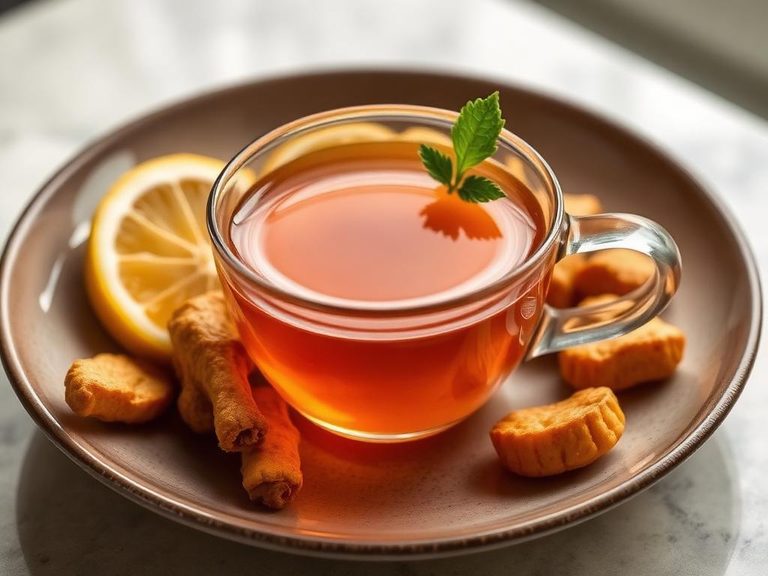
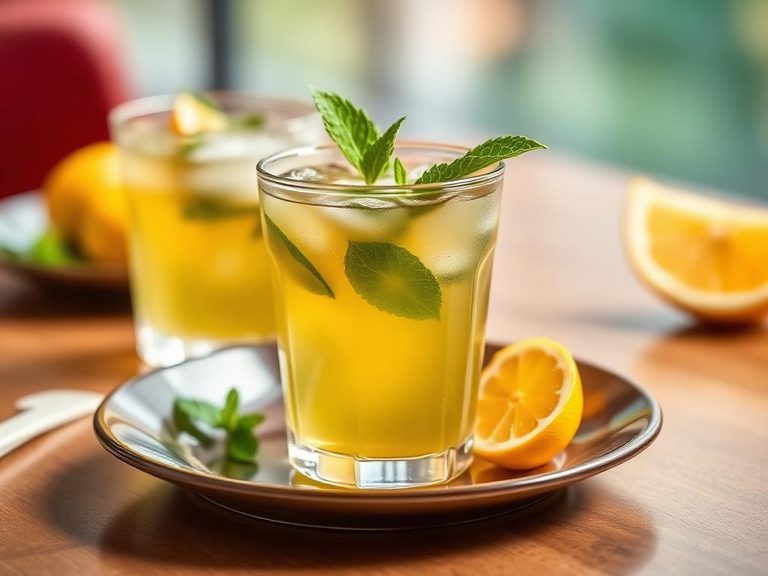
A fragrant, soothing beverage brewed by steeping ginger root in hot water, often alongside black or green tea leaves. It delivers a warm, spicy-sweet kick with a clean, slightly fibrous texture from the grated or sliced root. Nutritionally, it's virtually a zero-calorie drink, making it a popular choice for hydration without added sugars or fats.
Calorie split: 9% protein · 81% carbs · 10% fat
↓ Full nutrition💚 Why it's loved
People love it for its bold, spicy flavor that can be both invigorating and comforting. It's incredibly versatile, enjoyed hot or iced, and is a staple in many cultures for its role in wellness routines and culinary traditions.
⚠️ Watch-outs & how to enjoy it better
The strong, pungent flavor of ginger can be overwhelming for some, and excessive consumption may cause mild heartburn or stomach upset in sensitive individuals. To counteract this, start with a smaller amount of ginger or brew for a shorter time, and consider enjoying it with a meal rather than on an empty stomach.
Key benefits
- Supports digestive comfort and may help soothe nausea.
- Contains gingerol, a compound with antioxidant properties.
- Provides a warming sensation that can be comforting in cold weather.
- A naturally caffeine-free option when brewed without tea leaves.
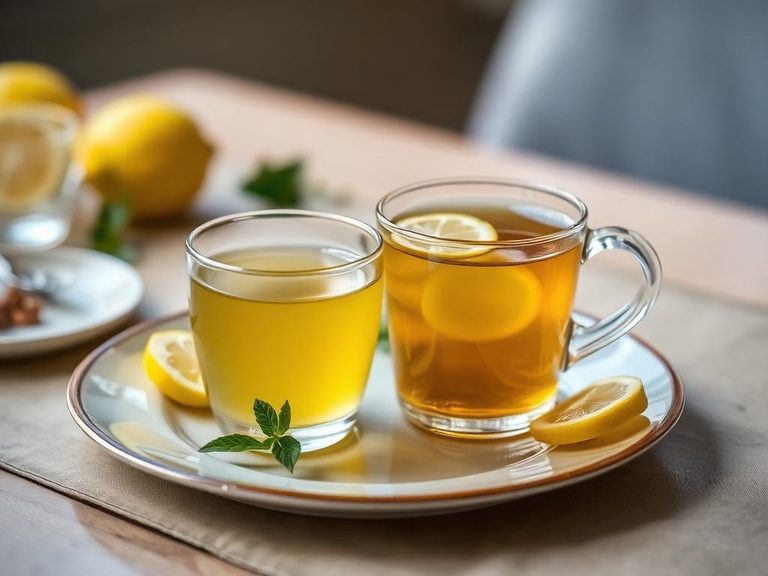
- Can be easily customized with lemon, honey, or other spices.
🍽️ Popular dishes
🌍 Where it's eaten
💡 Did you know?
The primary bioactive compound in ginger, gingerol, is structurally similar to capsaicin (the compound that makes chili peppers hot), which is why fresh ginger has that characteristic spicy bite.
Full nutrition (USDA data · scales with serving)
| Water | 99.7 g |
| Energy | 1.0 kcal |
| Protein | 0.02 g |
| Total lipid (fat) | 0.01 g |
| Carbohydrate, by difference | 0.18 g |
| Fiber, total dietary | 0.00 g |
| Total Sugars | 0.02 g |
| Calcium, Ca | 3.0 mg |
| Iron, Fe | 0.01 mg |
| Magnesium, Mg | 1.0 mg |
| Phosphorus, P | 0.00 mg |
| Potassium, K | 4.0 mg |
| Sodium, Na | 4.0 mg |
| Zinc, Zn | 0.01 mg |
| Copper, Cu | 0.01 mg |
| Selenium, Se | 0.00 ug |
| Vitamin C, total ascorbic acid | 0.00 mg |
| Thiamin | 0.00 mg |
| Riboflavin | 0.00 mg |
| Niacin | 0.01 mg |
| Vitamin B-6 | 0.00 mg |
| Folate, total | 0.00 ug |
| Folic acid | 0.00 ug |
| Folate, food | 0.00 ug |
| Folate, DFE | 0.00 ug |
| Choline, total | 0.30 mg |
| Vitamin B-12 | 0.00 ug |
| Vitamin B-12, added | 0.00 ug |
| Vitamin A, RAE | 0.00 ug |
| Retinol | 0.00 ug |
| Carotene, beta | 0.00 ug |
| Carotene, alpha | 0.00 ug |
| Cryptoxanthin, beta | 0.00 ug |
| Lycopene | 0.00 ug |
| Lutein + zeaxanthin | 0.00 ug |
| Vitamin E (alpha-tocopherol) | 0.00 mg |
| Vitamin E, added | 0.00 mg |
| Vitamin D (D2 + D3) | 0.00 ug |
| Vitamin K (phylloquinone) | 0.00 ug |
| Alcohol, ethyl | 0.00 g |
| Caffeine | 0.00 mg |
| Theobromine | 0.00 mg |
Fat & fatty acid profile (per 100g)
| Fatty acids, total saturated | 0.00 g |
| SFA 4:0 | 0.00 g |
| SFA 6:0 | 0.00 g |
| SFA 8:0 | 0.00 g |
| SFA 10:0 | 0.00 g |
| SFA 12:0 | 0.00 g |
| SFA 14:0 | 0.00 g |
| SFA 16:0 | 0.00 g |
| SFA 18:0 | 0.00 g |
| Fatty acids, total monounsaturated | 0.00 g |
| MUFA 16:1 | 0.00 g |
| MUFA 18:1 | 0.00 g |
| MUFA 20:1 | 0.00 g |
| MUFA 22:1 | 0.00 g |
| Fatty acids, total polyunsaturated | 0.00 g |
| PUFA 18:2 | 0.00 g |
| PUFA 18:3 | 0.00 g |
| PUFA 18:4 | 0.00 g |
| PUFA 20:4 | 0.00 g |
| PUFA 20:5 n-3 (EPA) | 0.00 g |
| PUFA 22:5 n-3 (DPA) | 0.00 g |
| PUFA 22:6 n-3 (DHA) | 0.00 g |
| Cholesterol | 0.00 mg |
Amino acid profile (per 100g)
Estimated from Cookies, animal crackers (includes arrowroot, tea biscuits) — USDA does not publish this profile for Tea.
| Tryptophan | 0.10 g |
| Threonine | 0.19 g |
| Isoleucine | 0.26 g |
| Leucine | 0.47 g |
| Lysine | 0.24 g |
| Methionine | 0.12 g |
| Cystine | 0.15 g |
| Phenylalanine | 0.32 g |
| Tyrosine | 0.20 g |
| Valine | 0.30 g |
| Arginine | 0.26 g |
| Histidine | 0.14 g |
| Alanine | 0.21 g |
| Aspartic acid | 0.29 g |
| Glutamic acid | 2.3 g |
| Glycine | 0.23 g |
| Proline | 0.76 g |
| Serine | 0.36 g |
FAQ
Is ginger tea the same as just hot water with ginger?
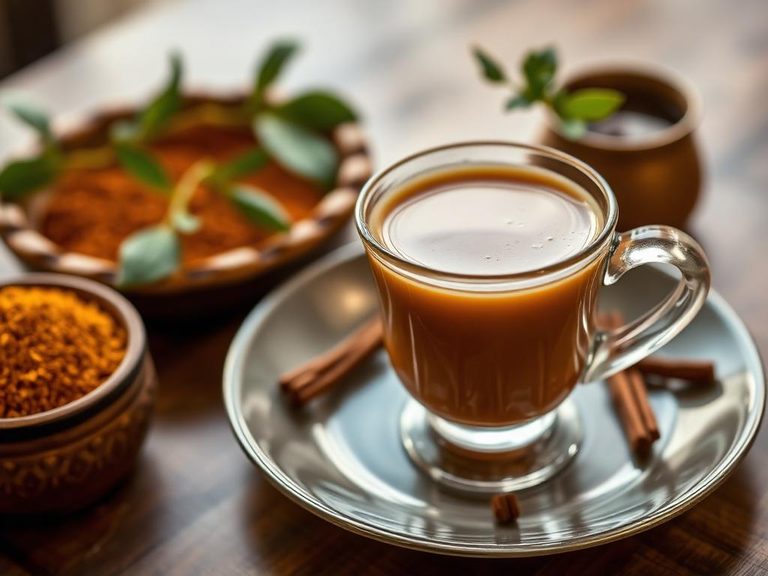
Yes, the term 'ginger tea' typically refers to an infusion made by steeping fresh ginger root in hot water. If it includes actual tea leaves (like black or green tea), it would be more accurately called 'ginger tea with tea leaves' or a specific blend like masala chai.
Does ginger tea contain caffeine?
Pure ginger tea, made only from ginger root and water, is naturally caffeine-free. However, if it is blended with black or green tea leaves, it will contain caffeine.
Can I drink ginger tea every day?
For most healthy adults, moderate daily consumption (1-2 cups) is generally considered safe. However, very high or prolonged intake may cause digestive discomfort for some. It's best to listen to your body and consult a healthcare provider if you have specific health conditions or are on medication.
Nutrient density (calculated · NRF9.3)
Nutrient Rich Foods index: beneficial nutrients (protein, fiber, vitamins, minerals) minus saturated fat, added sugar & sodium, per 100 kcal.
NRF9.3 index — Fulgoni, Keast & Drewnowski, 2009. Computed from USDA nutrients.
Weight-loss friendliness (composite index)
Energy density 0.01 kcal/g · 8% calories from protein · 0.0 g fiber · 0.0 g sugar per 100 g.
Composite of energy density (Rolls et al., 1999), protein & fiber satiety, minus sugar. A calculated heuristic — ranks satiety-per-calorie, not a clinical measure.
Dietary load (calculated from USDA values)
Potential renal acid load. Positive = acid-forming, negative = alkaline-forming.
Sodium-to-potassium ratio: 1.00 (lower is better — aim for ≤ 1)
Sodium:potassium per WHO potassium guidance. Computed from USDA nutrients.