

Summer squash, yellow, raw
Common food
Summer squash, yellow, raw is a vibrant, tender-skinned vegetable with a mild, slightly sweet flavor and a crisp, watery texture. It's exceptionally low in calories, providing just 19 kcal per 100g, and is a good source of vitamin C and manganese. Its high water content makes it a refreshing, hydrating addition to meals.
Calorie split: 18% protein · 71% carbs · 11% fat
↓ Full nutrition💚 Why it's loved
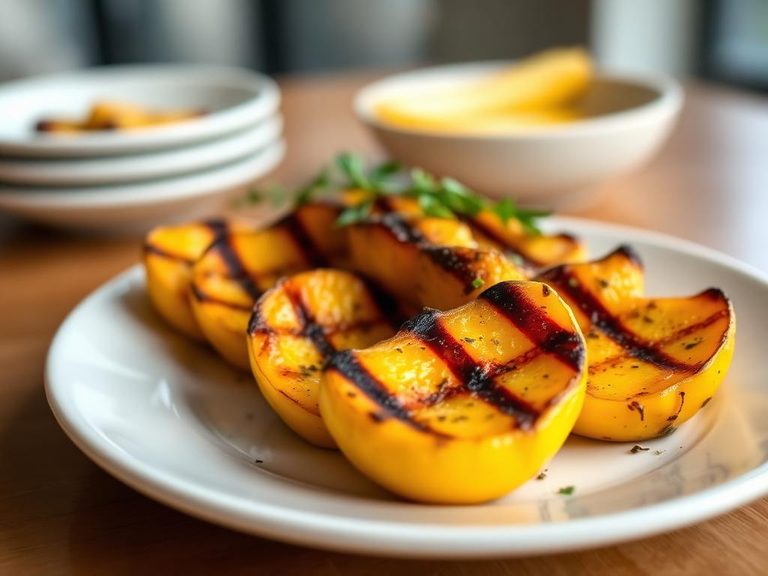
People love yellow summer squash for its delicate, buttery flavor that easily absorbs other seasonings and its incredible versatility—it can be eaten raw, grilled, roasted, or sautéed. It's a staple of summer cooking, often associated with garden-fresh abundance and simple, healthy meals.
⚠️ Watch-outs & how to enjoy it better
Its high water content can make it mushy if overcooked, and some may find its mild flavor too subtle. For those monitoring blood sugar, its natural sugars (2.88g per 100g) can add up in large portions. Tip: Pair it with protein or healthy fats (like olive oil or cheese) to slow sugar absorption and add satiety.
Key benefits
- Very low in calories and fat
- Good source of immune-supporting vitamin C
- Contains manganese for bone health
- High water content aids hydration
- Provides dietary fiber for digestion
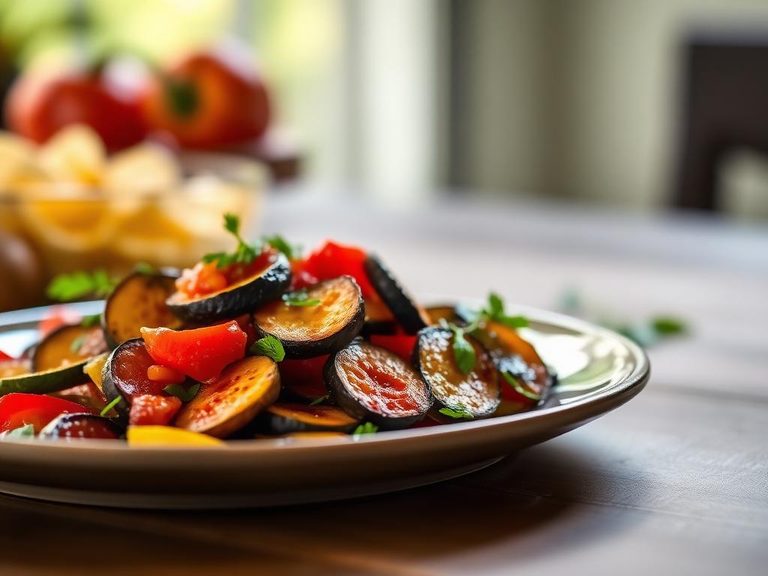
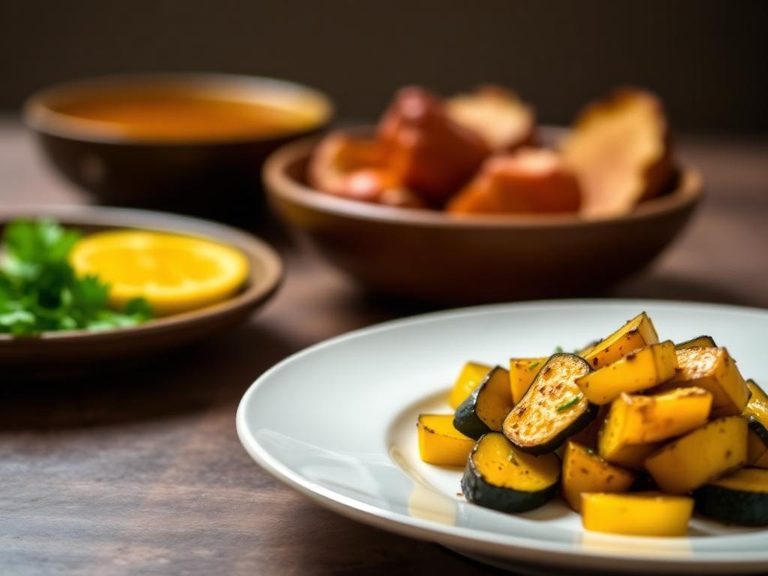
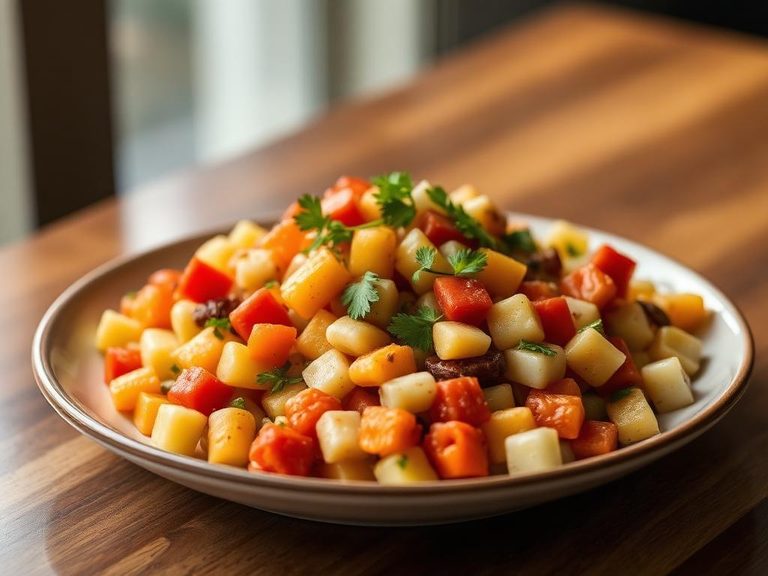
🍽️ Popular dishes

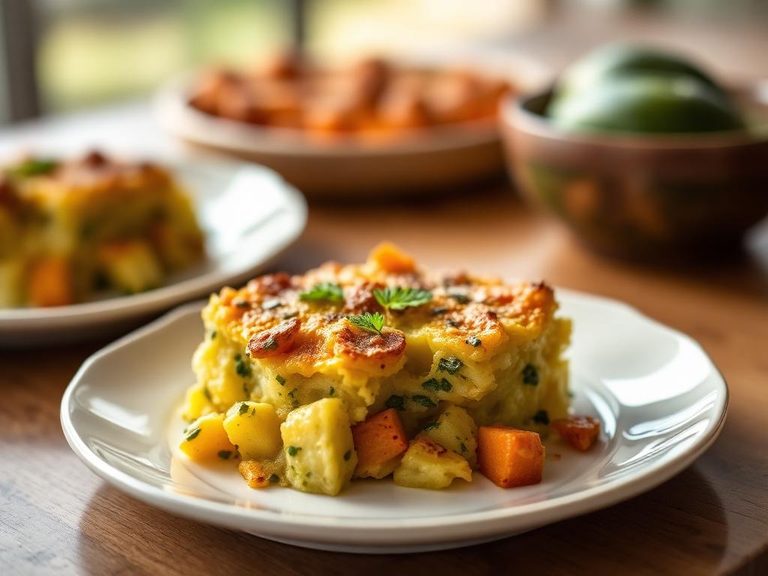
🌍 Where it's eaten
💡 Did you know?
Yellow summer squash is botanically a fruit (a berry) but is culinarily treated as a vegetable, and its blossoms are also edible and often stuffed or fried.
Full nutrition (USDA data · scales with serving)
| Water | 94.3 g |
| Energy | 19.0 kcal |
| Protein | 1.0 g |
| Total lipid (fat) | 0.27 g |
| Carbohydrate, by difference | 3.9 g |
| Fiber, total dietary | 1.0 g |
| Total Sugars | 2.9 g |
| Calcium, Ca | 21.0 mg |
| Iron, Fe | 0.44 mg |
| Magnesium, Mg | 20.0 mg |
| Phosphorus, P | 32.0 mg |
| Potassium, K | 222 mg |
| Sodium, Na | 2.0 mg |
| Zinc, Zn | 0.29 mg |
| Copper, Cu | 0.09 mg |
| Selenium, Se | 0.20 ug |
| Vitamin C, total ascorbic acid | 19.3 mg |
| Thiamin | 0.05 mg |
| Riboflavin | 0.04 mg |
| Niacin | 0.45 mg |
| Vitamin B-6 | 0.10 mg |
| Folate, total | 19.0 ug |
| Folic acid | 0.00 ug |
| Folate, food | 19.0 ug |
| Folate, DFE | 19.0 ug |
| Choline, total | 7.1 mg |
| Vitamin B-12 | 0.00 ug |
| Vitamin B-12, added | 0.00 ug |
| Vitamin A, RAE | 8.0 ug |
| Retinol | 0.00 ug |
| Carotene, beta | 90.0 ug |
| Carotene, alpha | 0.00 ug |
| Cryptoxanthin, beta | 0.00 ug |
| Lycopene | 0.00 ug |
| Lutein + zeaxanthin | 290 ug |
| Vitamin E (alpha-tocopherol) | 0.13 mg |
| Vitamin E, added | 0.00 mg |
| Vitamin D (D2 + D3) | 0.00 ug |
| Vitamin K (phylloquinone) | 3.2 ug |
| Alcohol, ethyl | 0.00 g |
| Caffeine | 0.00 mg |
| Theobromine | 0.00 mg |
Fat & fatty acid profile (per 100g)
| Fatty acids, total saturated | 0.09 g |
| SFA 4:0 | 0.00 g |
| SFA 6:0 | 0.00 g |
| SFA 8:0 | 0.00 g |
| SFA 10:0 | 0.01 g |
| SFA 12:0 | 0.00 g |
| SFA 14:0 | 0.00 g |
| SFA 16:0 | 0.07 g |
| SFA 18:0 | 0.01 g |
| Fatty acids, total monounsaturated | 0.01 g |
| MUFA 16:1 | 0.00 g |
| MUFA 18:1 | 0.01 g |
| MUFA 20:1 | 0.00 g |
| MUFA 22:1 | 0.00 g |
| Fatty acids, total polyunsaturated | 0.08 g |
| PUFA 18:2 | 0.04 g |
| PUFA 18:3 | 0.04 g |
| PUFA 18:4 | 0.00 g |
| PUFA 20:4 | 0.00 g |
| PUFA 20:5 n-3 (EPA) | 0.00 g |
| PUFA 22:5 n-3 (DPA) | 0.00 g |
| PUFA 22:6 n-3 (DHA) | 0.00 g |
| Cholesterol | 0.00 mg |
Amino acid profile (per 100g)
Estimated from Squash, summer, crookneck and straightneck, cooked, boiled, drained, without salt — USDA does not publish this profile for Summer squash.
| Tryptophan | 0.01 g |
| Threonine | 0.02 g |
| Isoleucine | 0.03 g |
| Leucine | 0.05 g |
| Lysine | 0.05 g |
| Methionine | 0.01 g |
| Cystine | 0.01 g |
| Phenylalanine | 0.03 g |
| Tyrosine | 0.02 g |
| Valine | 0.04 g |
| Arginine | 0.04 g |
| Histidine | 0.02 g |
| Alanine | 0.05 g |
| Aspartic acid | 0.11 g |
| Glutamic acid | 0.10 g |
| Glycine | 0.03 g |
| Proline | 0.03 g |
| Serine | 0.04 g |
FAQ
How do I keep yellow squash from getting mushy?
Cook it quickly over high heat (sauté, grill, or roast) to evaporate water without breaking down the flesh. Avoid boiling or over-steaming.
Is the skin edible?
Yes, the thin skin is edible and nutritious. Just wash it well. For very large squash, the skin may be tougher, so you can peel it if desired.
What's the difference between yellow squash and zucchini?
Both are summer squashes. Yellow squash typically has a tapered neck and yellow skin, while zucchini is cylindrical with dark green skin. Their flavors and uses are very similar.
Nutrient density (calculated · NRF9.3)
Nutrient Rich Foods index: beneficial nutrients (protein, fiber, vitamins, minerals) minus saturated fat, added sugar & sodium, per 100 kcal.
NRF9.3 index — Fulgoni, Keast & Drewnowski, 2009. Computed from USDA nutrients.
Weight-loss friendliness (composite index)
Energy density 0.19 kcal/g · 21% calories from protein · 1.0 g fiber · 2.9 g sugar per 100 g.
Composite of energy density (Rolls et al., 1999), protein & fiber satiety, minus sugar. A calculated heuristic — ranks satiety-per-calorie, not a clinical measure.
Dietary load (calculated from USDA values)
Potential renal acid load. Positive = acid-forming, negative = alkaline-forming.
Sodium-to-potassium ratio: 0.01 (lower is better — aim for ≤ 1)
Sodium:potassium per WHO potassium guidance. Computed from USDA nutrients.