

Summer squash, yellow or green, NS as to form, cooked
Common food

Photo: Wikipedia
Summer squash, whether yellow crookneck or green zucchini, is a tender, water-rich vegetable with a mild, slightly sweet flavor and a soft, yielding texture when cooked. It's remarkably low in calories at just 47 kcal per 100g, making it a light, nutrient-dense addition to any meal. Its subtle taste acts as a perfect canvas, readily absorbing the flavors of herbs, spices, and sauces.
Calorie split: 10% protein · 31% carbs · 59% fat
↓ Full nutrition💚 Why it's loved
People love summer squash for its incredible versatility and mild, crowd-pleasing flavor that works in everything from stir-fries and casseroles to simple sautés. Its ability to soak up seasonings and pair with almost any protein or sauce makes it a staple in home kitchens worldwide.
⚠️ Watch-outs & how to enjoy it better
When overcooked, summer squash can become mushy and watery, which some find unappealing. To counteract this, cook it quickly over high heat (like sautéing or grilling) to retain a slight bite, or add it near the end of a longer cooking process. Its mild flavor can also be perceived as bland if not seasoned well, so be generous with herbs, garlic, or a splash of acid like lemon juice.
Key benefits
- Very low calorie, supporting weight management goals
- Good source of vitamin C, an antioxidant that supports immune function
- Provides potassium, which helps regulate blood pressure
- Contains fiber for digestive health and satiety
- High water content aids in hydration
🍽️ Popular dishes
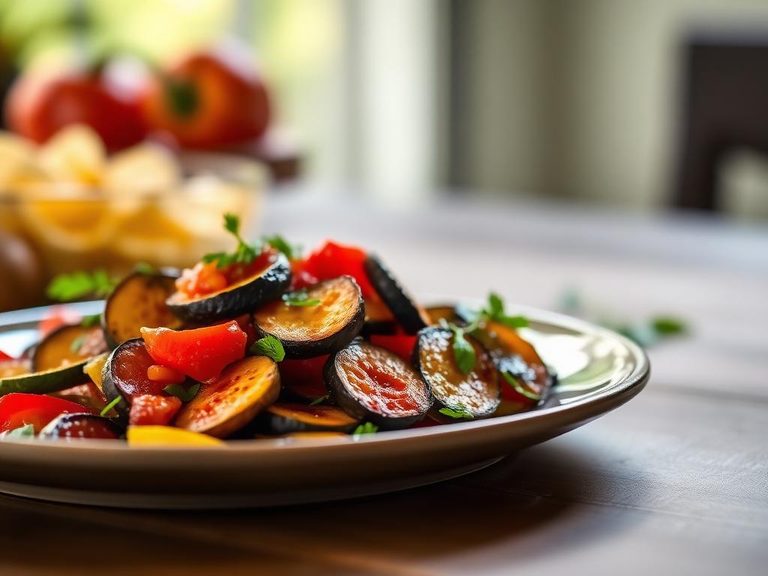
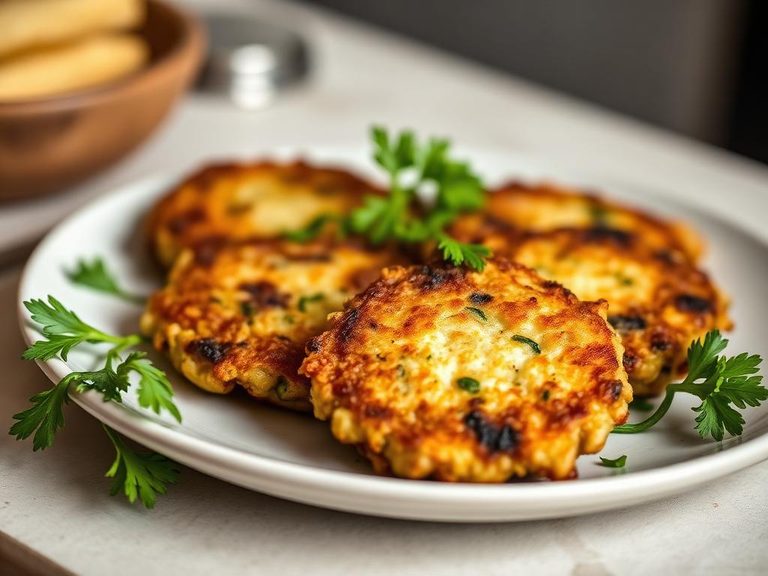

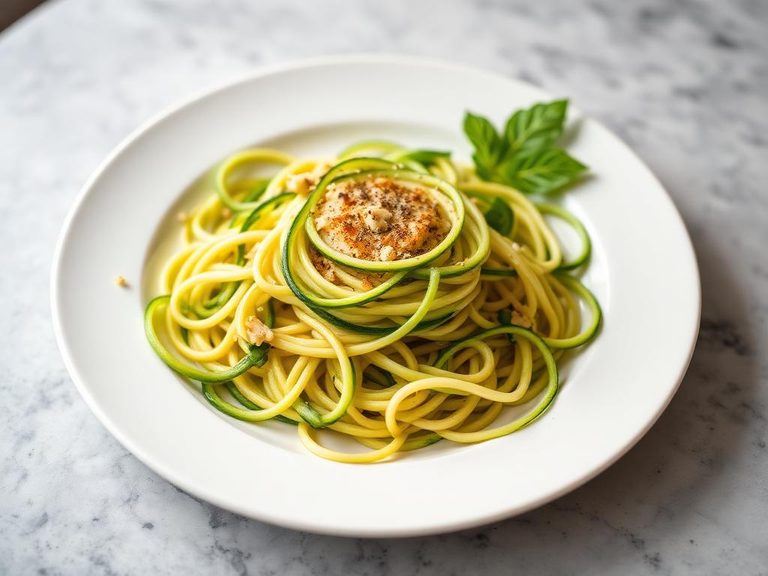
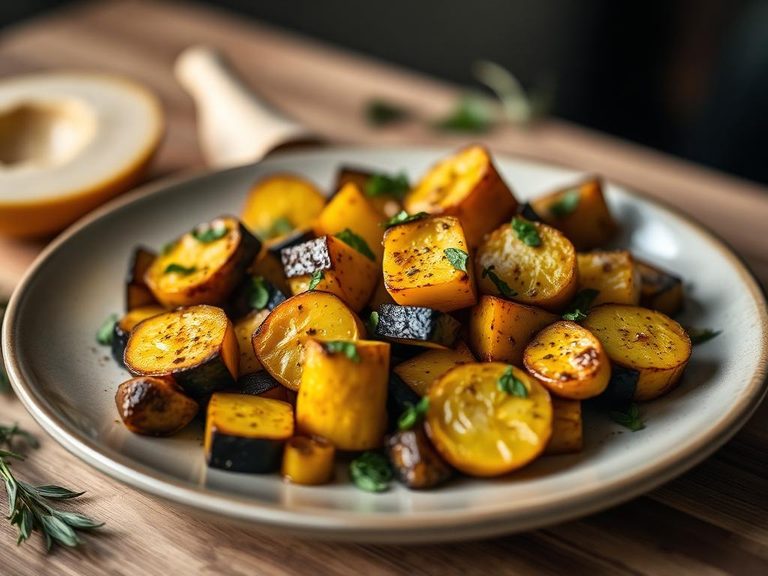
🌍 Where it's eaten
💡 Did you know?
Despite its name, summer squash is botanically a fruit, specifically a berry, because it develops from the flower of the plant and contains seeds.
Full nutrition (USDA data · scales with serving)
| Water | 90.4 g |
| Energy | 47.0 kcal |
| Protein | 1.3 g |
| Total lipid (fat) | 3.3 g |
| Carbohydrate, by difference | 4.0 g |
| Fiber, total dietary | 1.1 g |
| Total Sugars | 3.1 g |
| Calcium, Ca | 22.0 mg |
| Iron, Fe | 0.46 mg |
| Magnesium, Mg | 22.0 mg |
| Phosphorus, P | 40.0 mg |
| Potassium, K | 275 mg |
| Sodium, Na | 148 mg |
| Zinc, Zn | 0.35 mg |
| Copper, Cu | 0.08 mg |
| Selenium, Se | 0.20 ug |
| Vitamin C, total ascorbic acid | 18.0 mg |
| Thiamin | 0.05 mg |
| Riboflavin | 0.07 mg |
| Niacin | 0.49 mg |
| Vitamin B-6 | 0.16 mg |
| Folate, total | 21.0 ug |
| Folic acid | 0.00 ug |
| Folate, food | 21.0 ug |
| Folate, DFE | 21.0 ug |
| Choline, total | 9.7 mg |
| Vitamin B-12 | 0.00 ug |
| Vitamin B-12, added | 0.00 ug |
| Vitamin A, RAE | 23.0 ug |
| Retinol | 13.0 ug |
| Carotene, beta | 119 ug |
| Carotene, alpha | 0.00 ug |
| Cryptoxanthin, beta | 0.00 ug |
| Lycopene | 0.00 ug |
| Lutein + zeaxanthin | 1306 ug |
| Vitamin E (alpha-tocopherol) | 0.59 mg |
| Vitamin E, added | 0.00 mg |
| Vitamin D (D2 + D3) | 0.00 ug |
| Vitamin K (phylloquinone) | 6.7 ug |
| Alcohol, ethyl | 0.00 g |
| Caffeine | 0.00 mg |
| Theobromine | 0.00 mg |
Fat & fatty acid profile (per 100g)
| Fatty acids, total saturated | 0.88 g |
| SFA 4:0 | 0.02 g |
| SFA 6:0 | 0.01 g |
| SFA 8:0 | 0.01 g |
| SFA 10:0 | 0.03 g |
| SFA 12:0 | 0.03 g |
| SFA 14:0 | 0.08 g |
| SFA 16:0 | 0.49 g |
| SFA 18:0 | 0.17 g |
| Fatty acids, total monounsaturated | 1.1 g |
| MUFA 16:1 | 0.02 g |
| MUFA 18:1 | 1.0 g |
| MUFA 20:1 | 0.01 g |
| MUFA 22:1 | 0.00 g |
| Fatty acids, total polyunsaturated | 0.96 g |
| PUFA 18:2 | 0.80 g |
| PUFA 18:3 | 0.15 g |
| PUFA 18:4 | 0.00 g |
| PUFA 20:4 | 0.00 g |
| PUFA 20:5 n-3 (EPA) | 0.00 g |
| PUFA 22:5 n-3 (DPA) | 0.00 g |
| PUFA 22:6 n-3 (DHA) | 0.00 g |
| Cholesterol | 2.0 mg |
Amino acid profile (per 100g)
Estimated from Squash, summer, crookneck and straightneck, cooked, boiled, drained, without salt — USDA does not publish this profile for Summer squash.
| Tryptophan | 0.01 g |
| Threonine | 0.02 g |
| Isoleucine | 0.03 g |
| Leucine | 0.05 g |
| Lysine | 0.05 g |
| Methionine | 0.01 g |
| Cystine | 0.01 g |
| Phenylalanine | 0.03 g |
| Tyrosine | 0.02 g |
| Valine | 0.04 g |
| Arginine | 0.04 g |
| Histidine | 0.02 g |
| Alanine | 0.05 g |
| Aspartic acid | 0.11 g |
| Glutamic acid | 0.10 g |
| Glycine | 0.03 g |
| Proline | 0.03 g |
| Serine | 0.04 g |
FAQ
What's the difference between summer and winter squash?
Summer squash (like zucchini and yellow squash) has a thin, edible skin and a tender, high-water-content flesh, while winter squash (like butternut and acorn) has a thick, hard rind and a dense, starchy flesh that stores well.
Do I need to peel summer squash before cooking?
No, the skin is thin, tender, and edible. It's best left on to retain nutrients and color, though you may want to trim the stem end.
How can I prevent my cooked squash from becoming watery?
Salt the sliced squash and let it sit in a colander for 20-30 minutes to draw out excess moisture, then pat dry before cooking. Alternatively, cook it quickly over high heat to evaporate moisture.
Nutrient density (calculated · NRF9.3)
Nutrient Rich Foods index: beneficial nutrients (protein, fiber, vitamins, minerals) minus saturated fat, added sugar & sodium, per 100 kcal.
NRF9.3 index — Fulgoni, Keast & Drewnowski, 2009. Computed from USDA nutrients.
Weight-loss friendliness (composite index)
Energy density 0.47 kcal/g · 11% calories from protein · 1.1 g fiber · 3.1 g sugar per 100 g.
Composite of energy density (Rolls et al., 1999), protein & fiber satiety, minus sugar. A calculated heuristic — ranks satiety-per-calorie, not a clinical measure.
Dietary load (calculated from USDA values)
Potential renal acid load. Positive = acid-forming, negative = alkaline-forming.
Sodium-to-potassium ratio: 0.54 (lower is better — aim for ≤ 1)
Sodium:potassium per WHO potassium guidance. Computed from USDA nutrients.