

Stew, vegetable
Common food
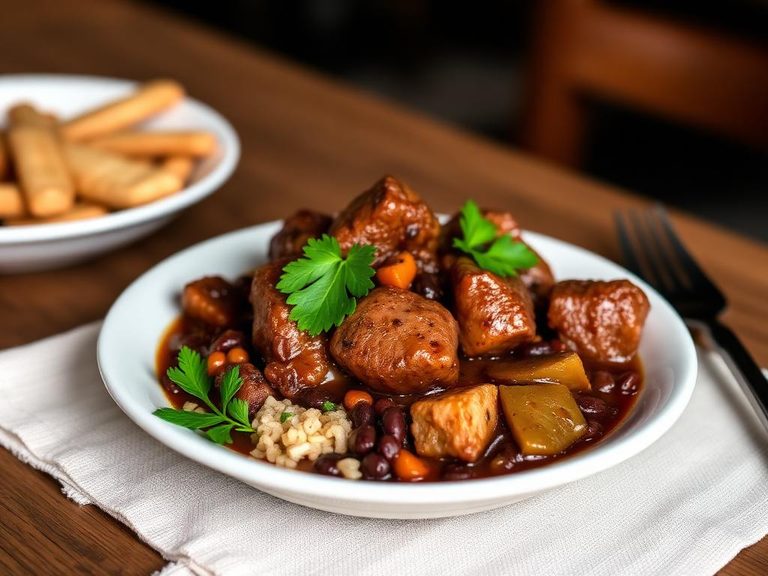
Vegetable stew is a hearty, slow-simmered medley of seasonal vegetables in a savory broth, often with a thick, comforting texture. It's a low-calorie, high-fiber dish where the natural sweetness of carrots, celery, and tomatoes shines through. The nutrition profile is lean, with minimal fat and a good dose of plant-based carbohydrates for sustained energy.
Calorie split: 12% protein · 84% carbs · 4% fat
↓ Full nutrition💚 Why it's loved
People love vegetable stew for its deep, comforting flavors that meld together beautifully, making it a quintessential 'comfort food.' Its versatility is a major draw, as it can be adapted to any season's harvest and served as a standalone meal or a side.
⚠️ Watch-outs & how to enjoy it better
The high fiber and water content can cause bloating or digestive discomfort for those unaccustomed to it. To counteract this, introduce it gradually into your diet and ensure vegetables are cooked thoroughly. Be mindful of added sodium in broths; opt for low-sodium versions or use herbs and spices for flavor.
Key benefits
- Excellent source of dietary fiber for digestive health.
- Very low in fat and calories, aiding weight management.
- Rich in vitamins and antioxidants from varied vegetables.
- Hydrating due to high water and broth content.
- Provides complex carbohydrates for steady energy.
🍽️ Popular dishes
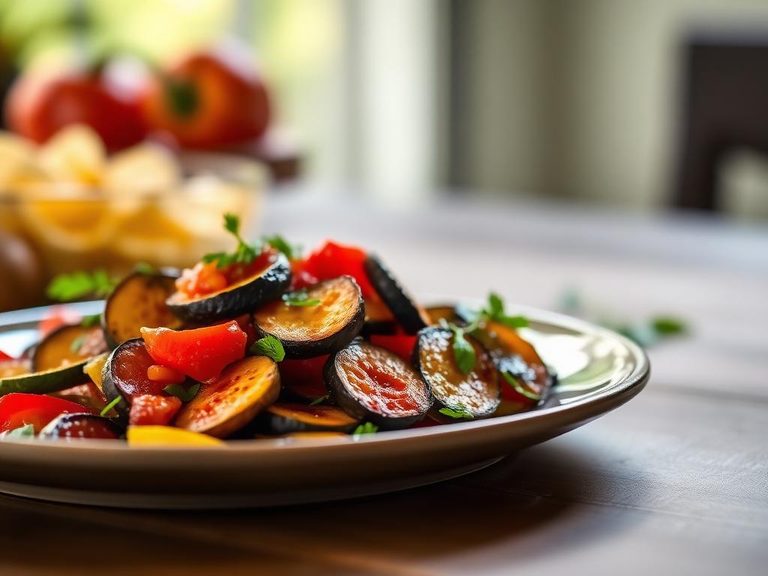
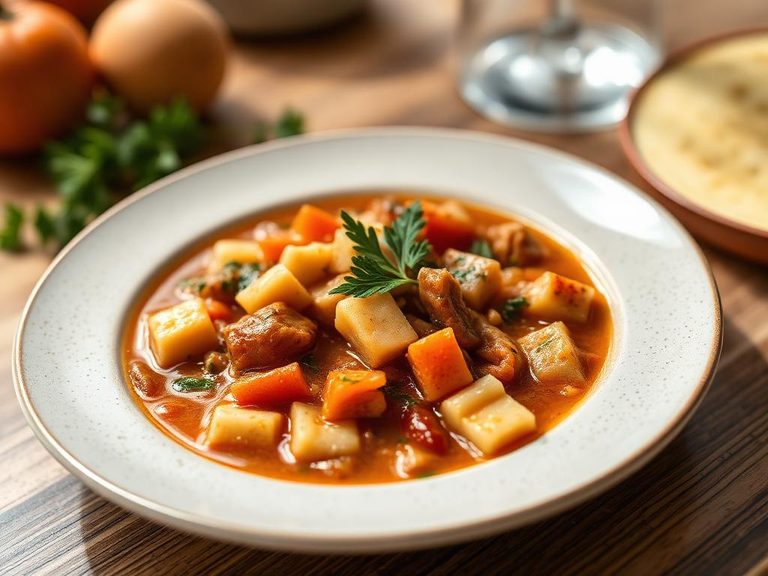
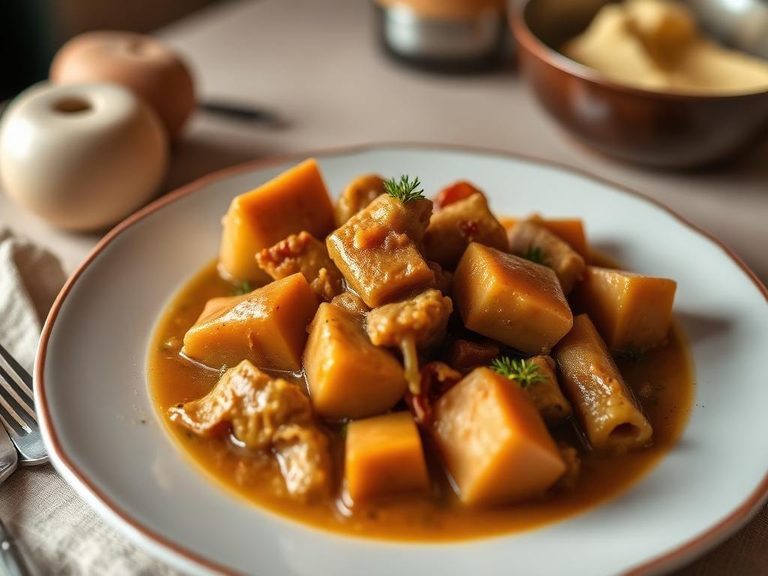
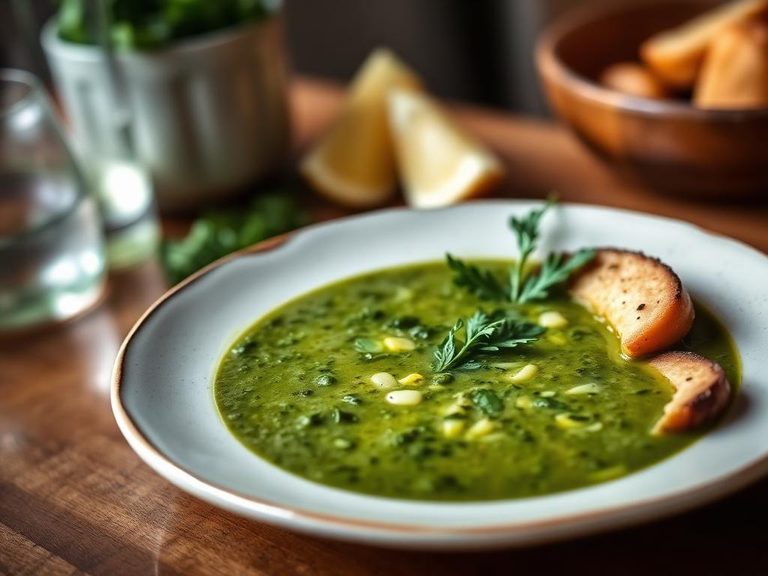

🌍 Where it's eaten
💡 Did you know?
The 'stew' cooking method is one of the oldest known to humanity, with evidence of stew-like dishes dating back to around 2000 BC in Mesopotamia.
Full nutrition (USDA data · scales with serving)
| Water | 87.0 g |
| Energy | 47.0 kcal |
| Protein | 1.4 g |
| Total lipid (fat) | 0.24 g |
| Carbohydrate, by difference | 10.1 g |
| Fiber, total dietary | 2.1 g |
| Total Sugars | 2.5 g |
| Calcium, Ca | 18.0 mg |
| Iron, Fe | 0.36 mg |
| Magnesium, Mg | 16.0 mg |
| Phosphorus, P | 38.0 mg |
| Potassium, K | 258 mg |
| Sodium, Na | 296 mg |
| Zinc, Zn | 0.27 mg |
| Copper, Cu | 0.07 mg |
| Selenium, Se | 0.20 ug |
| Vitamin C, total ascorbic acid | 11.2 mg |
| Thiamin | 0.05 mg |
| Riboflavin | 0.05 mg |
| Niacin | 0.95 mg |
| Vitamin B-6 | 0.11 mg |
| Folate, total | 20.0 ug |
| Folic acid | 0.00 ug |
| Folate, food | 20.0 ug |
| Folate, DFE | 20.0 ug |
| Choline, total | 9.9 mg |
| Vitamin B-12 | 0.00 ug |
| Vitamin B-12, added | 0.00 ug |
| Vitamin A, RAE | 206 ug |
| Retinol | 0.00 ug |
| Carotene, beta | 2056 ug |
| Carotene, alpha | 828 ug |
| Cryptoxanthin, beta | 5.0 ug |
| Lycopene | 864 ug |
| Lutein + zeaxanthin | 250 ug |
| Vitamin E (alpha-tocopherol) | 0.30 mg |
| Vitamin E, added | 0.00 mg |
| Vitamin D (D2 + D3) | 0.00 ug |
| Vitamin K (phylloquinone) | 8.6 ug |
| Alcohol, ethyl | 0.00 g |
| Caffeine | 0.00 mg |
| Theobromine | 0.00 mg |
Fat & fatty acid profile (per 100g)
| Fatty acids, total saturated | 0.03 g |
| SFA 4:0 | 0.00 g |
| SFA 6:0 | 0.00 g |
| SFA 8:0 | 0.00 g |
| SFA 10:0 | 0.00 g |
| SFA 12:0 | 0.00 g |
| SFA 14:0 | 0.00 g |
| SFA 16:0 | 0.03 g |
| SFA 18:0 | 0.00 g |
| Fatty acids, total monounsaturated | 0.02 g |
| MUFA 16:1 | 0.00 g |
| MUFA 18:1 | 0.01 g |
| MUFA 20:1 | 0.00 g |
| MUFA 22:1 | 0.00 g |
| Fatty acids, total polyunsaturated | 0.07 g |
| PUFA 18:2 | 0.06 g |
| PUFA 18:3 | 0.01 g |
| PUFA 18:4 | 0.00 g |
| PUFA 20:4 | 0.00 g |
| PUFA 20:5 n-3 (EPA) | 0.00 g |
| PUFA 22:5 n-3 (DPA) | 0.00 g |
| PUFA 22:6 n-3 (DHA) | 0.00 g |
| Cholesterol | 0.00 mg |
Amino acid profile (per 100g)
Estimated from Stew, hominy with mutton (Navajo) — USDA does not publish this profile for Stew.
| Tryptophan | 0.04 g |
| Threonine | 0.24 g |
| Isoleucine | 0.25 g |
| Leucine | 0.54 g |
| Lysine | 0.43 g |
| Methionine | 0.16 g |
| Cystine | 0.07 g |
| Phenylalanine | 0.26 g |
| Tyrosine | 0.18 g |
| Valine | 0.29 g |
| Arginine | 0.39 g |
| Histidine | 0.16 g |
| Alanine | 0.42 g |
| Aspartic acid | 0.53 g |
| Glutamic acid | 0.99 g |
| Glycine | 0.45 g |
| Proline | 0.39 g |
| Serine | 0.25 g |
FAQ
Is vegetable stew a good source of protein?
By itself, it is relatively low in protein (about 1.4g per 100g). To make it a complete protein-rich meal, add beans, lentils, tofu, or serve it alongside whole grains or lean meat.
Can I freeze vegetable stew?
Yes, it freezes exceptionally well. Allow it to cool completely, then store in airtight containers for up to 3 months. The texture of some vegetables may soften slightly upon thawing.
How can I thicken my vegetable stew without adding cream or flour?
You can blend a portion of the cooked vegetables and stir them back into the pot, or add a small amount of mashed potato or cornstarch slurry (cornstarch mixed with cold water) during the last few minutes of cooking.
Nutrient density (calculated · NRF9.3)
Nutrient Rich Foods index: beneficial nutrients (protein, fiber, vitamins, minerals) minus saturated fat, added sugar & sodium, per 100 kcal.
NRF9.3 index — Fulgoni, Keast & Drewnowski, 2009. Computed from USDA nutrients.
Weight-loss friendliness (composite index)
Energy density 0.47 kcal/g · 12% calories from protein · 2.1 g fiber · 2.5 g sugar per 100 g.
Composite of energy density (Rolls et al., 1999), protein & fiber satiety, minus sugar. A calculated heuristic — ranks satiety-per-calorie, not a clinical measure.
Dietary load (calculated from USDA values)
Potential renal acid load. Positive = acid-forming, negative = alkaline-forming.
Sodium-to-potassium ratio: 1.15 (lower is better — aim for ≤ 1)
Sodium:potassium per WHO potassium guidance. Computed from USDA nutrients.