

Stew, NFS
Common food

Photo: Wikipedia
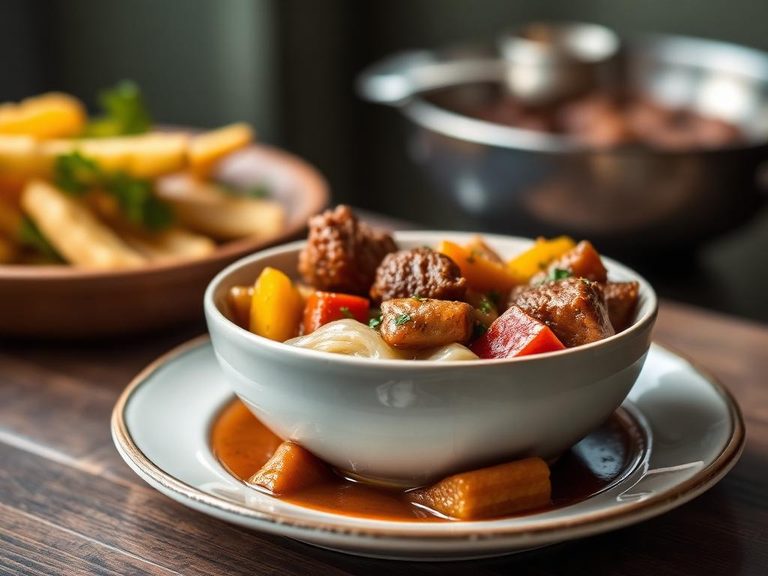
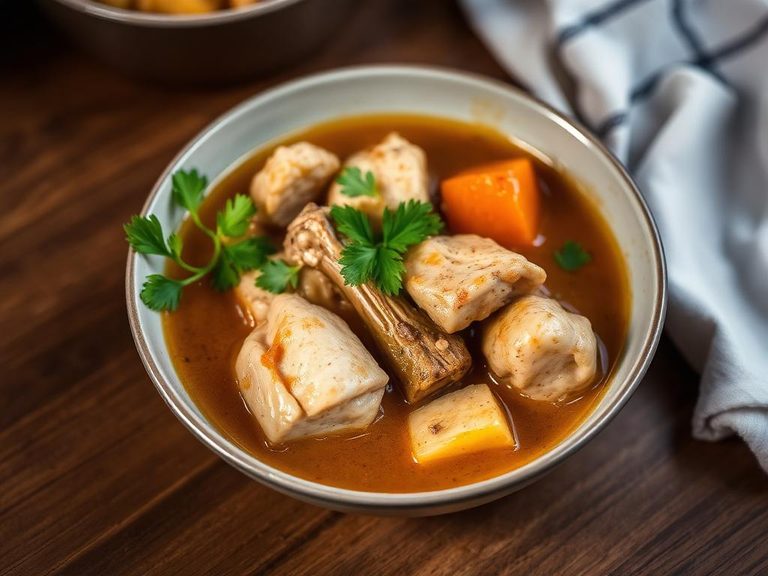
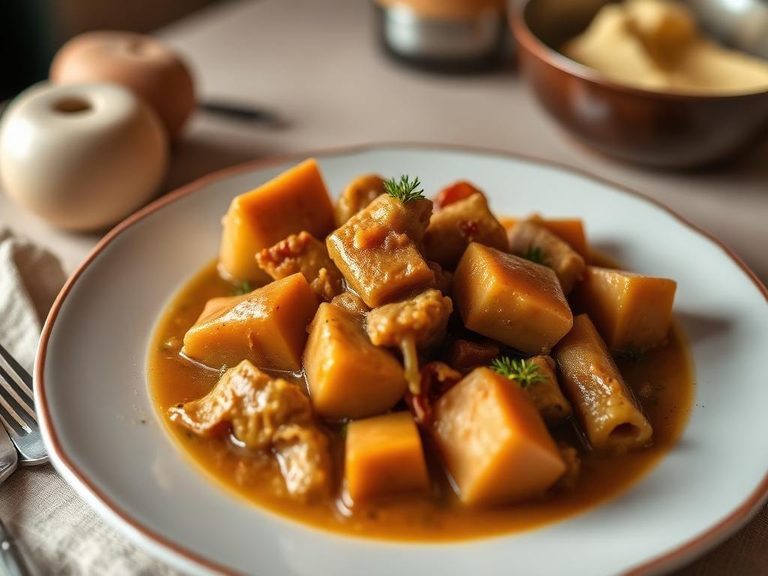
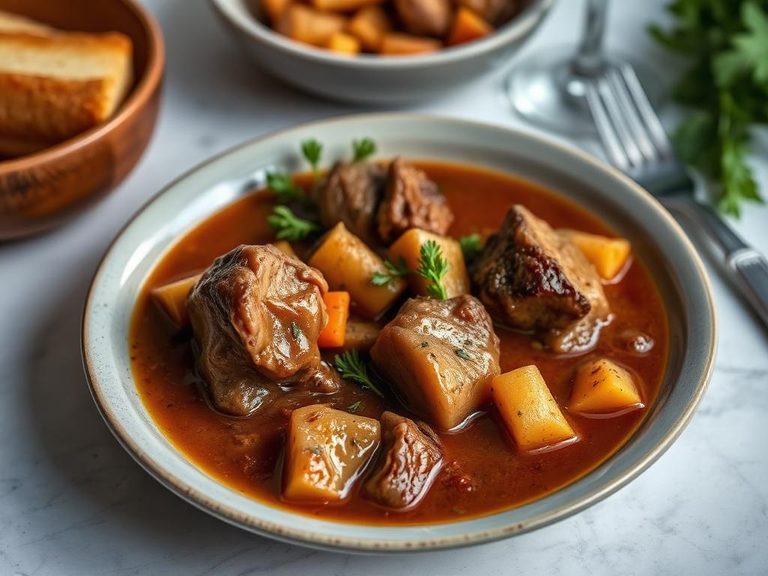
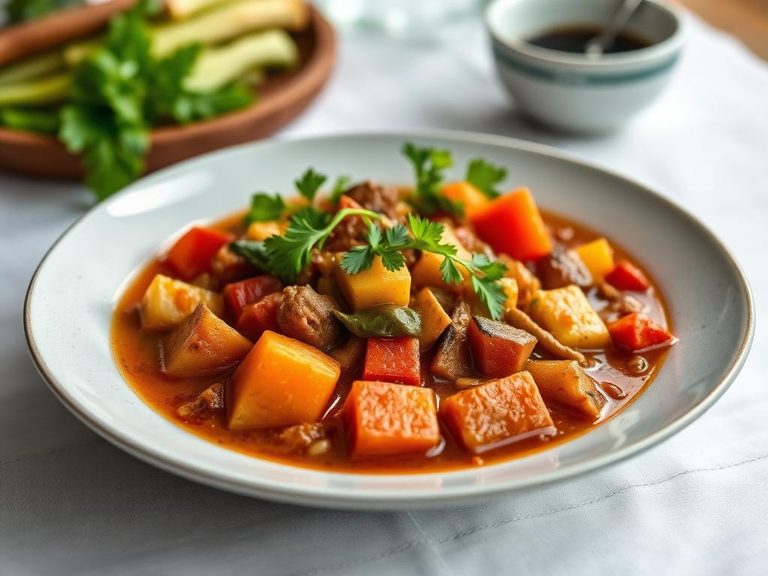
Stew, NFS (Not Further Specified) is a hearty, slow-cooked dish where ingredients simmer in a flavorful liquid until tender. It typically features a rich, savory broth with a variety of meats, vegetables, and sometimes starches, offering a comforting, cohesive texture. Nutritionally, it provides a balanced mix of protein and moderate calories, making it a satisfying, nutrient-dense meal option.
Calorie split: 36% protein · 26% carbs · 38% fat
↓ Full nutrition💚 Why it's loved
People love stew for its deep, melded flavors and comforting warmth, often evoking nostalgia and home-cooked meals. Its versatility allows for endless variations, from hearty beef stews to vegetable-based versions, making it a beloved staple across cultures.
⚠️ Watch-outs & how to enjoy it better
Stew can be high in sodium if prepared with processed broths or canned ingredients, which may concern those with hypertension. To counteract, use low-sodium broth, limit added salt, and pair with potassium-rich foods like potatoes or spinach to balance electrolytes.
Key benefits
- High protein content supports muscle maintenance and satiety.
- Low calorie density helps with weight management.
- Fiber from vegetables aids digestion and gut health.
- Rich in micronutrients from diverse ingredients like vegetables and meats.
- Versatile base allows for nutrient-dense additions like legumes or greens.
🍽️ Popular dishes

🌍 Where it's eaten
💡 Did you know?
The word 'stew' comes from the Old French 'estuve,' meaning a heated room or bath, reflecting its origins in slow-cooking in enclosed pots.
Full nutrition (USDA data · scales with serving)
| Water | 79.5 g |
| Energy | 99.0 kcal |
| Protein | 8.9 g |
| Total lipid (fat) | 4.1 g |
| Carbohydrate, by difference | 6.3 g |
| Fiber, total dietary | 1.3 g |
| Total Sugars | 1.6 g |
| Calcium, Ca | 16.0 mg |
| Iron, Fe | 0.80 mg |
| Magnesium, Mg | 17.0 mg |
| Phosphorus, P | 88.0 mg |
| Potassium, K | 253 mg |
| Sodium, Na | 308 mg |
| Zinc, Zn | 1.5 mg |
| Copper, Cu | 0.07 mg |
| Selenium, Se | 7.8 ug |
| Vitamin C, total ascorbic acid | 7.0 mg |
| Thiamin | 0.05 mg |
| Riboflavin | 0.09 mg |
| Niacin | 2.4 mg |
| Vitamin B-6 | 0.22 mg |
| Folate, total | 14.0 ug |
| Folic acid | 0.00 ug |
| Folate, food | 14.0 ug |
| Folate, DFE | 14.0 ug |
| Choline, total | 32.6 mg |
| Vitamin B-12 | 0.53 ug |
| Vitamin B-12, added | 0.00 ug |
| Vitamin A, RAE | 131 ug |
| Retinol | 2.0 ug |
| Carotene, beta | 1285 ug |
| Carotene, alpha | 517 ug |
| Cryptoxanthin, beta | 3.0 ug |
| Lycopene | 540 ug |
| Lutein + zeaxanthin | 156 ug |
| Vitamin E (alpha-tocopherol) | 0.25 mg |
| Vitamin E, added | 0.00 mg |
| Vitamin D (D2 + D3) | 0.00 ug |
| Vitamin K (phylloquinone) | 6.1 ug |
| Alcohol, ethyl | 0.00 g |
| Caffeine | 0.00 mg |
| Theobromine | 0.00 mg |
Fat & fatty acid profile (per 100g)
| Fatty acids, total saturated | 1.5 g |
| SFA 4:0 | 0.00 g |
| SFA 6:0 | 0.00 g |
| SFA 8:0 | 0.00 g |
| SFA 10:0 | 0.00 g |
| SFA 12:0 | 0.00 g |
| SFA 14:0 | 0.10 g |
| SFA 16:0 | 0.89 g |
| SFA 18:0 | 0.43 g |
| Fatty acids, total monounsaturated | 1.8 g |
| MUFA 16:1 | 0.16 g |
| MUFA 18:1 | 1.5 g |
| MUFA 20:1 | 0.01 g |
| MUFA 22:1 | 0.00 g |
| Fatty acids, total polyunsaturated | 0.31 g |
| PUFA 18:2 | 0.26 g |
| PUFA 18:3 | 0.03 g |
| PUFA 18:4 | 0.00 g |
| PUFA 20:4 | 0.02 g |
| PUFA 20:5 n-3 (EPA) | 0.00 g |
| PUFA 22:5 n-3 (DPA) | 0.00 g |
| PUFA 22:6 n-3 (DHA) | 0.00 g |
| Cholesterol | 30.0 mg |
Amino acid profile (per 100g)
Estimated from Stew, hominy with mutton (Navajo) — USDA does not publish this profile for Stew.
| Tryptophan | 0.04 g |
| Threonine | 0.24 g |
| Isoleucine | 0.25 g |
| Leucine | 0.54 g |
| Lysine | 0.43 g |
| Methionine | 0.16 g |
| Cystine | 0.07 g |
| Phenylalanine | 0.26 g |
| Tyrosine | 0.18 g |
| Valine | 0.29 g |
| Arginine | 0.39 g |
| Histidine | 0.16 g |
| Alanine | 0.42 g |
| Aspartic acid | 0.53 g |
| Glutamic acid | 0.99 g |
| Glycine | 0.45 g |
| Proline | 0.39 g |
| Serine | 0.25 g |
FAQ
What does 'NFS' mean in 'Stew, NFS'?
NFS stands for 'Not Further Specified,' indicating a generic stew without detailing specific ingredients or preparation methods.
Is stew a healthy meal option?
Yes, stew can be healthy as it often includes protein, vegetables, and fiber, but its nutritional value depends on ingredients and cooking methods, such as using lean meats and low-sodium broth.
How can I reduce the sodium in stew?
Use low-sodium broth, avoid adding extra salt, and incorporate herbs and spices for flavor. Pair with potassium-rich foods like sweet potatoes to help balance sodium levels.
Nutrient density (calculated · NRF9.3)
Nutrient Rich Foods index: beneficial nutrients (protein, fiber, vitamins, minerals) minus saturated fat, added sugar & sodium, per 100 kcal.
NRF9.3 index — Fulgoni, Keast & Drewnowski, 2009. Computed from USDA nutrients.
Weight-loss friendliness (composite index)
Energy density 0.99 kcal/g · 36% calories from protein · 1.3 g fiber · 1.6 g sugar per 100 g.
Composite of energy density (Rolls et al., 1999), protein & fiber satiety, minus sugar. A calculated heuristic — ranks satiety-per-calorie, not a clinical measure.
Dietary load (calculated from USDA values)
Potential renal acid load. Positive = acid-forming, negative = alkaline-forming.
Sodium-to-potassium ratio: 1.22 (lower is better — aim for ≤ 1)
Sodium:potassium per WHO potassium guidance. Computed from USDA nutrients.