

Rice, cooked, NFS
Common food
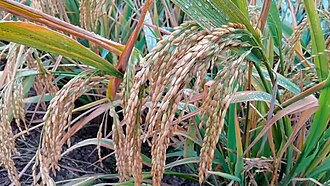
Photo: Wikipedia
Cooked rice is the fluffy, starchy foundation of countless meals worldwide, with a mild, subtly sweet flavor and a texture ranging from tender and separate to sticky and clinging. Nutritionally, it's a powerhouse of quick-energy carbohydrates, providing about 129 calories and 28 grams of carbs per 100g, with minimal fat and a small amount of protein.
Calorie split: 9% protein · 89% carbs · 2% fat
↓ Full nutrition💚 Why it's loved
People love rice for its incredible versatility and comforting neutrality—it can be the quiet base for a complex curry, the star in a simple stir-fry, or a sweet treat in a pudding. Its cultural significance is profound, symbolizing sustenance, prosperity, and home in cuisines from Asia to the Americas.
⚠️ Watch-outs & how to enjoy it better
As a high-carbohydrate, low-fiber food (especially refined white rice), it can cause rapid blood sugar spikes, which is a concern for individuals managing diabetes or insulin resistance. To counteract this, pair it with protein (like beans or chicken) and healthy fats (like avocado or nuts), or choose brown rice for its higher fiber content which slows digestion.
Key benefits
- Excellent source of quick-release energy for daily activities and exercise.
- Naturally gluten-free, making it a safe staple for those with celiac disease or gluten sensitivity.
- Low in fat and sodium, fitting well into heart-healthy dietary patterns.
- Acts as a neutral canvas, absorbing flavors from sauces, spices, and other ingredients.
- A primary dietary staple providing essential calories for over half the global population.
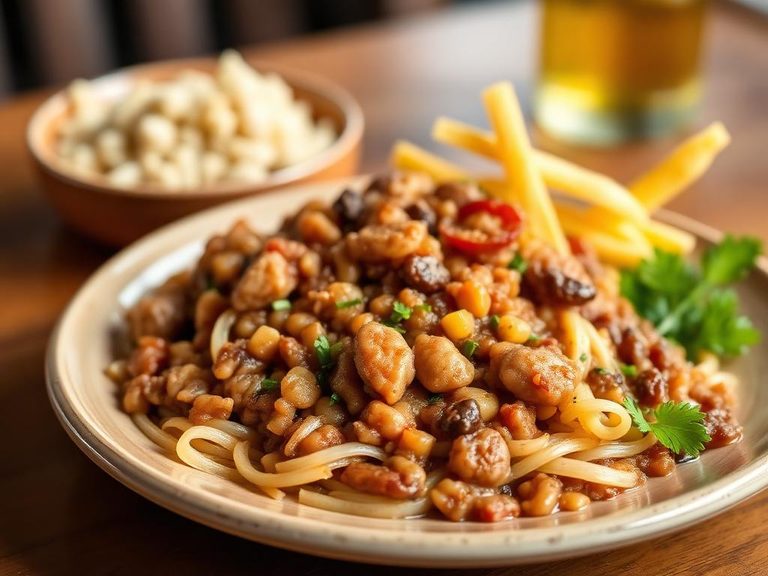
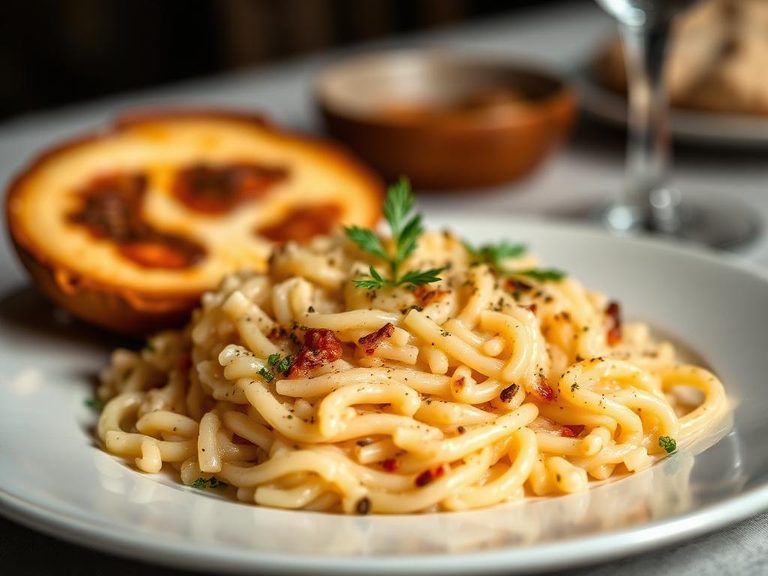
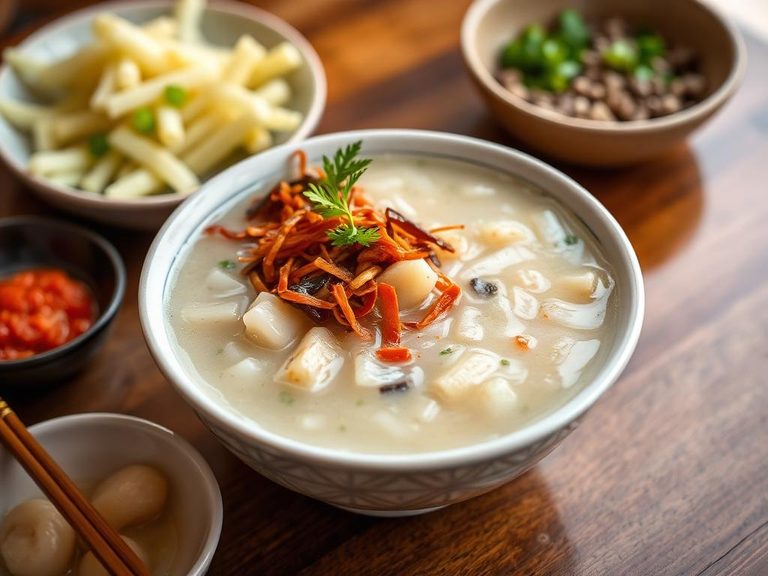
🍽️ Popular dishes
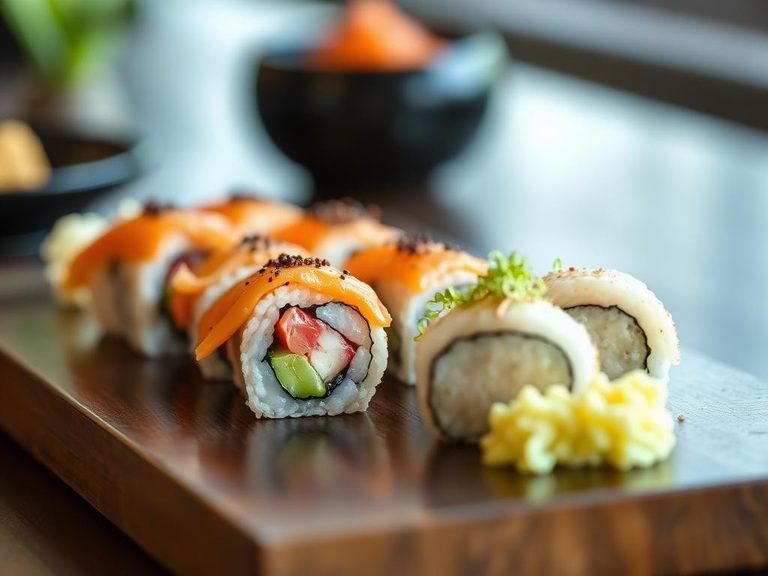
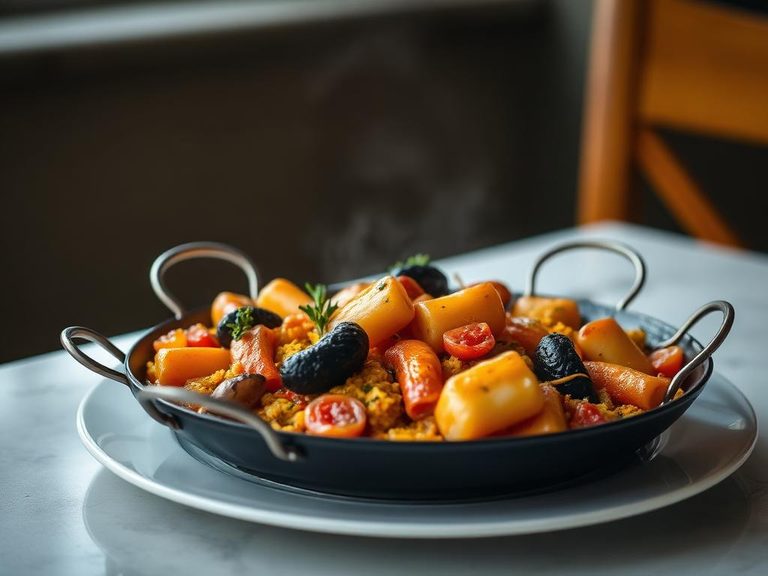
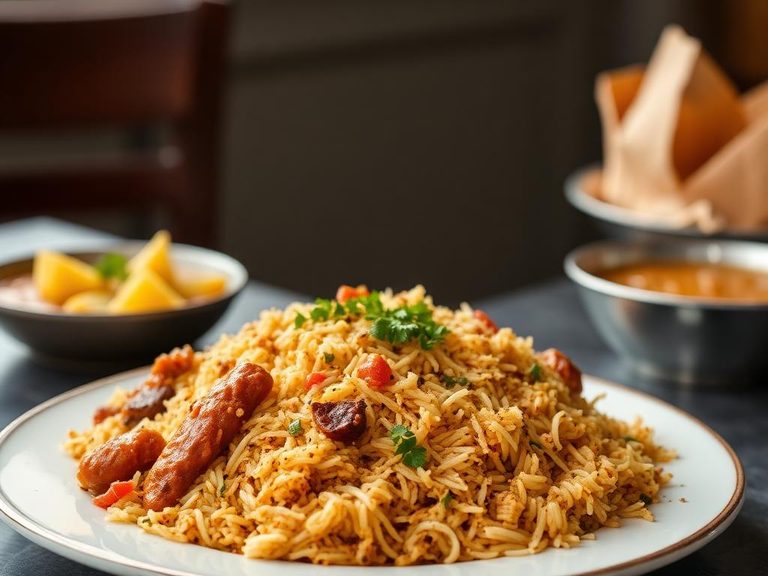
🌍 Where it's eaten
💡 Did you know?
The world's most expensive rice is 'Kinmemai Premium' from Japan, which is polished using a traditional stone mill to remove only the outermost bran layer, preserving more nutrients and giving it a unique, delicate flavor.
Full nutrition (USDA data · scales with serving)
| Water | 68.0 g |
| Energy | 129 kcal |
| Protein | 2.7 g |
| Total lipid (fat) | 0.28 g |
| Carbohydrate, by difference | 28.0 g |
| Fiber, total dietary | 0.40 g |
| Total Sugars | 0.05 g |
| Calcium, Ca | 10.0 mg |
| Iron, Fe | 1.2 mg |
| Magnesium, Mg | 12.0 mg |
| Phosphorus, P | 43.0 mg |
| Potassium, K | 35.0 mg |
| Sodium, Na | 245 mg |
| Zinc, Zn | 0.49 mg |
| Copper, Cu | 0.07 mg |
| Selenium, Se | 7.5 ug |
| Vitamin C, total ascorbic acid | 0.00 mg |
| Thiamin | 0.16 mg |
| Riboflavin | 0.01 mg |
| Niacin | 1.5 mg |
| Vitamin B-6 | 0.09 mg |
| Folate, total | 58.0 ug |
| Folic acid | 55.0 ug |
| Folate, food | 3.0 ug |
| Folate, DFE | 96.0 ug |
| Choline, total | 2.1 mg |
| Vitamin B-12 | 0.00 ug |
| Vitamin B-12, added | 0.00 ug |
| Vitamin A, RAE | 0.00 ug |
| Retinol | 0.00 ug |
| Carotene, beta | 0.00 ug |
| Carotene, alpha | 0.00 ug |
| Cryptoxanthin, beta | 0.00 ug |
| Lycopene | 0.00 ug |
| Lutein + zeaxanthin | 0.00 ug |
| Vitamin E (alpha-tocopherol) | 0.04 mg |
| Vitamin E, added | 0.00 mg |
| Vitamin D (D2 + D3) | 0.00 ug |
| Vitamin K (phylloquinone) | 0.00 ug |
| Alcohol, ethyl | 0.00 g |
| Caffeine | 0.00 mg |
| Theobromine | 0.00 mg |
Fat & fatty acid profile (per 100g)
| Fatty acids, total saturated | 0.08 g |
| SFA 4:0 | 0.00 g |
| SFA 6:0 | 0.00 g |
| SFA 8:0 | 0.00 g |
| SFA 10:0 | 0.00 g |
| SFA 12:0 | 0.00 g |
| SFA 14:0 | 0.00 g |
| SFA 16:0 | 0.07 g |
| SFA 18:0 | 0.01 g |
| Fatty acids, total monounsaturated | 0.09 g |
| MUFA 16:1 | 0.00 g |
| MUFA 18:1 | 0.09 g |
| MUFA 20:1 | 0.00 g |
| MUFA 22:1 | 0.00 g |
| Fatty acids, total polyunsaturated | 0.08 g |
| PUFA 18:2 | 0.06 g |
| PUFA 18:3 | 0.01 g |
| PUFA 18:4 | 0.00 g |
| PUFA 20:4 | 0.00 g |
| PUFA 20:5 n-3 (EPA) | 0.00 g |
| PUFA 22:5 n-3 (DPA) | 0.00 g |
| PUFA 22:6 n-3 (DHA) | 0.00 g |
| Cholesterol | 0.00 mg |
Amino acid profile (per 100g)
Estimated from Snacks, rice cakes, brown rice, sesame seed — USDA does not publish this profile for Rice.
| Tryptophan | 0.10 g |
| Threonine | 0.28 g |
| Isoleucine | 0.32 g |
| Leucine | 0.63 g |
| Lysine | 0.29 g |
| Methionine | 0.17 g |
| Cystine | 0.09 g |
| Phenylalanine | 0.39 g |
| Tyrosine | 0.29 g |
| Valine | 0.44 g |
| Arginine | 0.59 g |
| Histidine | 0.19 g |
| Alanine | 0.44 g |
| Aspartic acid | 0.71 g |
| Glutamic acid | 1.6 g |
| Glycine | 0.38 g |
| Proline | 0.35 g |
| Serine | 0.39 g |
FAQ
What's the difference between white and brown rice nutritionally?
Brown rice retains its bran and germ layers, making it higher in fiber (about 1.8g vs 0.4g per 100g cooked), vitamins (like B vitamins), and minerals (like magnesium). This also gives it a nuttier flavor and chewier texture, and it has a lower glycemic index than white rice.
Why does my rice sometimes turn out mushy or sticky?
This is primarily due to the rice's amylose content. High-amylose rice (like many long-grain varieties) stays separate when cooked. High-amylopectin rice (like sushi or risotto rice) is naturally stickier. Rinsing rice removes excess surface starch, which can help reduce stickiness for some dishes.
Is rice a common allergen?
Rice is not one of the top eight major food allergens. However, a rare allergy to rice protein does exist, and rice can be a concern for those with oral allergy syndrome or who are sensitive to arsenic, which rice plants can absorb from soil and water.
Nutrient density (calculated · NRF9.3)
Nutrient Rich Foods index: beneficial nutrients (protein, fiber, vitamins, minerals) minus saturated fat, added sugar & sodium, per 100 kcal.
NRF9.3 index — Fulgoni, Keast & Drewnowski, 2009. Computed from USDA nutrients.
Weight-loss friendliness (composite index)
Energy density 1.29 kcal/g · 8% calories from protein · 0.4 g fiber · 0.1 g sugar per 100 g.
Composite of energy density (Rolls et al., 1999), protein & fiber satiety, minus sugar. A calculated heuristic — ranks satiety-per-calorie, not a clinical measure.
Dietary load (calculated from USDA values)
Potential renal acid load. Positive = acid-forming, negative = alkaline-forming.
Sodium-to-potassium ratio: 7.00 (lower is better — aim for ≤ 1)
Sodium:potassium per WHO potassium guidance. Computed from USDA nutrients.