

Sushi (Japan)
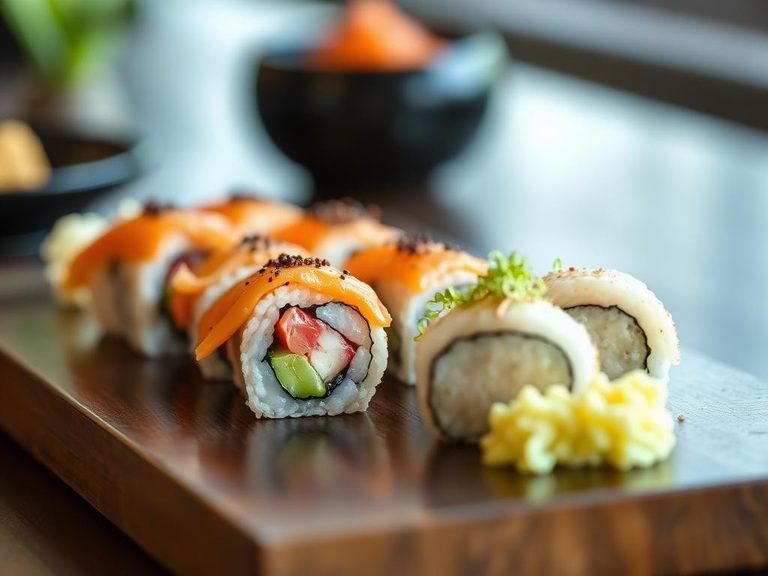
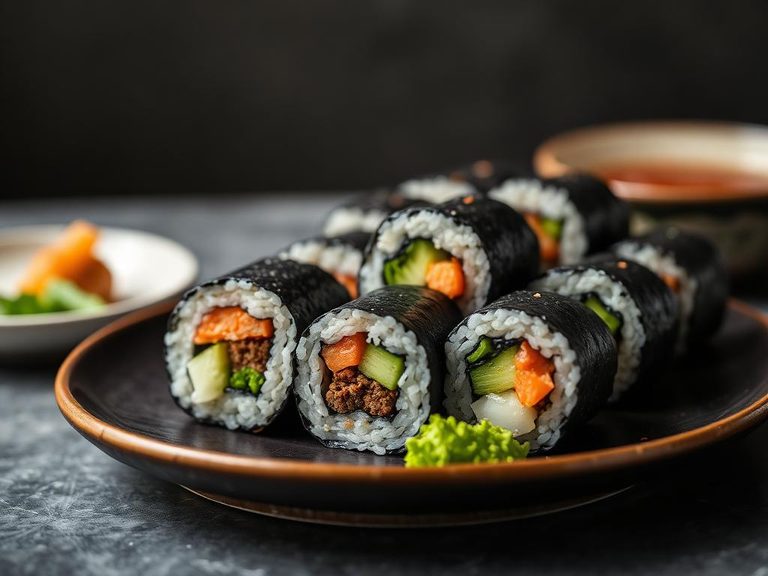
Sushi is a traditional Japanese dish consisting of vinegared rice combined with a variety of ingredients, most commonly fresh seafood, vegetables, and sometimes tropical fruits. It is often served with soy sauce, wasabi, and pickled ginger, and comes in many forms such as nigiri, maki rolls, and sashimi. Originating in Japan, sushi has become a globally beloved cuisine celebrated for its artistry and fresh flavors.
🍳 View the full Sushi (Japan) recipe →
🍽️ Nutrition at a glance
Sushi is generally a balanced dish that provides a good source of protein from fish and carbohydrates from rice, while being relatively low in fat unless paired with creamy sauces or tempura. A typical serving of sushi (about 6-8 pieces) contains roughly 300-500 calories, offering essential nutrients like omega-3 fatty acids, vitamins, and minerals.
Nutrition breakdown
| Calories | 200 kcal |
| Protein | 8 g |
| Carbs | 30 g |
| Fat | 5 g |
| Fiber | 1 g |
| Sugar | 4 g |
| Sodium | 350 mg |
| Selenium | 15 mcg |
| Manganese | 0.5 mg |
| Thiamin (B1) | 0.1 mg |
| Niacin (B3) | 2 mg |
| Magnesium | 20 mg |
| Phosphorus | 100 mg |
| Iron | 0.8 mg |
| Zinc | 0.6 mg |
Per 1 roll (110 g) · estimated, varies by recipe
💡 What's interesting
Culturally, sushi is a symbol of Japanese precision and craftsmanship, with chefs undergoing years of training to perfect their skills. Nutritionally, it is unique for its combination of lean protein, healthy fats, and fermented elements like vinegar, which can support digestion and overall health.
🍽️ Related dishes


AI estimate may be inaccurate · Terms