

Rice, fried, NFS
Common food

Photo: Wikipedia
Fried rice is a staple of quick, flavorful cooking where pre-cooked rice is stir-fried with oil, seasonings, and often small bits of vegetables, egg, or meat. The texture is distinct: each grain is slightly chewy and separated, with a subtle crispness from the high-heat sear. Nutritionally, it's a moderate-energy food, primarily providing carbohydrates for fuel with a modest amount of protein.
Calorie split: 9% protein · 75% carbs · 16% fat
↓ Full nutrition💚 Why it's loved
People adore fried rice for its incredible adaptability and the deep, savory 'wok hei' (breath of the wok) flavor that comes from high-heat cooking. It's a beloved comfort food across cultures, transforming simple leftovers into a satisfying and flavorful dish.
⚠️ Watch-outs & how to enjoy it better
Plain fried rice can cause blood-sugar spikes due to its high glycemic load, and it's often high in sodium from sauces like soy. To counteract this, pair it with a source of protein (like egg, chicken, or tofu) and fiber-rich vegetables (like broccoli or peas) to slow digestion, and use low-sodium sauces or season with herbs and spices.
Key benefits
- Provides quick, accessible energy from carbohydrates.
- A versatile base for adding vegetables, lean proteins, and healthy fats.
- A practical way to use leftover cooked rice, reducing food waste.
- Can be a balanced one-pot meal when loaded with diverse ingredients.
🍽️ Popular dishes
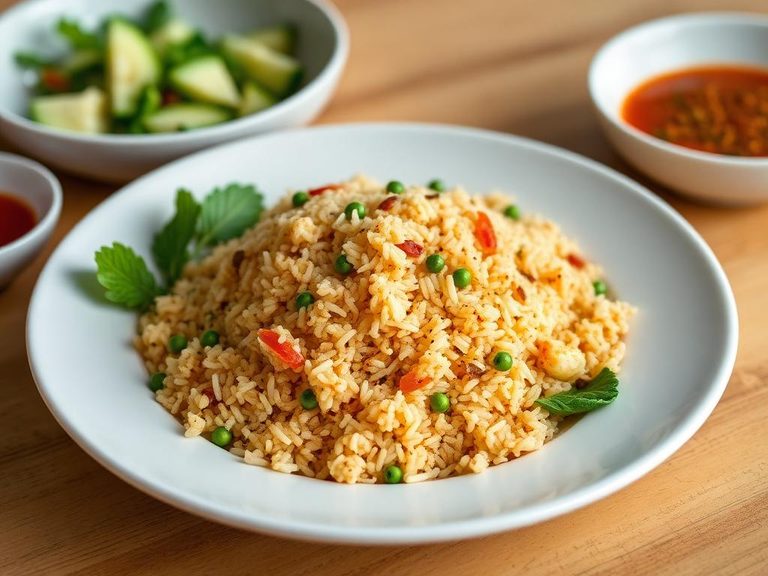
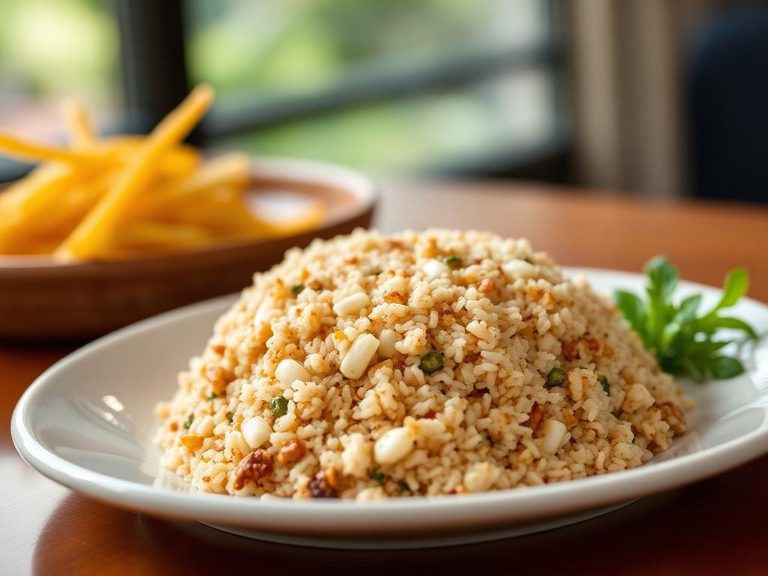
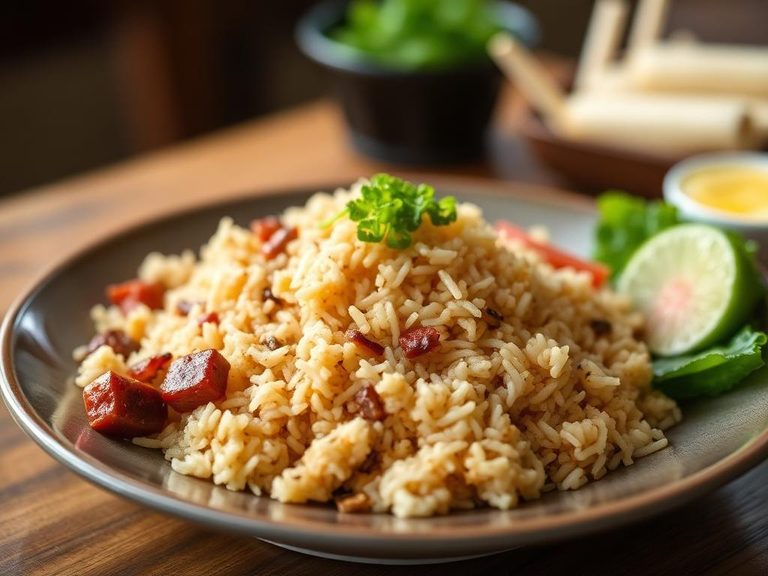
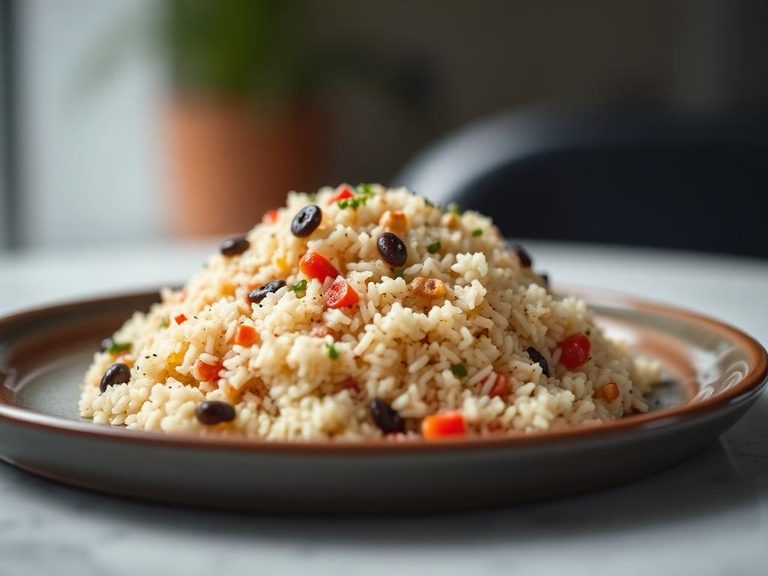
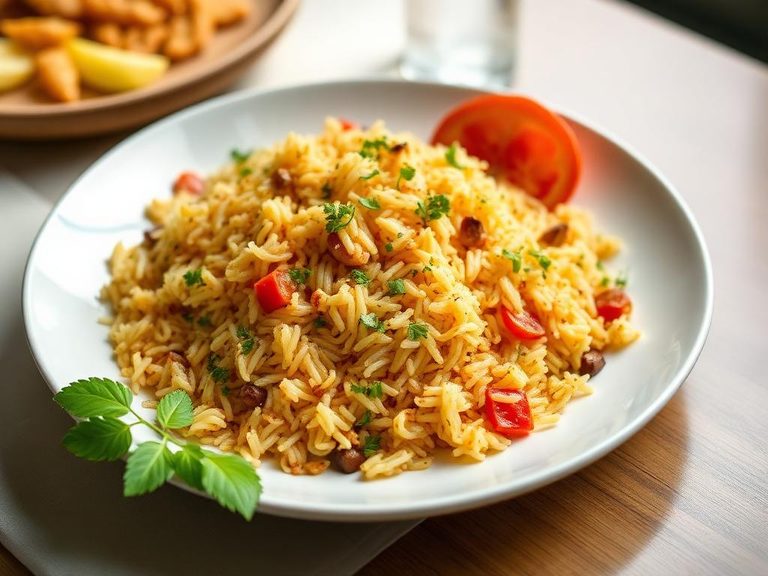
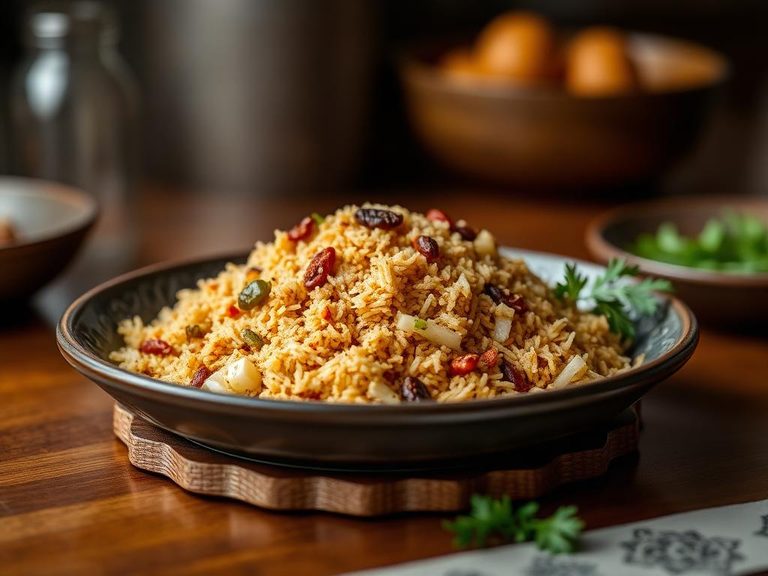
🌍 Where it's eaten
💡 Did you know?
The practice of stir-frying rice is believed to have originated as a way to avoid wasting leftover cooked rice, turning yesterday's meal into today's new dish.
Full nutrition (USDA data · scales with serving)
| Water | 59.3 g |
| Energy | 174 kcal |
| Protein | 3.8 g |
| Total lipid (fat) | 3.2 g |
| Carbohydrate, by difference | 32.5 g |
| Fiber, total dietary | 1.1 g |
| Total Sugars | 0.62 g |
| Calcium, Ca | 11.0 mg |
| Iron, Fe | 0.46 mg |
| Magnesium, Mg | 10.0 mg |
| Phosphorus, P | 44.0 mg |
| Potassium, K | 69.0 mg |
| Sodium, Na | 361 mg |
| Zinc, Zn | 0.69 mg |
| Copper, Cu | 0.09 mg |
| Selenium, Se | 8.3 ug |
| Vitamin C, total ascorbic acid | 3.8 mg |
| Thiamin | 0.01 mg |
| Riboflavin | 0.03 mg |
| Niacin | 0.64 mg |
| Vitamin B-6 | 0.03 mg |
| Folate, total | 6.0 ug |
| Folic acid | 0.00 ug |
| Folate, food | 6.0 ug |
| Folate, DFE | 6.0 ug |
| Choline, total | 5.5 mg |
| Vitamin B-12 | 0.00 ug |
| Vitamin B-12, added | 0.00 ug |
| Vitamin A, RAE | 22.0 ug |
| Retinol | 10.0 ug |
| Carotene, beta | 128 ug |
| Carotene, alpha | 38.0 ug |
| Cryptoxanthin, beta | 0.00 ug |
| Lycopene | 3.0 ug |
| Lutein + zeaxanthin | 103 ug |
| Vitamin E (alpha-tocopherol) | 0.13 mg |
| Vitamin E, added | 0.00 mg |
| Vitamin D (D2 + D3) | 0.00 ug |
| Vitamin K (phylloquinone) | 2.8 ug |
| Alcohol, ethyl | 0.00 g |
| Caffeine | 0.00 mg |
| Theobromine | 0.00 mg |
Fat & fatty acid profile (per 100g)
| Fatty acids, total saturated | 0.49 g |
| SFA 4:0 | 0.00 g |
| SFA 6:0 | 0.00 g |
| SFA 8:0 | 0.00 g |
| SFA 10:0 | 0.00 g |
| SFA 12:0 | 0.00 g |
| SFA 14:0 | 0.01 g |
| SFA 16:0 | 0.35 g |
| SFA 18:0 | 0.11 g |
| Fatty acids, total monounsaturated | 0.59 g |
| MUFA 16:1 | 0.01 g |
| MUFA 18:1 | 0.58 g |
| MUFA 20:1 | 0.01 g |
| MUFA 22:1 | 0.00 g |
| Fatty acids, total polyunsaturated | 1.1 g |
| PUFA 18:2 | 1.0 g |
| PUFA 18:3 | 0.12 g |
| PUFA 18:4 | 0.00 g |
| PUFA 20:4 | 0.00 g |
| PUFA 20:5 n-3 (EPA) | 0.00 g |
| PUFA 22:5 n-3 (DPA) | 0.00 g |
| PUFA 22:6 n-3 (DHA) | 0.00 g |
| Cholesterol | 18.0 mg |
Amino acid profile (per 100g)
Estimated from Snacks, rice cakes, brown rice, sesame seed — USDA does not publish this profile for Rice.
| Tryptophan | 0.10 g |
| Threonine | 0.28 g |
| Isoleucine | 0.32 g |
| Leucine | 0.63 g |
| Lysine | 0.29 g |
| Methionine | 0.17 g |
| Cystine | 0.09 g |
| Phenylalanine | 0.39 g |
| Tyrosine | 0.29 g |
| Valine | 0.44 g |
| Arginine | 0.59 g |
| Histidine | 0.19 g |
| Alanine | 0.44 g |
| Aspartic acid | 0.71 g |
| Glutamic acid | 1.6 g |
| Glycine | 0.38 g |
| Proline | 0.35 g |
| Serine | 0.39 g |
FAQ
Why is day-old rice better for fried rice?
Freshly cooked rice is too moist and will steam or clump in the wok. Refrigerating it overnight dries it out, allowing the grains to separate and fry properly for a better texture.
What gives fried rice its classic yellow color?
The color primarily comes from scrambling eggs into the hot oil before adding the rice. The yolk coats the grains, giving them a golden hue. Turmeric or certain curry powders can also be used for color.
Is fried rice inherently unhealthy?
Not necessarily. Its healthiness depends entirely on the ingredients and preparation. Using minimal oil, loading it with vegetables and lean protein, and controlling sodium makes it a balanced meal. The base version is simply a carbohydrate-rich energy source.
Nutrient density (calculated · NRF9.3)
Nutrient Rich Foods index: beneficial nutrients (protein, fiber, vitamins, minerals) minus saturated fat, added sugar & sodium, per 100 kcal.
NRF9.3 index — Fulgoni, Keast & Drewnowski, 2009. Computed from USDA nutrients.
Weight-loss friendliness (composite index)
Energy density 1.74 kcal/g · 9% calories from protein · 1.1 g fiber · 0.6 g sugar per 100 g.
Composite of energy density (Rolls et al., 1999), protein & fiber satiety, minus sugar. A calculated heuristic — ranks satiety-per-calorie, not a clinical measure.
Dietary load (calculated from USDA values)
Potential renal acid load. Positive = acid-forming, negative = alkaline-forming.
Sodium-to-potassium ratio: 5.23 (lower is better — aim for ≤ 1)
Sodium:potassium per WHO potassium guidance. Computed from USDA nutrients.