

Biryani (India)

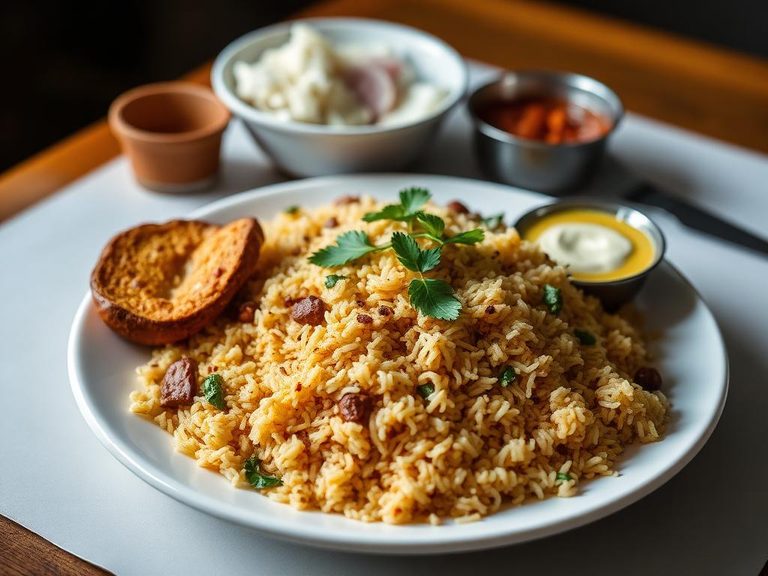
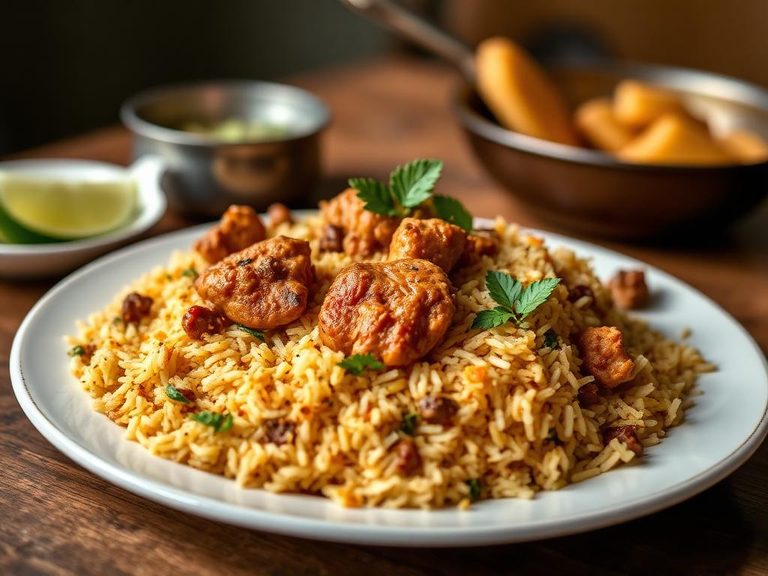
Biryani is a beloved and aromatic mixed rice dish from the Indian subcontinent, celebrated for its complex layers of flavor and fragrance. It typically consists of long-grain basmati rice cooked with tender meat (like chicken, mutton, or beef) or vegetables, and a rich blend of spices such as saffron, cardamom, and cloves. Each region in India has its own unique variation, from the fiery Hyderabadi biryani to the fragrant Lucknowi (Awadhi) style.
🍳 View the full Biryani (India) recipe →
🍽️ Nutrition at a glance
A typical serving of biryani is a calorie-dense meal, providing a substantial amount of carbohydrates from the rice and protein from the meat or legumes. It is also a good source of fats, both from cooking oil or ghee and from the meat itself, and delivers key nutrients like iron, B vitamins, and fiber if prepared with vegetables. A single serving can range from 400 to over 600 calories, depending on the recipe and portion size.
Nutrition breakdown
| Calories | 480 kcal |
| Protein | 22 g |
| Carbs | 58 g |
| Fat | 18 g |
| Fiber | 4 g |
| Sugar | 5 g |
| Sodium | 850 mg |
| Potassium | 400 mg |
| Iron | 3.5 mg |
| Magnesium | 50 mg |
| Phosphorus | 250 mg |
| Zinc | 3.0 mg |
| Vitamin B3 (Niacin) | 6.0 mg |
| Vitamin B6 | 0.4 mg |
| Folate | 45 mcg |
Per 1 plate (300 g) · estimated, varies by recipe
💡 What's interesting
What makes biryani culturally unique is the 'dum' cooking method, where the rice and meat are layered and slow-cooked in a sealed pot, allowing the flavors to meld and intensify. Nutritionally, the combination of protein and complex carbohydrates makes it a very satiating and energy-providing meal, often served at celebrations and festivals as a centerpiece dish.
🍽️ Related dishes





AI estimate may be inaccurate · Terms