

Indian Biryani

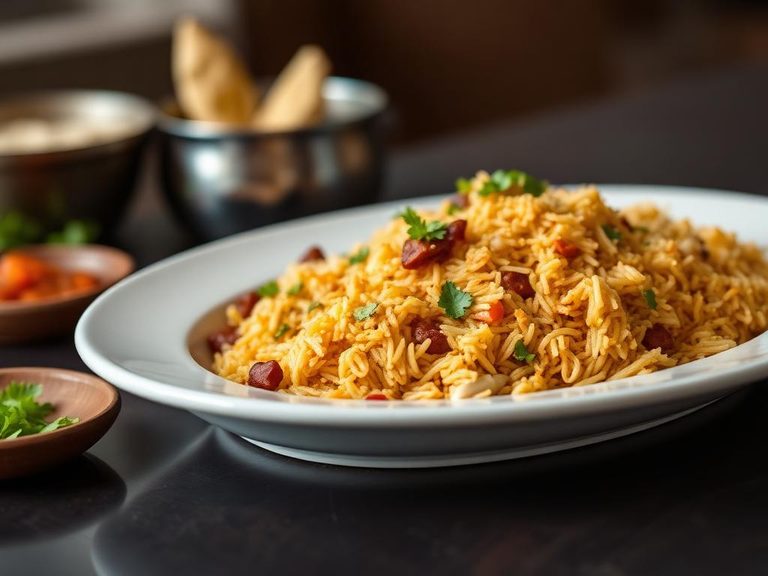
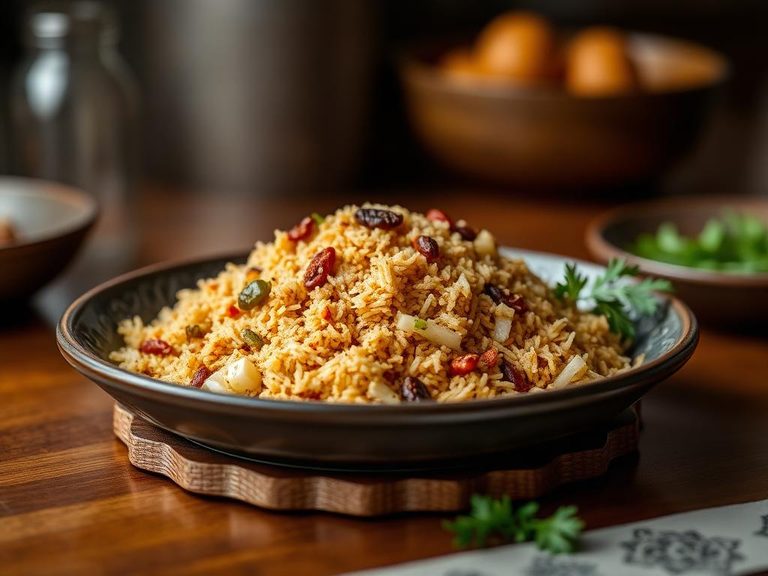
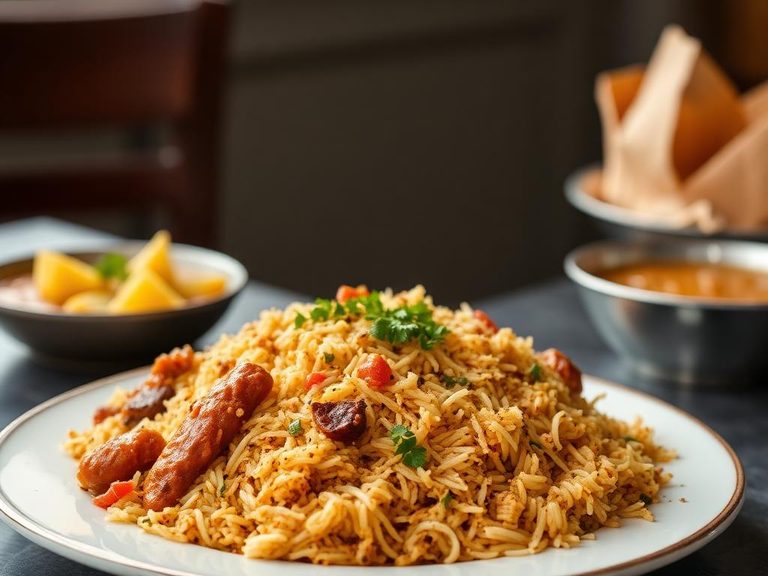
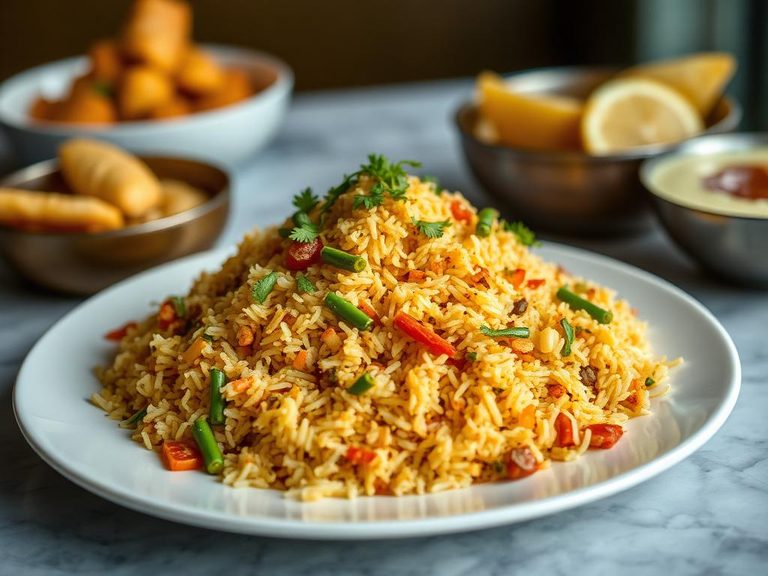
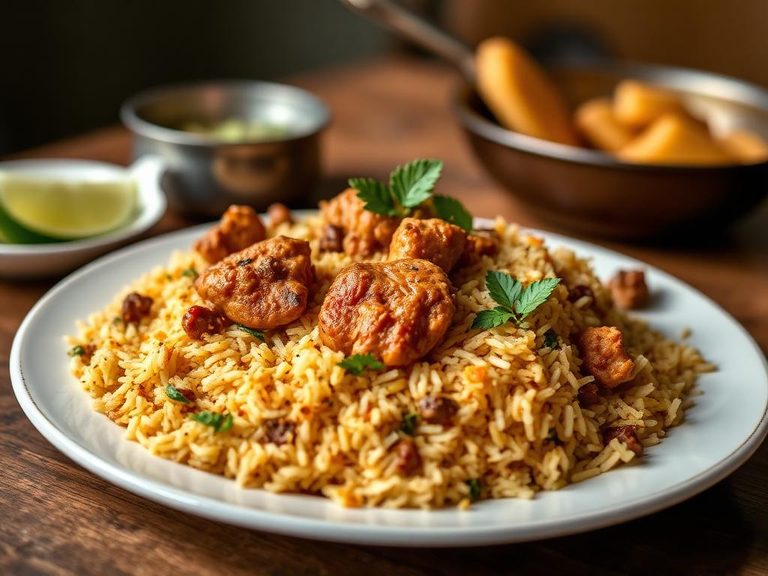
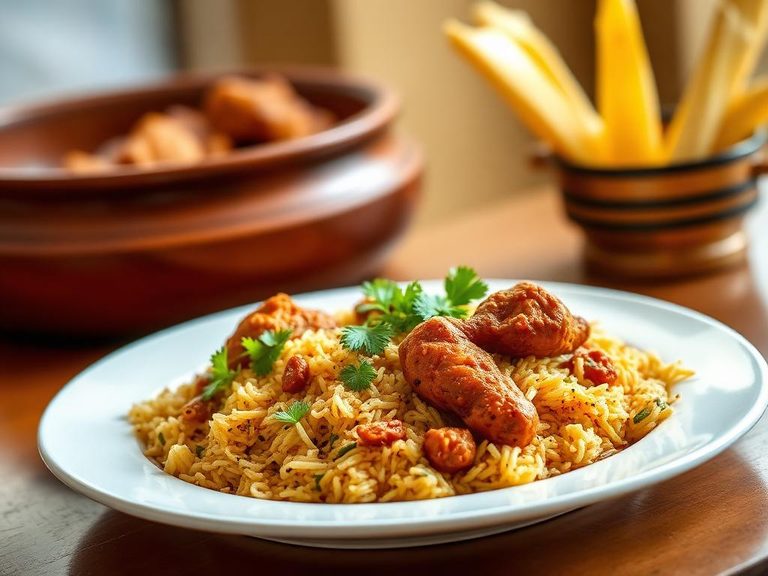
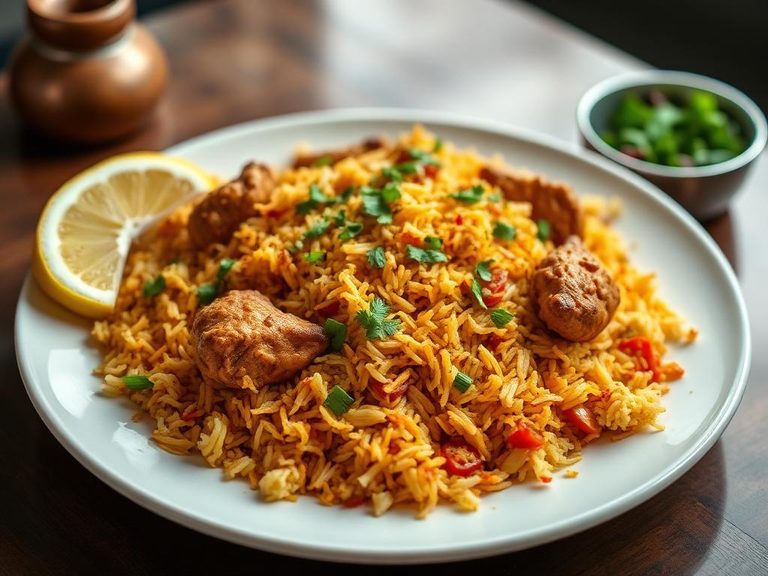
Indian Biryani is a fragrant, layered rice dish where partially cooked rice is simmered with spiced meat or vegetables, often sealed with dough to trap steam. Its typical ingredients include long-grain basmati rice, aromatic spices like saffron and cardamom, onions, yogurt, and marinated chicken, lamb, or paneer. Originating from the Indian subcontinent, it is a beloved celebratory meal with regional variations like Hyderabadi, Kolkata, and Lucknowi styles.
🍳 View the full Indian Biryani recipe →
🍽️ Nutrition at a glance
Biryani is generally high in carbohydrates from the rice and fats from ghee or oil, with protein from the meat or legumes. It provides key nutrients like iron, B vitamins, and fiber if made with whole spices and vegetables, with a typical serving containing around 500-800 calories.
Nutrition breakdown
| Calories | 350 kcal |
| Protein | 15 g |
| Carbs | 50 g |
| Fat | 12 g |
| Fiber | 3 g |
| Sugar | 4 g |
| Sodium | 650 mg |
| Iron | 3.5 mg |
| Potassium | 350 mg |
| Phosphorus | 250 mg |
| Vitamin B3 (Niacin) | 5 mg |
| Vitamin B6 | 0.4 mg |
| Folate | 60 µg |
| Magnesium | 45 mg |
| Zinc | 2.5 mg |
Per 1 cup (240 g) · estimated, varies by recipe
💡 What's interesting
Culturally, biryani is often the centerpiece of weddings and festivals, symbolizing hospitality and abundance. Nutritionally, the slow-cooking 'dum' method helps retain the spices' antioxidants, and the combination of rice and protein makes it a complete, energy-dense meal.
🍽️ Related dishes

AI estimate may be inaccurate · Terms