

Spinach, frozen, cooked with oil
Common food

Photo: Wikipedia
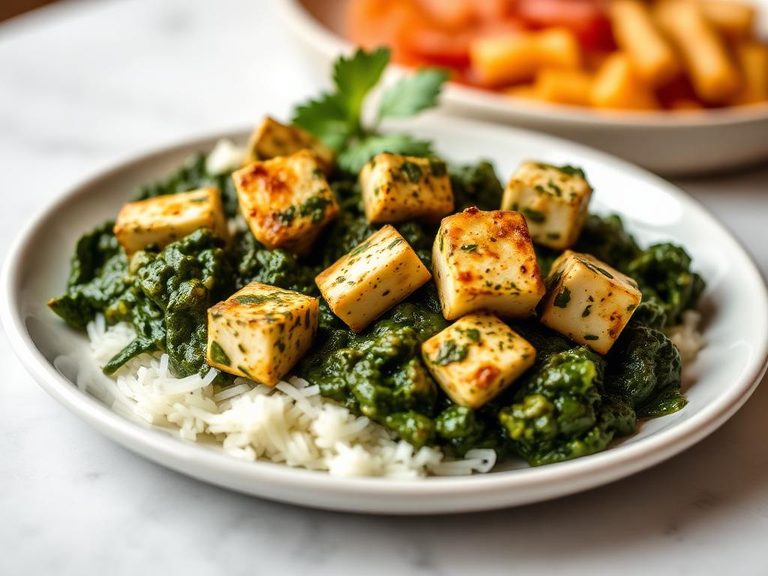
Frozen spinach, cooked with oil, is a convenient, nutrient-dense staple that transforms from icy blocks into tender, deep-green leaves with a mild, earthy flavor and a soft, slightly silky texture. The cooking process with oil helps unlock fat-soluble vitamins, making it a practical way to enjoy spinach year-round. Its standout feature is an impressive fiber content, offering over 3.5 grams per 100 grams.
Calorie split: 23% protein · 27% carbs · 50% fat
↓ Full nutrition💚 Why it's loved
People love it for its incredible convenience and consistency; it's always ready to go, with no washing or wilting required. Its mild flavor makes it a versatile canvas that absorbs the tastes of garlic, onions, and sauces beautifully in countless dishes.
⚠️ Watch-outs & how to enjoy it better
The oxalates naturally present in spinach can bind to minerals like calcium and iron, potentially reducing their absorption. To counteract this, pair it with a vitamin C source (like a squeeze of lemon or a side of tomatoes) to enhance iron uptake, and ensure a varied diet. Some may also find the texture slightly mushy compared to fresh spinach.
Key benefits
- Excellent source of dietary fiber for digestive health.
- Low in calories while being nutrient-dense.
- Contains plant-based protein for muscle maintenance.
- Provides a good amount of healthy fats from the cooking oil.
- Rich in vitamins and minerals like iron and magnesium.
🍽️ Popular dishes
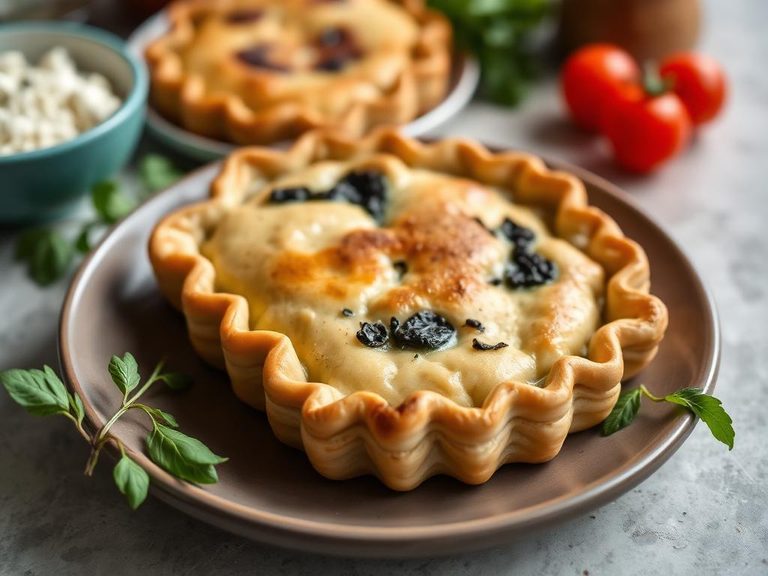
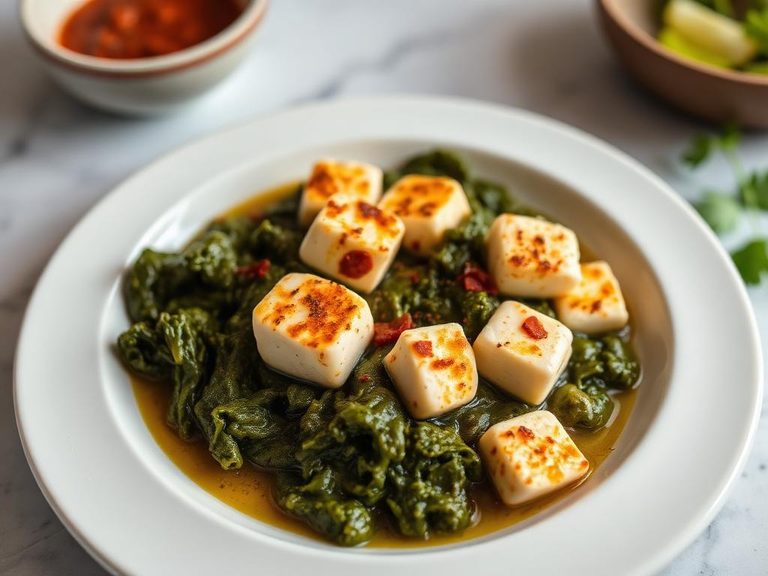
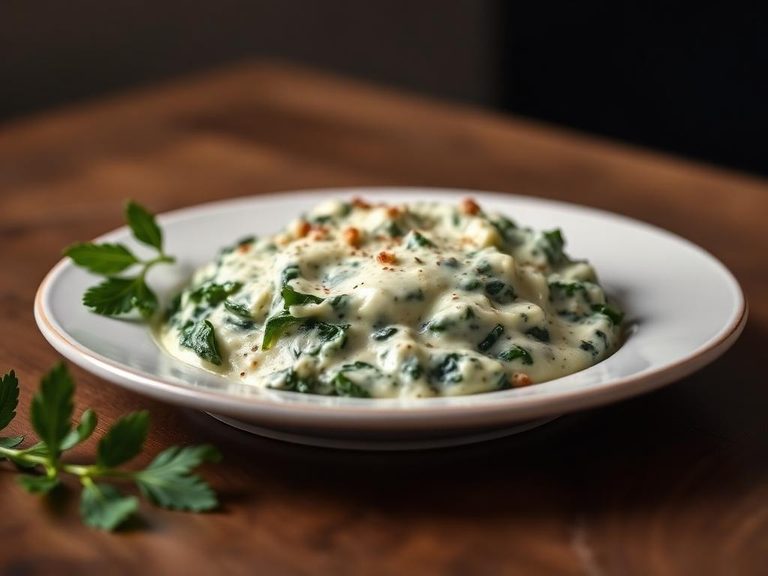
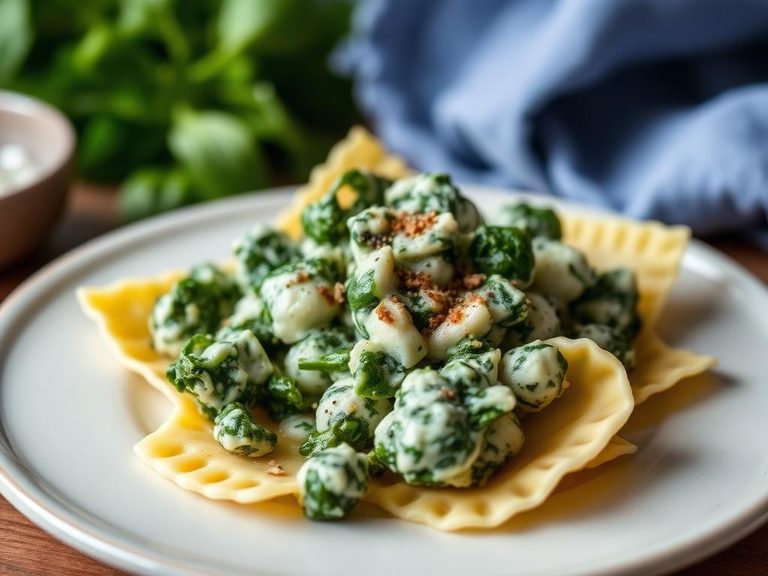

🌍 Where it's eaten
💡 Did you know?
Freezing spinach can actually increase the bioavailability of certain antioxidants like beta-carotene, as the ice crystals break down cell walls during the freezing process.
Full nutrition (USDA data · scales with serving)
| Water | 86.1 g |
| Energy | 59.0 kcal |
| Protein | 3.9 g |
| Total lipid (fat) | 3.8 g |
| Carbohydrate, by difference | 4.7 g |
| Fiber, total dietary | 3.6 g |
| Total Sugars | 0.49 g |
| Calcium, Ca | 148 mg |
| Iron, Fe | 1.9 mg |
| Magnesium, Mg | 79.0 mg |
| Phosphorus, P | 48.0 mg |
| Potassium, K | 292 mg |
| Sodium, Na | 206 mg |
| Zinc, Zn | 0.47 mg |
| Copper, Cu | 0.16 mg |
| Selenium, Se | 5.3 ug |
| Vitamin C, total ascorbic acid | 2.1 mg |
| Thiamin | 0.08 mg |
| Riboflavin | 0.17 mg |
| Niacin | 0.42 mg |
| Vitamin B-6 | 0.13 mg |
| Folate, total | 117 ug |
| Folic acid | 0.00 ug |
| Folate, food | 117 ug |
| Folate, DFE | 117 ug |
| Choline, total | 24.0 mg |
| Vitamin B-12 | 0.00 ug |
| Vitamin B-12, added | 0.00 ug |
| Vitamin A, RAE | 584 ug |
| Retinol | 0.00 ug |
| Carotene, beta | 7006 ug |
| Carotene, alpha | 0.00 ug |
| Cryptoxanthin, beta | 0.00 ug |
| Lycopene | 0.00 ug |
| Lutein + zeaxanthin | 15189 ug |
| Vitamin E (alpha-tocopherol) | 4.0 mg |
| Vitamin E, added | 0.00 mg |
| Vitamin D (D2 + D3) | 0.00 ug |
| Vitamin K (phylloquinone) | 526 ug |
| Alcohol, ethyl | 0.00 g |
| Caffeine | 0.00 mg |
| Theobromine | 0.00 mg |
Fat & fatty acid profile (per 100g)
| Fatty acids, total saturated | 0.54 g |
| SFA 4:0 | 0.00 g |
| SFA 6:0 | 0.00 g |
| SFA 8:0 | 0.00 g |
| SFA 10:0 | 0.00 g |
| SFA 12:0 | 0.00 g |
| SFA 14:0 | 0.00 g |
| SFA 16:0 | 0.43 g |
| SFA 18:0 | 0.08 g |
| Fatty acids, total monounsaturated | 1.2 g |
| MUFA 16:1 | 0.01 g |
| MUFA 18:1 | 1.2 g |
| MUFA 20:1 | 0.02 g |
| MUFA 22:1 | 0.00 g |
| Fatty acids, total polyunsaturated | 1.5 g |
| PUFA 18:2 | 0.99 g |
| PUFA 18:3 | 0.49 g |
| PUFA 18:4 | 0.00 g |
| PUFA 20:4 | 0.00 g |
| PUFA 20:5 n-3 (EPA) | 0.00 g |
| PUFA 22:5 n-3 (DPA) | 0.00 g |
| PUFA 22:6 n-3 (DHA) | 0.00 g |
| Cholesterol | 0.00 mg |
Amino acid profile (per 100g)
Estimated from Babyfood, vegetables, spinach, creamed, strained — USDA does not publish this profile for Spinach.
| Tryptophan | 0.04 g |
| Threonine | 0.10 g |
| Isoleucine | 0.11 g |
| Leucine | 0.22 g |
| Lysine | 0.15 g |
| Methionine | 0.06 g |
| Cystine | 0.03 g |
| Phenylalanine | 0.10 g |
| Tyrosine | 0.12 g |
| Valine | 0.15 g |
| Arginine | 0.15 g |
| Histidine | 0.06 g |
| Alanine | 0.12 g |
| Aspartic acid | 0.20 g |
| Glutamic acid | 0.42 g |
| Glycine | 0.10 g |
| Proline | 0.21 g |
| Serine | 0.10 g |
FAQ
How is frozen spinach different from fresh spinach?
Frozen spinach is blanched before freezing, which softens its texture and concentrates its flavor. It's often more nutrient-dense per gram than fresh spinach that has been stored for days, and it's pre-cleaned and ready to use.
Do I need to thaw frozen spinach before cooking?
It's not strictly necessary. You can add frozen spinach directly to soups, stews, or sauces. For dishes where you want to remove excess water, like quiches or pies, thawing and squeezing it dry is recommended to prevent a soggy result.
Why is it cooked with oil in the nutritional data?
Cooking with oil helps the body absorb fat-soluble vitamins (A, K, E) found in spinach. The oil also adds flavor and prevents the spinach from sticking during sautéing.
Nutrient density (calculated · NRF9.3)
Nutrient Rich Foods index: beneficial nutrients (protein, fiber, vitamins, minerals) minus saturated fat, added sugar & sodium, per 100 kcal.
NRF9.3 index — Fulgoni, Keast & Drewnowski, 2009. Computed from USDA nutrients.
Weight-loss friendliness (composite index)
Energy density 0.59 kcal/g · 26% calories from protein · 3.6 g fiber · 0.5 g sugar per 100 g.
Composite of energy density (Rolls et al., 1999), protein & fiber satiety, minus sugar. A calculated heuristic — ranks satiety-per-calorie, not a clinical measure.
Dietary load (calculated from USDA values)
Potential renal acid load. Positive = acid-forming, negative = alkaline-forming.
Sodium-to-potassium ratio: 0.71 (lower is better — aim for ≤ 1)
Sodium:potassium per WHO potassium guidance. Computed from USDA nutrients.