

Spinach, fresh, cooked with oil
Common food
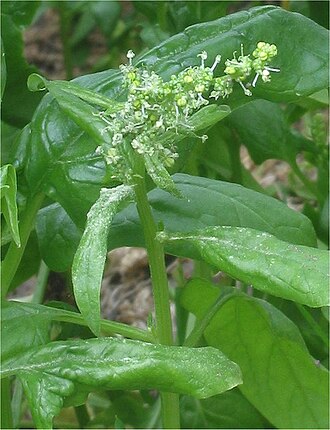
Photo: Wikipedia
This is fresh spinach leaves quickly wilted in a pan with oil, transforming from a voluminous raw pile into a tender, silky, and slightly concentrated green with a mild, earthy-sweet flavor. Nutritionally, it's a low-calorie powerhouse, delivering a solid dose of plant-based protein and healthy fats per serving, making it a satisfying and nutrient-dense side dish.
Calorie split: 21% protein · 19% carbs · 59% fat
↓ Full nutrition💚 Why it's loved
People love it for its incredible versatility—it's a quick, flavorful side that pairs perfectly with garlic, lemon, or chili flakes, and serves as a foundational ingredient in countless cuisines from Italian to Indian.
⚠️ Watch-outs & how to enjoy it better
Spinach contains oxalates, which can bind to minerals like calcium and may be a concern for those prone to certain kidney stones. To reduce oxalate content, you can blanch the spinach briefly in boiling water before sautéing, or simply enjoy it in moderation as part of a varied diet.
Key benefits
- Excellent source of vitamin K for bone health.
- Rich in antioxidants like lutein and zeaxanthin for eye health.
- Provides plant-based iron and magnesium.
- High in fiber for digestive health.
- Low in calories and carbohydrates.
🍽️ Popular dishes
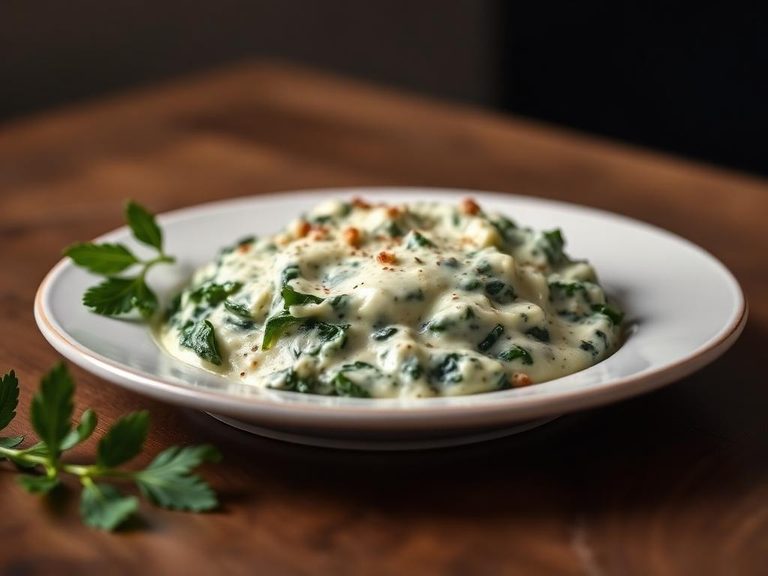
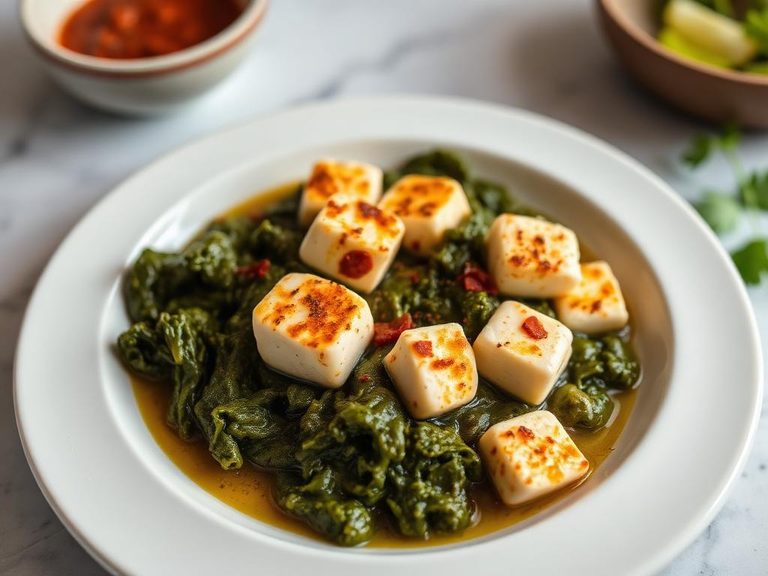
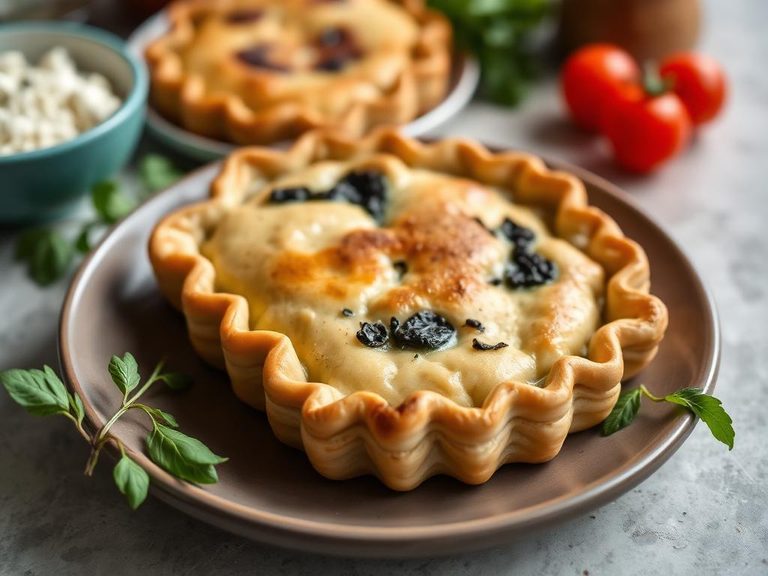
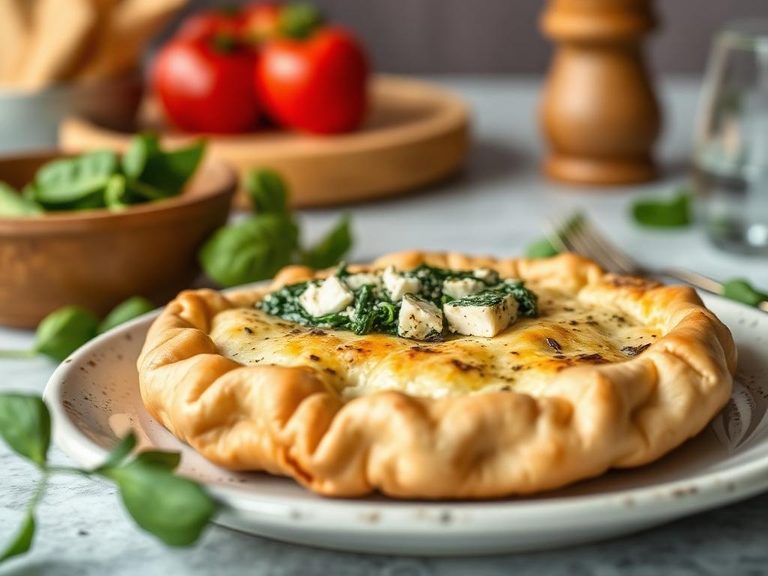

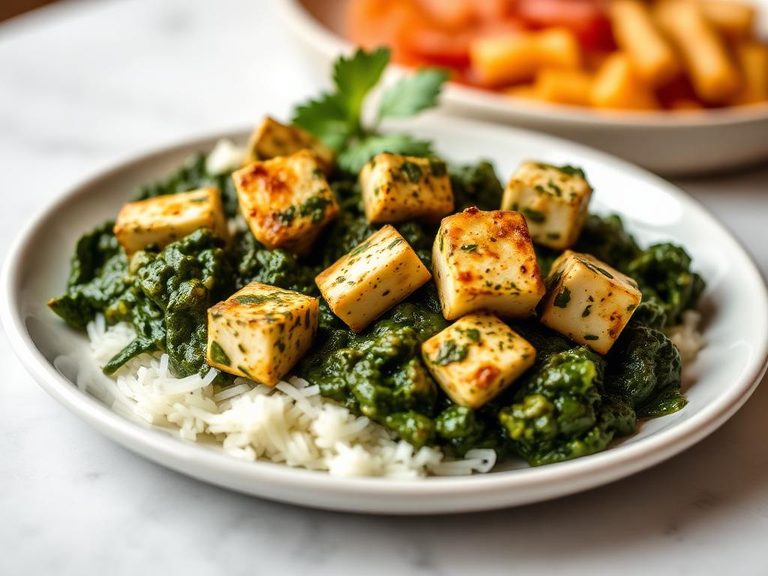
🌍 Where it's eaten
💡 Did you know?
Spinach is a member of the amaranth family, making it a relative of beets and quinoa, not lettuce.
Full nutrition (USDA data · scales with serving)
| Water | 87.6 g |
| Energy | 63.0 kcal |
| Protein | 3.3 g |
| Total lipid (fat) | 4.1 g |
| Carbohydrate, by difference | 3.0 g |
| Fiber, total dietary | 1.8 g |
| Total Sugars | 0.48 g |
| Calcium, Ca | 76.0 mg |
| Iron, Fe | 1.2 mg |
| Magnesium, Mg | 106 mg |
| Phosphorus, P | 47.0 mg |
| Potassium, K | 524 mg |
| Sodium, Na | 254 mg |
| Zinc, Zn | 0.48 mg |
| Copper, Cu | 0.09 mg |
| Selenium, Se | 0.00 ug |
| Vitamin C, total ascorbic acid | 24.2 mg |
| Thiamin | 0.08 mg |
| Riboflavin | 0.21 mg |
| Niacin | 0.55 mg |
| Vitamin B-6 | 0.23 mg |
| Folate, total | 97.0 ug |
| Folic acid | 0.00 ug |
| Folate, food | 97.0 ug |
| Folate, DFE | 97.0 ug |
| Choline, total | 22.0 mg |
| Vitamin B-12 | 0.00 ug |
| Vitamin B-12, added | 0.00 ug |
| Vitamin A, RAE | 331 ug |
| Retinol | 0.00 ug |
| Carotene, beta | 3970 ug |
| Carotene, alpha | 0.00 ug |
| Cryptoxanthin, beta | 11.0 ug |
| Lycopene | 0.00 ug |
| Lutein + zeaxanthin | 8567 ug |
| Vitamin E (alpha-tocopherol) | 3.0 mg |
| Vitamin E, added | 0.00 mg |
| Vitamin D (D2 + D3) | 0.00 ug |
| Vitamin K (phylloquinone) | 553 ug |
| Alcohol, ethyl | 0.00 g |
| Caffeine | 0.00 mg |
| Theobromine | 0.00 mg |
Fat & fatty acid profile (per 100g)
| Fatty acids, total saturated | 0.53 g |
| SFA 4:0 | 0.00 g |
| SFA 6:0 | 0.00 g |
| SFA 8:0 | 0.00 g |
| SFA 10:0 | 0.00 g |
| SFA 12:0 | 0.00 g |
| SFA 14:0 | 0.01 g |
| SFA 16:0 | 0.38 g |
| SFA 18:0 | 0.10 g |
| Fatty acids, total monounsaturated | 1.5 g |
| MUFA 16:1 | 0.02 g |
| MUFA 18:1 | 1.4 g |
| MUFA 20:1 | 0.02 g |
| MUFA 22:1 | 0.00 g |
| Fatty acids, total polyunsaturated | 1.5 g |
| PUFA 18:2 | 1.2 g |
| PUFA 18:3 | 0.31 g |
| PUFA 18:4 | 0.00 g |
| PUFA 20:4 | 0.00 g |
| PUFA 20:5 n-3 (EPA) | 0.00 g |
| PUFA 22:5 n-3 (DPA) | 0.00 g |
| PUFA 22:6 n-3 (DHA) | 0.00 g |
| Cholesterol | 0.00 mg |
Amino acid profile (per 100g)
Estimated from Babyfood, vegetables, spinach, creamed, strained — USDA does not publish this profile for Spinach.
| Tryptophan | 0.04 g |
| Threonine | 0.10 g |
| Isoleucine | 0.11 g |
| Leucine | 0.22 g |
| Lysine | 0.15 g |
| Methionine | 0.06 g |
| Cystine | 0.03 g |
| Phenylalanine | 0.10 g |
| Tyrosine | 0.12 g |
| Valine | 0.15 g |
| Arginine | 0.15 g |
| Histidine | 0.06 g |
| Alanine | 0.12 g |
| Aspartic acid | 0.20 g |
| Glutamic acid | 0.42 g |
| Glycine | 0.10 g |
| Proline | 0.21 g |
| Serine | 0.10 g |
FAQ
Why does cooked spinach have so much less volume than raw?
Spinach leaves are about 92% water. When cooked, the heat breaks down the cell walls, releasing this water and causing the leaves to wilt dramatically, concentrating the nutrients and flavor.
Is the iron in spinach well-absorbed?
Spinach contains non-heme iron, which is less bioavailable than heme iron from animal sources. Pairing it with a source of vitamin C (like a squeeze of lemon juice) can significantly enhance iron absorption.
What's the best oil for sautéing spinach?
Olive oil is a classic choice for its flavor and healthy fats. Avocado oil or ghee are also excellent due to their higher smoke points, which prevent the oil from burning during the quick, high-heat cooking process.
Nutrient density (calculated · NRF9.3)
Nutrient Rich Foods index: beneficial nutrients (protein, fiber, vitamins, minerals) minus saturated fat, added sugar & sodium, per 100 kcal.
NRF9.3 index — Fulgoni, Keast & Drewnowski, 2009. Computed from USDA nutrients.
Weight-loss friendliness (composite index)
Energy density 0.63 kcal/g · 21% calories from protein · 1.8 g fiber · 0.5 g sugar per 100 g.
Composite of energy density (Rolls et al., 1999), protein & fiber satiety, minus sugar. A calculated heuristic — ranks satiety-per-calorie, not a clinical measure.
Dietary load (calculated from USDA values)
Potential renal acid load. Positive = acid-forming, negative = alkaline-forming.
Sodium-to-potassium ratio: 0.48 (lower is better — aim for ≤ 1)
Sodium:potassium per WHO potassium guidance. Computed from USDA nutrients.