

Spinach, canned, cooked with oil
Common food

Photo: Wikipedia
Canned spinach cooked with oil is a deeply savory, tender leafy green with a concentrated, earthy flavor and a soft, almost silky texture. The added oil enriches its mouthfeel, while the canning process gives it a distinct, slightly metallic tang that pairs well with bold spices. At just 49 kcal per 100g, it delivers a notable 3.4g of fat and 2.73g of protein, making it a surprisingly substantial low-calorie side.
Calorie split: 20% protein · 24% carbs · 56% fat
↓ Full nutrition💚 Why it's loved
People love it for its deep, umami-rich flavor that acts as a perfect canvas for garlic, onions, and spices. Its soft, melt-in-your-mouth texture makes it incredibly versatile, easily stirred into stews, pastas, or served as a simple, satisfying side.
⚠️ Watch-outs & how to enjoy it better
The high oxalate content in spinach can hinder calcium absorption and may be a concern for those prone to kidney stones. To counteract this, pair it with calcium-rich foods like yogurt or cheese, and consider using canned spinach (which has lower oxalates than fresh) in moderate portions. The added oil increases fat content, so those watching fat intake should opt for water-packed versions or drain and rinse.
Key benefits
- Rich in iron and vitamin K for bone and blood health
- Low-calorie, high-fiber option for weight management
- Provides plant-based protein and healthy fats from cooking oil
- Convenient, shelf-stable source of leafy greens year-round
- Contains antioxidants like lutein and zeaxanthin for eye health
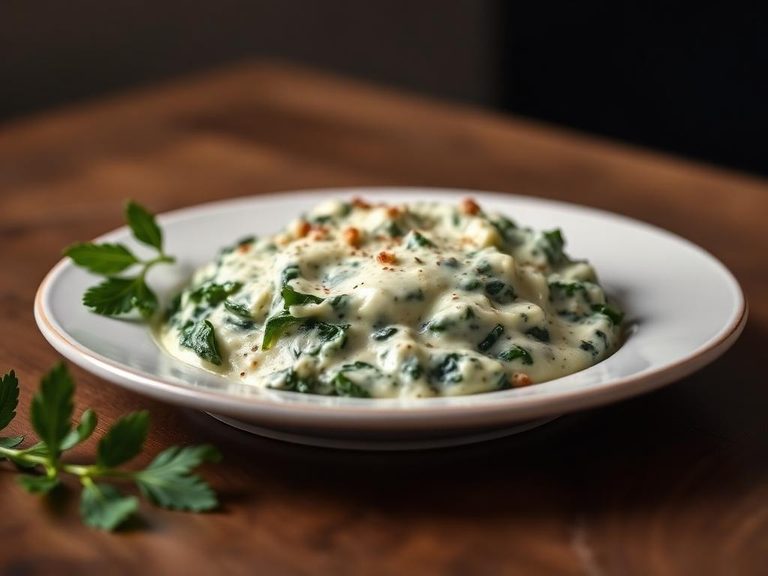
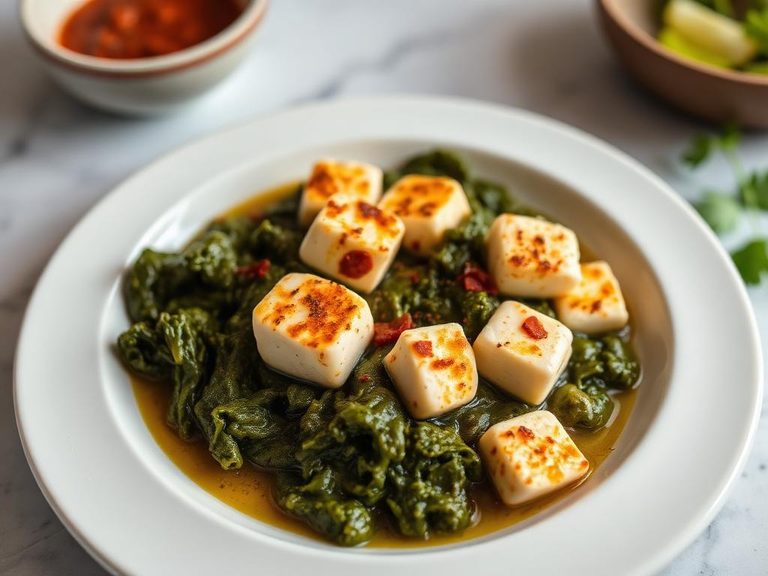
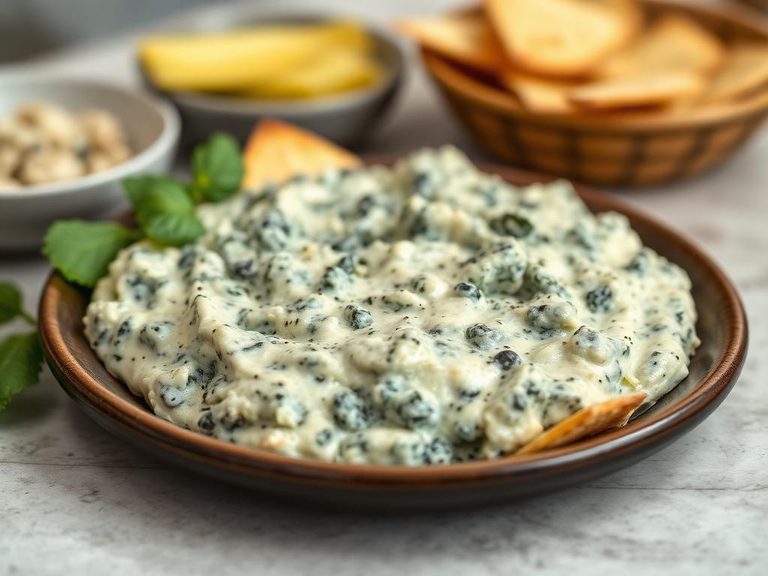
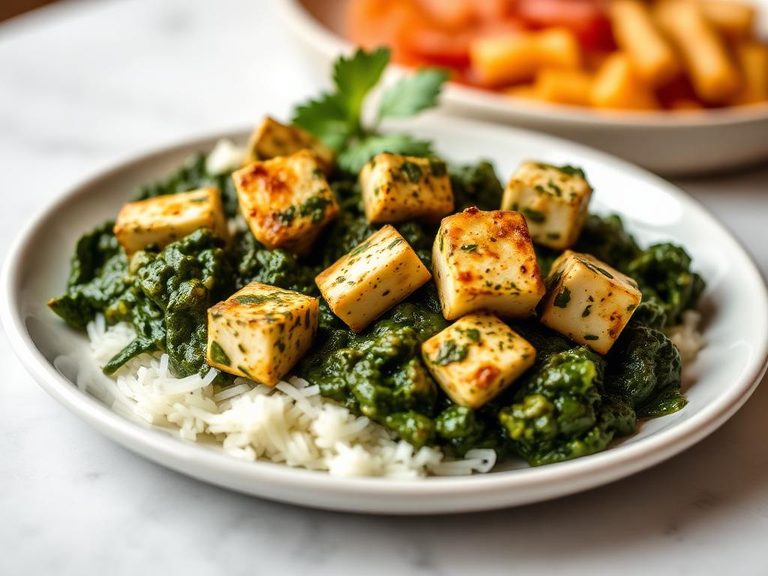
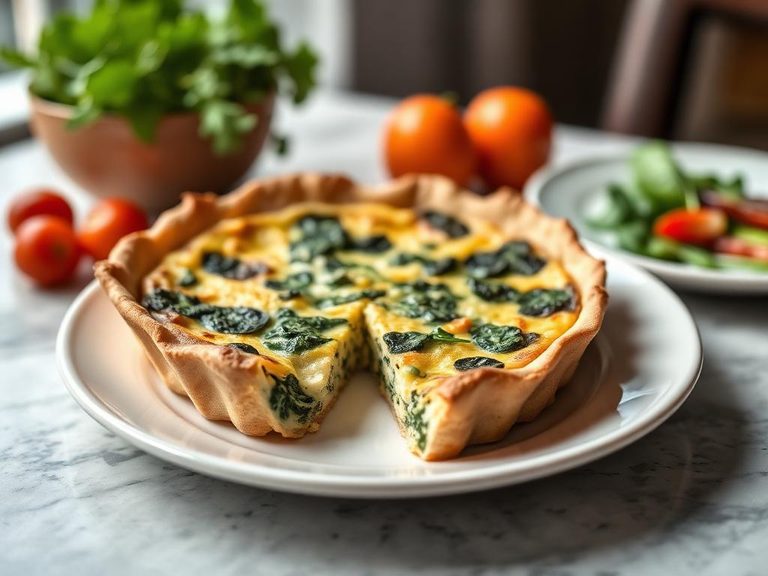
🍽️ Popular dishes

🌍 Where it's eaten
💡 Did you know?
Canned spinach was a staple for U.S. Navy sailors in the early 20th century, famously promoted by Popeye the Sailor Man, which led to a massive surge in spinach consumption in the 1930s.
Full nutrition (USDA data · scales with serving)
| Water | 89.1 g |
| Energy | 49.0 kcal |
| Protein | 2.7 g |
| Total lipid (fat) | 3.4 g |
| Carbohydrate, by difference | 3.3 g |
| Fiber, total dietary | 2.3 g |
| Total Sugars | 0.39 g |
| Calcium, Ca | 123 mg |
| Iron, Fe | 2.2 mg |
| Magnesium, Mg | 74.0 mg |
| Phosphorus, P | 43.0 mg |
| Potassium, K | 336 mg |
| Sodium, Na | 313 mg |
| Zinc, Zn | 0.45 mg |
| Copper, Cu | 0.17 mg |
| Selenium, Se | 1.4 ug |
| Vitamin C, total ascorbic acid | 13.2 mg |
| Thiamin | 0.02 mg |
| Riboflavin | 0.13 mg |
| Niacin | 0.38 mg |
| Vitamin B-6 | 0.10 mg |
| Folate, total | 90.0 ug |
| Folic acid | 0.00 ug |
| Folate, food | 90.0 ug |
| Folate, DFE | 90.0 ug |
| Choline, total | 17.9 mg |
| Vitamin B-12 | 0.00 ug |
| Vitamin B-12, added | 0.00 ug |
| Vitamin A, RAE | 476 ug |
| Retinol | 0.00 ug |
| Carotene, beta | 5710 ug |
| Carotene, alpha | 0.00 ug |
| Cryptoxanthin, beta | 0.00 ug |
| Lycopene | 0.00 ug |
| Lutein + zeaxanthin | 10267 ug |
| Vitamin E (alpha-tocopherol) | 2.4 mg |
| Vitamin E, added | 0.00 mg |
| Vitamin D (D2 + D3) | 0.00 ug |
| Vitamin K (phylloquinone) | 451 ug |
| Alcohol, ethyl | 0.00 g |
| Caffeine | 0.00 mg |
| Theobromine | 0.00 mg |
Fat & fatty acid profile (per 100g)
| Fatty acids, total saturated | 0.47 g |
| SFA 4:0 | 0.00 g |
| SFA 6:0 | 0.00 g |
| SFA 8:0 | 0.00 g |
| SFA 10:0 | 0.00 g |
| SFA 12:0 | 0.00 g |
| SFA 14:0 | 0.01 g |
| SFA 16:0 | 0.34 g |
| SFA 18:0 | 0.09 g |
| Fatty acids, total monounsaturated | 1.2 g |
| MUFA 16:1 | 0.02 g |
| MUFA 18:1 | 1.2 g |
| MUFA 20:1 | 0.02 g |
| MUFA 22:1 | 0.00 g |
| Fatty acids, total polyunsaturated | 1.3 g |
| PUFA 18:2 | 1.0 g |
| PUFA 18:3 | 0.30 g |
| PUFA 18:4 | 0.00 g |
| PUFA 20:4 | 0.00 g |
| PUFA 20:5 n-3 (EPA) | 0.00 g |
| PUFA 22:5 n-3 (DPA) | 0.00 g |
| PUFA 22:6 n-3 (DHA) | 0.00 g |
| Cholesterol | 0.00 mg |
Amino acid profile (per 100g)
Estimated from Babyfood, vegetables, spinach, creamed, strained — USDA does not publish this profile for Spinach.
| Tryptophan | 0.04 g |
| Threonine | 0.10 g |
| Isoleucine | 0.11 g |
| Leucine | 0.22 g |
| Lysine | 0.15 g |
| Methionine | 0.06 g |
| Cystine | 0.03 g |
| Phenylalanine | 0.10 g |
| Tyrosine | 0.12 g |
| Valine | 0.15 g |
| Arginine | 0.15 g |
| Histidine | 0.06 g |
| Alanine | 0.12 g |
| Aspartic acid | 0.20 g |
| Glutamic acid | 0.42 g |
| Glycine | 0.10 g |
| Proline | 0.21 g |
| Serine | 0.10 g |
FAQ
Is canned spinach as nutritious as fresh spinach?
Canned spinach retains most vitamins and minerals but loses some water-soluble vitamins like vitamin C. It's often lower in oxalates, making its iron and calcium more bioavailable.
How can I reduce the sodium in canned spinach?
Rinse the spinach thoroughly under cold water to remove excess sodium. Choose low-sodium or no-salt-added versions when available.
What does 'cooked with oil' mean for nutrition?
The oil adds calories and healthy fats, which help absorb fat-soluble vitamins like A and K. It also enhances flavor and texture, making the spinach richer and more satisfying.
Nutrient density (calculated · NRF9.3)
Nutrient Rich Foods index: beneficial nutrients (protein, fiber, vitamins, minerals) minus saturated fat, added sugar & sodium, per 100 kcal.
NRF9.3 index — Fulgoni, Keast & Drewnowski, 2009. Computed from USDA nutrients.
Weight-loss friendliness (composite index)
Energy density 0.49 kcal/g · 22% calories from protein · 2.3 g fiber · 0.4 g sugar per 100 g.
Composite of energy density (Rolls et al., 1999), protein & fiber satiety, minus sugar. A calculated heuristic — ranks satiety-per-calorie, not a clinical measure.
Dietary load (calculated from USDA values)
Potential renal acid load. Positive = acid-forming, negative = alkaline-forming.
Sodium-to-potassium ratio: 0.93 (lower is better — aim for ≤ 1)
Sodium:potassium per WHO potassium guidance. Computed from USDA nutrients.