

Spaghetti sauce with meat and added vegetables
Common food
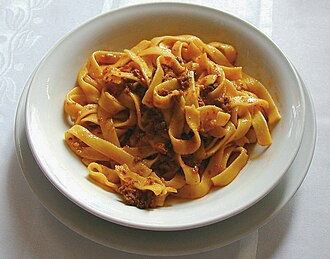
Photo: Wikipedia
This is a hearty, savory blend of ground meat simmered with tomatoes and a medley of vegetables like onions, carrots, and celery. It has a rich, chunky texture with a deep umami flavor from the meat and a subtle sweetness from the cooked vegetables and tomatoes. Nutritionally, it's a well-balanced sauce, offering a good protein punch for its calorie count, with fiber from the veggies.
Calorie split: 28% protein · 28% carbs · 43% fat
↓ Full nutrition💚 Why it's loved
People love it for its comforting, familiar flavor that forms the backbone of countless pasta dishes. Its versatility makes it a staple, easily paired with different pastas, used as a pizza topping, or served over polenta.
⚠️ Watch-outs & how to enjoy it better
The sodium content can be high, especially in store-bought versions, which may concern those monitoring salt intake. The tomatoes and possible added sugar can also cause blood sugar spikes for some. To counteract, pair it with a large portion of non-starchy vegetables (like a side salad) or whole-grain pasta to slow digestion, and choose low-sodium versions or make it at home to control salt.
Key benefits
- Good source of protein for muscle maintenance
- Contains dietary fiber from added vegetables
- Provides vitamins like A and C from tomatoes and carrots
- Lower in fat than many pure meat sauces
- Can increase vegetable intake in a palatable way
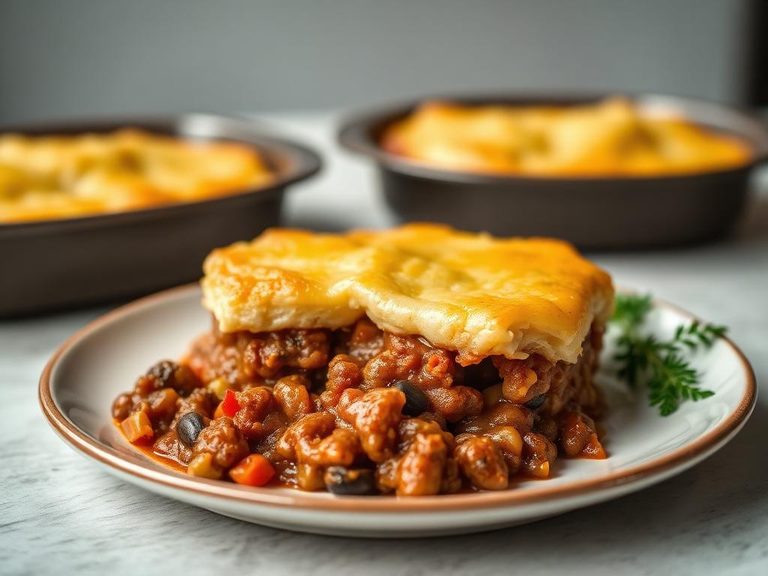
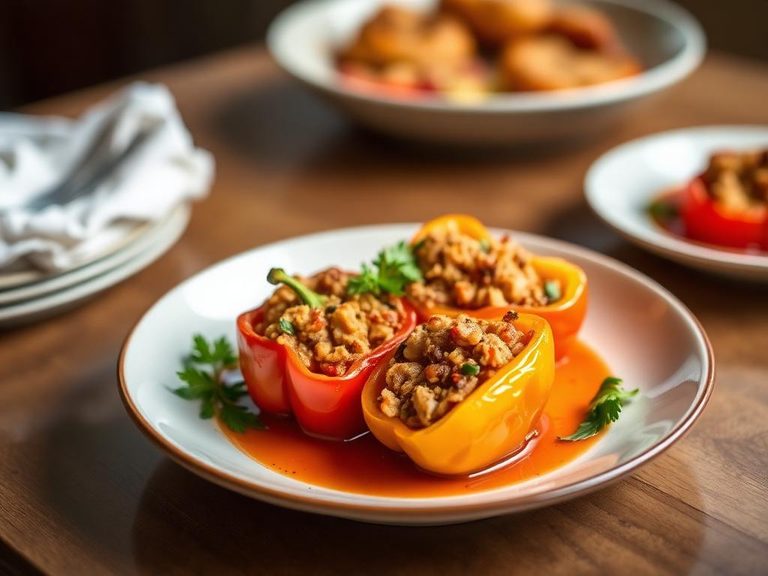
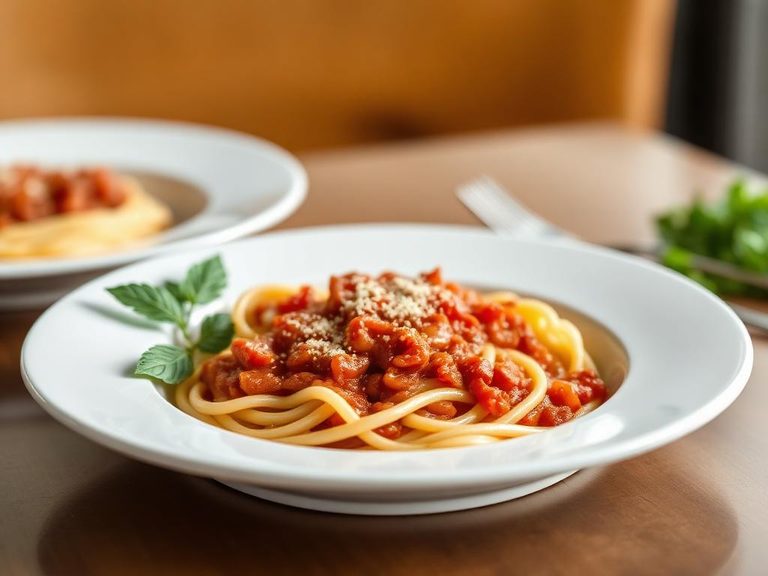
🍽️ Popular dishes
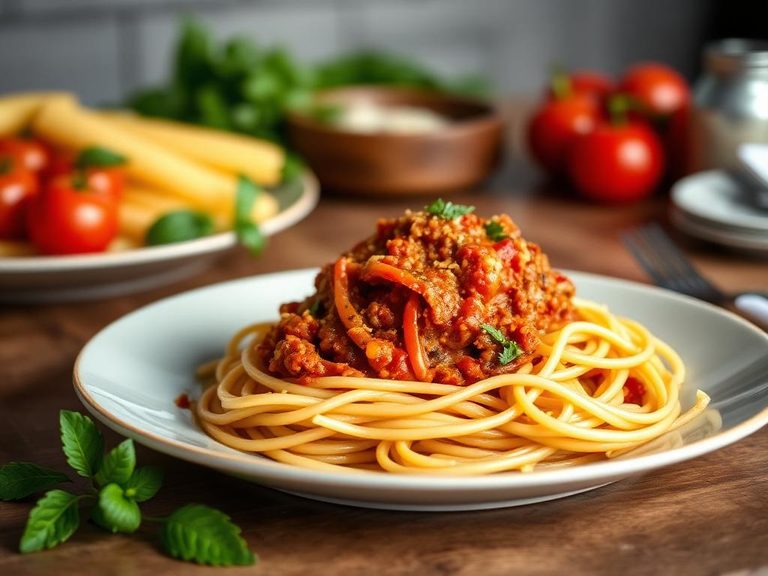
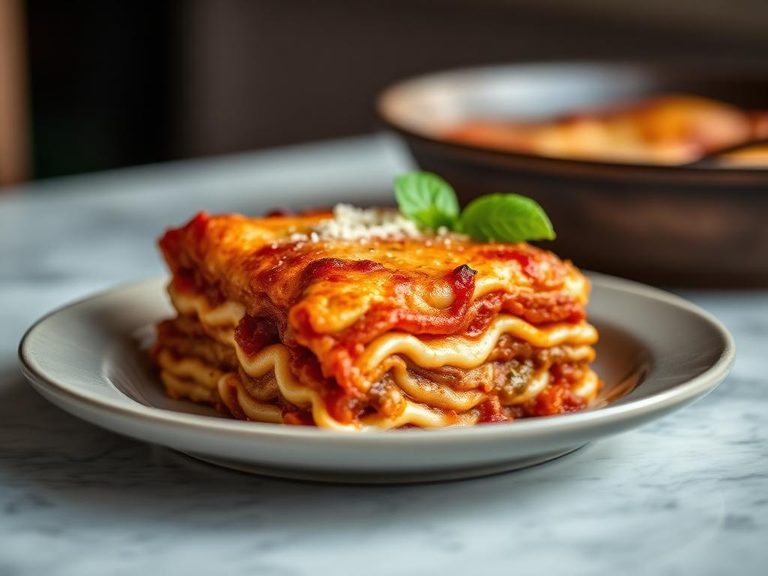
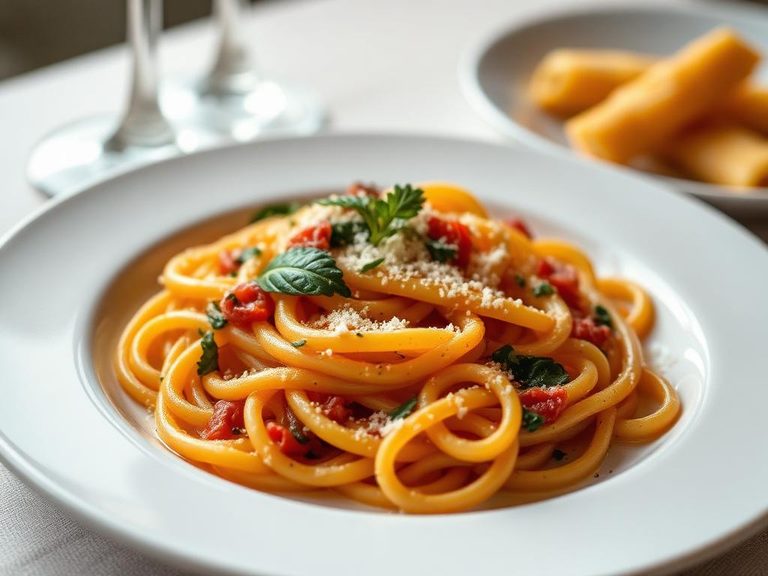
🌍 Where it's eaten
💡 Did you know?
The classic Italian 'ragù alla bolognese' is not traditionally served with spaghetti in Bologna, but with wider, flatter pasta like tagliatelle that better holds the thick, meaty sauce.
Full nutrition (USDA data · scales with serving)
| Water | 82.4 g |
| Energy | 86.0 kcal |
| Protein | 6.0 g |
| Total lipid (fat) | 4.1 g |
| Carbohydrate, by difference | 6.0 g |
| Fiber, total dietary | 1.4 g |
| Total Sugars | 4.0 g |
| Calcium, Ca | 23.0 mg |
| Iron, Fe | 1.0 mg |
| Magnesium, Mg | 18.0 mg |
| Phosphorus, P | 68.0 mg |
| Potassium, K | 314 mg |
| Sodium, Na | 333 mg |
| Zinc, Zn | 1.4 mg |
| Copper, Cu | 0.10 mg |
| Selenium, Se | 6.3 ug |
| Vitamin C, total ascorbic acid | 9.8 mg |
| Thiamin | 0.03 mg |
| Riboflavin | 0.11 mg |
| Niacin | 3.7 mg |
| Vitamin B-6 | 0.21 mg |
| Folate, total | 16.0 ug |
| Folic acid | 0.00 ug |
| Folate, food | 16.0 ug |
| Folate, DFE | 16.0 ug |
| Choline, total | 25.9 mg |
| Vitamin B-12 | 0.51 ug |
| Vitamin B-12, added | 0.00 ug |
| Vitamin A, RAE | 28.0 ug |
| Retinol | 1.0 ug |
| Carotene, beta | 318 ug |
| Carotene, alpha | 2.0 ug |
| Cryptoxanthin, beta | 18.0 ug |
| Lycopene | 7891 ug |
| Lutein + zeaxanthin | 216 ug |
| Vitamin E (alpha-tocopherol) | 1.6 mg |
| Vitamin E, added | 0.00 mg |
| Vitamin D (D2 + D3) | 0.00 ug |
| Vitamin K (phylloquinone) | 9.8 ug |
| Alcohol, ethyl | 0.00 g |
| Caffeine | 0.00 mg |
| Theobromine | 0.00 mg |
Fat & fatty acid profile (per 100g)
| Fatty acids, total saturated | 1.3 g |
| SFA 4:0 | 0.00 g |
| SFA 6:0 | 0.00 g |
| SFA 8:0 | 0.00 g |
| SFA 10:0 | 0.00 g |
| SFA 12:0 | 0.00 g |
| SFA 14:0 | 0.09 g |
| SFA 16:0 | 0.75 g |
| SFA 18:0 | 0.40 g |
| Fatty acids, total monounsaturated | 1.6 g |
| MUFA 16:1 | 0.12 g |
| MUFA 18:1 | 1.4 g |
| MUFA 20:1 | 0.01 g |
| MUFA 22:1 | 0.00 g |
| Fatty acids, total polyunsaturated | 0.43 g |
| PUFA 18:2 | 0.36 g |
| PUFA 18:3 | 0.07 g |
| PUFA 18:4 | 0.00 g |
| PUFA 20:4 | 0.01 g |
| PUFA 20:5 n-3 (EPA) | 0.00 g |
| PUFA 22:5 n-3 (DPA) | 0.00 g |
| PUFA 22:6 n-3 (DHA) | 0.00 g |
| Cholesterol | 18.0 mg |
Amino acid profile (per 100g)
Estimated from OLIVE GARDEN, spaghetti with meat sauce — USDA does not publish this profile for Spaghetti sauce with meat and added vegetables.
| Tryptophan | 0.06 g |
| Threonine | 0.20 g |
| Isoleucine | 0.21 g |
| Leucine | 0.40 g |
| Lysine | 0.23 g |
| Methionine | 0.12 g |
| Cystine | 0.10 g |
| Phenylalanine | 0.29 g |
| Tyrosine | 0.14 g |
| Valine | 0.24 g |
| Arginine | 0.29 g |
| Histidine | 0.15 g |
| Alanine | 0.26 g |
| Aspartic acid | 0.46 g |
| Glutamic acid | 1.7 g |
| Glycine | 0.24 g |
| Proline | 0.57 g |
| Serine | 0.27 g |
| Hydroxyproline | 0.00 g |
FAQ
What's the difference between this and a plain meat sauce?
The key is the 'added vegetables.' A basic meat sauce might be just meat and tomatoes, while this version includes a soffritto (onion, carrot, celery) and sometimes other veggies, adding more fiber, nutrients, and a sweeter, more complex flavor base.
Is it healthy for weight loss?
It can be part of a healthy plan. At 86 kcal per 100g, it's relatively light. The protein and fiber help with satiety. The key is portion control and pairing it with fiber-rich pasta or vegetables instead of large amounts of refined carbs.
Can I freeze it?
Yes, it freezes exceptionally well. Let it cool completely, portion it into airtight containers or freezer bags, and it will keep for 3-4 months, making it a perfect make-ahead meal component.
Nutrient density (calculated · NRF9.3)
Nutrient Rich Foods index: beneficial nutrients (protein, fiber, vitamins, minerals) minus saturated fat, added sugar & sodium, per 100 kcal.
NRF9.3 index — Fulgoni, Keast & Drewnowski, 2009. Computed from USDA nutrients.
Weight-loss friendliness (composite index)
Energy density 0.86 kcal/g · 28% calories from protein · 1.4 g fiber · 4.0 g sugar per 100 g.
Composite of energy density (Rolls et al., 1999), protein & fiber satiety, minus sugar. A calculated heuristic — ranks satiety-per-calorie, not a clinical measure.
Dietary load (calculated from USDA values)
Potential renal acid load. Positive = acid-forming, negative = alkaline-forming.
Sodium-to-potassium ratio: 1.06 (lower is better — aim for ≤ 1)
Sodium:potassium per WHO potassium guidance. Computed from USDA nutrients.