

Spaghetti sauce with seafood and added vegetables
Common food
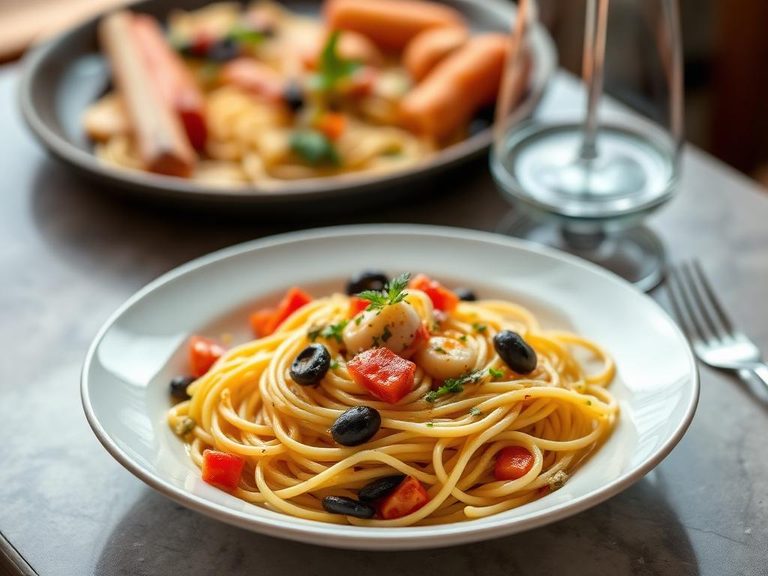
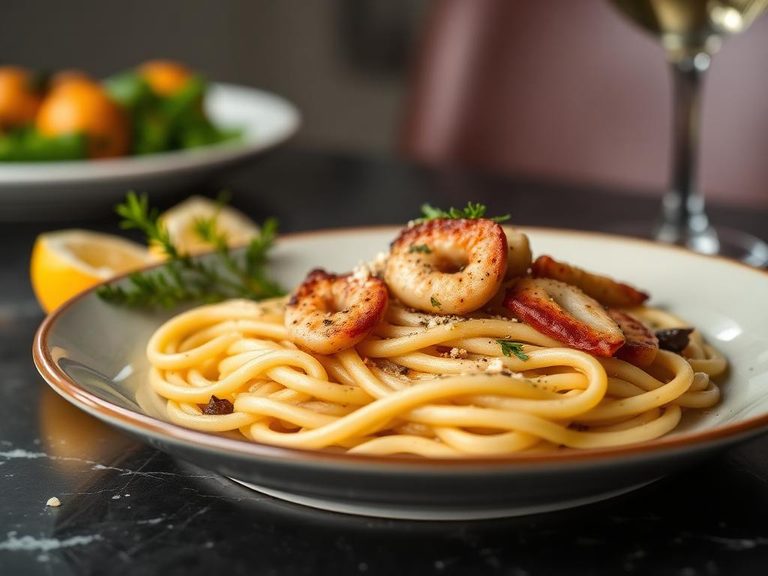
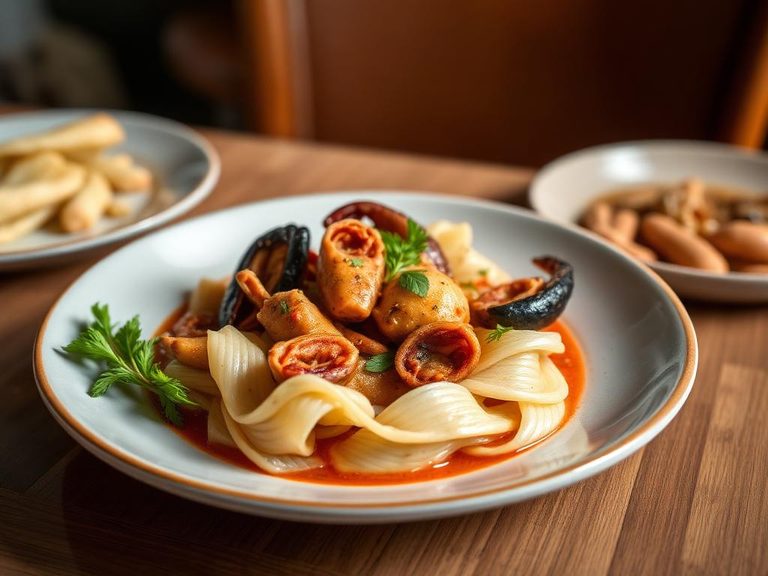
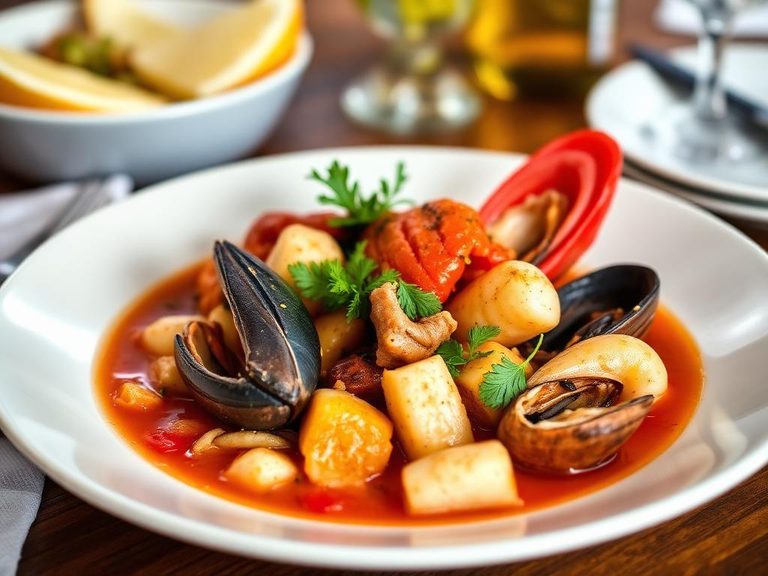
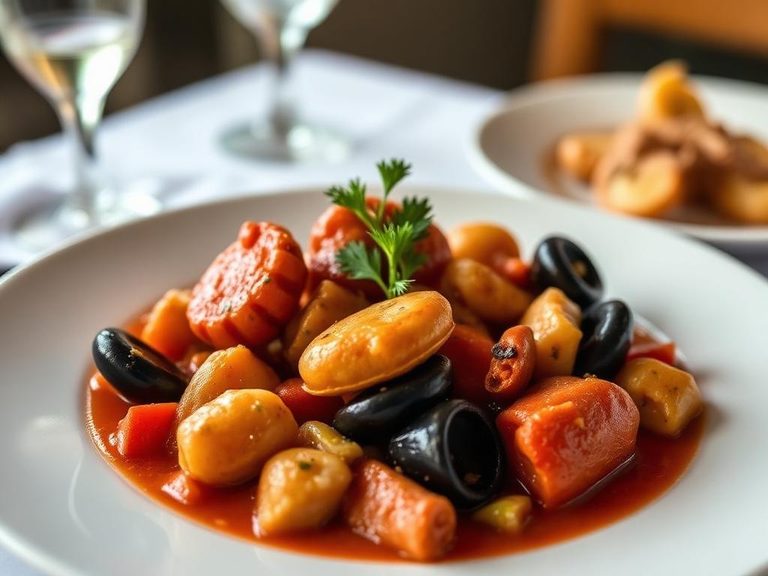
A light, savory sauce where tender seafood like shrimp or mussels mingles with a bright, vegetable-studded tomato base. The texture is a pleasant mix of soft, cooked-down vegetables and the occasional bite of seafood, all in a thinner, brothier consistency than a traditional meat sauce. Nutritionally, it's a low-calorie, high-protein option that packs flavor without heavy fats.
Calorie split: 37% protein · 44% carbs · 19% fat
↓ Full nutrition💚 Why it's loved
People love it for the clean, oceanic sweetness of the seafood cutting through the tangy tomato and aromatic vegetables. It's a versatile base that feels both comforting and light, making it a staple in coastal cuisines from Italy to Portugal.
⚠️ Watch-outs & how to enjoy it better
The primary caution is for those with shellfish or fish allergies, as cross-contamination is common. The sauce can also be high in sodium from added salt and canned tomatoes, and the sugar content, while natural, can affect blood sugar. To counteract, pair with a fiber-rich whole grain like whole-wheat pasta and a drizzle of olive oil to slow absorption, and rinse canned seafood if concerned about sodium.
Key benefits
- Excellent source of lean protein from seafood
- Very low in calories and fat per serving
- Provides fiber and vitamins from added vegetables
- Naturally gluten-free if served without pasta
- Rich in umami flavor from seafood and tomatoes
🍽️ Popular dishes
🌍 Where it's eaten
💡 Did you know?
The Italian term 'frutti di mare' literally translates to 'fruits of the sea' and is used on menus across Italy, though the specific seafood included can vary wildly by region and season.
Full nutrition (USDA data · scales with serving)
| Water | 85.0 g |
| Energy | 60.0 kcal |
| Protein | 5.4 g |
| Total lipid (fat) | 1.3 g |
| Carbohydrate, by difference | 6.6 g |
| Fiber, total dietary | 1.4 g |
| Total Sugars | 4.0 g |
| Calcium, Ca | 39.0 mg |
| Iron, Fe | 1.0 mg |
| Magnesium, Mg | 20.0 mg |
| Phosphorus, P | 81.0 mg |
| Potassium, K | 323 mg |
| Sodium, Na | 353 mg |
| Zinc, Zn | 0.46 mg |
| Copper, Cu | 0.12 mg |
| Selenium, Se | 11.5 ug |
| Vitamin C, total ascorbic acid | 10.2 mg |
| Thiamin | 0.03 mg |
| Riboflavin | 0.09 mg |
| Niacin | 2.9 mg |
| Vitamin B-6 | 0.14 mg |
| Folate, total | 15.0 ug |
| Folic acid | 0.00 ug |
| Folate, food | 15.0 ug |
| Folate, DFE | 15.0 ug |
| Choline, total | 28.5 mg |
| Vitamin B-12 | 1.8 ug |
| Vitamin B-12, added | 0.00 ug |
| Vitamin A, RAE | 41.0 ug |
| Retinol | 14.0 ug |
| Carotene, beta | 318 ug |
| Carotene, alpha | 2.0 ug |
| Cryptoxanthin, beta | 18.0 ug |
| Lycopene | 7891 ug |
| Lutein + zeaxanthin | 216 ug |
| Vitamin E (alpha-tocopherol) | 1.8 mg |
| Vitamin E, added | 0.00 mg |
| Vitamin D (D2 + D3) | 0.00 ug |
| Vitamin K (phylloquinone) | 9.5 ug |
| Alcohol, ethyl | 0.00 g |
| Caffeine | 0.00 mg |
| Theobromine | 0.00 mg |
Fat & fatty acid profile (per 100g)
| Fatty acids, total saturated | 0.17 g |
| SFA 4:0 | 0.00 g |
| SFA 6:0 | 0.00 g |
| SFA 8:0 | 0.00 g |
| SFA 10:0 | 0.00 g |
| SFA 12:0 | 0.00 g |
| SFA 14:0 | 0.00 g |
| SFA 16:0 | 0.10 g |
| SFA 18:0 | 0.04 g |
| Fatty acids, total monounsaturated | 0.26 g |
| MUFA 16:1 | 0.01 g |
| MUFA 18:1 | 0.24 g |
| MUFA 20:1 | 0.01 g |
| MUFA 22:1 | 0.00 g |
| Fatty acids, total polyunsaturated | 0.43 g |
| PUFA 18:2 | 0.30 g |
| PUFA 18:3 | 0.06 g |
| PUFA 18:4 | 0.00 g |
| PUFA 20:4 | 0.01 g |
| PUFA 20:5 n-3 (EPA) | 0.03 g |
| PUFA 22:5 n-3 (DPA) | 0.01 g |
| PUFA 22:6 n-3 (DHA) | 0.03 g |
| Cholesterol | 30.0 mg |
Amino acid profile (per 100g)
Estimated from OLIVE GARDEN, spaghetti with meat sauce — USDA does not publish this profile for Spaghetti sauce with seafood and added vegetables.
| Tryptophan | 0.06 g |
| Threonine | 0.20 g |
| Isoleucine | 0.21 g |
| Leucine | 0.40 g |
| Lysine | 0.23 g |
| Methionine | 0.12 g |
| Cystine | 0.10 g |
| Phenylalanine | 0.29 g |
| Tyrosine | 0.14 g |
| Valine | 0.24 g |
| Arginine | 0.29 g |
| Histidine | 0.15 g |
| Alanine | 0.26 g |
| Aspartic acid | 0.46 g |
| Glutamic acid | 1.7 g |
| Glycine | 0.24 g |
| Proline | 0.57 g |
| Serine | 0.27 g |
| Hydroxyproline | 0.00 g |
FAQ
Is this sauce typically served hot or cold?
It is almost always served hot, ladled over freshly cooked pasta or used as a base for a seafood stew.
What kind of seafood is most common?
Common choices include shrimp, mussels, clams, calamari, and firm white fish like cod or halibut, often used in combination.
Can I use frozen seafood?
Yes, frozen seafood works well and is often more sustainable. Thaw it properly before adding to the sauce to avoid excess water.
Nutrient density (calculated · NRF9.3)
Nutrient Rich Foods index: beneficial nutrients (protein, fiber, vitamins, minerals) minus saturated fat, added sugar & sodium, per 100 kcal.
NRF9.3 index — Fulgoni, Keast & Drewnowski, 2009. Computed from USDA nutrients.
Weight-loss friendliness (composite index)
Energy density 0.60 kcal/g · 36% calories from protein · 1.4 g fiber · 4.0 g sugar per 100 g.
Composite of energy density (Rolls et al., 1999), protein & fiber satiety, minus sugar. A calculated heuristic — ranks satiety-per-calorie, not a clinical measure.
Dietary load (calculated from USDA values)
Potential renal acid load. Positive = acid-forming, negative = alkaline-forming.
Sodium-to-potassium ratio: 1.09 (lower is better — aim for ≤ 1)
Sodium:potassium per WHO potassium guidance. Computed from USDA nutrients.