

Spaghetti sauce, fat free
Common food

Photo: Wikipedia
This is a smooth, vibrant tomato-based sauce designed for guilt-free pasta nights, offering a bright, tangy flavor with a light, pourable consistency. It delivers the classic comfort of marinara with an impressively lean nutritional profile, clocking in at just 24 calories per 100g. It's a pantry staple for anyone seeking a low-fat, high-fiber way to add robust flavor to a meal.
Calorie split: 17% protein · 74% carbs · 9% fat
↓ Full nutrition💚 Why it's loved
People love it for its incredible convenience and versatility—it transforms plain pasta, chicken, or vegetables into a satisfying meal in minutes. It captures the essential, comforting taste of a slow-simmered tomato sauce without the heaviness or prep work.
⚠️ Watch-outs & how to enjoy it better
The main downside is the potential for added sodium and sugars (3.56g per 100g) common in many commercial brands, which can be a concern for those monitoring blood sugar or salt intake. To counteract this, pair it with a lean protein like grilled chicken or beans and a source of healthy fat like a sprinkle of Parmesan or a drizzle of olive oil to slow sugar absorption and enhance satiety.
Key benefits
- Extremely low in calories and fat (24 kcal, 0.3g fat per 100g)
- Good source of dietary fiber (1.5g per 100g)
- Contains lycopene, an antioxidant from cooked tomatoes
- Provides a quick, flavorful base for numerous dishes
- Naturally low in saturated fat and cholesterol
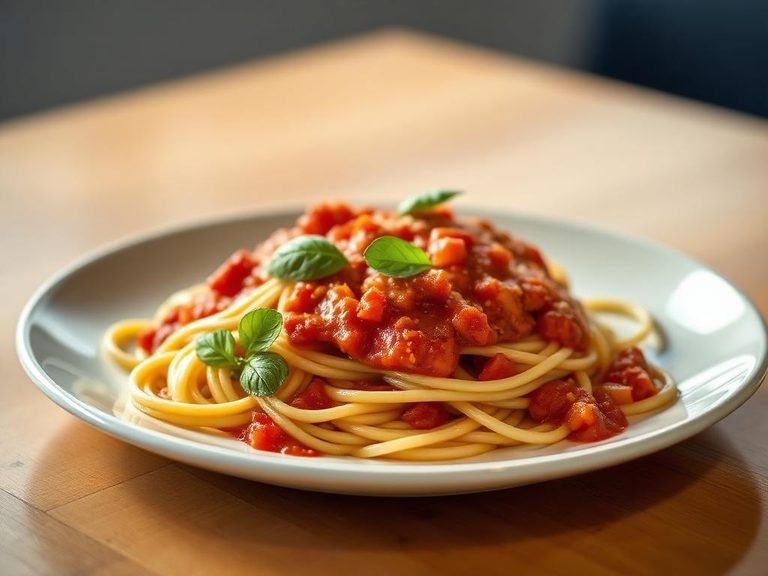
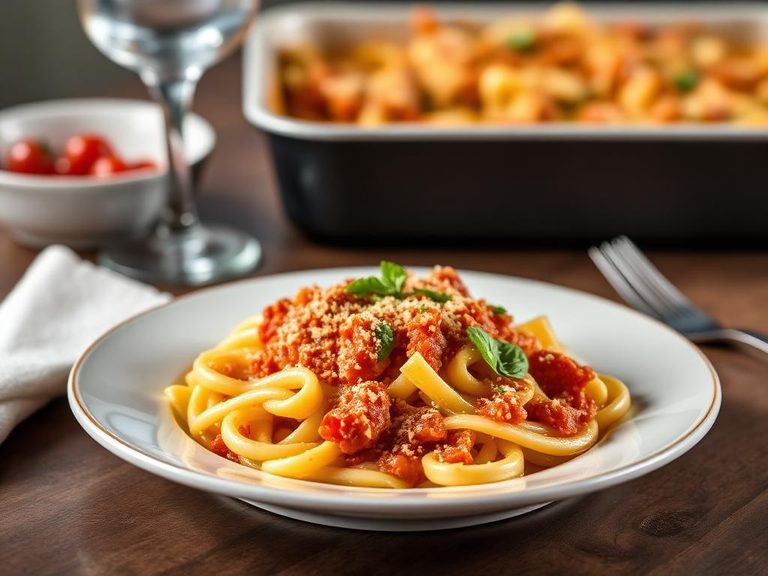
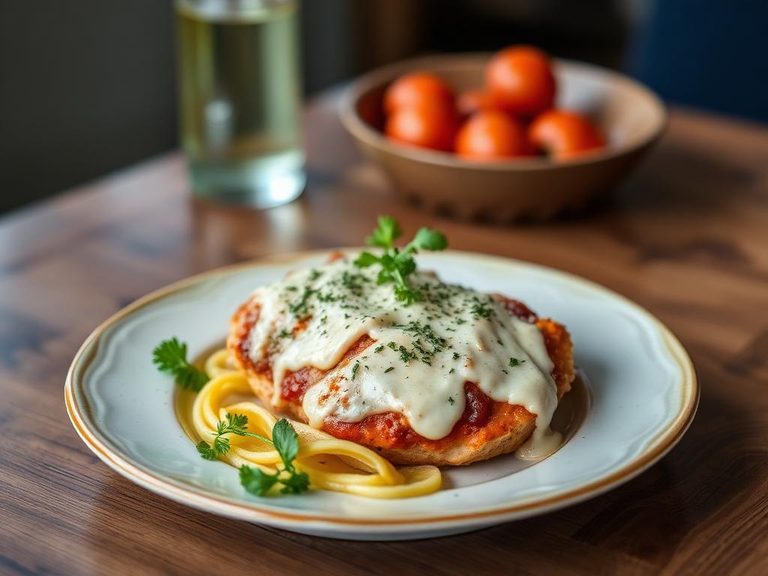
🍽️ Popular dishes
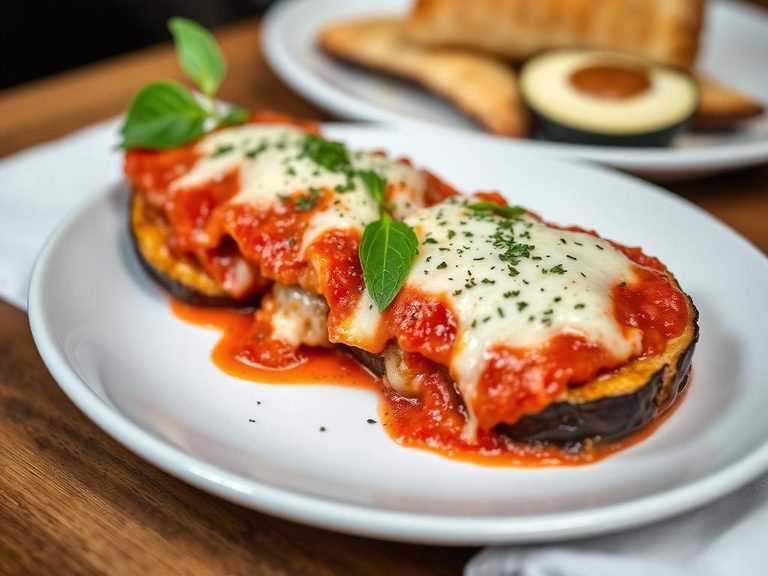
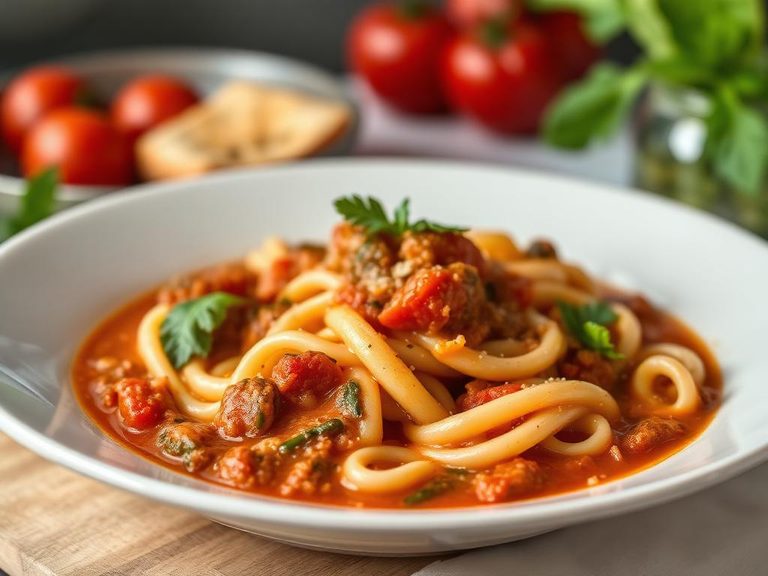
🌍 Where it's eaten
💡 Did you know?
The iconic 'spaghetti sauce' as a jarred product is largely an American invention, popularized in the post-WWII era, while traditional Italian sauces are often simpler and freshly made with just a few ingredients.
Full nutrition (USDA data · scales with serving)
| Water | 91.3 g |
| Energy | 24.0 kcal |
| Protein | 1.2 g |
| Total lipid (fat) | 0.30 g |
| Carbohydrate, by difference | 5.3 g |
| Fiber, total dietary | 1.5 g |
| Total Sugars | 3.6 g |
| Calcium, Ca | 14.0 mg |
| Iron, Fe | 0.96 mg |
| Magnesium, Mg | 15.0 mg |
| Phosphorus, P | 27.0 mg |
| Potassium, K | 297 mg |
| Sodium, Na | 474 mg |
| Zinc, Zn | 0.22 mg |
| Copper, Cu | 0.12 mg |
| Selenium, Se | 0.60 ug |
| Vitamin C, total ascorbic acid | 7.0 mg |
| Thiamin | 0.02 mg |
| Riboflavin | 0.07 mg |
| Niacin | 0.99 mg |
| Vitamin B-6 | 0.10 mg |
| Folate, total | 9.0 ug |
| Folic acid | 0.00 ug |
| Folate, food | 9.0 ug |
| Folate, DFE | 9.0 ug |
| Choline, total | 9.9 mg |
| Vitamin B-12 | 0.00 ug |
| Vitamin B-12, added | 0.00 ug |
| Vitamin A, RAE | 22.0 ug |
| Retinol | 0.00 ug |
| Carotene, beta | 259 ug |
| Carotene, alpha | 0.00 ug |
| Cryptoxanthin, beta | 3.0 ug |
| Lycopene | 13895 ug |
| Lutein + zeaxanthin | 24.0 ug |
| Vitamin E (alpha-tocopherol) | 1.4 mg |
| Vitamin E, added | 0.00 mg |
| Vitamin D (D2 + D3) | 0.00 ug |
| Vitamin K (phylloquinone) | 2.8 ug |
| Alcohol, ethyl | 0.00 g |
| Caffeine | 0.00 mg |
| Theobromine | 0.00 mg |
Fat & fatty acid profile (per 100g)
| Fatty acids, total saturated | 0.04 g |
| SFA 4:0 | 0.00 g |
| SFA 6:0 | 0.00 g |
| SFA 8:0 | 0.00 g |
| SFA 10:0 | 0.00 g |
| SFA 12:0 | 0.00 g |
| SFA 14:0 | 0.00 g |
| SFA 16:0 | 0.03 g |
| SFA 18:0 | 0.01 g |
| Fatty acids, total monounsaturated | 0.04 g |
| MUFA 16:1 | 0.00 g |
| MUFA 18:1 | 0.04 g |
| MUFA 20:1 | 0.00 g |
| MUFA 22:1 | 0.00 g |
| Fatty acids, total polyunsaturated | 0.12 g |
| PUFA 18:2 | 0.12 g |
| PUFA 18:3 | 0.01 g |
| PUFA 18:4 | 0.00 g |
| PUFA 20:4 | 0.00 g |
| PUFA 20:5 n-3 (EPA) | 0.00 g |
| PUFA 22:5 n-3 (DPA) | 0.00 g |
| PUFA 22:6 n-3 (DHA) | 0.00 g |
| Cholesterol | 0.00 mg |
Amino acid profile (per 100g)
Estimated from OLIVE GARDEN, spaghetti with meat sauce — USDA does not publish this profile for Spaghetti sauce.
| Tryptophan | 0.06 g |
| Threonine | 0.20 g |
| Isoleucine | 0.21 g |
| Leucine | 0.40 g |
| Lysine | 0.23 g |
| Methionine | 0.12 g |
| Cystine | 0.10 g |
| Phenylalanine | 0.29 g |
| Tyrosine | 0.14 g |
| Valine | 0.24 g |
| Arginine | 0.29 g |
| Histidine | 0.15 g |
| Alanine | 0.26 g |
| Aspartic acid | 0.46 g |
| Glutamic acid | 1.7 g |
| Glycine | 0.24 g |
| Proline | 0.57 g |
| Serine | 0.27 g |
| Hydroxyproline | 0.00 g |
FAQ
Is fat-free spaghetti sauce as flavorful as regular sauce?
It can be, but the flavor profile is different. It often relies more on herbs, garlic, and onion for depth since it lacks the richness from fat. Many people find it perfectly satisfying, especially when used as a base for other ingredients.
Can I use it for dishes other than pasta?
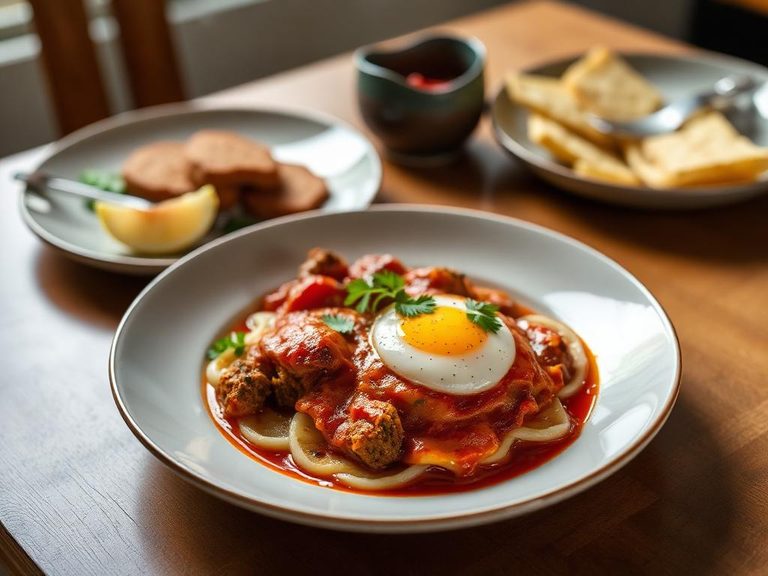
Absolutely! It's a fantastic base for shakshuka, a topping for baked chicken or fish, a simmering liquid for meatballs, or even as a pizza sauce. Its low calorie count makes it a versatile flavor booster.
What should I look for on the label to choose a healthier option?
Check the sodium content (aim for under 400mg per serving) and added sugars. Look for brands with simple ingredient lists where tomatoes are the first ingredient, and avoid those with high-fructose corn syrup or excessive salt.
Nutrient density (calculated · NRF9.3)
Nutrient Rich Foods index: beneficial nutrients (protein, fiber, vitamins, minerals) minus saturated fat, added sugar & sodium, per 100 kcal.
NRF9.3 index — Fulgoni, Keast & Drewnowski, 2009. Computed from USDA nutrients.
Weight-loss friendliness (composite index)
Energy density 0.24 kcal/g · 20% calories from protein · 1.5 g fiber · 3.6 g sugar per 100 g.
Composite of energy density (Rolls et al., 1999), protein & fiber satiety, minus sugar. A calculated heuristic — ranks satiety-per-calorie, not a clinical measure.
Dietary load (calculated from USDA values)
Potential renal acid load. Positive = acid-forming, negative = alkaline-forming.
Sodium-to-potassium ratio: 1.60 (lower is better — aim for ≤ 1)
Sodium:potassium per WHO potassium guidance. Computed from USDA nutrients.