

Soup, tomato rice, canned, condensed
Whole food · Soups, Sauces, and Gravies

Photo: Wikipedia
This is the concentrated heart of a classic tomato soup, a thick, glossy paste that unlocks a deep, savory-sweet tomato flavor when diluted. Its texture is smooth and velvety, with a rich umami backbone that forms the base of countless comfort foods. Nutritionally, it's a low-calorie, carb-focused ingredient that delivers a quick energy boost and a dose of lycopene.
Calorie split: 7% protein · 73% carbs · 20% fat
↓ Full nutrition💚 Why it's loved
People love its incredible convenience and the deep, nostalgic flavor of slow-cooked tomatoes it provides in minutes. It's a versatile pantry hero that can transform a simple meal with its rich, savory-sweet profile.
⚠️ Watch-outs & how to enjoy it better
The condensed form can be high in sodium and added sugars, which may concern those monitoring blood pressure or blood sugar. To counteract this, dilute it with unsalted broth or water, and balance the meal by adding a source of protein (like beans or chicken) and healthy fats (like a drizzle of olive oil).
Key benefits
- Low in calories and fat per serving
- Good source of quick-release carbohydrates
- Contains lycopene, an antioxidant from cooked tomatoes
- Long shelf life reduces food waste
- Provides a convenient base for homemade soups and sauces
🍽️ Popular dishes
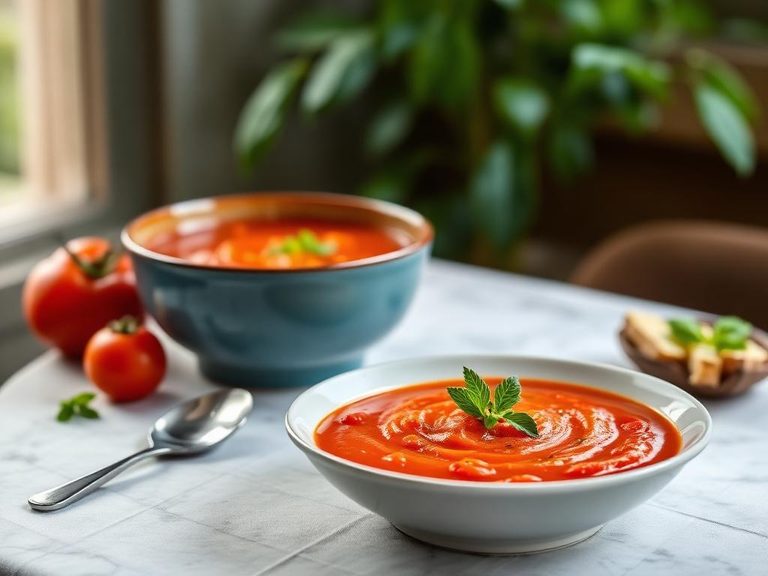
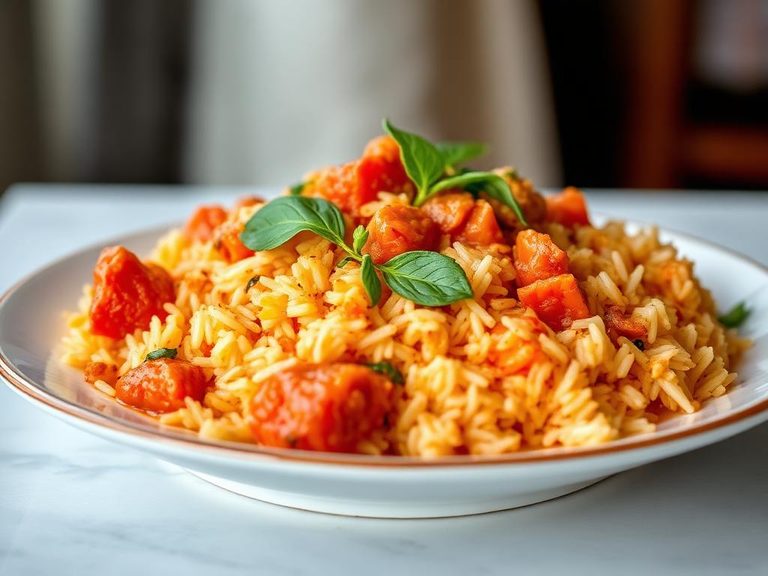
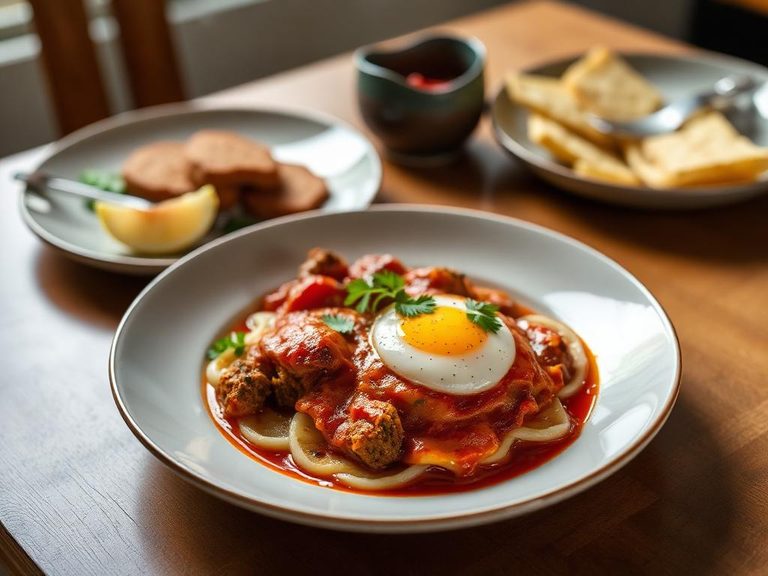


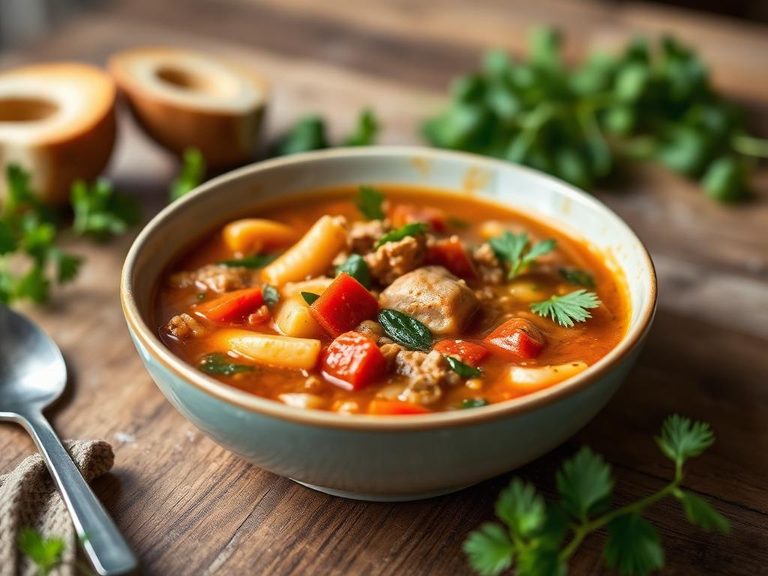
🌍 Where it's eaten
💡 Did you know?
The process of canning and concentrating tomatoes actually increases the bioavailability of lycopene, making it easier for your body to absorb compared to raw tomatoes.
Full nutrition (USDA data · scales with serving)
| Water | 77.1 g |
| Energy | 93.0 kcal |
| Energy | 389 kj |
| Protein | 1.6 g |
| Total lipid (fat) | 2.1 g |
| Ash | 2.0 g |
| Carbohydrate, by difference | 17.1 g |
| Fiber, total dietary | 1.3 g |
| Total Sugars | 5.9 g |
| Calcium, Ca | 18.0 mg |
| Iron, Fe | 0.62 mg |
| Magnesium, Mg | 4.0 mg |
| Phosphorus, P | 26.0 mg |
| Potassium, K | 257 mg |
| Sodium, Na | 635 mg |
| Zinc, Zn | 0.40 mg |
| Copper, Cu | 0.10 mg |
| Manganese, Mn | 0.30 mg |
| Selenium, Se | 1.8 ug |
| Vitamin C, total ascorbic acid | 11.5 mg |
| Thiamin | 0.05 mg |
| Riboflavin | 0.04 mg |
| Niacin | 0.82 mg |
| Pantothenic acid | 0.10 mg |
| Vitamin B-6 | 0.06 mg |
| Folate, total | 11.0 ug |
| Folic acid | 0.00 ug |
| Folate, food | 11.0 ug |
| Folate, DFE | 11.0 ug |
| Choline, total | 15.6 mg |
| Vitamin B-12 | 0.00 ug |
| Vitamin B-12, added | 0.00 ug |
| Vitamin A, RAE | 23.0 ug |
| Retinol | 2.0 ug |
| Carotene, beta | 248 ug |
| Carotene, alpha | 0.00 ug |
| Cryptoxanthin, beta | 0.00 ug |
| Vitamin A, IU | 421 iu |
| Lycopene | 17183 ug |
| Lutein + zeaxanthin | 3.0 ug |
| Vitamin E (alpha-tocopherol) | 1.7 mg |
| Vitamin E, added | 0.00 mg |
| Vitamin D (D2 + D3), International Units | 0.00 iu |
| Vitamin D (D2 + D3) | 0.00 ug |
| Vitamin K (phylloquinone) | 3.0 ug |
| Alcohol, ethyl | 0.00 g |
| Caffeine | 0.00 mg |
| Theobromine | 0.00 mg |
Fat & fatty acid profile (per 100g)
| Fatty acids, total saturated | 0.40 g |
| SFA 4:0 | 0.00 g |
| SFA 6:0 | 0.01 g |
| SFA 8:0 | 0.00 g |
| SFA 10:0 | 0.00 g |
| SFA 12:0 | 0.01 g |
| SFA 14:0 | 0.03 g |
| SFA 16:0 | 0.22 g |
| SFA 18:0 | 0.10 g |
| Fatty acids, total monounsaturated | 0.47 g |
| MUFA 16:1 | 0.01 g |
| MUFA 18:1 | 0.46 g |
| MUFA 20:1 | 0.00 g |
| MUFA 22:1 | 0.00 g |
| Fatty acids, total polyunsaturated | 1.1 g |
| PUFA 18:2 | 0.87 g |
| PUFA 18:3 | 0.18 g |
| PUFA 18:4 | 0.00 g |
| PUFA 20:4 | 0.00 g |
| PUFA 20:5 n-3 (EPA) | 0.00 g |
| PUFA 22:5 n-3 (DPA) | 0.00 g |
| PUFA 22:6 n-3 (DHA) | 0.00 g |
| Cholesterol | 1.0 mg |
Amino acid profile (per 100g)
Estimated from Soup, bean with pork, canned, condensed — USDA does not publish this profile for Soup.
| Tryptophan | 0.06 g |
| Threonine | 0.24 g |
| Isoleucine | 0.29 g |
| Leucine | 0.48 g |
| Lysine | 0.40 g |
| Methionine | 0.07 g |
| Cystine | 0.07 g |
| Phenylalanine | 0.33 g |
| Tyrosine | 0.18 g |
| Valine | 0.32 g |
| Arginine | 0.31 g |
| Histidine | 0.15 g |
| Alanine | 0.29 g |
| Aspartic acid | 0.66 g |
| Glutamic acid | 1.1 g |
| Glycine | 0.28 g |
| Proline | 0.27 g |
| Serine | 0.29 g |
FAQ
How is condensed tomato soup different from regular canned soup?
Condensed soup is cooked to remove much of its water content, resulting in a thick, concentrated paste. You must add a liquid (like water, milk, or broth) to reconstitute it to the intended soup consistency and volume.
Can I use it in recipes other than soup?
Absolutely! It's a fantastic shortcut ingredient for stews, chili, pasta sauces, casseroles, and as a base for braising meats. It adds depth, color, and a touch of sweetness.
Is it gluten-free?
Most plain condensed tomato soups are naturally gluten-free, but always check the label for additives like wheat flour, which can be used as a thickener, or for potential cross-contamination warnings.
Nutrient density (calculated · NRF9.3)
Nutrient Rich Foods index: beneficial nutrients (protein, fiber, vitamins, minerals) minus saturated fat, added sugar & sodium, per 100 kcal.
NRF9.3 index — Fulgoni, Keast & Drewnowski, 2009. Computed from USDA nutrients.
Weight-loss friendliness (composite index)
Energy density 0.93 kcal/g · 7% calories from protein · 1.3 g fiber · 5.9 g sugar per 100 g.
Composite of energy density (Rolls et al., 1999), protein & fiber satiety, minus sugar. A calculated heuristic — ranks satiety-per-calorie, not a clinical measure.
Dietary load (calculated from USDA values)
Potential renal acid load. Positive = acid-forming, negative = alkaline-forming.
Sodium-to-potassium ratio: 2.47 (lower is better — aim for ≤ 1)
Sodium:potassium per WHO potassium guidance. Computed from USDA nutrients.