

Soup, chicken with rice, canned, condensed
Whole food · Soups, Sauces, and Gravies

Photo: Wikipedia
This is the classic, shelf-stable pantry staple: a thick, savory paste of shredded chicken and soft rice grains in a mild, creamy chicken broth. When reconstituted with water or milk, it transforms into a comforting, slightly gelatinous soup with a familiar, homestyle taste. Nutritionally, it's a low-calorie, low-fat base that provides a modest boost of protein and carbohydrates.
Calorie split: 11% protein · 68% carbs · 21% fat
↓ Full nutrition💚 Why it's loved
People adore it for its nostalgic, 'just-like-mom-made' simplicity and the comforting warmth it provides on a cold day or when feeling under the weather. Its versatility makes it a perfect blank canvas for adding extra vegetables, herbs, or a splash of cream.
⚠️ Watch-outs & how to enjoy it better
The condensed form is typically very high in sodium, which can be a concern for those monitoring blood pressure. To counteract this, use less of the concentrate, dilute it more than instructed, or pair it with fresh, low-sodium ingredients. The texture can also be overly thick or pasty for some; simply adding more liquid and a squeeze of lemon can brighten it up.
Key benefits
- Extremely long shelf life for emergency preparedness.
- Very low in calories and fat per serving.
- Quick and easy to prepare with minimal cooking.
- Provides a source of quick-energy carbohydrates.
- A familiar, comforting flavor for all ages.
🍽️ Popular dishes
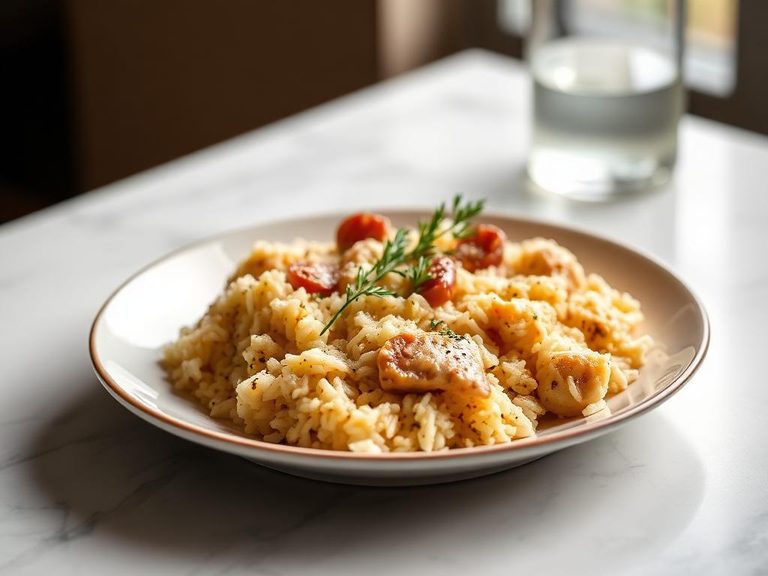
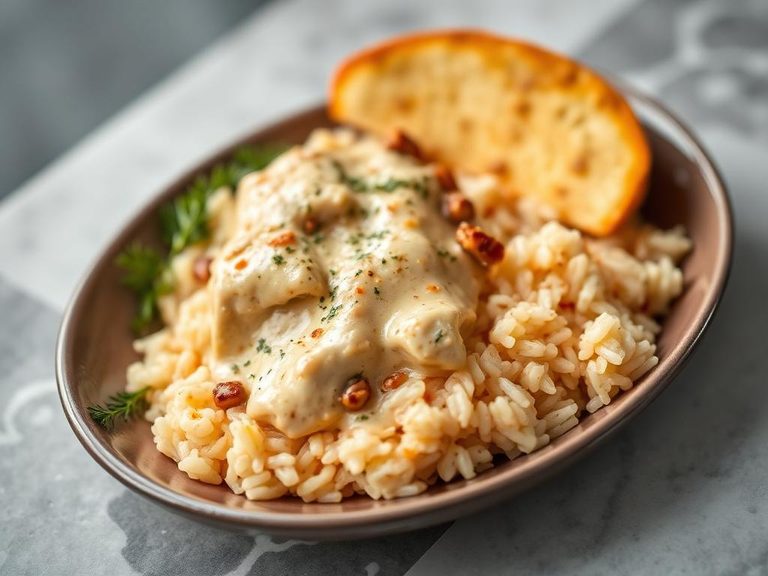
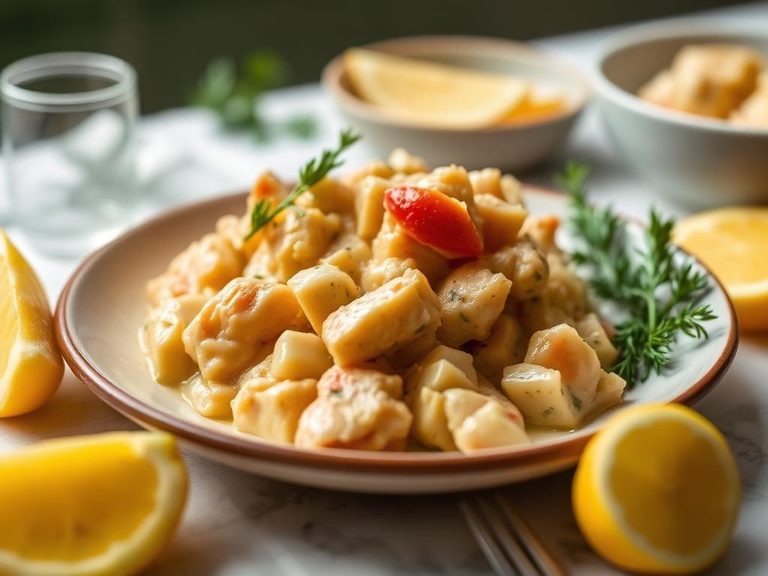
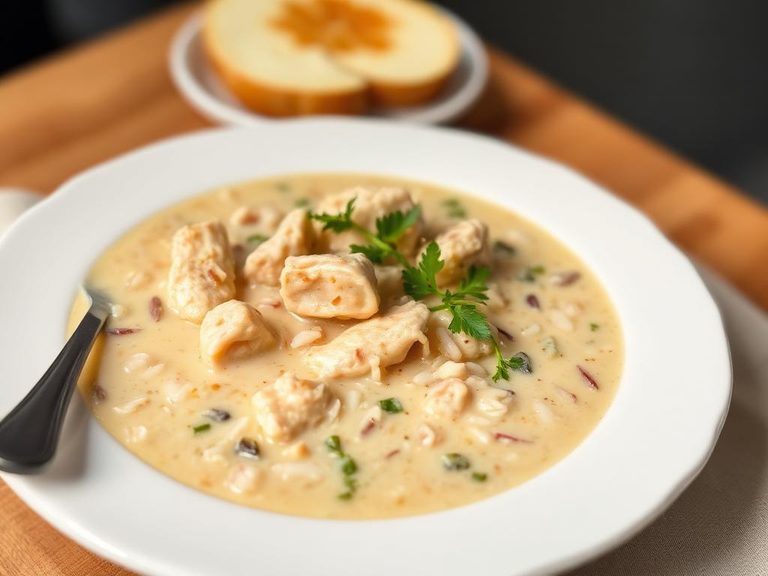
🌍 Where it's eaten
💡 Did you know?
The gelatinous texture of the condensed soup comes from the natural collagen in the chicken and the starch released by the rice during the canning process, which act as natural thickeners.
Full nutrition (USDA data · scales with serving)
| Water | 83.2 g |
| Energy | 68.0 kcal |
| Energy | 285 kj |
| Protein | 1.8 g |
| Total lipid (fat) | 1.6 g |
| Ash | 1.9 g |
| Carbohydrate, by difference | 11.6 g |
| Fiber, total dietary | 0.90 g |
| Total Sugars | 0.23 g |
| Calcium, Ca | 41.0 mg |
| Iron, Fe | 0.25 mg |
| Magnesium, Mg | 10.0 mg |
| Phosphorus, P | 42.0 mg |
| Potassium, K | 34.0 mg |
| Sodium, Na | 645 mg |
| Zinc, Zn | 0.18 mg |
| Copper, Cu | 0.10 mg |
| Manganese, Mn | 0.30 mg |
| Selenium, Se | 4.1 ug |
| Vitamin C, total ascorbic acid | 0.00 mg |
| Thiamin | 0.01 mg |
| Riboflavin | 0.02 mg |
| Niacin | 0.92 mg |
| Pantothenic acid | 0.14 mg |
| Vitamin B-6 | 0.02 mg |
| Folate, total | 1.0 ug |
| Folic acid | 0.00 ug |
| Folate, food | 1.0 ug |
| Folate, DFE | 1.0 ug |
| Choline, total | 9.8 mg |
| Vitamin B-12 | 0.13 ug |
| Vitamin B-12, added | 0.00 ug |
| Vitamin A, RAE | 25.0 ug |
| Retinol | 0.00 ug |
| Carotene, beta | 257 ug |
| Carotene, alpha | 84.0 ug |
| Cryptoxanthin, beta | 0.00 ug |
| Vitamin A, IU | 498 iu |
| Lycopene | 0.00 ug |
| Lutein + zeaxanthin | 6.0 ug |
| Vitamin E (alpha-tocopherol) | 0.07 mg |
| Vitamin E, added | 0.00 mg |
| Vitamin D (D2 + D3), International Units | 0.00 iu |
| Vitamin D (D2 + D3) | 0.00 ug |
| Vitamin K (phylloquinone) | 0.30 ug |
| Alcohol, ethyl | 0.00 g |
| Caffeine | 0.00 mg |
| Theobromine | 0.00 mg |
Fat & fatty acid profile (per 100g)
| Fatty acids, total saturated | 0.37 g |
| SFA 4:0 | 0.00 g |
| SFA 6:0 | 0.00 g |
| SFA 8:0 | 0.00 g |
| SFA 10:0 | 0.00 g |
| SFA 12:0 | 0.00 g |
| SFA 14:0 | 0.01 g |
| SFA 16:0 | 0.29 g |
| SFA 18:0 | 0.07 g |
| Fatty acids, total monounsaturated | 0.74 g |
| MUFA 16:1 | 0.06 g |
| MUFA 18:1 | 0.68 g |
| MUFA 20:1 | 0.00 g |
| MUFA 22:1 | 0.00 g |
| Fatty acids, total polyunsaturated | 0.34 g |
| PUFA 18:2 | 0.32 g |
| PUFA 18:3 | 0.01 g |
| PUFA 18:4 | 0.00 g |
| PUFA 20:4 | 0.00 g |
| PUFA 20:5 n-3 (EPA) | 0.00 g |
| PUFA 22:5 n-3 (DPA) | 0.00 g |
| PUFA 22:6 n-3 (DHA) | 0.00 g |
| Cholesterol | 4.0 mg |
Amino acid profile (per 100g)
Estimated from Soup, bean with pork, canned, condensed — USDA does not publish this profile for Soup.
| Tryptophan | 0.06 g |
| Threonine | 0.24 g |
| Isoleucine | 0.29 g |
| Leucine | 0.48 g |
| Lysine | 0.40 g |
| Methionine | 0.07 g |
| Cystine | 0.07 g |
| Phenylalanine | 0.33 g |
| Tyrosine | 0.18 g |
| Valine | 0.32 g |
| Arginine | 0.31 g |
| Histidine | 0.15 g |
| Alanine | 0.29 g |
| Aspartic acid | 0.66 g |
| Glutamic acid | 1.1 g |
| Glycine | 0.28 g |
| Proline | 0.27 g |
| Serine | 0.29 g |
FAQ
How do I use canned condensed chicken and rice soup?
The standard method is to mix one can of soup with one can of water or milk (about 1:1 ratio) and heat until hot. You can also use it undiluted as a creamy sauce or base for casseroles, pot pies, and skillet meals.
Is this soup healthy?
It's low in calories and fat, but can be high in sodium. For a healthier option, look for 'low-sodium' versions, dilute it with water, and boost its nutrition by adding fresh vegetables, lean protein, or whole grains when serving.
Can I freeze leftover prepared soup?
It's not recommended. The rice will absorb more liquid and become mushy upon thawing, significantly degrading the texture. It's best consumed fresh from the can after preparation.
Nutrient density (calculated · NRF9.3)
Nutrient Rich Foods index: beneficial nutrients (protein, fiber, vitamins, minerals) minus saturated fat, added sugar & sodium, per 100 kcal.
NRF9.3 index — Fulgoni, Keast & Drewnowski, 2009. Computed from USDA nutrients.
Weight-loss friendliness (composite index)
Energy density 0.68 kcal/g · 11% calories from protein · 0.9 g fiber · 0.2 g sugar per 100 g.
Composite of energy density (Rolls et al., 1999), protein & fiber satiety, minus sugar. A calculated heuristic — ranks satiety-per-calorie, not a clinical measure.
Dietary load (calculated from USDA values)
Potential renal acid load. Positive = acid-forming, negative = alkaline-forming.
Sodium-to-potassium ratio: 18.97 (lower is better — aim for ≤ 1)
Sodium:potassium per WHO potassium guidance. Computed from USDA nutrients.