

Shrimp and vegetables excluding carrots, broccoli, and dark-green leafy; no potatoes, no sauce
Common food

Photo: Wikipedia
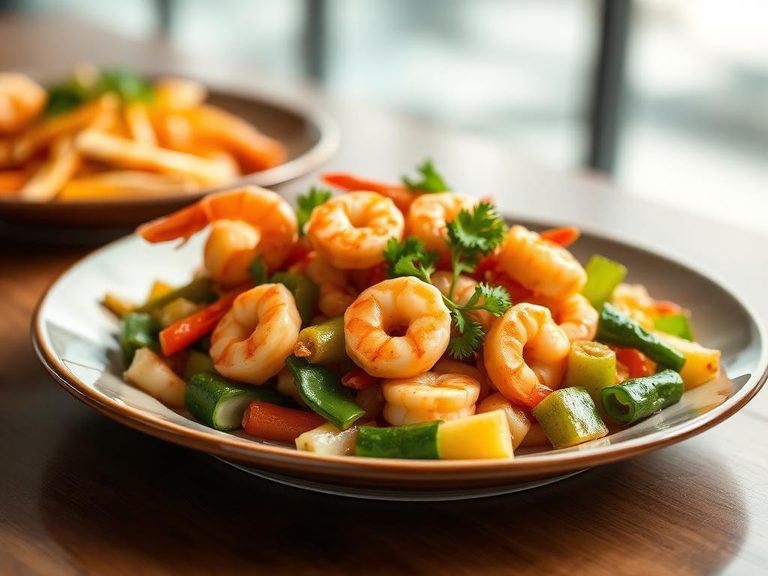
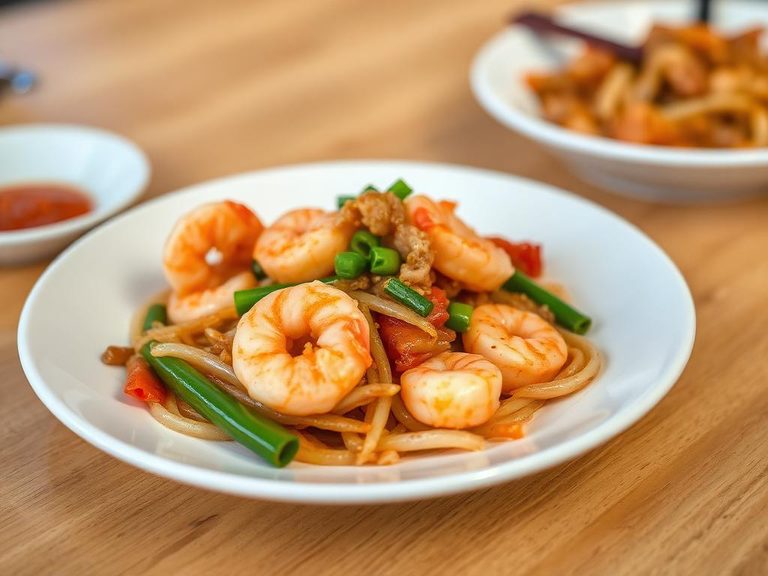
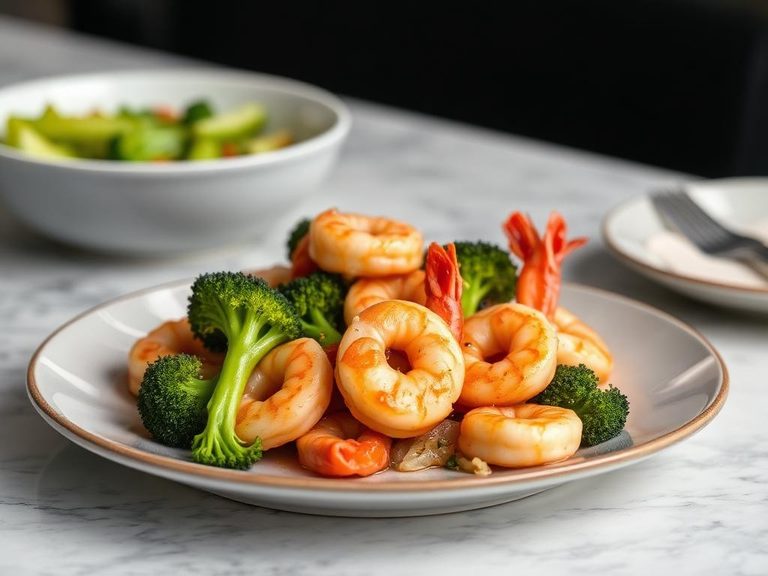
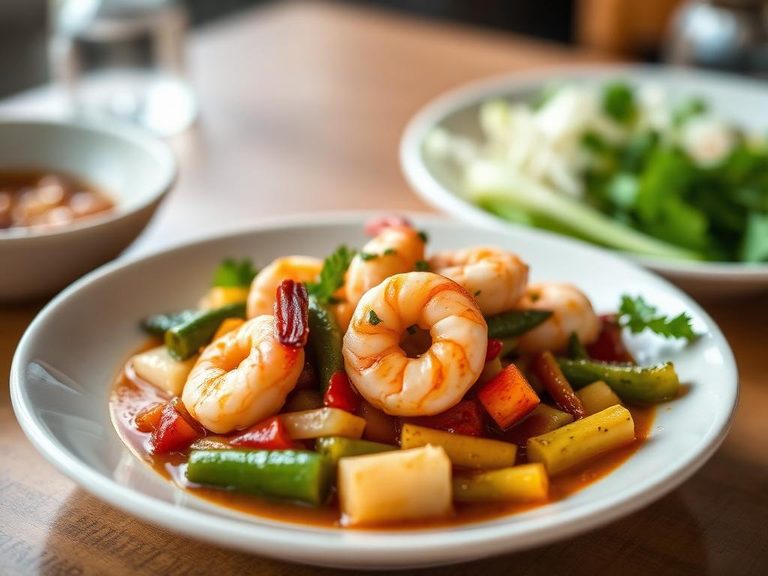
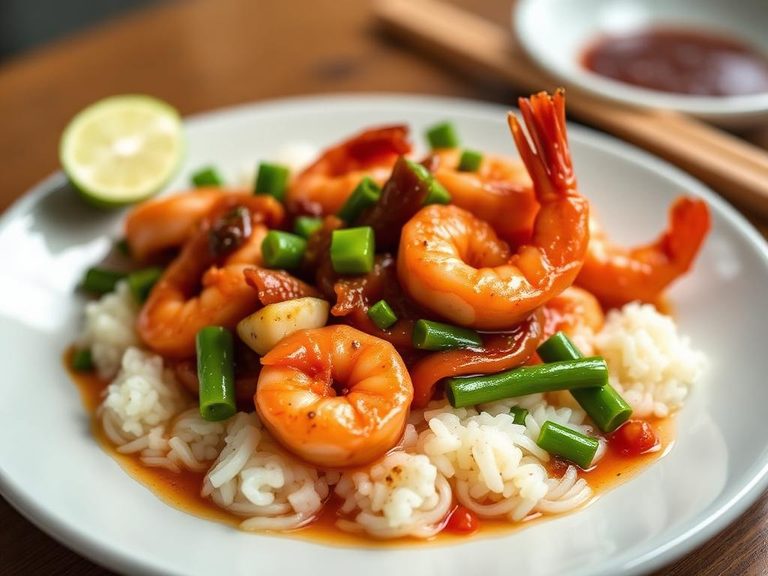
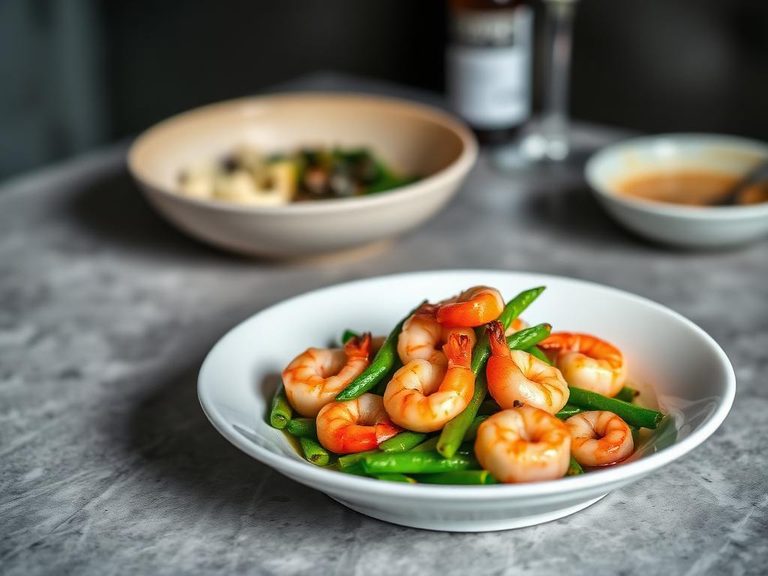
This is a vibrant stir-fry of succulent shrimp tossed with a medley of crisp vegetables like bell peppers, snap peas, and water chestnuts. The texture is a delightful contrast between the tender, snappy shrimp and the crunchy, fresh-tasting vegetables, all lightly coated in their own natural juices. It's a lean, protein-rich dish that delivers a satisfying meal with a relatively low calorie count.
Calorie split: 29% protein · 22% carbs · 49% fat
↓ Full nutrition💚 Why it's loved
People love it for its clean, fresh flavors where the natural sweetness of the shrimp and the vegetal crunch shine through. It's incredibly versatile, serving as a light main course or a substantial side, and is a staple in many cuisines known for balancing textures and tastes.
⚠️ Watch-outs & how to enjoy it better
Shrimp is a common shellfish allergen, and some individuals may have sensitivities. The dish can be high in sodium if prepared with added salt or salty condiments. To counteract this, season with herbs, garlic, or citrus juice instead of salt, and always be mindful of portion size if monitoring sodium intake. Ensure shrimp is cooked thoroughly to avoid foodborne illness.
Key benefits
- High-quality protein from shrimp supports muscle maintenance and satiety.
- Low in carbohydrates, making it suitable for low-carb dietary patterns.
- Provides essential minerals like selenium and zinc from seafood.
- The vegetable mix offers dietary fiber and micronutrients without starchy fillers.
- Quick to cook, preserving the nutrients and crisp texture of the ingredients.
🍽️ Popular dishes
🌍 Where it's eaten
💡 Did you know?
Shrimp contain a carotenoid called astaxanthin, which gives them their pink color when cooked and acts as a powerful antioxidant.
Full nutrition (USDA data · scales with serving)
| Water | 76.0 g |
| Energy | 124 kcal |
| Protein | 9.3 g |
| Total lipid (fat) | 6.9 g |
| Carbohydrate, by difference | 6.8 g |
| Fiber, total dietary | 1.3 g |
| Total Sugars | 1.2 g |
| Calcium, Ca | 44.0 mg |
| Iron, Fe | 0.40 mg |
| Magnesium, Mg | 25.0 mg |
| Phosphorus, P | 137 mg |
| Potassium, K | 157 mg |
| Sodium, Na | 41.0 mg |
| Zinc, Zn | 0.80 mg |
| Copper, Cu | 0.12 mg |
| Selenium, Se | 18.2 ug |
| Vitamin C, total ascorbic acid | 1.8 mg |
| Thiamin | 0.03 mg |
| Riboflavin | 0.04 mg |
| Niacin | 1.4 mg |
| Vitamin B-6 | 0.13 mg |
| Folate, total | 23.0 ug |
| Folic acid | 0.00 ug |
| Folate, food | 23.0 ug |
| Folate, DFE | 23.0 ug |
| Choline, total | 57.8 mg |
| Vitamin B-12 | 0.60 ug |
| Vitamin B-12, added | 0.00 ug |
| Vitamin A, RAE | 40.0 ug |
| Retinol | 33.0 ug |
| Carotene, beta | 66.0 ug |
| Carotene, alpha | 17.0 ug |
| Cryptoxanthin, beta | 30.0 ug |
| Lycopene | 0.00 ug |
| Lutein + zeaxanthin | 288 ug |
| Vitamin E (alpha-tocopherol) | 2.0 mg |
| Vitamin E, added | 0.00 mg |
| Vitamin D (D2 + D3) | 0.00 ug |
| Vitamin K (phylloquinone) | 15.5 ug |
| Alcohol, ethyl | 0.00 g |
| Caffeine | 0.00 mg |
| Theobromine | 0.00 mg |
Fat & fatty acid profile (per 100g)
| Fatty acids, total saturated | 1.0 g |
| SFA 4:0 | 0.00 g |
| SFA 6:0 | 0.00 g |
| SFA 8:0 | 0.00 g |
| SFA 10:0 | 0.00 g |
| SFA 12:0 | 0.00 g |
| SFA 14:0 | 0.01 g |
| SFA 16:0 | 0.72 g |
| SFA 18:0 | 0.23 g |
| Fatty acids, total monounsaturated | 2.7 g |
| MUFA 16:1 | 0.04 g |
| MUFA 18:1 | 2.6 g |
| MUFA 20:1 | 0.04 g |
| MUFA 22:1 | 0.00 g |
| Fatty acids, total polyunsaturated | 2.6 g |
| PUFA 18:2 | 2.2 g |
| PUFA 18:3 | 0.28 g |
| PUFA 18:4 | 0.00 g |
| PUFA 20:4 | 0.03 g |
| PUFA 20:5 n-3 (EPA) | 0.05 g |
| PUFA 22:5 n-3 (DPA) | 0.00 g |
| PUFA 22:6 n-3 (DHA) | 0.05 g |
| Cholesterol | 77.0 mg |
Amino acid profile (per 100g)
Estimated from Restaurant, Chinese, shrimp and vegetables — USDA does not publish this profile for Shrimp and vegetables excluding carrots.
| Tryptophan | 0.06 g |
| Threonine | 0.21 g |
| Isoleucine | 0.22 g |
| Leucine | 0.40 g |
| Lysine | 0.43 g |
| Methionine | 0.15 g |
| Cystine | 0.06 g |
| Phenylalanine | 0.21 g |
| Tyrosine | 0.18 g |
| Valine | 0.24 g |
| Arginine | 0.47 g |
| Histidine | 0.12 g |
| Alanine | 0.31 g |
| Aspartic acid | 0.59 g |
| Glutamic acid | 1.2 g |
| Glycine | 0.29 g |
| Proline | 0.25 g |
| Serine | 0.22 g |
FAQ
Is this dish healthy for weight loss?
Yes, it can be. It's high in protein and low in calories, which promotes fullness. The key is to avoid heavy sauces and cook with minimal added fat.
Can I use frozen shrimp and vegetables?
Absolutely. Ensure shrimp are fully thawed and patted dry before cooking for the best texture. Frozen vegetables work well but may release more water.
What's the best way to keep the vegetables crisp?
Cook them quickly over high heat in a hot wok or skillet. Add denser vegetables like carrots first, and quicker-cooking ones like bell peppers later.
Nutrient density (calculated · NRF9.3)
Nutrient Rich Foods index: beneficial nutrients (protein, fiber, vitamins, minerals) minus saturated fat, added sugar & sodium, per 100 kcal.
NRF9.3 index — Fulgoni, Keast & Drewnowski, 2009. Computed from USDA nutrients.
Weight-loss friendliness (composite index)
Energy density 1.24 kcal/g · 30% calories from protein · 1.3 g fiber · 1.2 g sugar per 100 g.
Composite of energy density (Rolls et al., 1999), protein & fiber satiety, minus sugar. A calculated heuristic — ranks satiety-per-calorie, not a clinical measure.
Dietary load (calculated from USDA values)
Potential renal acid load. Positive = acid-forming, negative = alkaline-forming.
Sodium-to-potassium ratio: 0.26 (lower is better — aim for ≤ 1)
Sodium:potassium per WHO potassium guidance. Computed from USDA nutrients.